Jack Kornfield's assertion that "to live fully is to be always in no-man's-land, to experience each moment as completely new and fresh" invites us to reconsider our relationship with time and experience. In a world often dominated by routine and expectation, this quote challenges us to embrace the present moment with a sense of wonder and openness. It suggests that true aliveness is found not in the past or future, but in the vibrant immediacy of now, where each moment holds the potential for discovery and transformation.
By framing life as a journey through "no-man's-land," Kornfield evokes a space that is neither here nor there, a liminal realm where the familiar dissolves and the new emerges. This perspective encourages us to let go of preconceived notions and habitual patterns, allowing us to engage with life as it unfolds. In doing so, we cultivate a profound sense of presence that enriches our experiences and deepens our understanding of ourselves and the world around us.
The image / the metaphor
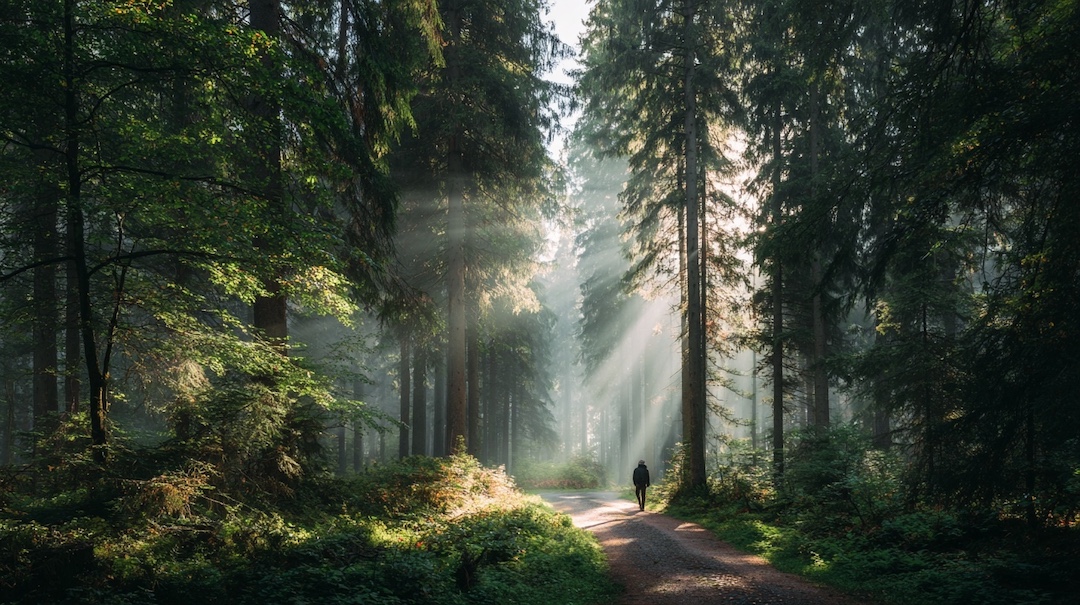
The imagery of "no-man's-land" conjures a sense of ambiguity and openness, a place where boundaries blur and possibilities abound. It evokes the feeling of standing at the edge of the known, where the familiar comforts of life give way to the uncertainty of the present moment. The verbs "live" and "experience" emphasize an active engagement with life, suggesting that to truly inhabit our existence, we must be willing to step into this uncharted territory with curiosity and courage.
Diving deeper into the metaphor, "no-man's-land" can be seen as a fertile ground for personal growth and spiritual awakening. It represents the space where we confront our fears, desires, and attachments, allowing us to transcend the limitations of our conditioned responses. In this realm, we are invited to shed the weight of our past and the anxieties of our future, embracing the freshness of each moment as an opportunity for renewal and transformation.
In the speaker's tradition
Jack Kornfield, a prominent figure in contemporary Buddhism, draws upon the rich tapestry of Buddhist teachings to illuminate the path of presence and awareness. Central to this tradition is the concept of "sunyata," or emptiness, which encourages us to recognize the impermanent and interconnected nature of all things. By embracing the notion of no-man's-land, we align ourselves with the practice of "kenosis," or self-emptying, allowing our preconceived notions to dissolve and making space for the new to emerge.
In his book "A Path with Heart," Kornfield echoes the teachings of the Buddha, who emphasized the importance of mindfulness and the cultivation of "prajna," or wisdom. This wisdom arises from a direct experience of reality, unclouded by the filters of our past experiences and future expectations. By living in the present moment, we tap into a deeper understanding of ourselves and our place in the world, fostering a sense of connection and compassion for all beings.
Living the teaching
Consider a modern scenario where this teaching can be applied: imagine walking through a bustling city, surrounded by the noise and chaos of daily life. Instead of becoming overwhelmed by the sights and sounds, you consciously choose to engage with the moment, noticing the colors, textures, and rhythms around you. By allowing yourself to be fully present, you discover a sense of aliveness that transforms the mundane into the extraordinary, revealing the beauty that exists in each fleeting moment.
This teaching also finds resonance in our relationships. Picture a conversation with a loved one, where the tendency to dwell on past grievances or future worries can cloud the connection. By practicing presence, you can approach the dialogue with fresh eyes and an open heart, allowing for genuine understanding and empathy to flourish. In this way, the practice of living in no-man's-land enriches our interactions, fostering deeper connections and a greater appreciation for the people in our lives.
A reflection
As we contemplate Kornfield's invitation to live fully in no-man's-land, we are called to reflect on our own experiences of presence and newness. What would it mean for you to approach each moment as completely fresh and new? Consider the ways in which you might let go of past narratives and future expectations, allowing the richness of the present to unfold before you. In this exploration, may you discover the profound aliveness that resides in the heart of each moment.