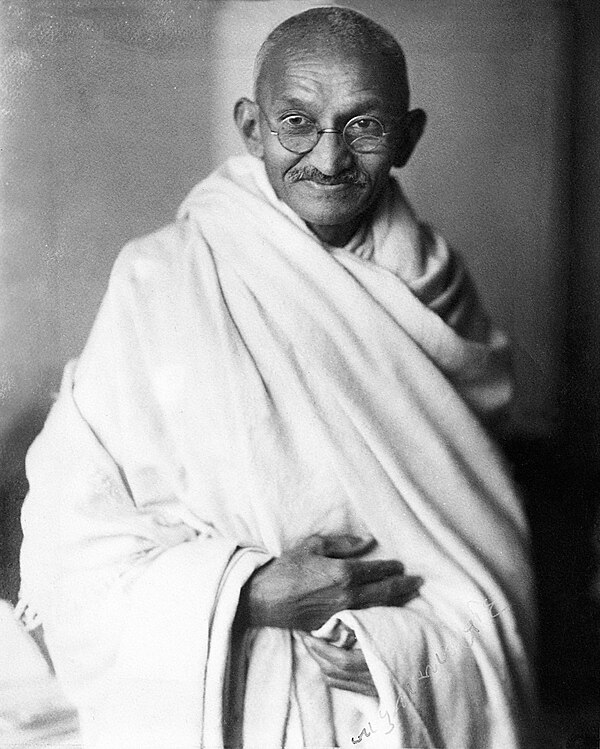
Mahatma Gandhi's poignant reflection reminds us that throughout history, the forces of truth and love have ultimately prevailed, despite the temporary dominance of tyrants and oppressors. In moments of despair, it is vital to recall this enduring truth: while darkness may seem overwhelming, it is not invincible. The essence of Gandhi's message lies in the unwavering belief that love and truth, though often obscured, will eventually emerge victorious. This perspective is not merely optimistic; it is a call to resilience and hope in the face of adversity.
Gandhi's assertion serves as a profound reminder of the cyclical nature of history, where the shadows of tyranny may loom large but are ultimately transient. His words resonate deeply in a world still grappling with injustice and conflict, urging us to cultivate a steadfast commitment to truth and love. In recognizing that the forces of good have historically triumphed, we find the strength to confront our own challenges, fostering a sense of agency and purpose in our lives. This perspective invites us to reflect on our role in the ongoing narrative of humanity, where each act of love and truth contributes to the greater tapestry of existence.
The image / the metaphor
The imagery in Gandhi's quote evokes a powerful sense of struggle and eventual triumph. The juxtaposition of "tyrants and murderers" against the ideals of "truth and love" creates a vivid contrast between darkness and light. The verbs "seem" and "fall" suggest a transient nature to tyranny, emphasizing that its apparent strength is ultimately an illusion. This imagery invites us to visualize a battlefield where love and truth stand resilient against the onslaught of oppression, reminding us that the latter may dominate for a time, but cannot withstand the enduring power of the former.
Diving deeper into the metaphor, we can see that Gandhi is not merely speaking of historical events but also of the internal battles we face within ourselves. The "tyrants" can represent our fears, doubts, and negative thoughts that threaten to overwhelm us. Conversely, "truth and love" symbolize the inner virtues that guide us toward clarity and compassion. This duality reflects the human experience, where we are often caught in a struggle between light and darkness, yet it is the light that ultimately prevails. Gandhi's words serve as a reminder that our personal victories over despair are part of a larger, universal narrative of hope.
In the speaker's tradition
Gandhi's philosophy is deeply rooted in the Hindu tradition, particularly in concepts such as dharma, which emphasizes righteousness and moral duty. His understanding of truth (satya) and love (ahimsa) aligns with the principles of non-violence and compassion that are central to Hindu ethics. In this context, Gandhi embodies the ideal of bhakti, or devotion, where love for humanity and commitment to truth become acts of spiritual practice. His life exemplifies the belief that living in accordance with these principles not only uplifts the individual but also contributes to the collective well-being of society.
A relevant text that echoes Gandhi's sentiments is the Bhagavad Gita, where Lord Krishna imparts wisdom about the eternal nature of truth and the importance of righteous action. In Chapter 2, Krishna speaks of the impermanence of the physical body and the eternal nature of the soul, reinforcing the idea that while worldly struggles may seem overwhelming, they are ultimately transient. This perspective encourages individuals to act with integrity and love, knowing that their efforts contribute to a greater cosmic order that favors truth and compassion over tyranny and despair.
Living the teaching
In our modern world, the application of Gandhi's teaching can be seen in various social movements that advocate for justice and equality. For instance, consider the ongoing fight against systemic racism and inequality. Activists draw upon the principles of truth and love to challenge oppressive systems, often facing significant backlash. Yet, history has shown that these movements, grounded in non-violence and compassion, ultimately lead to transformative change. By embodying Gandhi's teachings, individuals can find strength in solidarity, fostering hope even in the face of adversity.
On a more personal level, this teaching can manifest in our relationships, particularly during conflicts. When faced with misunderstandings or disagreements, recalling Gandhi's message can inspire us to approach the situation with love and a commitment to truth. Instead of allowing anger or resentment to dictate our responses, we can choose to listen deeply and communicate with compassion. This practice not only nurtures healthier relationships but also reinforces our inner resilience, reminding us that love and truth can guide us through even the most challenging moments.
A reflection
As we contemplate Gandhi's profound words, we are invited to reflect on our own lives: In what ways can we embody truth and love in our daily actions? This question encourages us to consider the small yet significant choices we make, whether in our interactions with others or in our responses to the challenges we face. By embracing this inquiry, we can cultivate a deeper understanding of our role in the ongoing narrative of humanity, recognizing that each act of love and truth contributes to the eventual triumph over despair.


