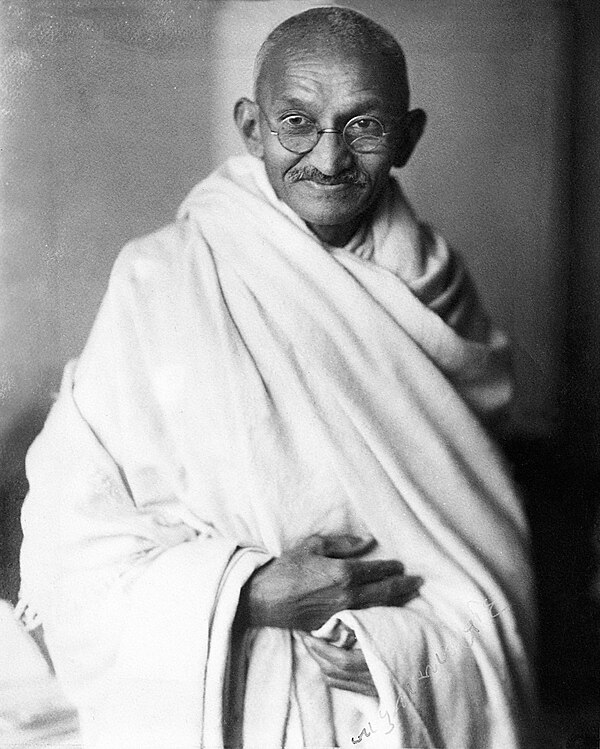
Mahatma Gandhi's assertion that "It is not enough not to fight injustice. We must speak out against it" serves as a profound reminder of our moral obligation to confront wrongdoing. In a world rife with inequality and suffering, silence can often be complicit, allowing injustice to flourish unchecked. Gandhi urges us to transcend mere inaction and embrace the courage to vocalize our dissent, emphasizing that true justice requires active participation rather than passive observation.
This call to action resonates deeply within the fabric of human experience, challenging us to reflect on our roles as witnesses to injustice. It compels us to consider the implications of our silence and the potential power of our voices. In a society where the status quo often perpetuates harm, Gandhi's words remind us that the act of speaking out is not merely a choice but a responsibility that can catalyze change and inspire others to join the struggle for justice.
The image / the metaphor
The imagery in Gandhi's quote is striking in its simplicity yet profound in its implications. The verbs "fight" and "speak out" evoke a sense of urgency and action, suggesting that injustice is not a passive phenomenon but an active force that demands confrontation. The phrase "not to fight" implies a stance of neutrality, which Gandhi critiques as insufficient; it is the act of vocalizing our discontent that transforms passive observation into active resistance. The felt sense of this quote is one of empowerment, urging individuals to harness their voices as instruments of change.
Diving deeper into the metaphor, we can see that speaking out against injustice is akin to igniting a flame in the darkness. It symbolizes the illumination of truth in a world often shrouded in ignorance and apathy. Gandhi's call to action invites us to recognize that our voices can resonate beyond our immediate surroundings, creating ripples that challenge systemic injustices. In this light, the act of speaking becomes not just a personal endeavor but a collective movement toward a more just society.
In the speaker's tradition
Furthermore, Gandhi's teachings can be likened to the concept of satya, or truth, which he held in the highest regard. In his autobiography, "The Story of My Experiments with Truth," he articulates the importance of living in accordance with truth, which necessitates speaking out against falsehoods and injustices. This alignment of personal integrity with social responsibility underscores the interconnectedness of individual actions and the broader quest for justice, illustrating that silence in the face of injustice is a betrayal of both truth and dharma.
Living the teaching
In contemporary society, the relevance of Gandhi's teaching can be seen in movements advocating for social justice, such as Black Lives Matter or climate activism. These movements exemplify the courage to speak out against systemic injustices, urging individuals to raise their voices in solidarity with marginalized communities. For instance, a young activist might participate in a protest, not only to express their dissent but also to inspire others to join the cause, embodying Gandhi's belief that silence is not an option when faced with injustice. This collective action demonstrates how speaking out can galvanize communities and foster a sense of shared purpose.
On a more personal level, the application of this teaching can manifest in our daily interactions and relationships. Consider a situation where a friend is being treated unfairly at work; speaking out in support of them, whether through direct confrontation or by offering a listening ear, embodies the essence of Gandhi's message. This act of advocacy, however small, reinforces the idea that each of us has the capacity to challenge injustice in our immediate circles. By cultivating the courage to speak out, we not only support others but also contribute to a culture that values justice and compassion.
A reflection
As we contemplate Gandhi's powerful words, we are invited to reflect on our own relationship with injustice. What injustices do we witness in our lives, and how might we find the courage to speak out against them? This question encourages us to explore the boundaries of our comfort zones and consider the impact our voices can have in the world. In doing so, we may discover that the act of speaking out is not just a moral obligation but a profound expression of our shared humanity.


