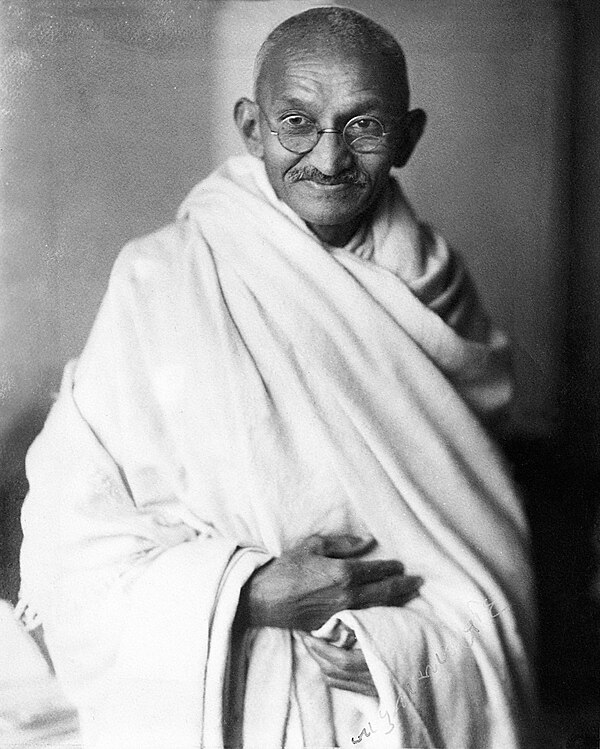
Mahatma Gandhi's assertion that "it is better to be violent, if there is violence in our hearts, than to put on the cloak of nonviolence to cover impotence" challenges us to confront the rawness of our emotions rather than disguise them. In a world that often equates nonviolence with moral superiority, Gandhi invites us to examine the authenticity of our intentions. This quote underscores the importance of honesty in our spiritual journeys, suggesting that true nonviolence stems not from mere external adherence to principles but from a deep, internal transformation.
In a society that frequently promotes the idea of suppressing negative emotions, Gandhi's words resonate with a profound truth: acknowledging our inner turmoil is a prerequisite for genuine peace. The stakes are high; to ignore our violent impulses is to risk living inauthentically, potentially leading to greater harm both to ourselves and others. By embracing our true feelings, we can cultivate a more profound understanding of nonviolence, one that is rooted in courage and self-awareness rather than mere compliance.
The image / the metaphor
The imagery in Gandhi's quote is striking, evoking a sense of urgency and raw honesty. The metaphor of a "cloak of nonviolence" suggests a superficial layer that can easily be donned to mask deeper, unresolved emotions. This cloak, while it may appear virtuous, ultimately serves to conceal impotence—a lack of true strength or conviction. The choice between violence and the pretense of nonviolence becomes a powerful metaphor for the struggle between authenticity and facade.
Diving deeper into this metaphor, we can see that Gandhi is not advocating for violence in a literal sense but rather urging us to confront the violence within ourselves. The act of acknowledging our darker impulses can be a catalyst for transformation. By facing our inner turmoil, we can begin to understand its roots and, in doing so, cultivate a more profound sense of compassion and empathy. This journey from recognition to transformation is essential for anyone seeking to embody true nonviolence.
In the speaker's tradition
Gandhi's philosophy is deeply rooted in Hindu thought, particularly the concepts of dharma and ahimsa. Dharma, or righteous duty, calls for individuals to act in accordance with their true nature, which includes recognizing and addressing their inner conflicts. Ahimsa, or nonviolence, is not merely the absence of physical violence but encompasses a broader commitment to compassion and understanding. By acknowledging our violent tendencies, we can align our actions with our higher selves, fulfilling our dharma in a more authentic manner.
In the Bhagavad Gita, a foundational text in Hindu philosophy, the warrior Arjuna grapples with his own inner conflict before battle. His struggle mirrors the essence of Gandhi's teaching: the importance of confronting one's own fears and desires before taking action. Just as Arjuna must reconcile his duty with his moral dilemmas, we too must face our inner violence to cultivate a path of true nonviolence. This process of self-examination and acceptance is essential for spiritual growth and the realization of our higher purpose.
Living the teaching
Consider a modern scenario where this teaching resonates: a heated discussion about social justice issues. In such moments, individuals may feel a surge of anger or frustration, leading them to react impulsively. Gandhi's insight encourages us to pause and reflect on these feelings rather than suppress them under a veneer of calmness. By acknowledging our anger, we can engage in a more meaningful dialogue, transforming our initial violent impulses into constructive action that promotes understanding and healing.
This teaching can also be applied in personal relationships. Imagine a situation where one partner feels neglected and resorts to passive-aggressive behavior instead of expressing their true feelings. Gandhi's wisdom reminds us that it is better to confront these feelings honestly, even if they are uncomfortable. By doing so, both partners can engage in a more authentic conversation, fostering deeper connection and understanding. This practice of honesty not only strengthens relationships but also cultivates a culture of openness and vulnerability.
A reflection
As we contemplate Gandhi's powerful words, we are invited to reflect on our own inner landscapes. Are there emotions we are suppressing, hiding behind a facade of nonviolence? How can we embrace our true feelings as a pathway to deeper understanding and compassion? In this moment of reflection, consider: what does it mean for you to live authentically in the face of your inner turmoil?