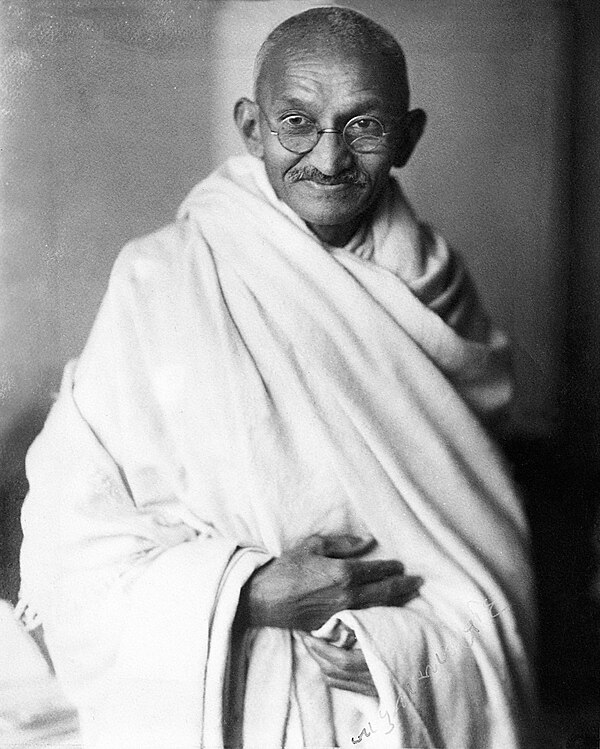
Mahatma Gandhi's assertion, "If I have the belief that I can do it, I shall surely acquire the capacity to do it even if I may not have it at the beginning," speaks to the transformative power of faith and self-belief. At its core, this quote emphasizes that the journey toward achieving our goals begins with a conviction in our own potential. It suggests that belief is not merely a passive state but an active force that can shape our abilities and outcomes, even when we feel ill-equipped at the outset.
This perspective invites us to consider the profound implications of faith in our lives. In a world often dominated by doubt and uncertainty, Gandhi's words remind us that the seeds of capability lie within us, waiting to be nurtured by our belief. This notion of faith as a precursor to action is not just a motivational platitude; it is a call to embrace the inherent potential within ourselves, urging us to step into the unknown with courage and determination.
The image / the metaphor
The imagery in Gandhi's quote evokes a sense of growth and evolution. The verbs "believe" and "acquire" suggest a dynamic process, where belief acts as the catalyst for developing capacity. This metaphor of growth is akin to a seed that, when planted in fertile soil, can sprout and flourish into a mighty tree. The initial lack of capacity is not a barrier but rather a stage in the journey, one that can be transcended through the power of belief.
In the speaker's tradition
Gandhi's insights are deeply rooted in the Hindu tradition, which emphasizes concepts such as dharma, or one's duty, and the transformative power of faith. In Hindu philosophy, the belief in one's ability to fulfill one's dharma is essential for personal and spiritual growth. This aligns with the idea of bhakti, or devotion, where faith in a higher purpose can empower individuals to transcend their limitations and achieve their potential.
Moreover, Gandhi's perspective resonates with the teachings found in the Bhagavad Gita, where Arjuna's initial doubts are transformed through Krishna's guidance. Krishna emphasizes the importance of self-belief and the realization of one's inherent potential. This dialogue illustrates that the journey toward self-actualization often begins with a shift in mindset, reinforcing the notion that belief is a powerful precursor to action and achievement.
Living the teaching
Consider a modern scenario where this teaching can be applied: a young professional facing the daunting challenge of a new job. Initially overwhelmed by self-doubt and the fear of inadequacy, this individual recalls Gandhi's words. By cultivating a belief in their ability to learn and adapt, they begin to approach their responsibilities with a sense of confidence. This shift in mindset not only enhances their performance but also opens doors to new opportunities, illustrating how belief can lead to the acquisition of skills and success.
In a different context, think about a relationship that has become strained due to misunderstandings. One partner may feel that their efforts to communicate are futile. However, by embracing the belief that positive change is possible, they can approach the situation with renewed hope and determination. This belief can foster patience and empathy, allowing for deeper connections and healing. Here, Gandhi's teaching serves as a reminder that faith in the possibility of transformation can lead to profound shifts in our interactions and relationships.
A reflection
As we contemplate Gandhi's profound insight, we are invited to reflect on our own beliefs and the capacities we wish to cultivate. What areas of our lives are we holding back due to self-doubt? In what ways can we nurture our belief in ourselves to unlock our potential? These questions encourage us to engage in a deeper exploration of our inner landscapes, fostering a commitment to personal growth and the realization of our capabilities.


