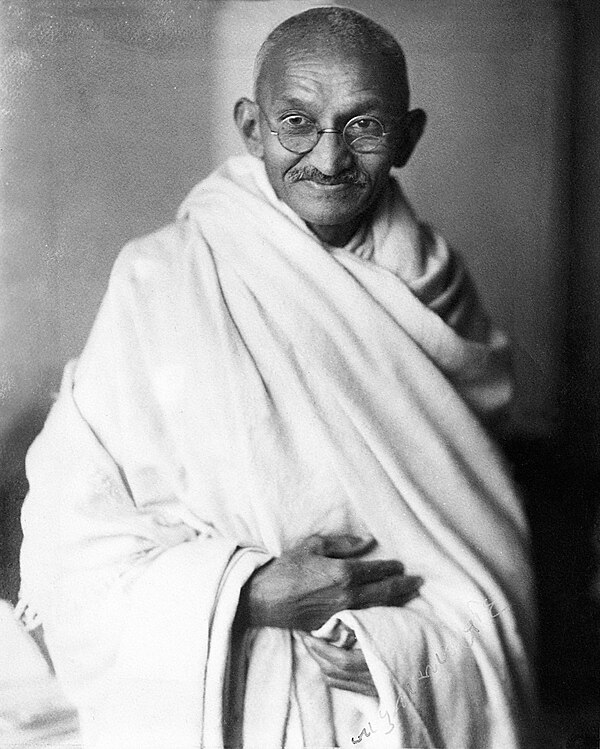
Mahatma Gandhi's assertion that "Faith is not something to grasp, it is a state to grow into" invites us to reconsider our understanding of faith itself. Rather than viewing faith as a static possession or a mere belief system to be clutched tightly, Gandhi encourages us to see it as a dynamic process of maturation. This perspective is vital in a world often characterized by uncertainty and doubt, where the temptation to cling to rigid beliefs can overshadow the transformative potential of faith. Embracing faith as a state of growth opens pathways to deeper understanding and connection with ourselves and the universe.
In this light, faith becomes less about the certainty of doctrine and more about the fluidity of experience. It is a journey rather than a destination, a continual unfolding that invites us to engage with the complexities of life. This understanding resonates deeply within the Hindu tradition, where the essence of spiritual practice is often about evolution and transformation. By recognizing faith as a state to grow into, we allow ourselves to be vulnerable, to question, and to seek, fostering a relationship with the divine that is alive and responsive.
The image / the metaphor
The imagery in Gandhi's quote is rich and evocative, suggesting a natural process akin to the growth of a plant. Just as a seed must be nurtured in the soil, watered, and exposed to sunlight to flourish, so too must our faith be cultivated through experience, reflection, and openness. The verbs "to grasp" and "to grow" contrast sharply; the former implies a sense of ownership and control, while the latter evokes a sense of surrender and patience. This distinction highlights the importance of allowing faith to develop organically rather than forcing it into a predefined mold.
Diving deeper into this metaphor, we can see that growth is inherently tied to the cycles of life—seasons of doubt, struggle, and renewal. Just as a tree may lose its leaves in winter only to bloom anew in spring, our faith may wane in challenging times but can also be revitalized through introspection and connection. This cyclical nature of growth underscores the idea that faith is not linear; it is a complex interplay of experiences that shape our understanding and relationship with the divine.
In the speaker's tradition
Gandhi's perspective on faith aligns beautifully with key concepts in Hindu philosophy, particularly the idea of dharma, or one's duty and path in life. Dharma emphasizes the importance of living in accordance with one's true nature and the greater cosmic order, suggesting that faith is not merely an individual endeavor but a communal and relational one. This interconnectedness echoes the notion of bhakti, or devotion, where faith is expressed through love and service to others, fostering a sense of unity and purpose.
Moreover, Gandhi's understanding of faith can be likened to the concept of kenosis, which refers to the self-emptying of one's will to allow for divine influence. In this light, faith becomes a practice of surrendering our preconceived notions and opening ourselves to the transformative power of the divine. The Bhagavad Gita, a foundational text in Hinduism, speaks to this surrender in its teachings on selfless action and devotion, reinforcing the idea that true faith is a journey of growth and discovery rather than a static belief.
Living the teaching
Consider a modern scenario where this teaching resonates: a person grappling with a significant life change, such as a career transition or the end of a relationship. In such moments, the instinct may be to cling to familiar beliefs or past identities, seeking comfort in what is known. However, embracing Gandhi's perspective invites this individual to view the situation as an opportunity for growth, to explore new possibilities, and to cultivate faith in their ability to navigate the unknown. This shift in mindset transforms the experience from one of fear to one of potential, allowing for a deeper engagement with life.
In the realm of relationships, this teaching can manifest in the way we approach conflicts or misunderstandings. Instead of grasping tightly to our viewpoints or seeking to be right, we can choose to grow into a state of empathy and understanding. This might involve listening deeply to the other person's perspective, allowing ourselves to be vulnerable, and recognizing that faith in the relationship requires patience and nurturing. By fostering an environment where both individuals can grow, the relationship itself can evolve into something richer and more meaningful.
A reflection
As we contemplate Gandhi's profound insight, we might ask ourselves: "In what areas of my life am I clinging to rigid beliefs, and how might I allow myself to grow into a more expansive understanding of faith?" This question invites us to reflect on our personal journeys, encouraging us to embrace the uncertainties and complexities of life as opportunities for growth. By engaging with this inquiry, we can cultivate a faith that is alive, dynamic, and deeply rooted in our experiences, ultimately leading us toward a more profound connection with ourselves and the world around us.


