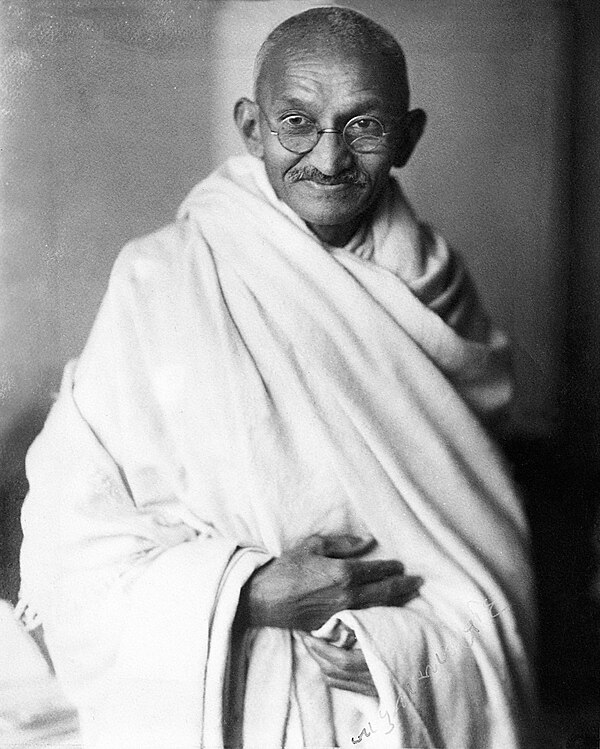
Mahatma Gandhi's assertion that "Civilization in the real sense of the term consists not in the multiplication, but in the deliberate and voluntary reduction of wants" invites us to reconsider our understanding of progress and fulfillment. In a world often driven by consumerism and the relentless pursuit of more, Gandhi's words challenge us to reflect on the essence of true civilization. This perspective is not merely an economic critique; it is a profound spiritual invitation to cultivate simplicity and intentionality in our lives.
By emphasizing a "deliberate and voluntary reduction of wants," Gandhi places the onus on individuals to consciously choose simplicity over excess. This choice is not about deprivation but about recognizing the deeper, often overlooked, joys that arise from living with less. In a society that equates worth with accumulation, Gandhi's vision of civilization becomes a radical call to redefine our values and priorities, urging us to seek fulfillment in connection, community, and inner peace rather than material possessions.
The image / the metaphor
The imagery in Gandhi's quote evokes a sense of intentionality and mindfulness. The verbs "multiplication" and "reduction" create a stark contrast, highlighting the tension between the external pressures to acquire and the internal call to simplify. This metaphor of reduction suggests a pruning of the excesses that clutter our lives, allowing for the flourishing of what truly matters. It conjures the image of a gardener who, through careful tending, removes the weeds to allow the flowers to bloom, illustrating that civilization is not merely about growth but about nurturing the essential.
Diving deeper into this metaphor, we can see that the act of reducing wants is akin to a spiritual practice of discernment. It invites us to examine our desires critically and to differentiate between what is necessary for our well-being and what is merely a fleeting want. This process of discernment is not only liberating but also transformative, as it encourages us to cultivate a deeper relationship with ourselves and the world around us. In this light, Gandhi's vision of civilization becomes a pathway to authenticity and deeper connection.
In the speaker's tradition
Moreover, Gandhi's thoughts can be likened to the teachings found in the Bhagavad Gita, where the importance of selfless action and detachment from the fruits of one's labor is emphasized. In Chapter 2, Verse 47, Krishna advises Arjuna to focus on his duty without attachment to outcomes, echoing Gandhi's sentiment that true civilization lies in the conscious choice to simplify our desires. This alignment with ancient texts underscores the timeless nature of Gandhi's wisdom and its relevance in our contemporary lives.
Living the teaching
In today's fast-paced world, the application of Gandhi's teaching can be seen in the growing movement towards minimalism. Many individuals are choosing to declutter their homes and lives, recognizing that the accumulation of possessions often leads to stress and dissatisfaction. By intentionally reducing their wants, they find greater clarity and peace, allowing them to focus on what truly enriches their lives—relationships, experiences, and personal growth. This modern scenario illustrates how Gandhi's vision of civilization can manifest in practical ways, encouraging a lifestyle that prioritizes quality over quantity.
Furthermore, this teaching can also be applied in the realm of relationships. In moments of conflict or misunderstanding, the urge to assert one's wants can lead to discord. However, by practicing the deliberate reduction of wants—such as letting go of the need to be right or to have the last word—individuals can foster deeper connections and understanding. This approach not only enhances personal relationships but also contributes to a more harmonious community, reflecting Gandhi's belief that true civilization is rooted in compassion and mutual respect.
A reflection
As we contemplate Gandhi's profound insight, we are invited to ask ourselves: What wants can I consciously reduce in my life to cultivate a deeper sense of fulfillment and connection? This question encourages introspection and invites us to explore the layers of our desires, challenging us to discern what truly nourishes our spirit. In embracing simplicity, we may discover that the essence of civilization lies not in what we possess, but in how we choose to live and relate to one another.


