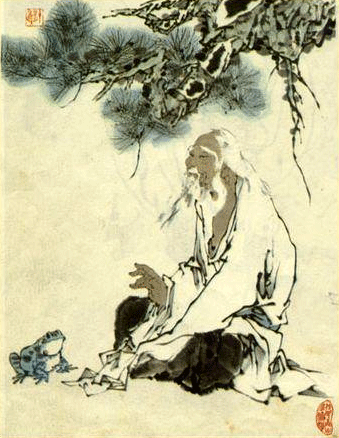
Chuang Tzu invites us to ponder the enigmatic nature of existence with his profound assertion: "Who knows their workings? Man's life is a coming-together of breath." This statement encapsulates the essence of life as a delicate interplay of forces, suggesting that our very being is woven from the threads of breath and the mysteries that surround it. In a world often dominated by the quest for control and understanding, this quote beckons us to embrace the unknown, to recognize the transient beauty of life, and to find solace in the rhythm of our breath.
As we delve deeper into Chuang Tzu's wisdom, we uncover layers of meaning that resonate with the core of Taoist philosophy. The notion of breath transcends mere physicality; it symbolizes the life force that animates us and connects us to the universe. By acknowledging the mystery of our existence, we are invited to cultivate a sense of humility and wonder, recognizing that life is not merely a series of events to be dissected but a profound experience to be lived fully. In this light, Chuang Tzu's words serve as a gentle reminder to surrender to the flow of life, to breathe deeply, and to embrace the unknown with open hearts.
The image / the metaphor
At first glance, Chuang Tzu's quote evokes a vivid image of breath as the essence of life itself. The phrase "coming-together of breath" suggests a dynamic process, where breath is not a static entity but a continuous flow that binds us to our existence. The use of the word "workings" implies a complexity that is often beyond our comprehension, hinting at the intricate interplay of forces that shape our lives. This imagery invites us to feel the rhythm of our breath, to recognize it as a vital thread that weaves through our experiences, connecting us to ourselves and to the world around us.
Delving deeper into the metaphor, we find that breath represents more than just the physical act of inhaling and exhaling; it embodies the very essence of being. In many spiritual traditions, breath is seen as a bridge between the material and the spiritual, a conduit through which we can access deeper states of awareness. Chuang Tzu's emphasis on the mystery of life's workings encourages us to let go of the need for certainty and to embrace the fluidity of existence. In doing so, we can cultivate a sense of presence and mindfulness, allowing each breath to ground us in the here and now.
In the speaker's tradition
Chuang Tzu's insights are deeply rooted in the tradition of Taoism, which emphasizes the interconnectedness of all things and the importance of aligning oneself with the natural flow of the universe. Central to this philosophy is the concept of "wu wei," or effortless action, which encourages individuals to move with the currents of life rather than against them. This aligns beautifully with the idea that life is a "coming-together of breath," suggesting that by surrendering to the flow of existence, we can find harmony and balance in our lives.
In the context of Taoist texts, the "Zhuangzi" serves as a rich source of wisdom that explores the nature of reality and the importance of embracing uncertainty. One notable passage describes the idea of "sunyata," or emptiness, which invites us to recognize the inherent fluidity of existence. Just as breath is both a vital force and a transient phenomenon, so too is life itself—a series of moments that arise and dissolve, inviting us to engage with the present without clinging to the past or fearing the future.
Living the teaching
Consider a modern scenario where this teaching resonates: a busy professional navigating the demands of work and personal life. In the midst of deadlines and responsibilities, one might feel overwhelmed, striving to control every aspect of their existence. However, by embracing Chuang Tzu's perspective, this individual can learn to pause, take a deep breath, and reconnect with the present moment. This simple act of breathing can serve as a reminder that life is not solely about achieving goals but about experiencing the richness of each moment as it unfolds.
In the realm of relationships, Chuang Tzu's wisdom can also illuminate the way we engage with others. Imagine a conflict arising between friends, where misunderstandings and emotions run high. By embodying the teaching of breath, one can approach the situation with a sense of calm and openness, allowing space for dialogue and understanding. In this way, the act of breathing becomes a tool for fostering connection and compassion, reminding us that our interactions are part of the intricate tapestry of life that weaves us together.
A reflection
As we contemplate Chuang Tzu's profound assertion, we are invited to reflect on the nature of our own existence. How often do we find ourselves caught in the web of trying to understand and control our lives? In what ways can we cultivate a deeper awareness of our breath and the mysteries that surround us? As you ponder these questions, consider how embracing the unknown can lead to a more profound appreciation of the beauty and complexity of life.


