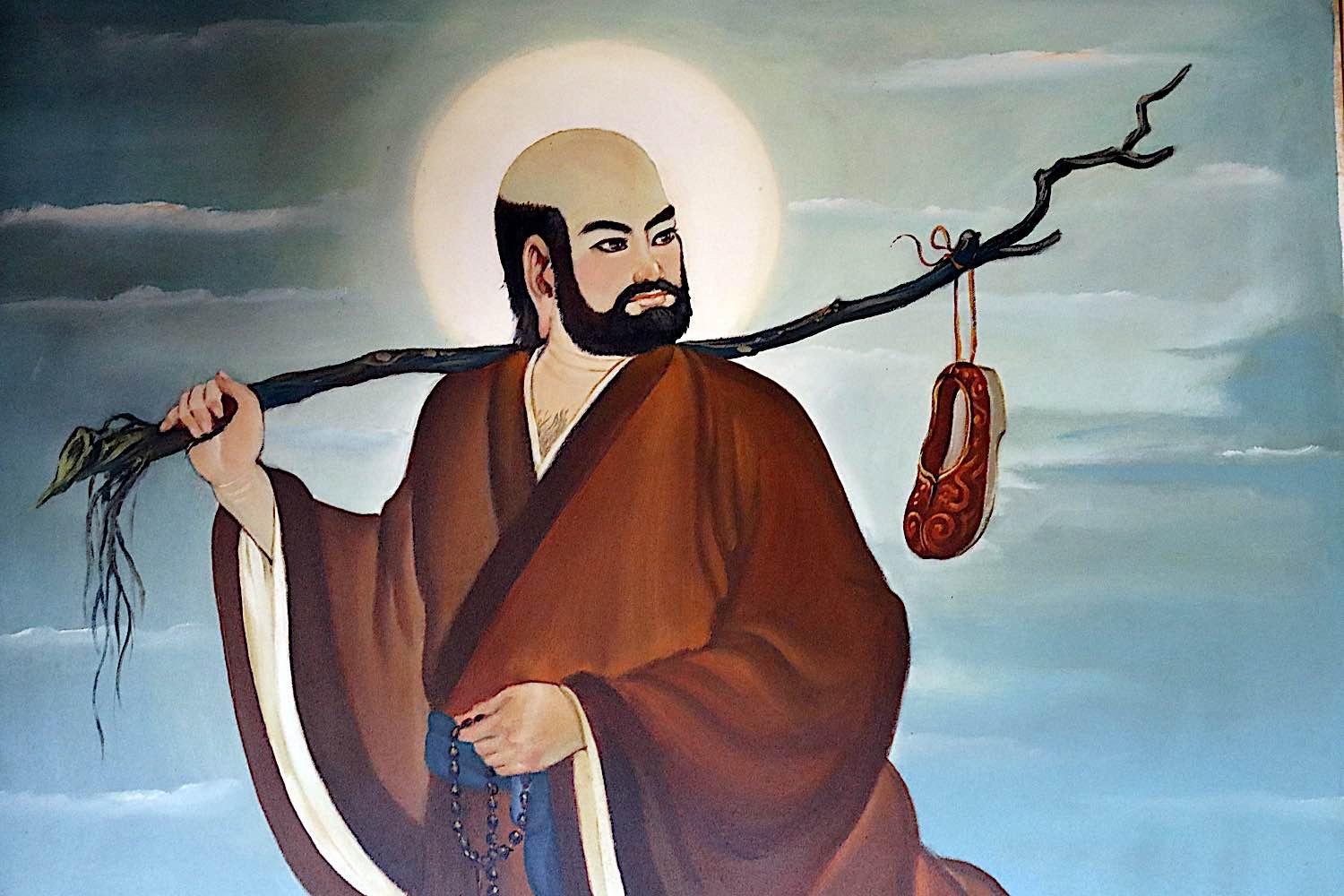
Beyond the Words: The Essence of Bodhidharma's Teaching
Bodhidharma's assertion, "Yet the scripture is not it," invites us to look beyond the written word, urging us to seek the essence of truth that lies beneath the surface of texts. This statement challenges the very foundation of how we often engage with spiritual teachings, suggesting that the heart of wisdom cannot be confined to scripture alone. In an age where information is abundant yet often superficial, this teaching beckons us to explore deeper meanings and personal experiences that transcend mere words.
In a world where doctrines and dogmas can sometimes overshadow the lived experience of spirituality, Bodhidharma's words resonate with profound urgency. They remind us that while scriptures can guide us, they are not the ultimate destination. The essence of spiritual truth is found in the practice of awareness, presence, and direct experience, which often eludes those who cling too tightly to textual interpretations. This teaching invites us to cultivate a relationship with the ineffable, urging us to engage with our own inner wisdom rather than relying solely on external sources.
The image / the metaphor
The phrase "Yet the scripture is not it" evokes a striking image of a map versus the terrain it represents. Just as a map can guide us through unfamiliar landscapes, scripture offers insights and directions for our spiritual journeys. However, the map is not the journey itself; it is merely a tool. Bodhidharma's choice of words emphasizes the importance of direct experience over intellectual understanding, suggesting that true insight arises from our engagement with life rather than from passive consumption of texts.
Diving deeper into this metaphor, we can see that scriptures, while valuable, can become obstacles if we mistake them for the ultimate truth. They can serve as a lens through which we view our experiences, yet they can also distort our perception if we become too attached to their interpretations. Bodhidharma's teaching encourages us to embrace the fluidity of experience, reminding us that the essence of spiritual awakening is found in the present moment, beyond the confines of written words.
In the speaker's tradition
Situated within the Zen tradition, Bodhidharma's teaching reflects core concepts such as *sunyata* (emptiness) and *prajna* (wisdom). Zen emphasizes direct experience and the realization that all phenomena are transient and interconnected. The notion that "the scripture is not it" aligns with the Zen practice of *koan*, where students are encouraged to transcend logical reasoning and engage with the essence of their being. This teaching invites practitioners to let go of rigid interpretations and to experience the world directly, fostering a deeper understanding of their own nature.
Living the teaching
Consider a modern scenario where someone is grappling with the teachings of a spiritual text. They may find themselves memorizing verses, attending lectures, and engaging in discussions, yet still feel a sense of disconnection from their own experience. Bodhidharma's teaching serves as a gentle reminder that true understanding arises not from intellectual mastery but from the lived experience of presence and awareness. In this context, the individual might benefit from stepping away from the text, engaging in meditation, or simply observing their thoughts and feelings without judgment, allowing them to connect with their inner wisdom.
In relationships, this teaching can manifest in the way we communicate and connect with others. Often, we may rely on established norms or scripts when navigating interactions, leading to misunderstandings or superficial connections. By embodying Bodhidharma's insight, we can learn to listen deeply and respond authentically, moving beyond the confines of expectation and embracing the essence of genuine connection. This practice of presence fosters deeper intimacy and understanding, allowing us to engage with others in a way that transcends mere words.
A reflection
As we contemplate Bodhidharma's profound statement, we are invited to reflect on our own relationship with scripture and teachings. Are we clinging to words and concepts, or are we open to the deeper truths they point toward? In what ways can we cultivate a practice that emphasizes direct experience over intellectual understanding? This inquiry invites us to explore the essence of our spiritual journeys, encouraging us to seek the truth that lies beyond the written word.
