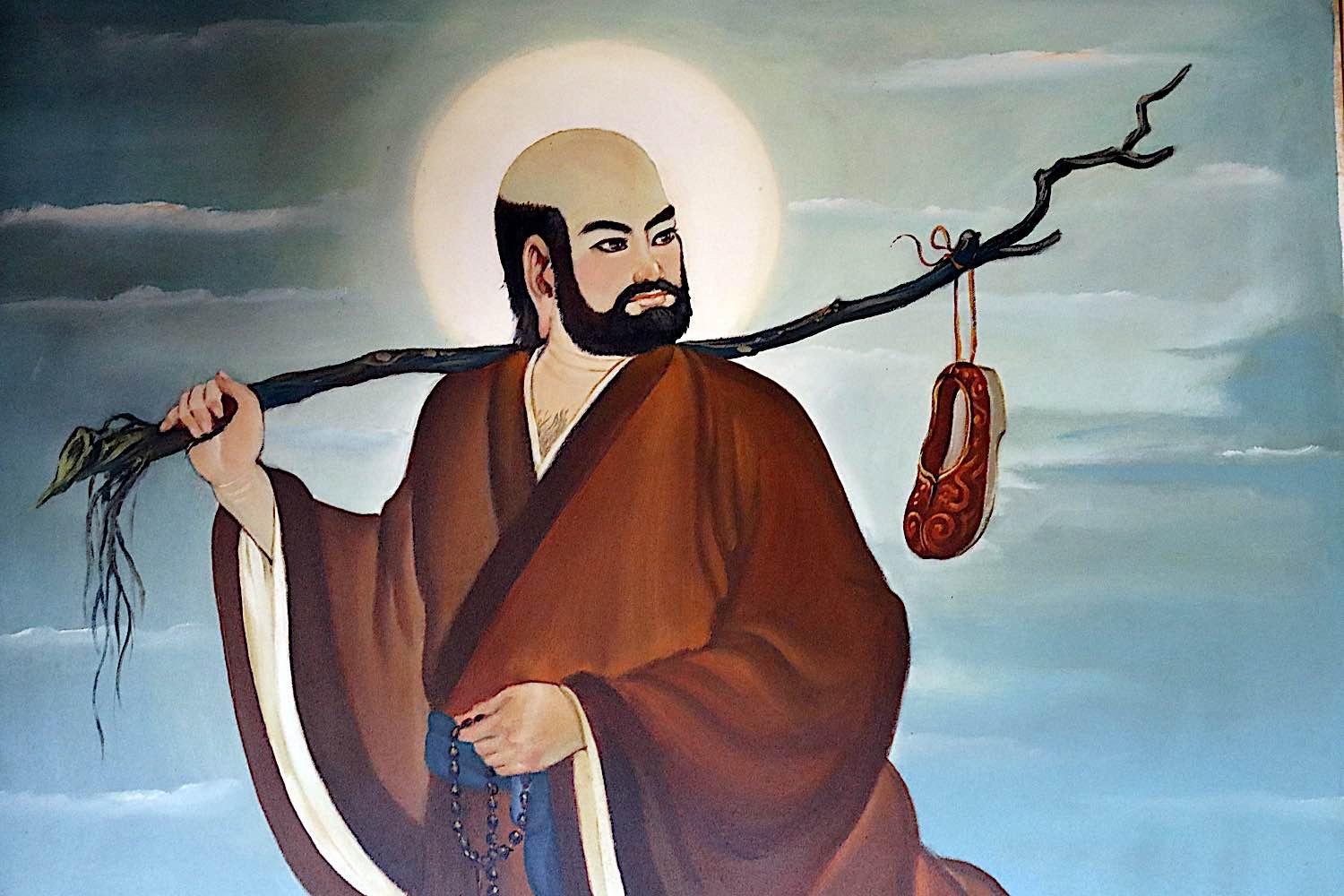
Bodhidharma's assertion, "Wherever you sit, that is where you are," invites us to embrace the profound simplicity of presence. This statement serves as a reminder that our physical location is not merely a backdrop but a vital aspect of our experience. In a world often characterized by distraction and disconnection, this teaching implores us to cultivate awareness of our current state, urging us to fully inhabit our lives rather than perpetually seeking elsewhere for fulfillment or meaning.
At its core, this quote challenges the tendency to escape into the future or dwell in the past, emphasizing the importance of being fully present in the here and now. It beckons us to recognize that our true existence unfolds in the present moment, regardless of external circumstances. By acknowledging where we are—both physically and mentally—we can begin to engage with life more authentically, fostering a deeper connection to ourselves and the world around us.
The image / the metaphor
The imagery in Bodhidharma's quote is strikingly vivid, encapsulating the essence of being rooted in the present. The act of sitting symbolizes a state of stillness and contemplation, suggesting that our physical posture can reflect our mental and spiritual state. The verb "sit" evokes a sense of grounding, inviting us to pause and take stock of our surroundings, our thoughts, and our emotions. It implies that wherever we find ourselves—whether in a bustling city, a quiet room, or amidst nature—we have the opportunity to engage with our immediate reality.
Diving deeper into the metaphor, the notion of "wherever you sit" transcends the literal act of sitting. It speaks to the idea of acceptance and surrender to the present moment. In Zen practice, this acceptance is crucial; it encourages us to let go of our preconceived notions of where we should be or what we should be doing. Instead, we are invited to embrace our current situation, recognizing that it is within this very moment that we can discover clarity, insight, and a sense of belonging.
In the speaker's tradition
Bodhidharma, the legendary figure credited with bringing Zen Buddhism to China, emphasizes the importance of direct experience and mindfulness. His teachings often revolve around concepts such as dharma, the inherent nature of reality, and sunyata, or emptiness, which invites us to release attachments and preconceived notions. In this context, "wherever you sit" can be understood as an invitation to engage with the dharma of the present moment, recognizing that each experience is a manifestation of the interconnectedness of all things.
Moreover, Bodhidharma's teachings resonate with the concept of prajna, or wisdom, which arises from direct engagement with our experiences. In the "Wake-up Sermon," he encourages practitioners to awaken to their true nature by fully inhabiting their present circumstances. This aligns with the Zen practice of zazen, or seated meditation, where practitioners learn to observe their thoughts and feelings without attachment, ultimately leading to a deeper understanding of self and reality.
Living the teaching
Consider a modern scenario where this teaching can be applied: imagine a busy professional caught in the whirlwind of deadlines and meetings. In this context, the reminder to be present becomes a powerful tool for managing stress and enhancing productivity. By consciously choosing to "sit" in each moment—whether during a meeting, a conversation, or even while commuting—this individual can cultivate mindfulness, allowing them to engage more fully with their tasks and relationships, rather than being lost in a haze of distraction.
Another application of this teaching can be found in personal relationships. Picture a moment of conflict between partners, where emotions run high and communication falters. By embodying the essence of Bodhidharma's quote, each person can pause to acknowledge their feelings and the present situation, fostering a space for understanding and connection. This practice of presence not only diffuses tension but also deepens intimacy, as both individuals learn to meet each other where they truly are, rather than where they wish the other to be.
A reflection
As we contemplate Bodhidharma's profound words, we are invited to ask ourselves: "In what ways can I cultivate a deeper sense of presence in my daily life?" This question encourages us to explore the myriad opportunities for mindfulness that exist in each moment, prompting us to reflect on our habits, distractions, and the ways we might resist the present. By embracing this inquiry, we open ourselves to the transformative power of being fully present, allowing us to experience life with greater clarity, connection, and authenticity.
