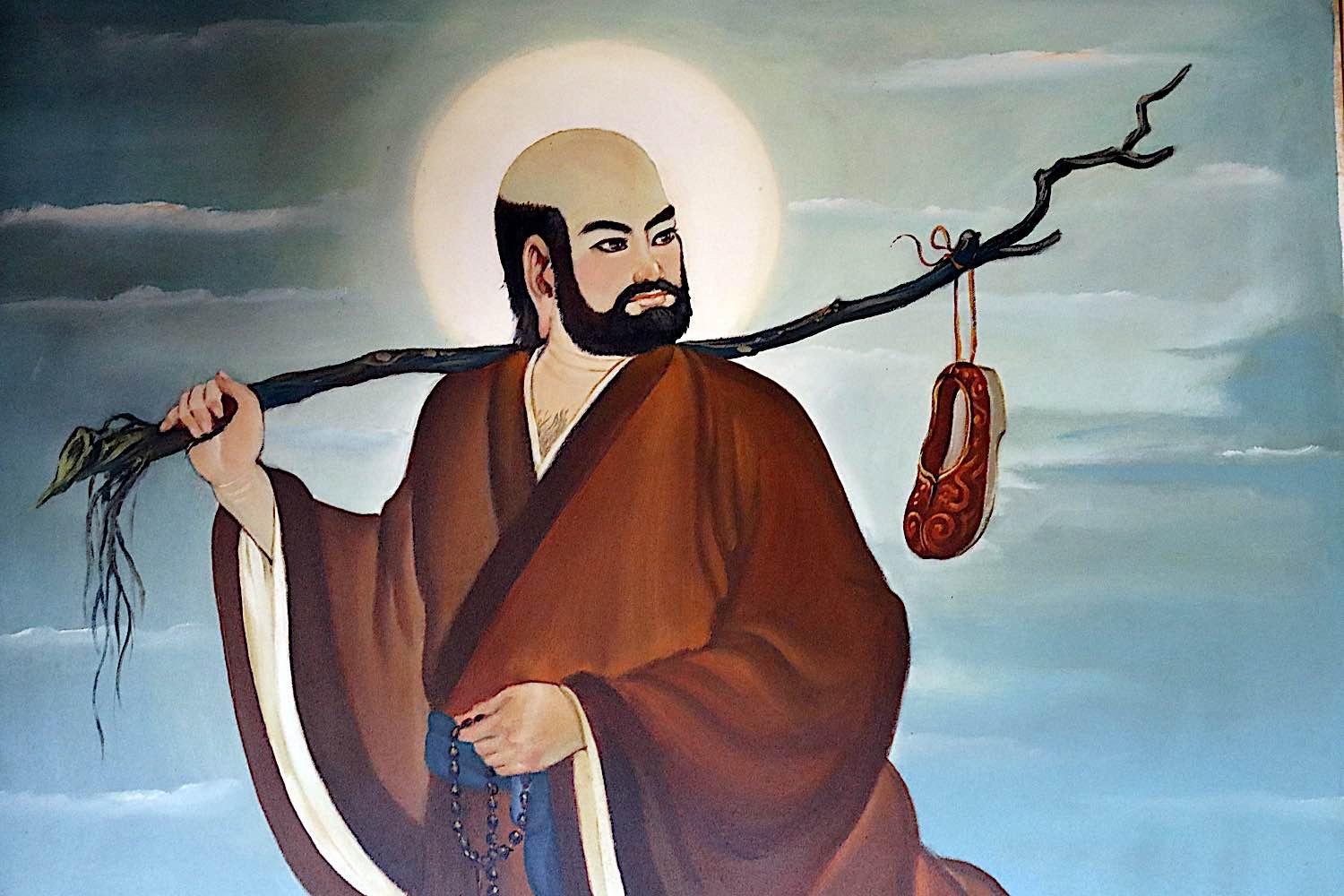
Teaching on essence
“This is the whole teaching.”
Bodhidharma
Bodhidharma

The Essence of Teaching: A Journey into Completeness

Bodhidharma's succinct declaration, "This is the whole teaching," invites us to explore the depths of Zen practice and its essence. In a world often cluttered with complexity and distraction, this statement serves as a reminder of the simplicity and completeness inherent in the teachings of Zen. It challenges us to distill our understanding of spirituality to its core, urging us to recognize that the essence of practice is not found in endless elaboration but in the direct experience of reality itself.

As we delve deeper into this quote, we uncover layers of meaning that resonate with the heart of Zen philosophy. Bodhidharma, the legendary figure credited with bringing Zen to China, emphasizes a teaching that transcends words and concepts. This statement is not merely a summary of teachings but an invitation to experience the fullness of existence, to engage with life in a way that reveals the interconnectedness of all things. In this light, we are called to reflect on what it means to embody this teaching in our daily lives.

The image / the metaphor

In the speaker's tradition

Living the teaching

A reflection

Bodhidharma
ArtistBodhidharma

Semi-legendary 5th-6th century Buddhist monk who carried Chan (Zen) Buddhism from India to China. Famous for nine years of wall-gazing meditation at Shaolin and the four-line summa…

Got Questions?

Frequently Asked Questions

Bodhidharma's statement emphasizes the simplicity and completeness of Zen teachings, suggesting that the essence of spiritual practice is found not in complex doctrines but in direct experience. It invites practitioners to recognize that the entirety of the teaching is accessible in the present moment.
You can apply this teaching by cultivating mindfulness in your daily activities, recognizing that each moment holds the potential for profound insight. Instead of getting lost in distractions, focus on being fully present, allowing the essence of your experiences to unfold.
Yes, the concept of wholeness and direct experience is prevalent in many Zen texts, including the Heart Sutra, which emphasizes the emptiness of all phenomena. Both Bodhidharma's teachings and these texts encourage practitioners to transcend dualistic thinking and embrace the fullness of existence.
Dharma refers to the teachings and principles of Buddhism, while prajna signifies the wisdom that arises from direct experience of those teachings. In the context of Bodhidharma's quote, prajna is the realization that the essence of the teaching is found in the lived experience of the present moment.
Mindfulness meditation is a powerful practice that supports living Bodhidharma's teaching. By focusing on the breath and observing thoughts without attachment, practitioners can cultivate a deeper awareness of the present moment, allowing them to experience the wholeness of life.
Sunyata, or emptiness, relates closely to Bodhidharma's teaching by highlighting the interconnectedness of all things. Recognizing the emptiness of fixed concepts allows practitioners to experience the fullness of life without the constraints of dualistic thinking.

Continue Reading

Related Quotes

View All