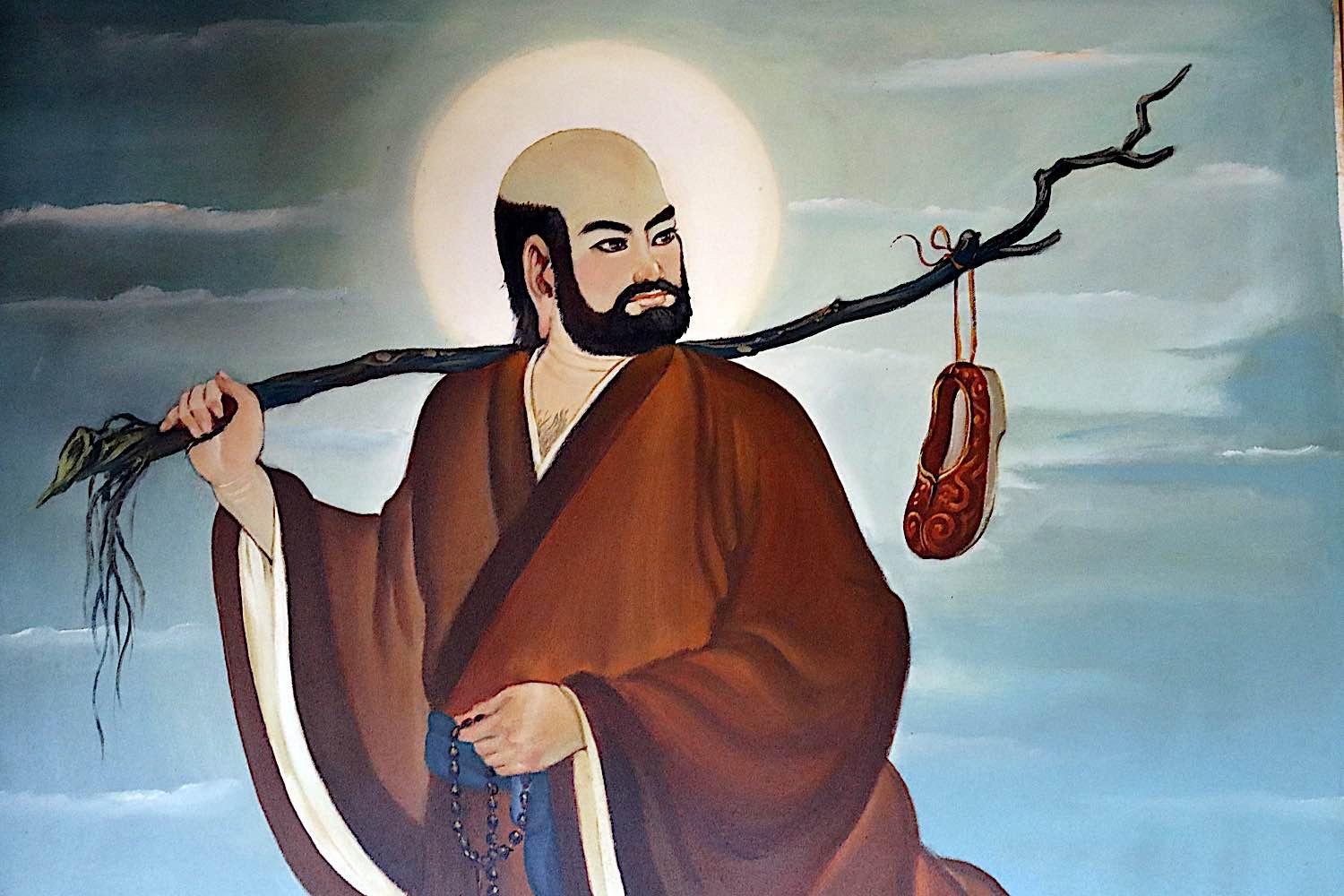
The Art of Letting Go: Embracing Stillness in a Chaotic World
Bodhidharma's succinct directive, "Stop reading; stop arguing; stop chasing," invites us to pause and reflect on the frenetic pace of modern life. In a world saturated with information, debate, and relentless pursuit, this quote serves as a profound reminder of the necessity of stillness. It beckons us to consider the value of ceasing our habitual distractions and the deeper implications of such a cessation. This teaching is not merely about stopping; it is about the transformative power of stillness and the clarity that arises from it.
In a culture that often equates busyness with productivity, Bodhidharma's words challenge us to reconsider our relationship with activity and engagement. The act of stopping is not a retreat from life but an invitation to engage with it more authentically. By pausing, we create space for introspection and insight, allowing us to discern what truly matters. This teaching resonates deeply within the Zen tradition, where the practice of meditation and mindfulness emphasizes the importance of being present and aware, free from the incessant noise of the mind.
The image / the metaphor
The imagery in Bodhidharma's quote is striking in its simplicity yet profound in its implications. The verbs "stop reading," "stop arguing," and "stop chasing" evoke a sense of urgency to disengage from the external stimuli that often dominate our lives. Each action represents a common human tendency: the pursuit of knowledge, the desire for validation through debate, and the relentless chase for goals or desires. By urging us to stop, Bodhidharma highlights the importance of turning inward, suggesting that true understanding and fulfillment cannot be found in external pursuits.
Diving deeper into the metaphor, we can see that each of these actions—reading, arguing, and chasing—can be seen as distractions that prevent us from experiencing the present moment fully. They symbolize the mind's tendency to wander, to seek satisfaction outside of itself. In Zen practice, this wandering is often referred to as "monkey mind," a state where the mind jumps from thought to thought without rest. Bodhidharma's call to stop is an invitation to quiet this restless mind, to cultivate a sense of inner peace that arises when we cease our habitual patterns of distraction.
In the speaker's tradition
Bodhidharma, the legendary founder of Zen Buddhism, emphasizes the significance of direct experience over intellectual understanding. Within the Zen tradition, concepts such as dharma (the path of truth), sunyata (emptiness), and prajna (wisdom) are central to the practice. By urging us to stop our incessant activities, Bodhidharma aligns with the Zen principle of "no-mind" (wu xin), where one transcends the dualities of thought and experience to encounter reality as it is. This state of being allows for a deeper connection with the essence of life, free from the distortions of the ego.
In the context of Bodhidharma's teachings, we can draw parallels to the Heart Sutra, which speaks of the emptiness of all phenomena. The Sutra reminds us that clinging to concepts and forms leads to suffering. By stopping our reading, arguing, and chasing, we can begin to experience the truth of sunyata, recognizing that our attachments to ideas and outcomes are what bind us. This realization is the first step toward liberation, allowing us to embrace the present moment with clarity and openness.
Living the teaching
Consider a modern scenario where this teaching finds resonance: the overwhelming flood of information we encounter daily through social media and news outlets. Many of us find ourselves scrolling endlessly, seeking validation or the latest updates, often leading to feelings of anxiety and disconnection. By applying Bodhidharma's teaching, we might choose to take a break from our screens, allowing ourselves the space to breathe and reflect. In this stillness, we can reconnect with our inner selves, gaining clarity about what truly matters in our lives.
This teaching can also be applied in the context of relationships. Imagine a moment of conflict with a loved one, where emotions run high, and arguments ensue. Instead of continuing the cycle of disagreement, one might pause, embodying Bodhidharma's directive to stop arguing. This pause allows for reflection and the opportunity to approach the situation with compassion and understanding. By stepping back, we create a space for deeper connection and healing, moving beyond the surface-level disputes to engage with the heart of the matter.
A reflection
As we contemplate Bodhidharma's invitation to "stop reading; stop arguing; stop chasing," we are called to reflect on our own lives. What distractions are we clinging to that prevent us from experiencing the present moment fully? In what ways can we cultivate stillness amidst the chaos of our daily routines? These questions invite us to explore the depths of our own experience, encouraging us to embrace the transformative power of stopping and the clarity that arises from it.
