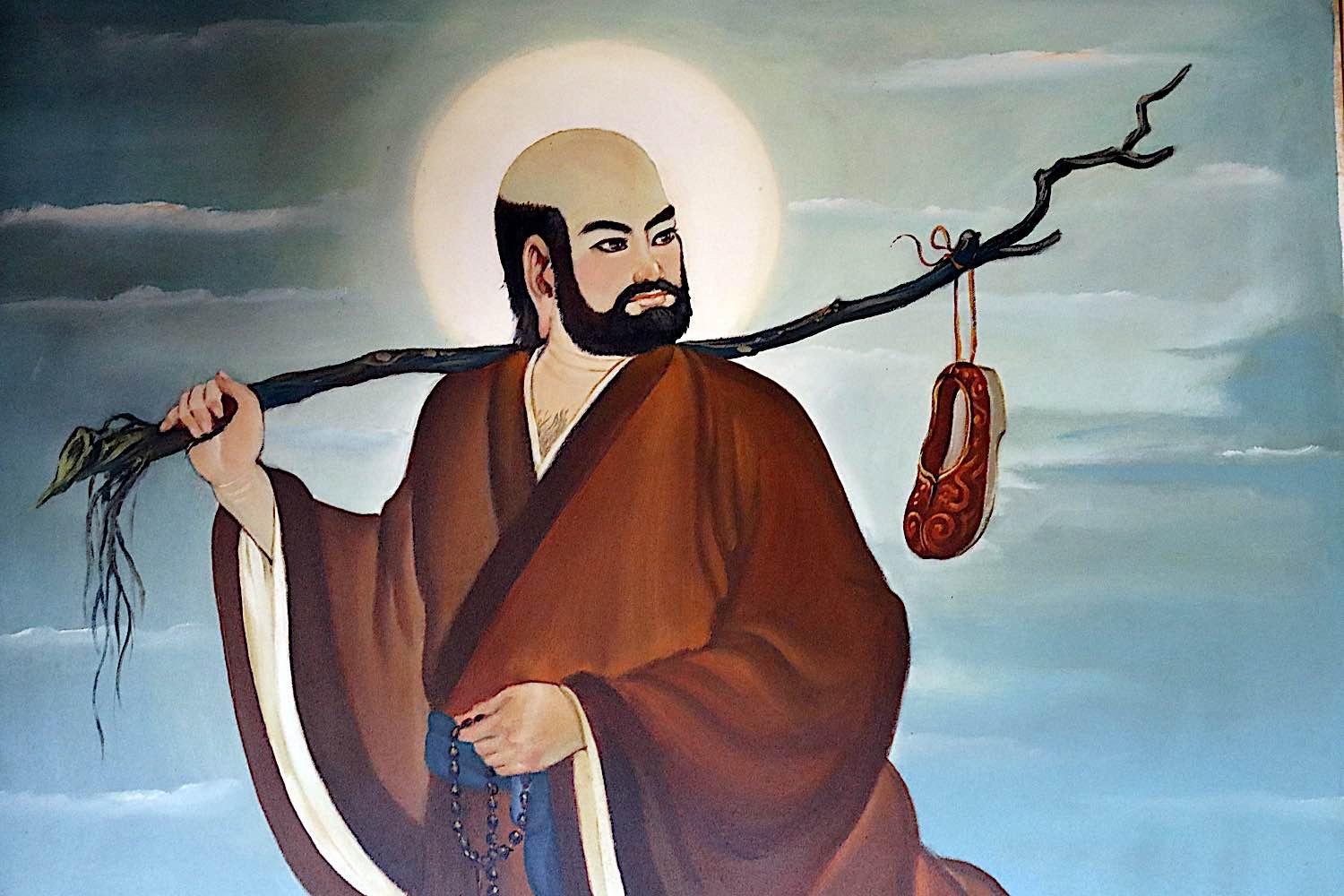
Seeing the Essence: A Journey into Self-Realization
Bodhidharma's succinct exhortation, "Just see your nature — that is enough," invites us to engage in a profound exploration of our own essence. In a world often preoccupied with external validation and distractions, this quote serves as a gentle reminder that the key to understanding lies within ourselves. The stakes are high; to truly see our nature is to embark on a journey that can lead to liberation from the illusions that bind us. It is a call to introspection, urging us to peel back the layers of conditioning and societal expectations to uncover the truth of who we are.
Delving deeper, we find that this invitation is not merely about observation but about a transformative realization. Bodhidharma, the legendary figure credited with bringing Zen to China, emphasizes that the act of seeing is not passive; it is an active engagement with our inner landscape. This seeing transcends mere perception; it is an awakening to the fundamental nature of our being, a recognition that can shift our understanding of existence itself. In this light, the quote becomes a beacon, illuminating the path toward self-discovery and authentic living.
The image / the metaphor
The imagery in Bodhidharma's quote is strikingly simple yet profoundly rich. The verb "see" suggests an active engagement, a conscious act of looking beyond the surface. It evokes a sense of clarity and awareness, as if we are being invited to peel back the layers of our existence to reveal the core of our being. The term "nature" speaks to the essence of who we are, untouched by external influences or societal constructs. This duality of seeing and nature creates a dynamic interplay, where the act of observation becomes a pathway to understanding our true self.
In the speaker's tradition
To understand Bodhidharma's teaching, we must situate it within the rich tapestry of Zen Buddhism. Central to this tradition is the concept of dharma, which encompasses the teachings and the nature of reality itself. Bodhidharma's emphasis on seeing one's nature aligns with the Zen practice of prajna, or wisdom, which arises from direct experience rather than intellectual understanding. This notion of direct insight is crucial; it invites practitioners to engage with their own experience rather than relying solely on scriptures or doctrines.
In the context of Bodhidharma's teachings, we can draw parallels to the Heart Sutra, which articulates the concept of sunyata, or emptiness. Just as the Heart Sutra reveals that form is emptiness and emptiness is form, Bodhidharma's call to see our nature encourages us to recognize that our essence is not separate from the world around us. This realization can lead to a profound sense of liberation, as we begin to understand that our true nature is not confined to the ego or the transient aspects of life.
Living the teaching
Consider a modern scenario where this teaching can be applied: a busy professional grappling with the pressures of work and societal expectations. In the midst of deadlines and responsibilities, the individual may feel disconnected from their true self, lost in the noise of external demands. By taking a moment to pause and reflect on Bodhidharma's words, they might find an opportunity to reconnect with their essence. This could manifest as a simple practice of mindfulness, where they take time each day to sit in silence, allowing themselves to observe their thoughts and feelings without judgment. In this space of stillness, they may begin to see their nature more clearly, recognizing that their worth is not defined by their productivity.
Another application of this teaching can be found in interpersonal relationships. Imagine a moment of conflict between two friends, where misunderstandings and hurt feelings cloud their communication. By embodying Bodhidharma's invitation to see their nature, each person can approach the situation with a sense of openness and vulnerability. Instead of reacting defensively, they might take a step back to reflect on their own feelings and motivations, fostering a deeper understanding of themselves and each other. This practice of self-awareness can transform the dynamic, allowing for healing and connection to emerge from the depths of their true selves.
A reflection
As we contemplate Bodhidharma's profound invitation, we are left with a contemplative question to ponder: What does it mean for me to truly see my nature? This inquiry invites us to explore the layers of our identity, to question the beliefs and narratives we hold about ourselves. In the stillness of reflection, we may uncover insights that lead us closer to our authentic selves, revealing the beauty and complexity of our existence. In this journey of self-discovery, may we find the courage to embrace our true nature and live from that place of authenticity.
