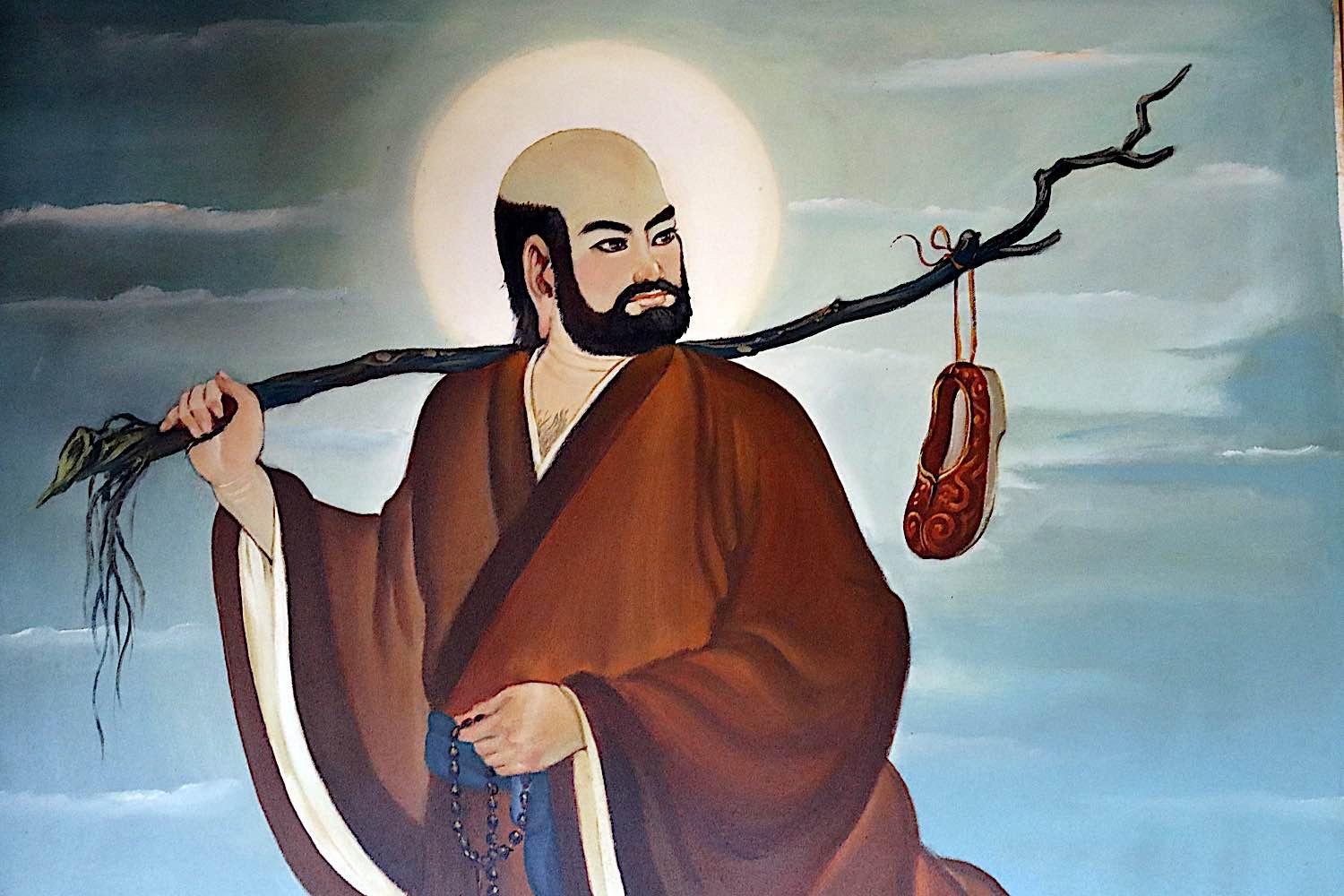
Finding Solace Within: The Wisdom of Self-Reliance
Bodhidharma's profound exhortation, "Be your own refuge," invites us to cultivate an inner sanctuary, a space of autonomy and self-reliance. In a world often fraught with uncertainty and external pressures, this teaching resonates deeply, urging us to turn inward for solace and strength. The stakes are high; our ability to navigate life's challenges hinges on our capacity to trust ourselves and our inner resources. This quote serves as a reminder that true refuge is not found in external circumstances but within the depths of our own being.
As we delve deeper into this wisdom, we recognize that Bodhidharma's call to self-reliance is not merely about independence; it is an invitation to engage with our own consciousness. It challenges us to confront our fears, insecurities, and doubts, transforming them into opportunities for growth. By becoming our own refuge, we learn to embrace the complexities of our existence, fostering resilience and a profound sense of peace that is unshakeable by external turmoil.
The image / the metaphor
The imagery of "being your own refuge" evokes a sense of sanctuary, a safe haven that exists within oneself. The verb "be" emphasizes a state of existence rather than a mere action, suggesting that this refuge is not something to be sought after but rather a realization of what is already present within us. The metaphor speaks to the idea of inner strength and the capacity to cultivate a space of calm amidst the chaos of life. It invites us to visualize our inner landscape as a nurturing environment where we can retreat, reflect, and rejuvenate.
In the speaker's tradition
Situated within the Zen tradition, Bodhidharma's teaching resonates with key concepts such as dharma and prajna, which emphasize the importance of understanding one's true nature and the nature of reality. Dharma, in this context, refers to the path of truth and ethical living, while prajna signifies the wisdom that arises from direct experience and insight. By encouraging us to be our own refuge, Bodhidharma aligns with the Zen practice of self-inquiry and mindfulness, urging us to look within for guidance and understanding rather than relying solely on external authorities.
In the context of Zen texts, this teaching echoes the sentiments found in the Heart Sutra, which speaks of sunyata, or emptiness, as a fundamental aspect of existence. Just as the Heart Sutra invites us to recognize the interdependent nature of all things, Bodhidharma's call to self-reliance encourages us to understand that our true refuge lies not in the transient and impermanent aspects of life but in the profound stillness and clarity that arises from within. This alignment with the essence of Zen practice underscores the importance of cultivating an intimate relationship with oneself as a pathway to liberation.
Living the teaching
Consider a modern scenario where this teaching might resonate: a person facing a significant life transition, such as a career change or the end of a relationship. In such moments, it is easy to feel lost or overwhelmed, seeking reassurance from friends, family, or societal expectations. However, Bodhidharma's wisdom reminds us that the true refuge lies within. By turning inward, reflecting on our values, desires, and fears, we can navigate these transitions with a sense of clarity and purpose, trusting in our ability to make choices that align with our authentic selves.
Another application of this teaching can be found in the realm of relationships. When conflicts arise, it is tempting to seek validation or resolution from others, often leading to frustration or disappointment. Instead, by embodying the principle of being our own refuge, we can cultivate a sense of inner peace that allows us to approach conflicts with compassion and understanding. This self-reliance fosters healthier communication and emotional resilience, enabling us to engage with others from a place of strength rather than dependence.
A reflection
As we contemplate Bodhidharma's profound invitation to "be your own refuge," we are called to reflect on our relationship with ourselves. In what ways do we seek external validation or support, and how might we cultivate a deeper sense of self-reliance? Consider the moments in your life when you have felt most at peace or empowered; what inner resources did you draw upon during those times? This contemplation invites us to explore the depths of our own being, recognizing that the refuge we seek is already within us, waiting to be discovered.
