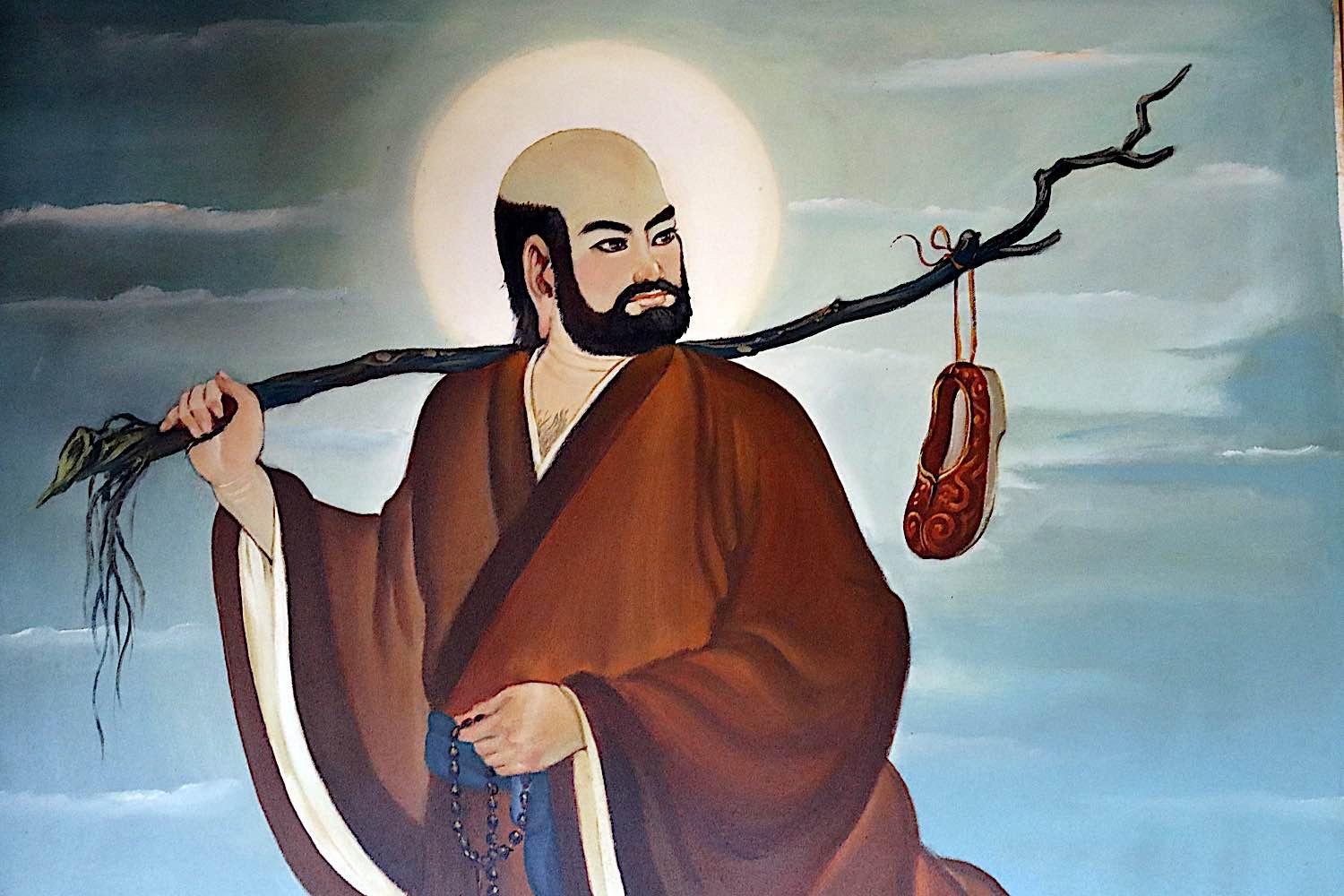
The Weight of Truth: Beyond Rumor
Bodhidharma's assertion, "All else is rumor," invites us to confront the essence of our understanding and experience. In a world saturated with opinions, interpretations, and distractions, this statement serves as a clarion call to seek the truth that lies beyond the noise. It compels us to examine the nature of our beliefs and the sources from which they arise, urging us to cultivate a direct experience of reality rather than relying on hearsay. This exploration is not merely philosophical; it is a matter of spiritual urgency, as the clarity of our perception shapes our existence.
Delving deeper into Bodhidharma's words reveals a profound invitation to engage with life authentically. The term "rumor" suggests a layer of distortion, a veil that obscures the truth. In Zen practice, this distortion can manifest as attachments to thoughts, narratives, and societal constructs that divert us from direct experience. To heed Bodhidharma's call is to embark on a journey of discernment, where we learn to differentiate between the ephemeral chatter of the mind and the still, clear voice of direct experience. This journey is essential for anyone seeking to awaken to the fullness of life.
The image / the metaphor
The phrase "All else is rumor" conjures an image of a vast landscape obscured by fog, where clarity is lost amidst the whispers of the wind. The choice of the word "rumor" implies a transient quality, suggesting that what we often accept as truth is merely a shadow of reality, shaped by perception and interpretation. This imagery evokes a sense of urgency; it beckons us to pierce through the veil of illusion and seek the unadulterated essence of our experiences. The verbs in this statement—"is" and "rumor"—create a stark contrast between the solidity of truth and the fluidity of hearsay, emphasizing the need for a grounded understanding.
Diving deeper into this metaphor, we recognize that rumors thrive in environments of uncertainty and fear. They flourish when we are disconnected from our own experiences and rely on external validation. Bodhidharma's words challenge us to cultivate a discerning mind, one that can sift through the noise and recognize the transient nature of thoughts and beliefs. In this sense, the metaphor serves as a reminder that the path to enlightenment is not paved with assumptions but with the courage to confront our own perceptions and the willingness to embrace the unknown.
In the speaker's tradition
Bodhidharma, the legendary figure credited with bringing Zen Buddhism to China, embodies the essence of direct experience. His teachings emphasize the importance of "dharma," or the truth of the way things are, which stands in stark contrast to the distractions of rumor and speculation. In Zen, the practice of "kenosis," or self-emptying, aligns with Bodhidharma's call to let go of preconceived notions and attachments. This process of emptying oneself allows for a deeper engagement with "sunyata," or emptiness, which reveals the interconnectedness of all things and the illusion of separateness that often fuels our misunderstandings.
In the context of Zen literature, Bodhidharma's emphasis on direct experience resonates with the teachings found in the "Heart Sutra," where the realization of emptiness leads to liberation from suffering. The sutra states, "Form is emptiness, emptiness is form," echoing the sentiment that our perceptions are often clouded by layers of interpretation. Just as the Heart Sutra invites us to see beyond the surface, Bodhidharma's assertion encourages us to peel back the layers of rumor and distraction to uncover the profound truth that lies within our direct experience.
Living the teaching
Consider a modern scenario where the teaching of "All else is rumor" finds its resonance: the overwhelming influx of information in our digital age. Social media platforms, news outlets, and even casual conversations often bombard us with opinions and narratives that can distort our understanding of reality. In this context, Bodhidharma's wisdom serves as a guiding principle, urging us to cultivate discernment in our consumption of information. By prioritizing direct experience—whether through mindful observation, meditation, or simply engaging with the world around us—we can navigate the cacophony of voices and arrive at a clearer understanding of our own truths.
Another application of this teaching can be found in interpersonal relationships. Misunderstandings often arise from assumptions and rumors, leading to conflict and disconnection. By embodying the essence of Bodhidharma's words, we can approach our relationships with a spirit of inquiry and openness. Instead of relying on hearsay or preconceived notions about others, we can engage in honest dialogue, seeking to understand the lived experiences of those around us. This practice not only fosters deeper connections but also cultivates a sense of compassion and empathy, allowing us to transcend the limitations of rumor and embrace the richness of direct experience.
A reflection
As we contemplate Bodhidharma's profound statement, we are invited to reflect on the nature of our own beliefs and perceptions. What layers of rumor and assumption cloud our understanding of ourselves and the world? In what ways can we cultivate a practice of discernment that allows us to engage more fully with our direct experiences? These questions serve as a starting point for a deeper exploration of truth, inviting us to peel back the layers of distraction and embrace the clarity that arises from authentic engagement with life.
