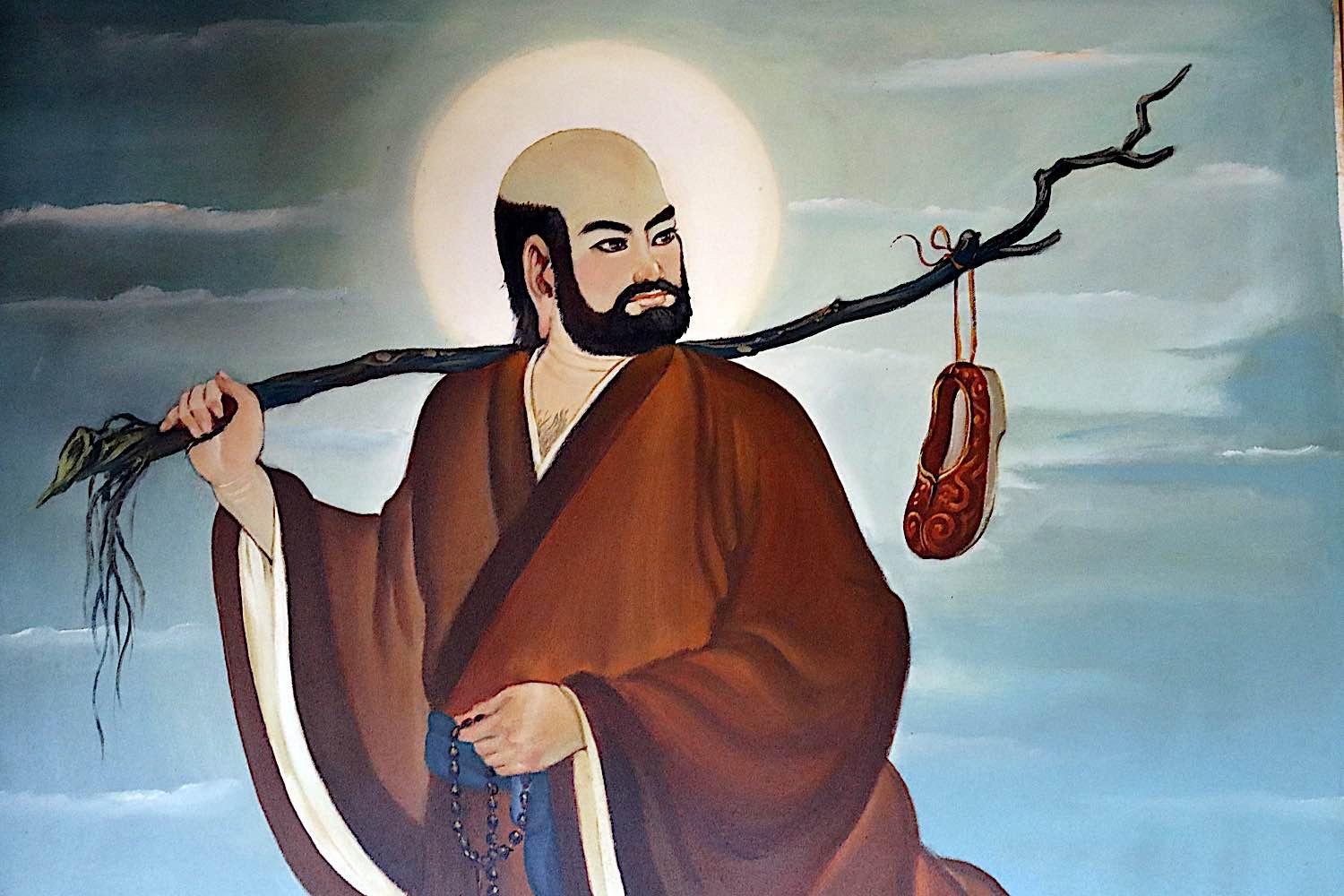
The Essence of Authenticity: Unpacking Bodhidharma's Wisdom
In the profound simplicity of Bodhidharma's assertion, "All else is borrowed," we encounter a striking invitation to examine the nature of our existence and the authenticity of our being. This statement compels us to confront the layers of identity and experience that we often mistake for our true selves. In a world saturated with external influences, the stakes of this inquiry are high; to live authentically is to reclaim ownership of our lives, to discern what is genuinely ours from what we have merely adopted.
As we delve deeper into this quote, we recognize that the essence of Bodhidharma's teaching transcends mere intellectual understanding. It beckons us to explore the roots of our attachments and the borrowed narratives that shape our perceptions. In this exploration, we are invited to engage with the fundamental question of what it means to be truly ourselves, stripped of the layers of expectation, imitation, and societal conditioning. The journey toward authenticity is not just a personal endeavor; it is a spiritual quest that resonates with the heart of Zen practice.
The image / the metaphor
At first glance, the phrase "All else is borrowed" evokes a vivid image of a life built upon borrowed foundations. The word "borrowed" suggests a temporary possession, a fleeting grasp on something that does not inherently belong to us. This imagery resonates with the transient nature of existence, where experiences, beliefs, and identities can be seen as ephemeral gifts rather than permanent fixtures. The verb "is" anchors us in the present moment, urging us to recognize the immediacy of our situation and the reality of our borrowed existence.
Delving deeper into the metaphor, we can perceive "borrowing" as a reflection of our interconnectedness with the world around us. Just as a borrower relies on the generosity of others, we often find ourselves shaped by external influences—cultural norms, familial expectations, and societal pressures. This metaphor invites us to question the authenticity of our choices and to discern whether they arise from our true selves or from the echoes of others' voices. In this light, the act of borrowing becomes a call to awareness, prompting us to sift through the layers of our identity to uncover the essence of who we truly are.
In the speaker's tradition
To fully appreciate Bodhidharma's wisdom, we must situate it within the rich tapestry of Zen Buddhism. Bodhidharma, often regarded as the first patriarch of Zen, emphasized direct experience and the realization of one's true nature. Central to this tradition is the concept of *dharma*, which refers to the inherent truth or law that governs existence. In recognizing that "all else is borrowed," we are invited to engage with the *dharma* of our own lives, to discern what is genuinely ours and what is merely a reflection of external influences.
Moreover, this teaching resonates with the Zen principle of *sunyata*, or emptiness, which suggests that all phenomena are devoid of inherent existence. In this context, the notion of borrowing becomes a profound acknowledgment of the impermanence and interdependence of all things. Just as the Zen text *The Heart Sutra* teaches that form is emptiness and emptiness is form, Bodhidharma's quote encourages us to embrace the fluidity of our identities, recognizing that what we often cling to as "self" is, in fact, a collection of borrowed experiences and beliefs.
Living the teaching
Consider a modern scenario where this teaching might resonate: an individual navigating the pressures of social media. In the quest for validation, one may find themselves curating a persona that reflects the ideals and expectations of others, rather than their authentic self. Here, the teaching of "all else is borrowed" serves as a poignant reminder to pause and reflect on the motivations behind our choices. Are we expressing our true selves, or are we merely borrowing the identities that others project onto us?
In relationships, this teaching can manifest in the dynamics of love and connection. Often, we may find ourselves adopting the expectations of our partners or friends, molding our identities to fit their desires. This can lead to a dissonance between our true selves and the roles we play. By embracing Bodhidharma's wisdom, we can cultivate a deeper awareness of our own needs and desires, allowing for more authentic connections that honor both our individuality and the shared experience of love.
A reflection
As we contemplate the depth of Bodhidharma's assertion, we are left with a profound question to ponder: What aspects of my life are borrowed, and how can I begin to reclaim my authenticity? This inquiry invites us to engage in a process of self-examination, to sift through the layers of our identities and discern what is genuinely ours. In this journey, we may discover the freedom that comes from shedding the borrowed narratives and embracing the unique essence of our being.
