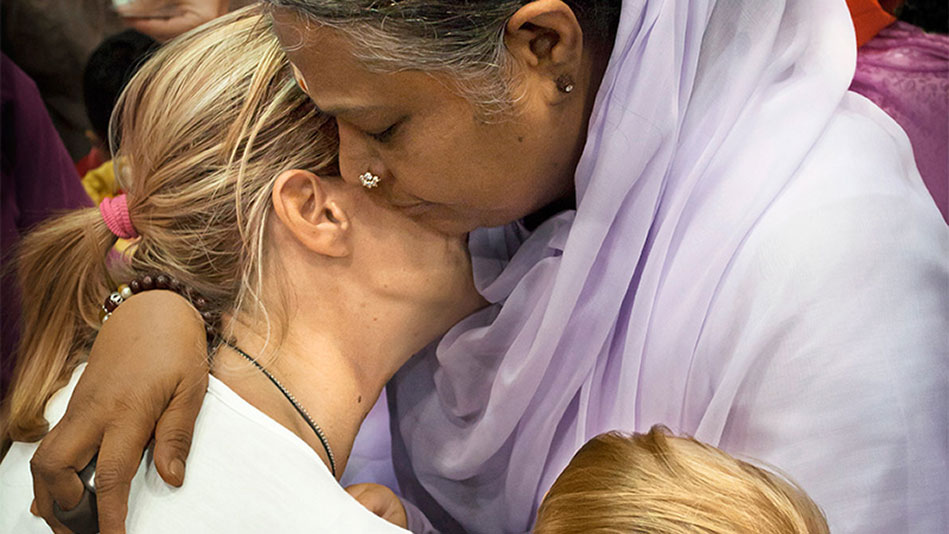
Amma's profound assertion, "The greatest service is the service of love," invites us to reconsider the very essence of service itself. In a world often driven by transactional relationships and superficial gestures, this quote challenges us to delve deeper into the motivations behind our actions. It suggests that true service transcends mere duty or obligation; it is rooted in a genuine love for others, a love that transforms both the giver and the receiver. This perspective is not only uplifting but also essential for fostering authentic connections in our lives.
To fully grasp the weight of Amma's words, we must recognize that love, in this context, is not a fleeting emotion but a profound state of being. It is an active force that compels us to engage with the world around us in a meaningful way. This service of love is not limited to grand gestures; it can manifest in the simplest acts of kindness, compassion, and understanding. By embracing this idea, we open ourselves to a deeper understanding of our interconnectedness and the impact we can have on one another's lives.
The image / the metaphor
At first glance, the imagery in Amma's quote evokes a sense of warmth and tenderness. The phrase "service of love" conjures visions of selfless acts, where the giver is wholly present and engaged. The verbs chosen—"service" and "love"—carry significant weight; they imply action and intention. Service suggests a commitment to others, while love embodies the emotional depth that fuels that commitment. Together, they create a powerful image of a life lived in devotion to the well-being of others, where the act of giving becomes a sacred expression of our humanity.
In the speaker's tradition
Amma's teachings are deeply rooted in the tradition of bhakti, which emphasizes devotion and love for the divine as the highest form of spiritual practice. In this context, the concept of service is intertwined with the idea of selfless love, or "prema." Bhakti encourages practitioners to cultivate a heart full of love, which naturally leads to acts of service. This aligns with the notion of "kenosis," or self-emptying, where one relinquishes the ego to serve others wholeheartedly. In this way, the service of love becomes a pathway to spiritual awakening and unity with the divine.
Moreover, the teachings of bhakti resonate with the idea of "sunyata," or emptiness, which invites us to let go of our attachments and desires in order to fully embrace the present moment. When we serve from a place of love, we embody this emptiness, allowing ourselves to be vessels of compassion and kindness. A relevant text that echoes this sentiment is the Bhagavad Gita, where Krishna emphasizes the importance of selfless action performed without attachment to the fruits of one's labor. This timeless wisdom reinforces Amma's message that true service is born from love and leads to spiritual fulfillment.
Living the teaching
Consider a modern scenario where this teaching can be applied: a community struggling with food insecurity. Imagine individuals coming together, not out of obligation, but driven by a genuine love for their neighbors. They organize food drives, cook meals, and distribute them with compassion, creating a sense of belonging and support. In this context, the service of love becomes a powerful force for change, fostering connections and healing within the community. Each act, no matter how small, contributes to a larger tapestry of care and compassion.
In our personal relationships, the service of love can manifest in various ways. For instance, during a difficult moment with a loved one, we may choose to listen deeply and offer our presence rather than rushing to fix the situation. This act of being fully present, rooted in love, can transform the dynamic of the relationship, allowing for healing and understanding. By embodying Amma's teaching in our daily interactions, we cultivate a practice of love that enriches our lives and those of others, reminding us that the greatest service we can offer is indeed the service of love.
A reflection
As we contemplate Amma's profound statement, we are invited to reflect on our own lives and the ways we express love through service. How can we deepen our commitment to serving others from a place of genuine love? In what areas of our lives can we shift our focus from obligation to heartfelt connection? These questions encourage us to explore the transformative power of love in our actions, guiding us toward a more compassionate and interconnected existence.