


What is Ritual Initiation?
Ritual initiation is a ceremonial process through which an individual transitions from one social, spiritual, or developmental status to another. Anthropologists regard initiation rites as a special class of rites of passage, displaying a tripartite sequential form dominated by themes of death from one social position and rebirth to a new one. These ceremonies serve to formally mark and facilitate significant life transitions—from childhood to adulthood, from novice to initiated member of a spiritual community, from layperson to religious practitioner.
The transformation is not merely symbolic. Initiation marks this transition and indicates an official change in the initiand’s status within the community. Through carefully structured ritual actions, the initiate undergoes a profound shift in identity, social role, and often, according to esoteric traditions, consciousness itself. The ritual container provides both community recognition of the change and experiential conditions that catalyze genuine internal transformation.
Origins & Lineage
The concept of a “rite of passage” was put forward in 1909 by the French ethnologist Arnold Van Gennep, in a work entitled Les rites de passage. Van Gennep was born in 1873 in Germany, his father a descendant of French immigrants to Germany, his mother of Dutch descent. On graduating from lycée in Grenoble, he went to Paris, where he studied Arabic and history at the École des Langues Orientales and religious studies at the École Pratique des Hautes Études.
Van Gennep asserted the existence of a ceremonial sequence consisting of three phases: separation, transition, and reincorporation—or preliminal, liminal (threshold), and postliminal. He argued that initiation, defined as a rite of passage from one social group, emotional state, and religious condition to another, was the most important element of religious ritual.
Victor Turner, the British cultural anthropologist, substantially developed Van Gennep’s framework. Van Gennep’s concept of liminality, the transition or initiation phase of these rites of passage, was further developed in the work of anthropologist Victor Turner, particularly in Turner’s 1969 text, The Ritual Process: Structure and Anti-Structure. Turner’s examination of the liminal phase revealed it as a state where initiates exist “betwixt and between”—temporarily outside normal social structures, stripped of former status, yet imbued with transformative potential.
The practice of ritual initiation predates these scholars by millennia. The Eleusinian Mysteries were initiations held every year for the cult of Demeter and Persephone based at the Panhellenic Sanctuary of Eleusis in ancient Greece. Their basis was a Bronze Age agrarian cult, and there is some evidence that they were derived from the religious practices of the Mycenean period. For nearly 2,000 years (c. 1500 BCE - 392 CE), the Eleusinian Mysteries were celebrated annually at Eleusis, near Athens. From the seventh century BCE until the destruction of the sanctuary by the Visigoth Alaric in 396 CE, the small town of Eleusis was the site of the most celebrated and most carefully guarded initiatic rites in the ancient world.
How It’s Practiced
Initiation rituals manifest in remarkably diverse forms across cultures, yet the underlying structural pattern remains consistent. The three-phase structure unfolds as follows:
Separation: The first phase (the rite of separation) requires the child to go through a separation from his family; this involves his/her “death” as a child, as childhood is effectively left behind. The initiate is physically or symbolically removed from their ordinary social context—taken to a sacred site, wilderness location, temple precinct, or ritual chamber.
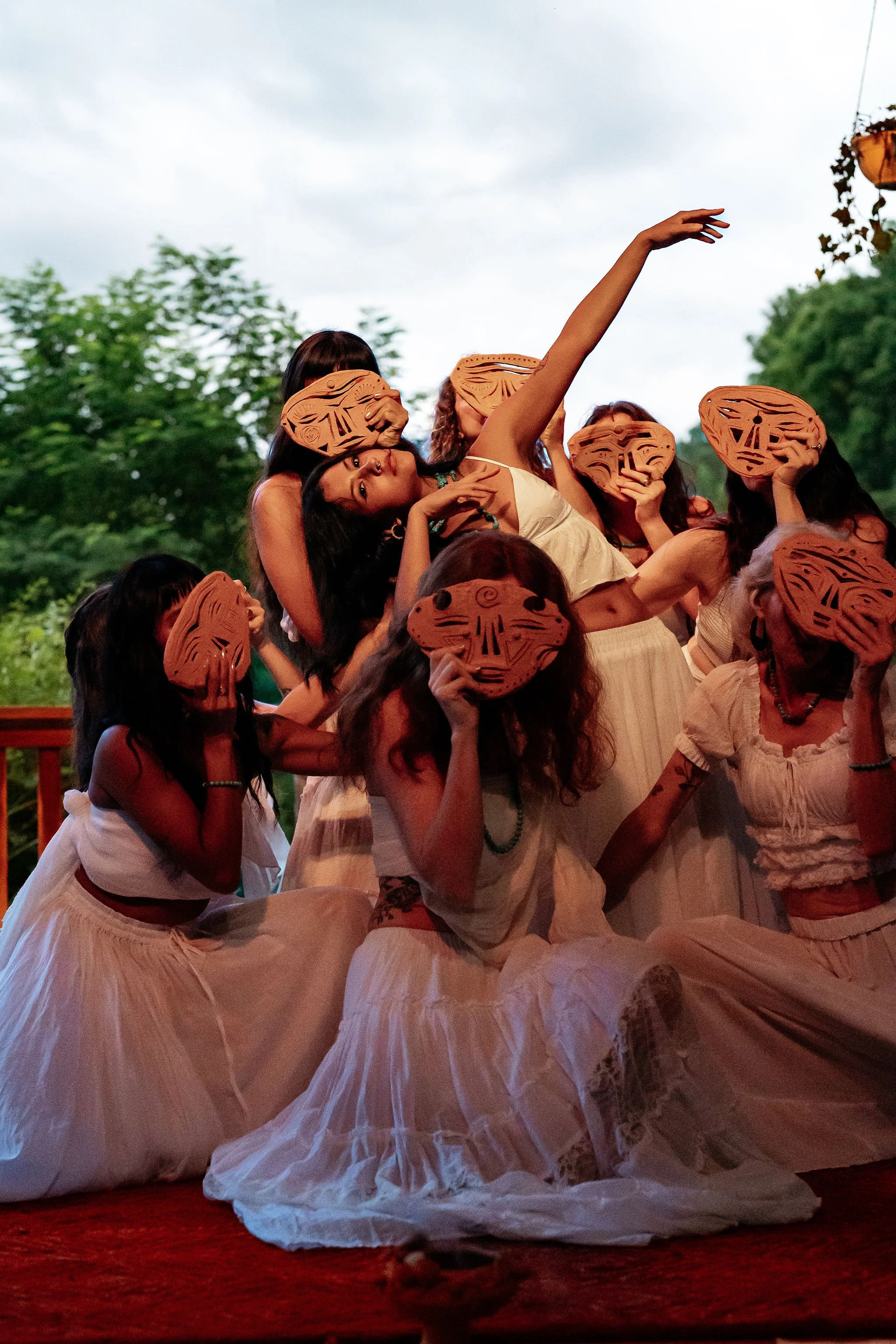
Liminality (Transition): The threshold phase constitutes the heart of the initiation. Turner argued that in the liminal state, initiates were lowly, without any real status, and dependent on guides and mentors for basic instruction. At the same time, they were also perceived as being directly in touch with sacred powers of transformation and thus imbued with a kind of holiness, as a result of a temporary existence outside the structures of society. This phase may involve fasting, sensory deprivation, ordeal, instruction in secret knowledge, or visionary experience. Everyone is equal and represents a kind of protean mass without any distinction of personality, name, physical distinctions (they often wear the same clothes), etc. They are often humiliated during this period.
Reincorporation: The final phase returns the initiate to the community in their new status. During postliminal rites (or rites of incorporation), the initiate is re-incorporated into society with a new identity, as a “new” being. The community formally recognizes the transformation through ceremony, new names, clothing, privileges, or responsibilities.
In mystery school traditions, the process includes additional elements. A spiritual initiation rite normally implies a shepherding process where those who are at a higher level guide the initiate through a process of greater exposure of knowledge. The ceremony itself can take many forms, but there are certain symbolic elements that are almost always present: purification—a symbolic and spiritual act in which the candidate is washed clean of any impurities, complexes, energetic blocks, negative energies, unruly spirits, etc.
Ritual Initiation Today
Contemporary seekers encounter initiation practices through multiple pathways:
Indigenous and Earth-Based Traditions: Vision quest, supernatural experience in which an individual seeks to interact with a guardian spirit, usually an anthropomorphized animal, to obtain advice or protection. Vision quests were most typically found among the native peoples of North and South America. Modern practitioners sometimes participate in vision quests, though such use of the term “vision quest” has been criticized as “cultural appropriation”, with those leading the exercises derided as “plastic shamans”.
Mystery School Revivals: Organizations such as the Hermetic Order of the Golden Dawn, Rosicrucian societies, and certain Masonic orders maintain formal initiation degrees. In contemporary Witchcraft and Paganism, initiation marks entry into a closed and traditionally secret society; opens the door to the learning of ritual secrets, magic and the development and use of psychic powers; marks a spiritual transformation, in which the initiate begins a journey into Self and toward the Divine Force.
Retreat and Workshop Format: Many spiritual teachers now offer initiation experiences through multi-day retreats. Often held in nature-rich settings, these transformational retreats invite participants into practices like ritual, ceremony, and sacred song, offering pathways to healing, guidance, and deeper alignment with the natural world. These range from Buddhist ordinations to shamanic plant medicine ceremonies to neo-pagan initiations.
Religious Traditions: Established religious initiations continue worldwide—Christian baptism and confirmation, Hindu upanayana, Jewish bar and bat mitzvah, Sufi khalwa retreats, and Buddhist refuge ceremonies.
Common Misconceptions
Initiation is not a single transformative event that permanently changes someone. While the ceremony itself may be powerful, authentic initiation traditions understand it as marking the beginning of a new phase of learning and responsibility, not the culmination.
Initiation is not inherently positive or benign. Among the technologically and scientifically advanced societies of the world, initiation rites have become increasingly secular. Some contemporary forms—fraternity hazing, gang initiations—represent distorted expressions that prioritize humiliation over transformation. The structure can be weaponized.
Initiation is not always religious or spiritual. Baptism, bris, confirmation, bar/bat mitzvah, débuting, rushing a fraternity or sorority, marriage, and taking religious vows all qualify as rites of initiation. Academic graduations, professional certifications, and military boot camps employ initiation structures for secular purposes.
Initiation rites are not universal in their specific form or timing. Van Gennep argued long ago, this name “puberty rites” is inappropriate. The age at which rites of attaining maturity are observed vary greatly from society to society, going far beyond the normal range of years at which sexual maturity is attained.
How to Begin
Those called to initiation should first clarify their intention. What status transition seeks recognition? What tradition or lineage calls to you?
For academic understanding, begin with Arnold van Gennep’s The Rites of Passage (1909, English translation 1960) and Victor Turner’s The Ritual Process (1969). These provide the foundational anthropological framework.
For experiential engagement, seek established lineages with transparent practices. Authentic initiatory traditions typically require preparation time, demonstrated commitment, and often preliminary instruction. Be wary of those offering instant initiation for high fees without genuine relationship or teaching.
Consider less formal threshold rituals first—vision quests guided by experienced facilitators, spiritual retreats emphasizing silence and solitude, or life-transition ceremonies created with trusted community. While traditional initiation rites exist, Witches and Pagans feel the spiritual threshold may be crossed in many alternate ways. Initiation may be experienced in a group or alone.
Respect the protocols of traditions not your own. Indigenous vision quests, for example, belong to specific cultures and should not be casually appropriated. New Age spiritual practices have co-opted the vision quest and offered it to non-Indigenous peoples as a form of spiritual tourism. Journeys guided by non-Indigenous peoples and in ways that are not standard practice are seen by some Indigenous peoples as a misrepresentation and imitation of traditional practices.
Ultimately, genuine initiation requires both inner readiness and outer container—the willingness to die to an old identity and the ritual structure that makes transformation possible.