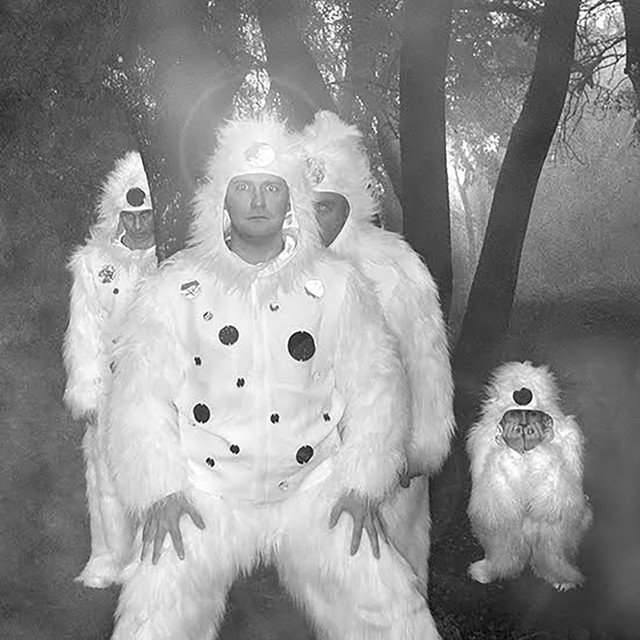
What is Avant Garde?
Avant garde (sometimes avant-garde) describes artistic, cultural, and philosophical movements that position themselves at the leading edge of innovation, challenging established norms and conventions. The term literally means “advance guard” or “vanguard,” referring to those who venture into unexplored territory before others follow. In the context of conscious and spiritual practice, avant garde denotes approaches that integrate experimental methods, non-traditional frameworks, or radical departures from inherited wisdom traditions—often synthesizing ancient practices with contemporary science, technology, or cross-cultural perspectives.
The avant garde stance is characterized by intentional disruption, formal experimentation, and a willingness to embrace discomfort or incomprehensibility in service of breaking through to new modes of perception and expression. It privileges novelty and transformation over preservation and continuity.
Origins & Lineage
The term emerged from French military vocabulary, where “avant-garde” designated troops who scouted ahead of the main army. Its cultural application began in the early 19th century, with Henri de Saint-Simon using it in 1825 to describe artists as the vanguard of social progress. The concept gained prominence during the late 19th and early 20th centuries with movements including Impressionism (1860s-1880s), Cubism (1907-1914), Futurism (launched by Filippo Tommaso Marinetti’s 1909 manifesto), Dadaism (1916-1924), and Surrealism (formalized by André Breton in 1924).
In music, the avant garde crystallized with composers like Arnold Schoenberg, who abandoned traditional tonality around 1908, and later with John Cage, whose 4’33" (1952) challenged the very definition of music. Visual artists including Marcel Duchamp, whose “Fountain” (1917) presented a urinal as art, exemplified avant garde provocation.
Within spiritual and consciousness movements, avant garde thinking emerged in the 1960s-1970s with figures like Timothy Leary exploring psychedelics as consciousness technology, the Esalen Institute (founded 1962) synthesizing Eastern practices with Western psychology, and artists like Pauline Oliveros developing “deep listening” practices that bridged meditation and experimental music.
How It’s Practiced
Avant garde spiritual and artistic practice manifests through deliberate experimentation with form, context, and content. This includes sound healing sessions incorporating noise music or field recordings, meditation practices using virtual reality or neurofeedback technology, movement work that deconstructs rather than codifies traditional forms, and ritualistic performances that challenge conventional sacred/profane boundaries.
Practitioners often work at intersections: contemporary dance meets Sufi whirling, AI-generated poetry meets contemplative inquiry, or biofeedback systems meet shamanic journey work. The emphasis falls on direct experience over lineage preservation, and on generating questions rather than transmitting answers.
In performance contexts, avant garde work frequently embraces durational extremes (very long or very short), unconventional spaces (abandoned buildings, forests, digital environments), or participatory structures that dissolve performer-audience boundaries.
Avant Garde Today
Contemporary seekers encounter avant garde approaches through experimental sound baths incorporating electronic music and extended vocal techniques, consciousness conferences featuring phenomenological research and contemplative neuroscience, immersive installations combining meditation with sensory deprivation or augmentation, and hybrid teacher-artists who resist categorization as either spiritual guides or performance artists.
Online platforms have democratized access while fragmenting what “avant garde” means—practices once considered radical (such as breathwork or ecstatic dance) have entered mainstream wellness culture, while new edges emerge around psychedelic-assisted therapy, DMT research, and AI-human collaborative spiritual practices.
Venues include experimental art spaces like The Kitchen (New York), ISSUE Project Room (Brooklyn), and REDCAT (Los Angeles), as well as consciousness-focused gatherings like the Science and Nonduality Conference and Boom Festival’s Liminal Village.
Common Misconceptions
Avant garde is not simply “weird for weird’s sake,” though it may appear inscrutable to those unfamiliar with its context and history. It is not synonymous with “new age” or “alternative”—many new age practices embrace traditional forms or seek comfort rather than disruption.
Being avant garde does not automatically confer quality or depth; provocation without rigor can be mere posturing. Conversely, experimental form does not preclude genuine spiritual transmission—the two can coexist, though tension between innovation and tradition remains.
Avant garde work is not necessarily hostile to tradition; many practitioners engage deeply with lineages while questioning their forms. The stance is investigative rather than nihilistic, though it accepts destruction as part of creative process.
How to Begin
For those curious about avant garde approaches to consciousness and spirituality, start with documented intersections: read “Silence: Lectures and Writings” by John Cage for foundational philosophy linking Zen Buddhism with experimental art, or explore Pauline Oliveros’s “Deep Listening: A Composer’s Sound Practice.” Attend performances at experimental venues in your area that blend contemplative and performative elements.
Engage with contemporary teachers who work at boundaries: researchers like Rupert Sheldrake (morphic resonance), or institutions like the California Institute of Integral Studies, which academically examines consciousness from multiple perspectives. Experiment with apps like Muse (meditation via EEG) or attend a sound healing session that incorporates unconventional instruments and structures.
Most importantly, cultivate a dual capacity: openness to unfamiliar experiences paired with critical discernment about what serves genuine transformation versus what merely performs innovation.