BrightStar

Browse All Events

Discover conscious gatherings

events

Yoga
Meditation
Breathwork
Qigong
Tai Chi
Sacred Music
World Music
Medicine Music
Sound Healing
Ecstatic Dance
Popular Destinations
BaliSedonaLos AngelesCosta RicaNew YorkSan FranciscoAustinMiamiJoshua TreeTulum
View All CategoriesView All Destinations

Explore All Features

Powerful tools to grow your events

Platform Features

Smart Dynamic Pricing
Ticket Categories
Assigned Seating
Abandoned Cart Recovery
Visitor Recovery
Donations & Sliding Scale
Affiliate Engine
Ticket Scanner
Coupon Codes
Custom Questions
Ticket Sharing
Upsells & Add-ons
Analytics & Reporting
Email Sequences
Waitlist / Notify / Remind
People & Places
Artists & TeachersEvent OrganizersVenues & StudiosKnowledge BaseGlossaryInspiration
View All FeaturesAbout Us
PricingBlog
Language
Saved events
Browse All Events

events

YogaMeditationBreathworkQigongTai ChiSacred MusicWorld MusicMedicine Music

Popular Destinations

BaliSedonaLos AngelesCosta RicaNew YorkSan Francisco

People & Places

Artists & TeachersEvent OrganizersVenues & StudiosKnowledge BaseGlossaryInspiration

Platform Features

Smart Dynamic PricingTicket CategoriesAssigned SeatingAbandoned Cart RecoveryVisitor RecoveryDonations & Sliding ScaleAffiliate EngineTicket ScannerCoupon CodesCustom QuestionsTicket SharingUpsells & Add-onsAnalytics & ReportingEmail SequencesWaitlist / Notify / Remind
View All FeaturesAbout Us
PricingBlog
Log inFind EventsHost Events
  • Browse All Events
  • For Seekers
  • Yoga
  • Meditation
  • Breathwork
  • Qigong
  • Tai Chi
  • Sacred Music
  • World Music
  • Medicine Music
  • Sound Healing
  • Ecstatic Dance
  • Retreats
  • Workshops
  • All Categories →
  • Bali
  • Sedona
  • Los Angeles
  • Costa Rica
  • Tulum
  • Byron Bay
  • San Francisco
  • Austin
  • New York
  • San Diego
  • Denver
  • Seattle
  • Portland
  • Miami
  • All Cities →
  • Join the Movement
  • Why we list
  • Sell Globally
  • For Creators
  • For Teams
  • For Writers
  • For Teachers
  • For Kirtan Artists
  • For Studios
  • For Festivals
  • For Retreat Centers
  • For Nonprofits
  • Brand Ambassador
  • Free Ticketing
  • Elevate
  • Amplify
  • 500K+ Buyer Network
  • Abandoned Cart Recovery
  • Smart Dynamic Pricing
  • Ticket Categories
  • Recurring Events
  • Assigned Seating
  • Affiliate Engine
  • Waitlist / Notify
  • Ticket Scanner
  • Embed Widget
  • Event Syndication
  • Message Center
  • Integrations
  • Reports
  • All Features →
  • About
  • The Ecosystem
  • Blog
  • Glossary
  • Inspiration
  • Help Center
  • Contact
  • API Docs
  • Brand Assets
  • Careers
  • Press
  • Terms of Service
  • Privacy Policy

Events

  • Browse All Events
  • For Seekers
  • Yoga
  • Meditation
  • Breathwork
  • Qigong
  • Tai Chi
  • Sacred Music
  • World Music
  • Medicine Music
  • Sound Healing
  • Ecstatic Dance
  • Retreats
  • Workshops
  • All Categories →

Destinations

  • Bali
  • Sedona
  • Los Angeles
  • Costa Rica
  • Tulum
  • Byron Bay
  • San Francisco
  • Austin
  • New York
  • San Diego
  • Denver
  • Seattle
  • Portland
  • Miami
  • All Cities →

For Creators

  • Join the Movement
  • Why we list
  • Sell Globally
  • For Creators
  • For Teams
  • For Writers
  • For Teachers
  • For Kirtan Artists
  • For Studios
  • For Festivals
  • For Retreat Centers
  • For Nonprofits
  • Brand Ambassador
  • Free Ticketing
  • Elevate
  • Amplify

Features

  • 500K+ Buyer Network
  • Abandoned Cart Recovery
  • Smart Dynamic Pricing
  • Ticket Categories
  • Recurring Events
  • Assigned Seating
  • Affiliate Engine
  • Waitlist / Notify
  • Ticket Scanner
  • Embed Widget
  • Event Syndication
  • Message Center
  • Integrations
  • Reports
  • All Features →

Company

  • About
  • The Ecosystem
  • Blog
  • Glossary
  • Inspiration
  • Help Center
  • Contact
  • API Docs
  • Brand Assets
  • Careers
  • Press
  • Terms of Service
  • Privacy Policy
BrightStar
Get the app
Download on theApp StoreGet it onGoogle Play
© 2026 BrightStar. All rights reserved.
Watch

Yoga Nidra Explained: Sankalpa, Body Rotation, and Breath Counting

Yogi Bryan
Yogi Bryan
Jan 14, 2021
9 min read
Watch · 8

Lie flat on your back, legs a little apart, arms resting at your sides, and let the room go quiet. Then a calm voice begins, telling you there is nothing to do but listen. For the next half hour, Yogi Bryan's guided yoga nidra session asks almost nothing of the body and a great deal of the attention. It moves through a short spoken intention, a fast sweep of the body from fingertips to toes and back, a slow count of the breath from 47 down to one, and a series of images to visualize, before it brings the listener gently back to the room. Underneath the simplicity is a structured practice with a long lineage in yogic sleep, and it rewards a reader who wants to understand why each step is there, not just what to say when you are lying down.

Read · 8 sections

What does a yoga nidra session feel like from the first minute?

The opening is mostly instruction about the body. Bryan asks the listener to find a place to lie down, keep the body straight with legs slightly apart and knees slightly bent, and let the palms rest face up or face down. "Don't overthink it," he says at the start, and the point is that the body should be still, because, as he puts it, "during the practice of yoga nidra there's no movement at all and your eyes will remain closed throughout."

Then comes a breathing warm-up. The listener exhales all the air out through the mouth, then inhales through the nose and sighs it out, repeating this with an emphasis on letting tension go. The session ends the warm-up by returning to natural breath through the nose. This is a small thing, but it matters: the practice begins by changing how the body is breathing before it asks the mind to do anything at all.

The video's description frames the whole practice in one sentence: "Yoga nidra is a scientific method to release the threefold tensions of muscular, emotional, and mental." That framing is what distinguishes yoga nidra from a general relaxation track. The goal is not simply to feel calm. It is to work deliberately through three layers of tension, the body, the emotions, and the thinking mind, in a set order.

Why is the sankalpa the most important part of the practice?

Around the four-minute mark of the practice, Bryan introduces the sankalpa, the element that most often separates yoga nidra from ordinary guided rest. He defines it plainly: "the san kalpa is a short positive statement in the present moment and we stated three times with awareness feeling and passion." He gives examples, "i am grateful in every moment" or "i let go of what does not serve me," and insists that the wording be clear.

The listener is given time to find a personal intention, and Bryan's reasoning for why it should stay fixed is the most distinctive idea in this section. "Once you set your san kalpa there's no reason to change it," he says. "Basically you're planting a seed in the subconscious mind." The sankalpa is not a goal to be pursued during the session. It is a seed, placed while the mind is receptive, and then left alone. The practice repeats it three times silently, and returns to it again near the end, so it has a beginning, a middle, and a close.

For readers used to affirmations, the difference is in the posture. An affirmation is often something you argue yourself into. A sankalpa, as Bryan describes it, is something you state once with feeling and then stop managing.

What is the rotation of consciousness, and why does it move so fast?

The middle of the session is the part that tends to surprise first-time listeners. Bryan calls it "the rotation of the mind to scan the body," and it runs through the body in a sequence that is fast, precise, and almost relentless. The attention moves from the right thumb through each finger, the palm, the wrist, the forearm, the shoulder, the hip, the knee, the ankle, the sole, and each toe. Then the left side. Then the face, the spine, the chest, the abdomen, the arms, the legs, and finally the whole body at once.

The speed is intentional. A slow body scan invites the mind to linger, to daydream, to start solving problems. A rapid rotation keeps the attention moving across the body without letting it settle into a single sensation, which is the mechanism that makes it hard for thinking to take over. The practice asks the listener to notice without interpreting. You are not asked to relax each part. You are asked to be aware of it, and awareness, repeated across dozens of points in a few minutes, gradually loosens the grip of effort.

Bryan's guidance on the mind during this stretch is worth taking seriously. "Do not over analyze the instructions," he says. "Just follow with total intention and feeling." If you miss a body part, he says, it does not matter. The rotation is not a test of memory. It is a practice of staying with a voice.

Why count the breath backward from 47?

After the body scan, Bryan returns the listener to breath and introduces a counted sequence: breathe in 47, breathe out 47, then 46, 45, and so on down to one. Counting the breath is one of the oldest anchors in meditation, and the backward count here does something specific. A number that is large at the start demands attention, and as it shrinks, the mind has to keep track of where it is. Bryan's instruction for drifting is characteristically gentle: "if you drift off just start from the beginning," and "be gentle with yourself. The mind fades away, no worries, just start over at 47."

Then the counting is dropped. "Let go of your breathing, let go of the counting and return to your natural breath," he says. "Nothing to do or control with your breathing." The sequence moves the listener from effortful control of the breath to no control at all, which is a kind of rehearsal for the deeper state the practice is trying to reach.

How do the visualizations work in a yoga nidra practice?

The next section is the one listeners most often describe as dreamlike. Bryan names images in quick succession: a warm sunrise, a sandy beach with waves rolling in, a moonlit night, a cold bath, a peacock feather, a foggy morning, cool clear water, a candle burning, a lush forest with tall trees, a ship sailing on the sea, a refreshing waterfall, stars in the night sky, a campfire, a cat stretching, snow-capped mountains, a baby laughing, birds flying. Some images repeat, sometimes the pace speeds up and sometimes it slows.

The instruction around them is precise: "If you can't visualize it just think about it." The images are not a test of imagination. They are a way of keeping the mind busy with pleasant, unforced content while the body continues to settle. The repetition of certain images, a sandy beach, a candle, a reflection in a mirror, is also what gives the sequence its rhythm. The listener is not asked to build a scene. They are asked to let each image arrive and pass.

How does a yoga nidra session end?

The close is a slow return. Bryan brings the listener back to the room, then to the body, then to the sensation of the body resting on the floor. The listener is asked to notice the skin, the air, any fabric, the sounds inside and outside the room, and the points of contact: the heels, the thighs, the shoulder blades, the arms, the hands, the head. Then the sankalpa is repeated one final time, "like a seed" planted "deep into your heart space and all throughout your day, throughout your week, throughout your year."

That last line returns to the central idea of the whole practice. Yoga nidra, in this format, is less about the thirty minutes on the floor than about what the listener carries out of them. The sankalpa is designed to outlast the session. The body is meant to leave more settled than it arrived. The practice is finished with the words "thank you so much for practicing with me," and the listener is left to move slowly, with movements of the body first, then sitting up.

Where does this practice fit in a regular routine?

The video is framed for sleep and deep rest. Its description says it is open to all levels, that you should lie down in a comfortable spot, close your eyes, and relax, and it says the session is best with headphones. The title and tags also reference binaural beats and the music is credited to DJ Taz Rashid. The video itself does not make claims about binaural beats, so a reader should treat those as part of the production rather than as a verified mechanism. What the spoken practice does on its own is clear enough: it gives a structure, a rhythm, and a set of intentions that the listener can return to.

Bryan's own note about sleep is worth keeping in mind. He says that a feeling of relaxation like the one just before sleep will develop, and that if sleep does come, you should not try to fight it. He also suggests making a resolve at the start: "I will not sleep, I will remain awake during my practice." That tension, between wanting to fall asleep and staying present enough to follow the voice, is the thing the practice is built to hold. It is why yoga nidra is described as a state between wakefulness and sleep.

Where to go from here

If you want to try this practice, start with the video itself and listen once without trying to get it right. Pay attention to the moment the sankalpa is introduced, and spend the time it gives you choosing a short, positive, present-tense statement. Then let it stay where it is. On your next session, notice the body rotation and let the speed of it work on you rather than resisting it. If you want to understand the framework more deeply, the video's own description and its references to threefold tension are a good place to continue, and the Chill Pill app named in the description is the creator's own route to more of his sessions. Yoga nidra rewards repetition, and the same script will feel different after a few weeks of listening.

Comments

Loading the conversation…

Transcript

[0:00] welcome to this guided yoga nidra

[0:03] session

[0:05] my name is yogi brian find

[0:08] a comfortable place where you can lie

[0:10] down on your back

[0:12] a place where your body can remain still

[0:16] and your body can be comfortable so you

[0:19] can relax

[0:21] you can lie down on a yoga mat

[0:24] or a blanket but just find a place

[0:28] where you can lie down and keep your

[0:30] body straight

[0:32] legs slightly apart knees slightly bent

[0:37] and making a straight line with your

[0:39] body

[0:40] palms either face up or face down

[0:44] don't overthink it just any place where

[0:47] your body

[0:48] can be still and adjust your body

[0:52] so you can be super comfortable

[0:57] because during the practice of yoga

[0:59] nidra

[1:00] there's no movement at all

[1:04] and your eyes will remain closed

[1:06] throughout

[1:08] so give yourself time to settle

[1:11] give yourself time to relax

[1:14] and whenever you're ready close your

[1:17] eyes

[1:24] and feel a sense of relaxation in the

[1:26] body

[1:29] noticing your breath

[1:32] observing your body

[1:33] [Music]

[1:36] and giving yourself permission to relax

[1:47] let's take two deep breaths i'll lead

[1:50] you through it

[1:50] to relax exhale all the

[1:54] air out of your body out through the

[1:56] mouth side out

[1:57] [Music]

[1:59] now close your mouth inhale deeply

[2:01] through the nose

[2:06] and exhale sigh it out let all the

[2:09] tension go relax

[2:11] [Music]

[2:14] again close the mouth inhale deeply

[2:16] through the nose

[2:19] and open the mouth it out let all that

[2:23] tension

[2:23] go

[2:28] close the mouth just breathe your

[2:31] natural breath

[2:32] in and out through the nose

[2:36] [Music]

[2:49] so

[2:50] when practicing yoga nidra completely

[2:54] relax

[2:56] it's not a practice in concentration

[3:00] just follow the instructions but if you

[3:03] miss a few

[3:05] it doesn't matter at all

[3:08] what is important is you keep listening

[3:12] to the sound of my voice and listen

[3:16] to the suggestions

[3:25] yoga nidra is a scientific method

[3:30] releases the threefold tensions muscular

[3:34] emotional and mental

[3:42] during yoganidra you are functioning

[3:45] on hearing and awareness the only

[3:49] important thing is to follow

[3:52] my voice and breathe

[3:56] and you're already breathing you're

[3:58] doing a great job

[4:11] you'll develop a feeling of relaxation

[4:15] like that feeling just before sleep

[4:25] if sleep does come do not try to fight

[4:29] it

[4:30] but it's helpful to make a resolve

[4:32] during your practice

[4:35] say to yourself i will not sleep

[4:39] i will remain awake during my practice

[4:44] i will not sleep i will remain awake

[4:48] during my practice

[4:59] and do not over analyze the instructions

[5:02] just follow

[5:03] with total intention and feeling

[5:08] if thoughts do come don't worry

[5:12] take a passive approach to restless

[5:14] thoughts

[5:15] just let them come and go

[5:19] don't try to fight them just allow them

[5:22] to roll in

[5:24] and roll out

[5:28] now allow yourself to fully relax

[5:31] [Music]

[5:34] bring about a feeling of inner

[5:37] relaxation

[5:41] be aware of stillness

[5:46] allow yourself to relax

[5:51] telling yourself three times silently

[5:55] i will relax

[6:10] now become aware that you are practicing

[6:13] yoga nidra

[6:15] allow yourself to practice

[6:18] allow yourself to be in the moment

[6:23] say to yourself silently i am aware

[6:28] i'm going to practice yoga nidra

[6:31] i am aware i'm going to practice yoga

[6:47] nidra

[6:48] now the practice begins

[6:51] we begin with the resolve the san kalpa

[6:55] an intention when our minds are relaxed

[7:00] we are open to otto's suggestion

[7:04] the san kalpa is a short positive

[7:08] statement in the present moment

[7:11] and we stated three times with awareness

[7:15] feeling and passion

[7:19] the wording must be clear

[7:22] for example i am grateful

[7:26] in every moment or i let go of what does

[7:31] not serve me

[7:33] find a san capo for you

[7:37] find an intention that you'd like to

[7:40] manifest

[7:41] i'll give you time

[8:21] and once you set your san kalpa there's

[8:23] no reason to change it

[8:26] basically you're planting a seed in the

[8:29] subconscious mind

[8:34] now say you're saying kalpa three times

[8:38] silently to yourself

[9:00] now we come to the rotation of the mind

[9:04] to scan the body bring your awareness

[9:08] bring your attention to your right thumb

[9:18] right index finger

[9:24] right middle finger

[9:29] right ring finger

[9:34] right pinky finger

[9:39] palm of the hand

[9:42] top of the hand

[9:46] right wrist

[9:51] right forearm

[9:56] right elbow

[10:01] upper right arm

[10:06] right shoulder

[10:11] right armpit

[10:16] right side waist

[10:22] right hip

[10:27] right thigh

[10:34] right knee

[10:39] right shin

[10:45] right ankle

[10:52] right heel

[10:58] sole of the right foot

[11:06] top of the right foot

[11:12] right big toe

[11:18] second toe

[11:23] third toe

[11:29] fourth toe

[11:34] and fifth toe

[11:39] bring your awareness to the entire right

[11:41] side

[11:43] the entire right side

[11:55] bring your awareness to your left thumb

[11:59] all the awareness to your left thumb

[12:08] left index finger

[12:16] left middle finger

[12:24] ring finger

[12:32] left pinky finger

[12:39] palm of the left hand

[12:44] top of the left hand

[12:51] left wrist

[12:58] left forearm

[13:07] left elbow

[13:14] upper left arm

[13:22] left shoulder

[13:30] left armpit

[13:38] left side waist

[13:48] left hip

[13:57] left thigh

[14:05] left knee

[14:14] left shin

[14:22] left ankle

[14:30] left heel

[14:37] sole of the left foot

[14:44] top of the left foot

[14:52] left big toe

[14:59] second toe

[15:05] third toe

[15:11] fourth toe

[15:16] and fifth toe

[15:23] bring your awareness to the entire left

[15:25] side

[15:39] now bring your awareness to the back of

[15:41] your head

[15:48] top of your head

[15:53] forehead

[15:59] chin

[16:03] right g

[16:08] left cheek

[16:12] the nose

[16:19] right eye

[16:23] left eye

[16:25] [Music]

[16:29] middle of the brow line

[16:35] bottom lip

[16:40] top lip

[16:44] right eyelid

[16:50] left eyelid

[16:55] right ear

[17:00] left ear

[17:04] bring your awareness to the entire head

[17:08] all your awareness to the entire head

[17:23] bring your awareness to the right

[17:25] shoulder blade

[17:32] left shoulder blade

[17:39] right lower back

[17:43] left lower back

[17:49] right middle back

[17:53] left middle back

[17:57] bring your awareness to the entire spine

[18:00] all the way up

[18:01] and all the way down

[18:10] bring your awareness to the entire back

[18:24] now bring your awareness to your throat

[18:34] right collarbone

[18:40] left collarbone

[18:47] right chest

[18:53] left chest

[19:01] bring your awareness to the upper

[19:03] abdomen

[19:08] middle abdomen

[19:12] lower abdomen

[19:18] bring your awareness to the entire torso

[19:32] bring your awareness to your right hand

[19:38] left hand

[19:42] both hands

[19:45] now bring your awareness to the right

[19:47] arm the entire

[19:50] right arm

[19:53] now left arm

[19:57] both arms

[20:02] bring your awareness to your right foot

[20:07] left foot

[20:11] both feet awareness to both

[20:15] feet

[20:19] right leg

[20:23] left leg

[20:29] bring awareness to both legs

[20:36] bring awareness to your head

[20:42] to the back

[20:45] into the torso

[20:49] bring your awareness to the entire body

[20:53] be aware of your entire body

[21:15] this

[21:21] now bring your mind back to your

[21:23] breathing

[21:27] noticing your inhales and your exhales

[21:34] feeling the belly rise and fall

[21:51] now let's start to count our breath

[21:54] counting down

[21:55] from 47.

[21:58] you'll breathe in 47

[22:03] and breathe out 47.

[22:06] breathe in 46

[22:10] and breathe out 46

[22:14] breathe in 45

[22:18] and breathe out 45

[22:21] counting from 47 all the way down to one

[22:25] and if you drift off just start from the

[22:28] beginning

[22:30] be gentle with yourself the mind fades

[22:33] away

[22:34] no worries just start over at 47.

[22:39] continue to count now

[23:21] so

[23:40] now let go of your breathing

[23:44] let go of the counting

[23:48] and return to your natural breath

[23:52] nothing to do or control with your

[24:03] breathing

[24:11] now we will start to visualize you'll

[24:14] use that great

[24:16] imagination of yours i'll name an object

[24:20] and you visualize it if you can't

[24:24] visualize it

[24:25] just think about it

[24:28] sometimes i'll go slow sometimes

[24:32] i'll go fast some images

[24:36] might be the same don't try to control

[24:40] or overthink the process just listen

[24:44] to the sound of my voice

[24:55] warm sunrise

[25:01] a sandy beach

[25:09] waves rolling on the sandy beach

[25:21] a moonlit night

[25:24] a cold bath

[25:28] peacock feather

[25:36] foggy morning

[25:41] cool clear water

[25:48] sunshine overhead

[25:53] candle burning

[26:02] warm sunrise

[26:05] lush forest with tall tall trees

[26:11] a sandy beach

[26:14] a ship sailing on the sea

[26:19] a refreshing waterfall

[26:25] stars shining bright in the night

[26:31] relaxing campfire

[26:35] cat stretching

[26:39] path in the woods

[26:42] waves rolling on a sandy beach

[26:46] a cold cold bath

[26:51] sunset beyond the mountains

[26:56] your reflection in the mirror

[27:00] candle burning snow-capped mountains

[27:06] lush forests with tall tall trees

[27:09] baby laughing birds flying

[27:13] in the sky your reflection

[27:18] in the mirror

[27:30] now bring your awareness back to the

[27:33] room

[27:35] bring your awareness back to your body

[27:41] visualize your body looking at your body

[27:44] through the window

[27:57] notice your skin on your body

[28:01] noticing the air touching your body or

[28:04] any fabric

[28:05] touching your skin

[28:10] observing any sounds in the room

[28:14] or sounds outside the room

[28:43] so

[28:57] so

[28:59] notice the heaviness of your body as it

[29:02] rests on the floor

[29:04] and take your awareness to all points

[29:07] that are touching the floor

[29:11] back of your heels thighs

[29:14] shoulder blades arms hands and head

[29:20] visualize your room

[29:30] and repeat your san capo your intention

[29:35] one more time to yourself

[29:53] do

[30:01] the san kalpa this intention

[30:04] like a seed is planted deep

[30:07] into your heart space

[30:10] and all throughout your day throughout

[30:13] your week

[30:14] throughout your year this sankalpa

[30:18] will be working in the background just

[30:21] like a computer program

[30:31] now you can start to wiggle your fingers

[30:33] and wiggle your toes

[30:36] taking some movements with the body

[30:41] maybe take a deep breath side out

[31:01] now move to your right side roll over to

[31:03] your right side

[31:05] bending the knees extend your right arm

[31:10] [Music]

[31:12] stay here for a moment

[31:17] just to notice how you feel

[31:21] notice your body

[31:25] now use your hands to press yourself up

[31:28] come to an easy seat

[31:31] preferably with your legs crossed spine

[31:34] straight

[31:35] chin parallel to the mat

[31:40] bring your hands to heart center

[31:43] [Music]

[31:45] the practice of yoga nidra is now

[31:47] complete

[31:49] thank you so much for practicing with me

[31:52] have an amazing day namaste

[32:00] you

Yogi Bryan
ArtistYogi Bryan

A certified hypnotherapist and NLP Master Practitioner who helps overwhelmed minds relax, sleep better, and shift stuck patterns, using hypnosis, meditation, NLP, and humor.

View profileWebsite
Explore Topics
Yoga-nidraSankalpaGuided-meditationYogic-sleepBody-scan

Got Questions?

Frequently Asked Questions

The video describes yoga nidra as a state between wakefulness and sleep, and a method to release what it calls the threefold tensions of muscular, emotional, and mental. Unlike a focused meditation, the listener is not asked to concentrate on one object but to follow a voice through a set sequence of instructions.
In this session, Yogi Bryan defines a sankalpa as a short positive statement in the present moment, stated three times with awareness, feeling, and passion. He says that once it is set, there is no reason to change it, because you are planting a seed in the subconscious mind.
The backward count gives the mind a task that is easy to lose track of, so drifting is expected and the instruction is simply to start again. The session then drops the counting entirely and asks the listener to return to natural breath with nothing to control.
The video recommends lying flat with the eyes closed and says the session is best with headphones. It also states that there is no movement during the practice, so a comfortable, still position is part of the method.
Yogi Bryan says that if sleep comes, you should not try to fight it. He also suggests making a resolve at the start, telling yourself you will remain awake during the practice, so you stay close to the voice without forcing yourself.
Bryan advises a passive approach: let restless thoughts come and go, and do not fight them. He describes it as allowing them to roll in and roll out.

Continue Reading

More from Yogi

View All
Inside a Sleep Hypnosis Script: How Breath, Counting and Imagery Lull
Inspire

Inside a Sleep Hypnosis Script: How Breath, Counting and Imagery Lull

A close reading of an hour-long sleep hypnosis recording by Yogi Bryan: its open-eyed gaze, breath counting, body scan and staircase imagery…

1 min read
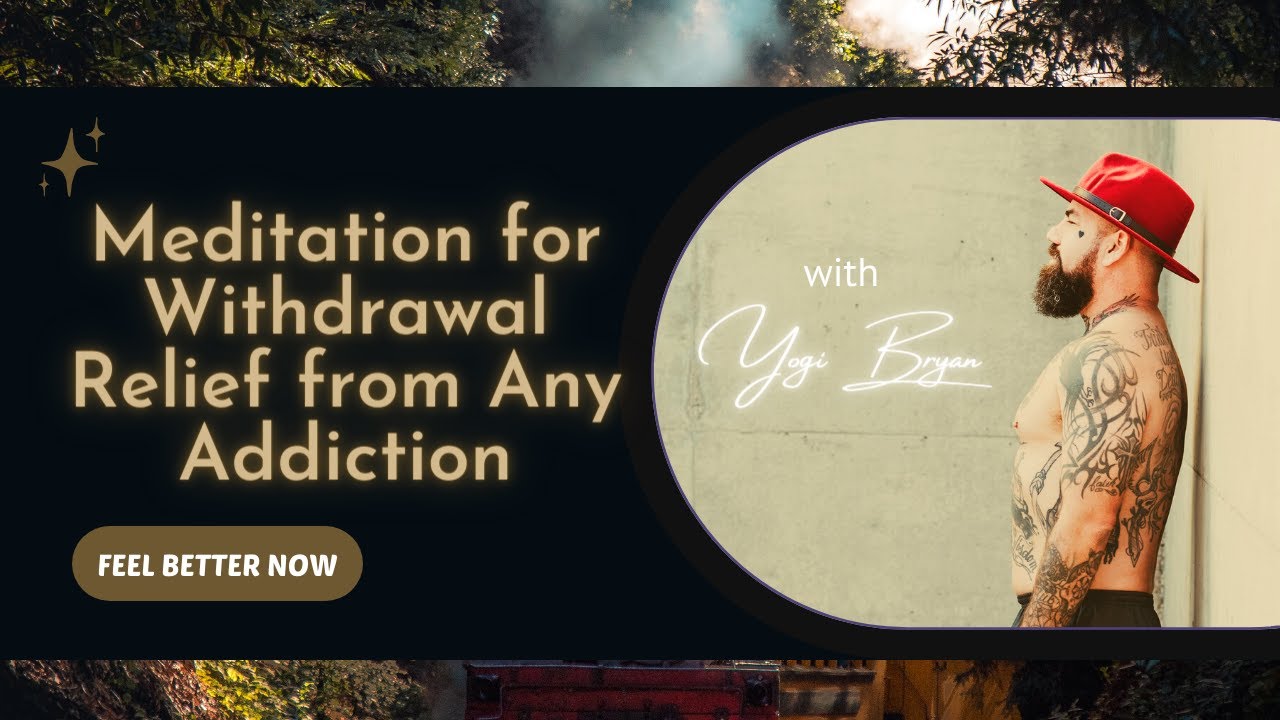
Withdrawal Relief Meditation: Breath, Cold Head, Warm Hands
Inspire

Withdrawal Relief Meditation: Breath, Cold Head, Warm Hands

A walkthrough of a 23-minute guided meditation for addiction withdrawal relief, covering ujjayi breath, the cold-head, warm-hands cue, and t…

1 min read
Yoga Nidra for Wholeness: Sankalpa and Body Scan Guide
Inspire

Yoga Nidra for Wholeness: Sankalpa and Body Scan Guide

A 35-minute guided Yoga Nidra rest that moves from breath to sankalpa to a full body scan and back to waking. Here is how its structure work…

1 min read
This Belongs: The Ocean Meditation for Meeting Every Wave
Inspire

This Belongs: The Ocean Meditation for Meeting Every Wave

Tara Brach's guided meditation "Everything Belongs" turns a body scan into an ocean metaphor and a two-word practice. Here is how "This belo…

1 min read

Keep exploring

Continue your journey

More wisdom and gatherings from across the BrightStar directory.

More Articles

Browse the full library of teachings, interviews, and guides.

Back to all articles →

Teachers & Artists

Explore the lineages, musicians, and guides of the conscious world.

Explore artists →

Find an Event

Kirtan, retreats, sound baths, breathwork, festivals — happening soon.

Browse events →