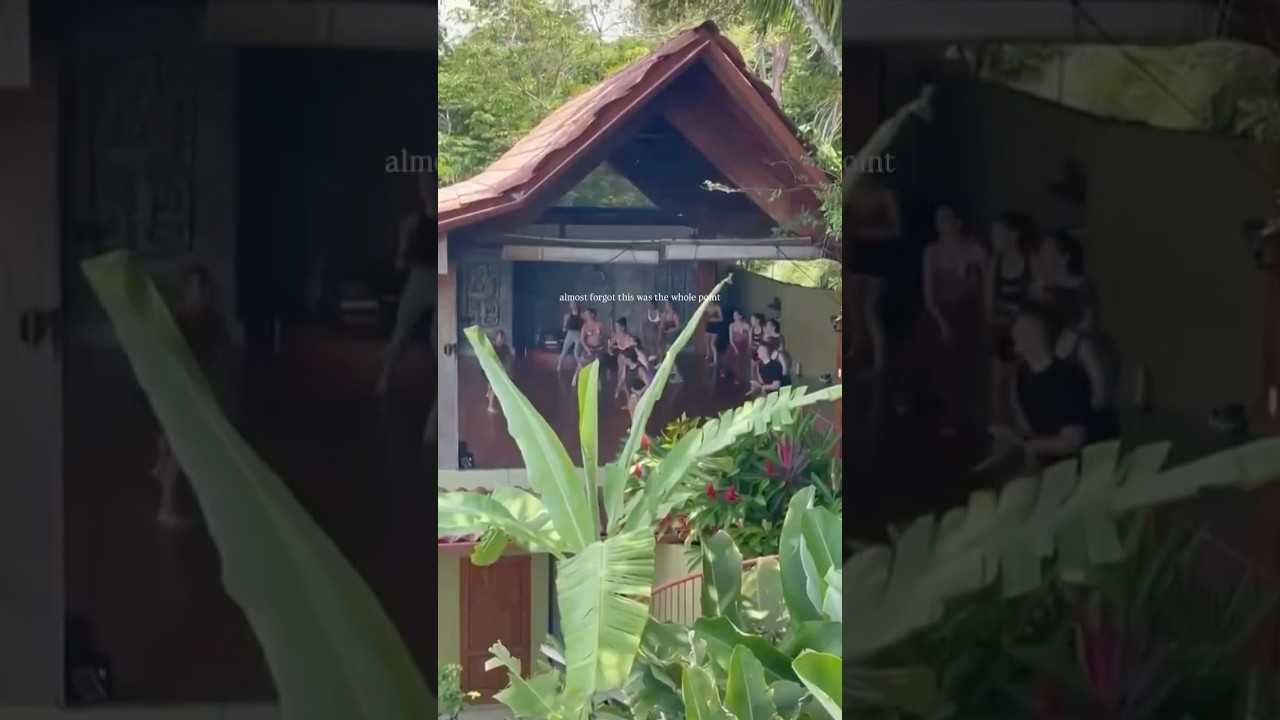
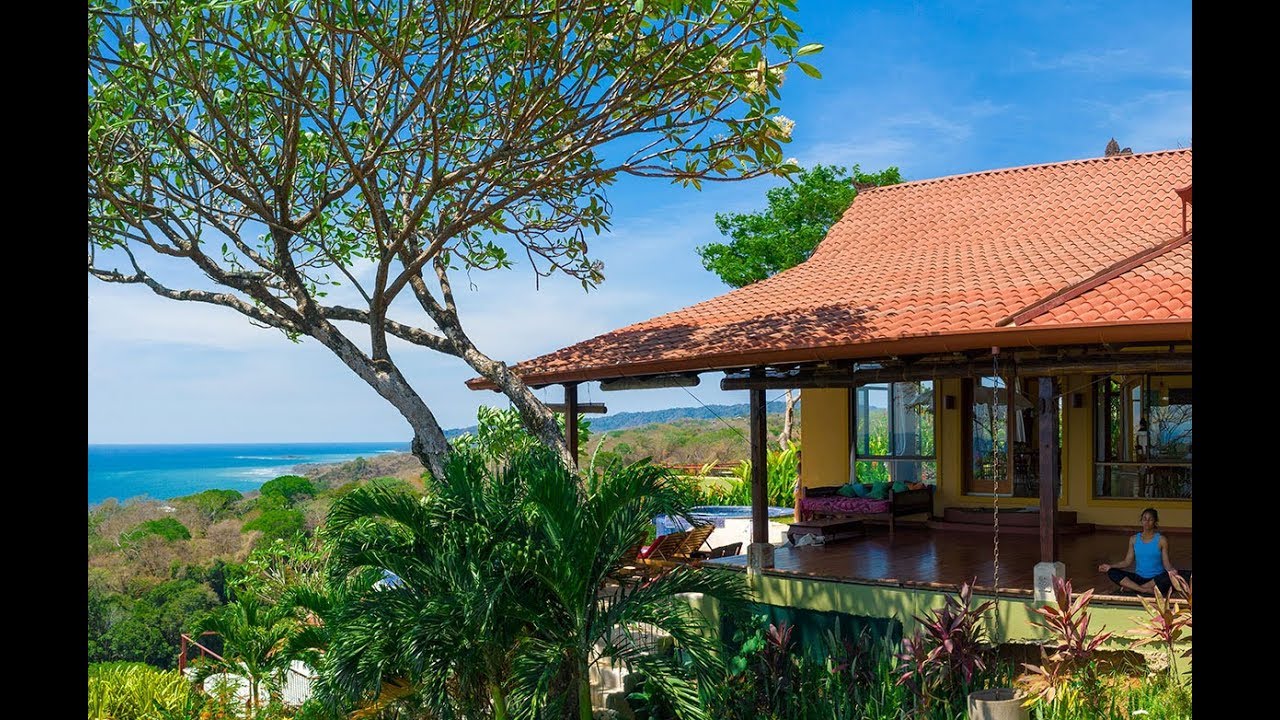
There's a particular kind of alchemy that happens when rigorous spiritual training meets raw natural beauty. The jungle doesn't negotiate or flatter—it simply is, with a density and presence that mirrors the work of turning a dedicated practitioner into a teacher. Anamaya Resort's yoga teacher training program operates in this intersection, positioning itself not as an escape from intensity but as a container for it, one framed by canopy and ocean.
The choice of where yoga teacher training happens is far from incidental. For centuries, yogic traditions have recognized that the external environment shapes the internal work. A student learning to hold space for others—to read the room, to understand the somatic vocabulary of breath and alignment, to embody steadiness—needs a space that itself embodies those qualities. Costa Rica, with its biodiversity and what many describe as a naturally grounded energy, becomes part of the curriculum rather than mere backdrop.
Anamaya's location in one of the world's most visually stunning regions means students encounter the training not in a fluorescent studio but within a landscape of genuine abundance. This isn't marketing language alone; the neurological reality is that beautiful environments reduce stress reactivity and create the nervous system conditions optimal for learning and integration. Teachers emerge not just with technique but with an embodied understanding of how nature itself teaches presence.
Modern yoga teacher certifications—whether 200-hour, 300-hour, or specialized tracks—demand mastery across multiple domains: anatomical literacy, the philosophy underpinning asana and pranayama, the ethics of the Yoga Sutras or other classical texts, and the art of verbal and physical cueing. A teacher must learn not just to perform poses but to understand the architecture of how bodies differ, where common injuries originate, and how to offer modifications that honor both safety and accessibility.
Beyond technique, teacher training requires something harder to quantify: the cultivation of presence. A good teacher doesn't simply transmit information; they hold a frequency. They've practiced long enough to recognize their own patterns of tension, ambition, and self-doubt—the very obstacles that would otherwise leak into their teaching. They understand that students come to yoga carrying unprocessed grief, chronic pain, trauma patterns. Teaching becomes an act of witnessing, not performing.
Residential teacher trainings like Anamaya's operate on a principle foreign to many modern learning models: depth through immersion. Rather than commuting to evening classes while juggling work and family, students step outside the normal rhythm of their lives for weeks or months. This creates the conditions for real transformation. You're not returning home each night to the habits and relationships that reinforce old patterns; instead, you're living alongside others engaged in the same intensive work.
The community that forms during immersive training often becomes foundational. These are the teachers you'll call when you're facing your first class, the peers who understand why teaching can sometimes feel lonelier than being a student, the friendships forged in the specific crucible of shared practice and study. The location—a beautiful resort in Costa Rica—compounds this: students arrive knowing they're investing not just in certification but in a complete reset, a deliberate pause where the primary work is inner.
If you're considering yoga teacher training, ask yourself first whether you're drawn to teaching or to deepening your own practice under closer guidance. Both are valid paths; they simply require different programs. If teaching calls you, research programs that match your philosophical lineage—whether that's Hatha, Vinyasa, Kundalini, Iyengar, or another tradition. Consider whether you learn better in urban environments or in retreat settings. Look at the faculty credentials and their own practice lineages. And don't underestimate the power of location: a training in a place that already feels sacred to you may accelerate integration in ways purely academic curricula cannot. Anamaya's approach—grounding rigorous instruction within natural beauty—represents one legitimate model for this transformative passage.