You walk into a room where someone is angry, and within seconds, your chest tightens. A friend calls with bad news, and you can't shake the weight of it for hours. You've learned to call yourself sensitive, maybe empathic—but what you're really contending with is a permeability that most people don't experience. For empaths, the boundary between their own emotional experience and everyone else's can feel nearly invisible. That's not a flaw in the system. It's a feature asking to be understood.
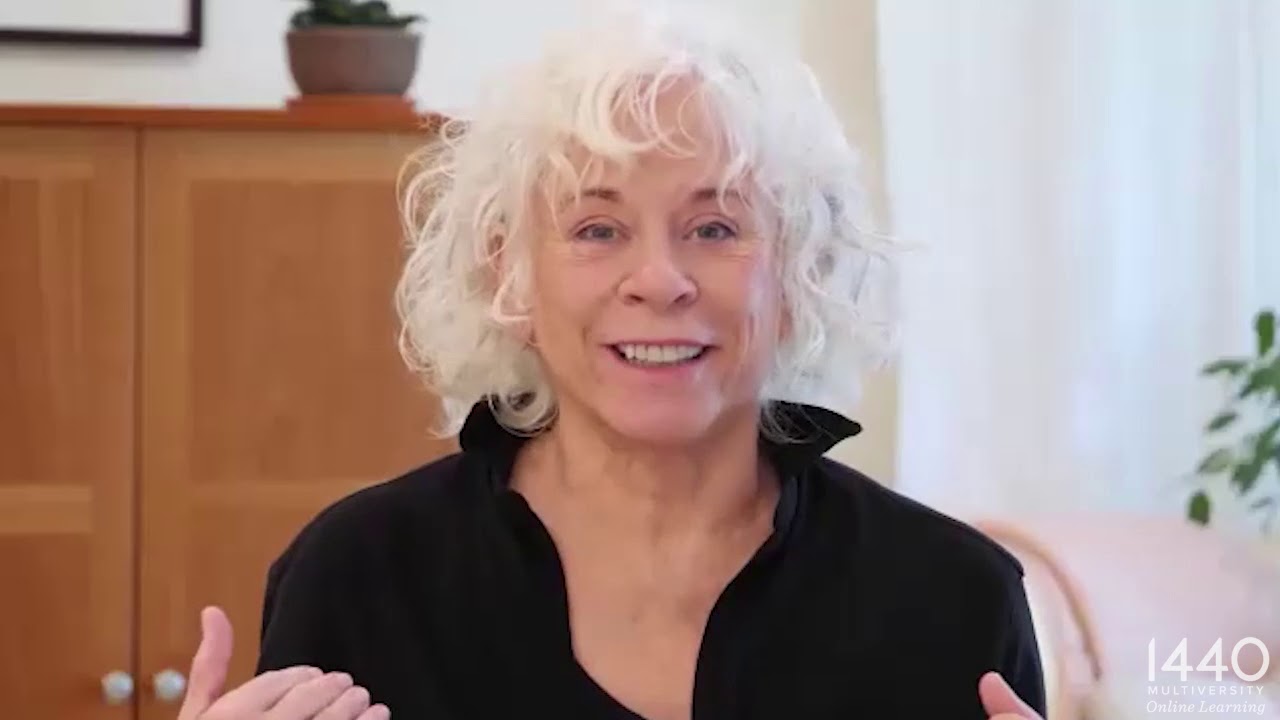
Spiritual teacher and empathic healer Matt Kahn reframes what it means to absorb others' energies, and in doing so, offers something genuinely practical: not how to shut down, but how to stay present without drowning. In a live session at 1440 Multiversity, he walked through the misunderstanding that keeps empaths exhausted—and the one tool that changes the game.
What You're Actually Feeling Might Not Be Yours
The first shift Kahn offers empaths is philosophical but urgent: question whether what you're feeling belongs to you. "The core teaching," he explained, "is questioning whether the things we feel are actually ours. Like, what if it's our experience but what if it doesn't belong to us?" This distinction matters because the old spiritual paradigm taught that you should "fix and resolve what we think is ours." But if the weight you're carrying isn't yours to begin with, fixing it is an act of self-betrayal.
For empaths, the realization lands differently. "What if what I feel is not mine? We understand as empaths that what I'm feeling is perhaps other people's experiences," Kahn said. "The only reason that I'm feeling other people's experiences is because my energy field is helping." This reframing transforms the empath from victim to conduit. You're not broken; you're resonating with someone else's pain because some part of you knows how to transmute it.
But here's what makes this teaching useful instead of just comforting: it means you have a choice. You're not bound to match every emotion in your vicinity. You're not obligated to merge your nervous system with everyone else's turmoil. You're a healer in training, Kahn insisted, but healing doesn't require you to become the wound.
Why Empaths Match the Energy of Others
The mechanism is both subtle and primal. When someone around you is in emotional chaos, your body picks it up instantly—not through telepathy, but through mirroring. "When people are in emotional turmoil, we match their experience, we merge with them," Kahn explained. "So to stay safe from any potential attack, we start breathing shallowly with people who are in emotional stress." Your nervous system, reading the room as a potential threat, synchronizes with theirs in an unconscious bid for safety. If they're panicked, you become panicked. If they're heavy, you become heavy. It's an old survival mechanism trying to keep you safe by staying invisible.
The irony is that this matching doesn't actually protect you. It entangles you. And for empaths, entanglement is exhaustion.
The Breath as Anchor and Transmitter
Kahn's core offering is spare enough to seem almost too simple: change your breath. "If we can breathe slower than other people, we're gonna actually have an experience different from other people." Not metaphorically different—actually different. "Because subconsciously, when people are in an emotional turmoil, we match their experience. We merge with them." But if you hold a slower breath, your nervous system stays in its own rhythm. You remain differentiated.
This isn't about avoidance or dissociation. It's the opposite. "If I can breathe slowly in the presence of someone going through turmoil, I am in effect holding space of light for their experience while being able to stay in my own unique experience without needing to match them in order to be in their presence." You're not shutting them out. You're not blocking their pain. You're standing beside them in a different nervous system state—calm, centered, present—and that presence alone becomes a transmission. Your steadiness becomes their flashcard for what's possible.
This is what distinguishes an empath who's been trained from an empath who's been trampled. The trained one learns to shine without merging. To feel without drowning. To hold space by literally holding their own breath as an anchor.
How This Works in a Chaotic World
The pressure on empaths sharpens when they step out of their homes. "A lot of empaths will say, 'I know how to be at peace in my home. I don't know how to be at peace in this crazy world,'" Kahn observed. The world moves fast, speaks loud, broadcasts pain constantly. An empath in this environment is like a tuning fork in a concert hall—resonating with everything.
"If we learn to breathe slower than the world, we learn to hold space for the world, we shine a light that transforms the world simply by being willing to be one with our breath." The metaphor matters. You're not transforming the world through willpower or manifestation work. You're transforming it through your own nervous system coherence. The slower you breathe than the chaos around you, the more you become a gravitational center for calm. Other people feel that. They might not know why they feel safer around you, but they do.
This is the empath's actual superpower—not absorption, but stabilization. Not taking on the world's pain, but holding a container for it to move through.
Taking Conscious Responsibility
When someone in the session asked Kahn about external threats—chemtrails, government control, frequencies being altered—his response revealed the philosophy beneath the breathing practice. "The government, like every other reality, is a reflection of our belief about it. These things may exist, but what exists is our relationship with these things."
The move is subtle but powerful. You stop positioning yourself as powerless against external forces. Instead, you recognize that your only real agency lies in your response. "We can't control the government. We can't control chemtrails. But we can control how well we take care of ourselves. We can't control how deeply we love ourselves, and we can't control how often we slow our breath." Each act of self-care, each conscious breath, becomes a vote for your own evolution rather than a defense against an enemy.
For empaths, this is crucial. You're prone to absorbing not just emotions but narratives—stories of threat, victimhood, helplessness. The teaching here is that your conscious choice to tend yourself, to breathe intentionally, to love deliberately, is itself a form of resistance. Not reactive resistance, but generative resistance. You're building something real in response to what feels broken.
Life as a Training Ground for Angels
Kahn offered a final reframing that ties the whole teaching together. "Life is the training planet for evolving angels. All of us really are here to remember that we're angels in training." This isn't metaphor-speak. It's a way of seeing why the world is so hard and why empaths feel so much. "This planet is giving us the exact curriculum we need to learn how to shine our light as potential spirit guides in the future."
So when you feel overwhelmed by others' pain, you're not failing. You're graduating. The heaviness is the textbook. Your job isn't to escape the curriculum; it's to learn the lesson—which is how to remain luminous while others are still in darkness. How to hold your own breath while everyone else is panicking. How to love yourself so fiercely that your love becomes something the world can feel.
For empaths, that's not just healing. That's purpose.
Where to go from here
If you identify as an empath, Kahn's teaching invites an experiment: practice slowing your breath deliberately, especially in moments of activation. Not as a way to "fix" yourself or block others, but as a way to stay in your own nervous system while remaining open to the world. Notice what changes when you breathe slower than the chaos. Notice how your presence shifts. Notice whether others sense the steadiness. The technique is simple, but the implications are vast—because when an empath learns to hold space rather than absorb it, they become not a wound that collects others' wounds, but a light that teaches others what's possible.
1440 Multiversity is a 75-acre nonprofit learning retreat in the redwoods of Scotts Valley, California, founded by philanthropists Joanie and Scott Kriens and opened in May 2017. N…
Slow your breath deliberately. By breathing slower than the people or environment around you, you stay in your own nervous system while remaining present to others' experiences. This prevents the unconscious merging that exhausts empaths and instead allows you to hold space for others without absorbing their energy.
When people around you are in emotional turmoil, your nervous system unconsciously mirrors theirs as a survival mechanism—you match their breath and emotional state to stay safe from perceived threat. For empaths, this merging happens automatically, which is why they feel so drained after being around emotional chaos.
Yes. The key is learning to feel others' experiences without matching their energy. By maintaining your own centered, slower breath, you hold what's called a "space of light" for their pain—you remain calm and present while they move through their experience, and that steadiness itself becomes healing.
Both, until you understand it. Empaths are described as healers in training—their sensitivity is preparation for learning how to transmute others' pain without being destroyed by it. Once you master your nervous system (through practices like intentional breathing), your empathy becomes a real superpower.
Protection through blocking is actually entanglement in disguise. Instead, establish your own rhythm through slower breathing and deeper self-love. When you're anchored in your own nervous system, you naturally repel emotional merging while remaining compassionately present.
Empaths who breathe slower than the chaos around them become gravitational centers for calm. That steadiness is a transmission—others sense it, their nervous systems downregulate around you, and you become a living example of what's possible. The world transforms not through force but through your coherence.