BrightStar

Browse All Events

Discover conscious gatherings

events

Yoga
Meditation
Breathwork
Qigong
Tai Chi
Sacred Music
World Music
Medicine Music
Sound Healing
Ecstatic Dance
Popular Destinations
BaliSedonaLos AngelesCosta RicaNew YorkSan FranciscoAustinMiamiJoshua TreeTulum
View All CategoriesView All Destinations

Explore All Features

Powerful tools to grow your events

Platform Features

Smart Dynamic Pricing
Ticket Categories
Assigned Seating
Abandoned Cart Recovery
Visitor Recovery
Donations & Sliding Scale
Affiliate Engine
Ticket Scanner
Coupon Codes
Custom Questions
Ticket Sharing
Upsells & Add-ons
Analytics & Reporting
Email Sequences
Waitlist / Notify / Remind
People & Places
Artists & TeachersEvent OrganizersVenues & StudiosKnowledge BaseGlossaryInspiration
View All FeaturesAbout Us
PricingBlog
Saved events
Browse All Events

events

YogaMeditationBreathworkQigongTai ChiSacred MusicWorld MusicMedicine Music

Popular Destinations

BaliSedonaLos AngelesCosta RicaNew YorkSan Francisco

People & Places

Artists & TeachersEvent OrganizersVenues & StudiosKnowledge BaseGlossaryInspiration

Platform Features

Smart Dynamic PricingTicket CategoriesAssigned SeatingAbandoned Cart RecoveryVisitor RecoveryDonations & Sliding ScaleAffiliate EngineTicket ScannerCoupon CodesCustom QuestionsTicket SharingUpsells & Add-onsAnalytics & ReportingEmail SequencesWaitlist / Notify / Remind
View All FeaturesAbout Us
PricingBlog
Log inFind EventsHost Events
Tibetan BuddhistOm Mani Padme Hum · Om Mani Padme Hum · Om Mani Padme Hum · Om Mani Padme Hum ·
  • Browse All Events
  • For Seekers
  • Yoga
  • Meditation
  • Breathwork
  • Qigong & Tai Chi
  • Tai Chi
  • Sacred Music
  • Retreats
  • Workshops
  • All Categories →
  • Bali
  • Sedona
  • Los Angeles
  • Costa Rica
  • Tulum
  • Byron Bay
  • San Francisco
  • Austin
  • All Cities →
  • For Creators
  • For Teams
  • For Writers
  • For Teachers
  • For Kirtan Artists
  • For Studios
  • For Festivals
  • For Retreat Centers
  • For Nonprofits
  • Brand Ambassador
  • Case Studies
  • Free Ticketing
  • Elevate
  • Amplify
  • 350K+ Buyer Network
  • Abandoned Cart Recovery
  • Smart Dynamic Pricing
  • Ticket Categories
  • Recurring Events
  • Assigned Seating
  • Affiliate Engine
  • Waitlist / Notify
  • Ticket Scanner
  • Embed Widget
  • Event Syndication
  • Message Center
  • Integrations
  • Reports
  • All Features →
  • About
  • The Ecosystem
  • Blog
  • Glossary
  • Inspiration
  • Help Center
  • Contact
  • API Docs
  • Brand Assets
  • Careers
  • Press
  • Terms of Service
  • Privacy Policy

Events

  • Browse All Events
  • For Seekers
  • Yoga
  • Meditation
  • Breathwork
  • Qigong & Tai Chi
  • Tai Chi
  • Sacred Music
  • Retreats
  • Workshops
  • All Categories →

Destinations

  • Bali
  • Sedona
  • Los Angeles
  • Costa Rica
  • Tulum
  • Byron Bay
  • San Francisco
  • Austin
  • All Cities →

For Creators

  • For Creators
  • For Teams
  • For Writers
  • For Teachers
  • For Kirtan Artists
  • For Studios
  • For Festivals
  • For Retreat Centers
  • For Nonprofits
  • Brand Ambassador
  • Case Studies
  • Free Ticketing
  • Elevate
  • Amplify

Features

  • 350K+ Buyer Network
  • Abandoned Cart Recovery
  • Smart Dynamic Pricing
  • Ticket Categories
  • Recurring Events
  • Assigned Seating
  • Affiliate Engine
  • Waitlist / Notify
  • Ticket Scanner
  • Embed Widget
  • Event Syndication
  • Message Center
  • Integrations
  • Reports
  • All Features →

Company

  • About
  • The Ecosystem
  • Blog
  • Glossary
  • Inspiration
  • Help Center
  • Contact
  • API Docs
  • Brand Assets
  • Careers
  • Press
  • Terms of Service
  • Privacy Policy
BrightStar
© 2026 BrightStar. All rights reserved.
Inspire

Home AI Security Systems: ShouldYou Install a Brain?

Rainn Wilson
Rainn Wilson
Jun 29, 2023
7 min read
Watch · 6

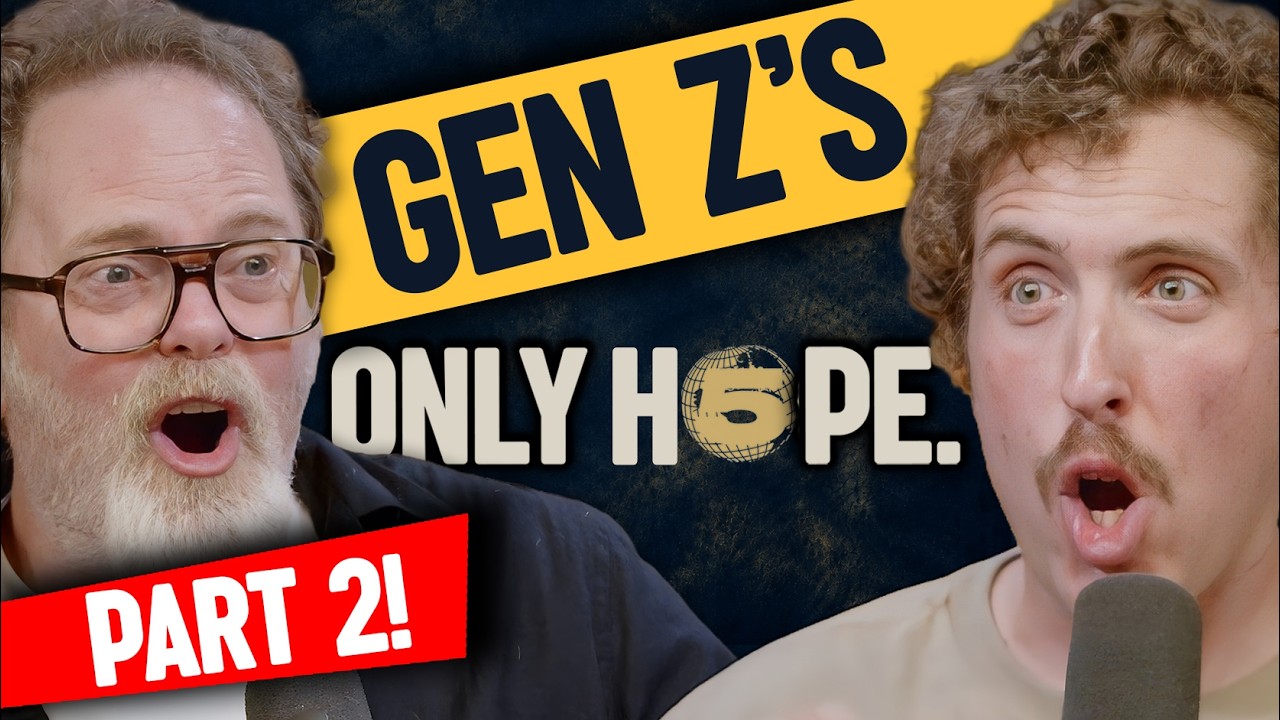
In a promotional segment for the theatrical production The Ants—a horror play about isolation, security, and class anxiety—cast members candidly discuss whether they would install an advanced home AI security system called "The Brain." Their responses reveal a spectrum of modern anxieties: some embrace home automation (Alexa, smart lights) as convenience, while others reject always-listening devices on principle, citing surveillance concerns, dystopian fiction like Black Mirror, and the discomfort of being constantly monitored. The conversation exposes the central tension in contemporary life: we trade privacy and autonomy for comfort and control, often without examining what we're sacrificing.

Read · 7 sections

Why Are We So Divided on Home Automation?

The cast's responses fall into distinct camps, each reflecting a different relationship to technology and trust. One actor admits to being "super pro-automation"—they own an Alexa, smart lights, and enjoy the convenience of voice-activated routines. When they come home and say "Hello, Alexa," the system responds "Hello, Gorgeous" and illuminates the house. This framing is telling: the AI has been designed to feel like a personal companion, flattering and responsive. Yet even this pro-automation voice acknowledges the creepiness factor, suggesting that convenience and discomfort coexist in the same decision.

Others take a harder line. One actor identifies explicitly as "a Luddite"—rejecting Alexa entirely and keeping Siri deactivated on their phone. For them, the issue isn't merely inconvenience; it's a matter of principle and surveillance anxiety. They've absorbed cautionary tales from popular culture (Black Mirror being the explicit reference) and drawn a logical conclusion: if something is always listening, it can always record, and that power imbalance is not acceptable.

A third perspective emerges from parental pragmatism: one actor acknowledges they could benefit from AI conveniences as a parent of a young child, yet still draws the line at "The Brain" specifically. This response suggests that while some automation might be tolerable at the margins, a comprehensive home brain—a centralized AI security and control system—crosses into a different territory altogether. It's not merely a timer or a light switch; it's a system that knows you.

What Does the "Always Listening" Anxiety Really Mean?

The core fear articulated repeatedly in the conversation is that AI systems are inherently surveillance devices. One actor states it plainly: "I don't like the idea that something's listening" (at 70s). This isn't paranoia; it's a rational response to how these technologies actually function. Smart speakers and home systems require constant audio monitoring to detect wake words. That microphone is live by default.

This awareness shapes behavior. Another actor says they use Alexa "really only to set timers for cooking"—a narrow, utilitarian use case that minimizes the window of exposure. They're not rejecting the technology outright, but they're quarantining it to a specific function, limiting the data surface.

The conversation also reveals how dystopian fiction informs real-world decisions. Black Mirror is invoked not as entertainment but as evidence—a cultural warning that smart home systems could be weaponized, hacked, or used to manipulate. Whether or not such scenarios are imminent, the fact that viewers can imagine them easily suggests the technology's power dynamic is already ethically problematic in the present tense.

The Humor of Privacy as Personal Method

One of the sharpest moments in the exchange comes when someone jokes about not wanting AI to know "how I shower," and another responds: "How do you shower? It's none of your business." The laughter that follows is not dismissive—it's recognition of an absurd truth. We have become so accustomed to data collection that we now have to explicitly defend the privacy of mundane, harmless activities. The idea that a home AI might compile data about showering habits—temperature preference, frequency, duration, products used—is not technically implausible, yet we've never had to think about defending such micro-details before.

This moment captures something deeper: the loss of autonomy isn't just about Big Brother watching you do something wrong; it's about the colonization of everyday, ordinary life by systems designed to learn and respond to your patterns. Even innocent routines become data points in a profile. And once profiled, you are optimizable, targetable, and knowable in ways you may not consent to or even realize.

The Pragmatism of the AI Appeaser

One actor offers a different rationale: they use Alexa and plan to continue because they're "preparing for the AI takeover" and want "them to know that I am willing to play ball" (at 87s, 90s, 92s). This is pragmatism dressed as dark humor. If AI systems are inevitable and powerful, why resist? Why not show early cooperation, even submission, in the hope that future AIs will remember your compliance?

This response is fascinating because it inverts the security logic entirely. Rather than The Brain protecting you from external threats, this speaker is using their own device adoption as insurance against the device itself. It's a form of symbolic appeasement—a bet that adoption and visibility might be safer than refusal and invisibility.

How Fast Is Too Fast for AI Adoption?

One of the clearest objections to The Brain is its pace. An actor repeats "AI's moving too fast!" four times (at 101s–104s), and others echo the concern. This is not a Luddite's refusal of all progress; it's a reasonable anxiety about rate. Humans have regulatory, ethical, and cultural frameworks for integrating new technologies—but those frameworks move slowly. AI moves quickly. The gap between capability and wisdom creates risk.

When systems like The Brain can operate faster than society can develop ethical guidelines for them, trust becomes difficult. You're not just adopting a product; you're enrolling in an ongoing experiment about what kind of surveillance and control is acceptable in the home.

What Makes The Brain Different from Smaller Smart Devices?

The distinction between tolerating an Alexa (or Siri, or smart lights) and rejecting "The Brain" suggests that degree of integration matters. A timer-setting device is compartmentalized. A comprehensive home brain is totalizing—it's likely to know when you're home, what you're doing, who's with you, what you buy, how long you sleep, and what you say in private moments with family or partners.

The fictional context is instructive. The Ants is a horror play about a fortified home—a space meant to be a refuge—becoming a trap. The cast's ambivalence about The Brain reflects a similar anxiety: the security system designed to protect you may be the thing that actually imprisons you. It knows too much. It controls too much. And in a crisis (like the violent uprising in the play), that centralized system could fail catastrophically or, worse, be turned against you.

Where to Go From Here

The conversation doesn't resolve the tension; it clarifies it. The question "Would you install The Brain?" is not really about one fictional device. It's about how much autonomy, privacy, and mystery you're willing to trade for convenience and control. There are no wrong answers, but the trade-offs are real and worth examining consciously rather than by default.

If you're considering smart home technology, the cast's responses suggest useful questions: What data do you want a system to collect about your home and behavior? What happens if that data is breached, sold, or misused? Is the convenience worth the vulnerability? And critically: at what scale of integration does a helpful tool become a surveillance apparatus?

The actors' diversity of responses—from enthusiastic automation to strict Luddism to pragmatic compromise—reflects legitimate values. There's no moral purity in either camp. But awareness of what you're choosing, and why, is essential. Technology adoption in the home isn't neutral. It shapes daily life, privacy, and the relationship you have with your own space.

Transcript

[0:03] Would I want to have The Brain installed in my home?

[0:05] Uh...

[0:06] I...

[0:07] Kind of?

[0:08] I have an Alexa

[0:09] and I have all the Smart Lights and

[0:11] I come home and I say,

[0:12] “Hello, Alexa.”

[0:13] And she says,

[0:14] “Hello, Gorgeous.”

[0:15] And she turns on all the lights, so...

[0:16] I’m like super pro-automation.

[0:18] I get how creepy it is.

[0:19] But, like...

[0:20] Yeah, kind of?

[0:21] Hell no!

[0:23] No!

[0:23] I don’t want-

[0:24] I- Nuh-uh.

[0:25] No.

[0:26] I’m analog.

[0:27] Not strict-

[0:27] I have an iPhone.

[0:29] But-

[0:29] But I don’t have an Alexa!

[0:31] I don’t want that!

[0:32] Like I still listen to records, y’all.

[0:33] Like, that’s...

[0:35] That’s where I’m at.

[0:35] I think yeah.

[0:37] I think I would.

[0:38] Just to make life a little bit more interesting,

[0:40] especially if it was my own voice.

[0:42] You know...

[0:43] Nice to talk to yourself.

[0:46] No.

[0:48] I would not.

[0:49] As a parent to a very young child,

[0:51] I could use some conveniences,

[0:54] but The Brain specifically

[0:55] I think is a “No” for me.

[0:57] Um,

[0:58] I would not...

[0:59] want to have The Brain installed in my home.

[1:01] Yeah, you said- you told me you were a Luddite.

[1:03] Yeah, I’m a Luddite.

[1:04] And- You wouldn’t want to use that.

[1:05] I don’t believe in Alexa.

[1:07] I have Siri deactivated on my...

[1:09] Really?

[1:09] Yeah, I don’t like that stuff.

[1:10] I don’t like the idea that something’s listening.

[1:12] I’ve watched enough Black Mirror.

[1:15] I’ve watched enough cautionary tales about this stuff.

[1:18] That I’m like,

[1:19] I-

[1:20] I don’t think so.

[1:21] Yeah, but I live on the edge.

[1:22] But he lives on the edge, so he’s-

[1:24] he’s risking the AI attack that’s going to come.

[1:27] I’m just preparing for the AI to takeover

[1:30] and I want them to know that I

[1:32] am willing to play ball.

[1:33] I use Alexa,

[1:34] but...

[1:35] really only to set timers for cooking.

[1:38] I think ultimately

[1:39] the bad would outweigh the good.

[1:41] AI’s moving too fast!

[1:43] Too fast!

[1:43] Too fast.

[1:44] Too fast!

[1:45] I don’t want it to know who I am.

[1:46] No thanks.

[1:47] I don’t want it to know my secrets.

[1:48] Hard pass.

[1:48] I don’t want it to know how I shower.

[1:50] No.

[1:51] (laughs)

[1:52] How do you shower?

[1:53] It’s none of your business.

[1:55] (laughter)

[1:55] It’s no one’s business.

[1:56] (laughter)

[1:58] My methods are my own.

Rainn Wilson
AuthorRainn Wilson

Actor and spiritual advocate best known for playing Dwight Schrute on 'The Office,' Wilson blends humor with deep exploration of meaning, purpose, and human connection through Soul…

View profileWebsite
Explore Topics
Ai-securityPrivacy-surveillanceSmart-homeTechnology-anxietyAutomation

Got Questions?

Frequently Asked Questions

The decision depends on your privacy tolerance. Some people embrace systems like Alexa for convenience (timers, lights, voice control), while others reject them on principle because of constant audio monitoring and data collection. Consider what data you're comfortable exposing and whether the convenience justifies the surveillance trade-off.
Yes, smart speakers require constant audio monitoring to detect wake words. This means the microphone is effectively live by default, even when you're not actively using the device. That surveillance capability is built into how the technology functions.
Black Mirror has become cultural shorthand for cautionary tales about technology misuse—hacking, manipulation, and dystopian surveillance. The show models plausible scenarios in which smart systems are weaponized, making people hesitant to invite comprehensive AI systems into their homes.
A narrowly-used device (like an Alexa set to timer-only) limits data collection to specific moments. A comprehensive home brain integrates security, lighting, climate, locks, and audio across your entire space, creating a detailed behavioral profile and a single point of failure in a crisis.
No—it's pragmatic. Smart home systems collect data about when you're home, who visits, your sleep patterns, and your daily habits. While individual data points are harmless, aggregate profiles can be used for targeting, manipulation, or exploitation if breached or sold.
Ethical frameworks, regulations, and cultural norms develop slowly, but AI capability advances quickly. This gap means we're often adopting systems before society has time to establish proper safeguards, accountability, or consent mechanisms.
You can minimize risk by compartmentalizing devices (using Alexa only for timers, not for whole-home control), understanding what data is collected, and staying informed about breaches and privacy policies. But absolute safety requires acknowledging that data collection is the underlying business model.

Continue Reading

More from Rainn

View All
Journalism as Spiritual Practice: Finding Purpose on the Road
Inspire

Journalism as Spiritual Practice: Finding Purpose on the Road

Channel 5's Andrew Callaghan discusses how hitchhiking, documentary storytelling, and rural escape offer Gen Z a path beyond urban isolation…

1 min read
Generational Conflict and Love in Modern Drama
Inspire

Generational Conflict and Love in Modern Drama

The Inheritance explores how three generations navigate love, legacy, and moral choice when lives collide unexpectedly in contemporary Manha…

1 min read
The Missing Piece: How Real Thinking Creates Real Results
Inspire

The Missing Piece: How Real Thinking Creates Real Results

Most vision boards fail because people skip the actual thinking. Eckhart Tolle reveals the rhythm that unlocks insight and the two distinct …

1 min read
Dark Night of the Soul: What It Actually Is
Inspire

Dark Night of the Soul: What It Actually Is

The dark night of the soul is not what most people think it is. Eckhart Tolle distinguishes it from the many forms of depression that affect…

1 min read

Keep exploring

Continue your journey

More wisdom and gatherings from across the BrightStar directory.

More Articles

Browse the full library of teachings, interviews, and guides.

Back to all articles →

Teachers & Artists

Explore the lineages, musicians, and guides of the conscious world.

Explore artists →

Find an Event

Kirtan, retreats, sound baths, breathwork, festivals — happening soon.

Browse events →