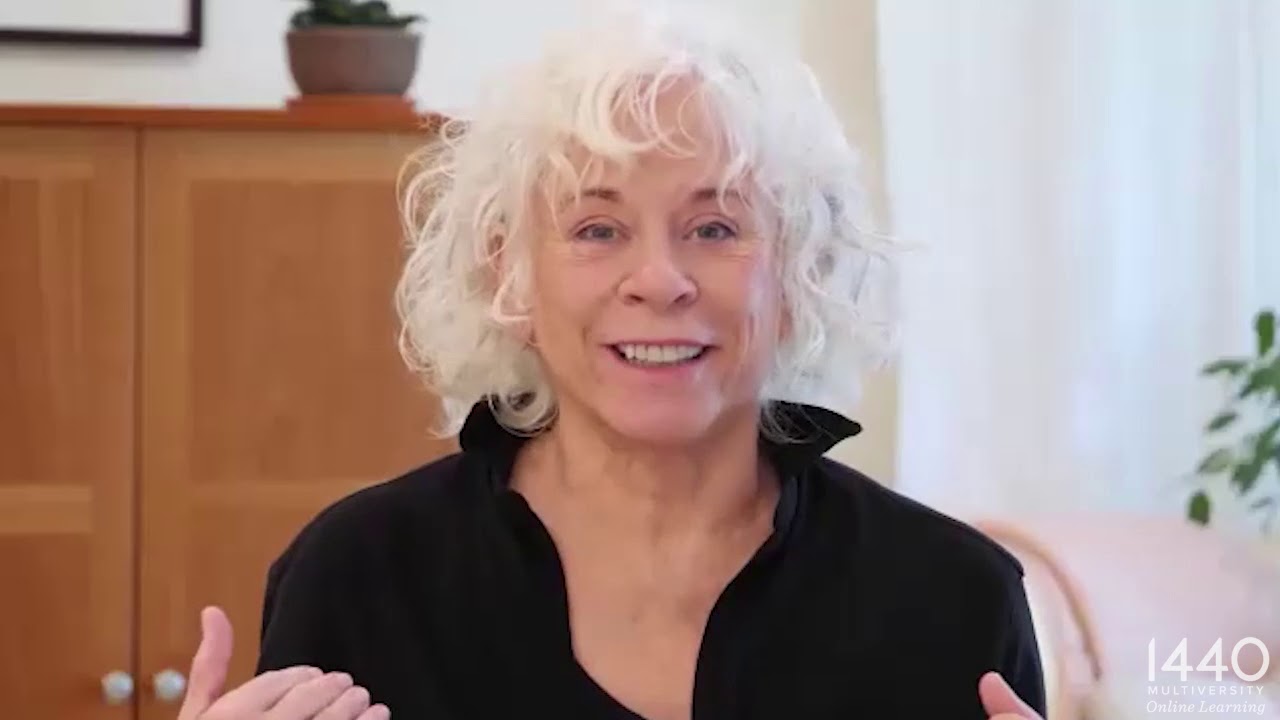
Scott Kriens opens with a simple arithmetic: there are 1440 minutes in a day. Not a mathematical curiosity, but a philosophical stance. That number is the name of his co-founded institute, and it carries a deliberate message about presence, about accounting for every moment of attention we possess. In an era when education has narrowed to credential-chasing and skill extraction, 1440 Multiversity exists as a counterweight—a physical and pedagogical space devoted to what Kriens calls "invest[ing] in all of ourselves: the heart, the spirit, the soul."
The Education System's Missing Half
Kriens diagnoses a familiar wound. Traditional education, he observes, has bifurcated the human being. "Our education system spends a lot of time on our heads," he says. "We learn science, we learn engineering, we learn math, but we don't learn so much about the social, relational, emotional, self." This is not an anti-intellectual stance—the statement presumes science and engineering matter. Rather, it's an imbalance recognized across the contemplative and developmental psychology worlds: we have built institutions to train minds while leaving hearts, relational capacities, and emotional literacy to chance or family inheritance.
The wager beneath 1440 is that this gap is not trivial. "That self and those relationships in our lives, that's the most important part of life," Kriens asserts. The statement sits at the core of the institute's logic. If the relational self is foundational, then an educational space worthy of the name must teach it as rigorously as calculus.
What Does "Whole-Self Learning" Actually Look Like?
1440 takes this philosophy off the page and into brick, redwood, and daily practice. Located in Northern California's Santa Cruz Mountains, the seventy-five-acre campus is what Kriens describes as "purpose-built"—a landscape engineered not for passive reception but for embodied experience. The physical plant reflects the pedagogical intent.
Teaching spaces vary: "intimate outdoor classrooms, amphitheaters and a large auditorium that seats over 700 people." The variety matters. An intimate circle in the forest teaches differently than a stage-lit auditorium; both are necessary for different kinds of learning and gathering. The campus houses 385 guests directly, with additional capacity in nearby facilities, allowing for scaled programming.
But infrastructure alone doesn't constitute whole-self education. 1440 embeds practice into the day itself. The offering includes "classes in yoga, meditation, Tai Chi, Qi Gong and more"—modalities that ask the body to participate in learning, not sit passively while the mind absorbs. A twenty-two-room healing arts facility with an infinity tub acknowledges that restoration and somatic care are not luxuries added after serious learning; they are central to it. Four miles of walking trails through the redwoods create space for contemplation, for the thinking that happens in motion and solitude.
The Kitchen Table as Culinary Principle
Perhaps unexpectedly, food becomes a teaching medium at 1440. "The Kitchen Table is the culinary heart of the campus," Kriens explains, and the menu design reflects pedagogical values: it "changes daily, there's a variety of cooking styles with seasonal and local ingredients, we serve lighter fare and hearty favorites." This is not merely wellness rhetoric. A daily-changing menu built on seasonal and local ingredients teaches economics, seasonality, and the relationship between land and nourishment. It models the opposite of the industrial food system. Shared meals, prepared with intention, are among the oldest educational technologies—they teach relationship, gratitude, and attunement to place.
Why Geography Matters: Silicon Valley Meets the Redwoods
1440's location is not incidental. The Santa Cruz Mountains place the institute in an unusual intersection: close enough to Silicon Valley and San Francisco ("an easy drive to San Francisco and about 30 minutes from the San Jose airport") that executives and thought leaders can access it, yet far enough into the redwood forest that the rhythm of tech-saturated life can be interrupted. Kriens notes this explicitly: "Because of our location we have unique access to Silicon Valley executives and Bay Area audiences."
This is strategic. The people most likely to benefit from education in the relational and emotional self—those operating at high velocity in capital-intensive, feedback-loop-driven environments—are also those most likely to dismiss it as soft. By placing the work in proximity to their geographic center while physically removing them into forest, 1440 creates a container where such learning becomes possible. The redwoods themselves become co-teachers: they teach slowness, depth, and the texture of time beyond quarterly earnings calls.
The Core Principle: Showing Up and Being Present
What ties all of this together—the 1440-minute philosophy, the varied teaching spaces, the healing arts, the trails, the daily-changing menu, the proximity to Silicon Valley—is a single operating principle. Kriens articulates it with precision: "1440 is really a principle, 1440 meaning the number of minutes in a day, showing up and being present to who we really are and learning and sharing that with each other in trusted relationships."
There are three elements here, nested within each other. First: presence—a commitment to attention that most education systems actively discourage. Second: self-knowledge—"who we really are"—which assumes the self is knowable and worth knowing, a premise that much professional education implicitly denies. Third: shared learning "in trusted relationships," which means education is never solitary accumulation but always relational, always witnessed, always held in the presence of others who matter.
This architecture—space designed for presence, programming built around whole-self development, a location that interrupts the habitual rhythm of Silicon Valley life—is what Kriens is inviting people into. Not a retreat center that offers occasional respite. Not a conference that prioritizes speaker curation and networking. But a different category altogether. "You'll find this is not like any place you've ever been. It's not like anything that you've ever done," he concludes. The claim, made without fanfare, is grounded in everything that precedes it.
Where to go from here
Those drawn to 1440's vision might ask: What kind of programs does the institute actually run? How long do people typically stay? What does a day look like? For answers, visit 1440.org directly. The institute's website will show current offerings, faculty, and registration information. The conversation Kriens initiates here—about what education could be if it made room for the heart as well as the head, for relationship as well as credentials—extends far beyond 1440's seventy-five acres. But this campus, with its trails and teaching spaces and daily-changing menu, is where such conversations have become practice.