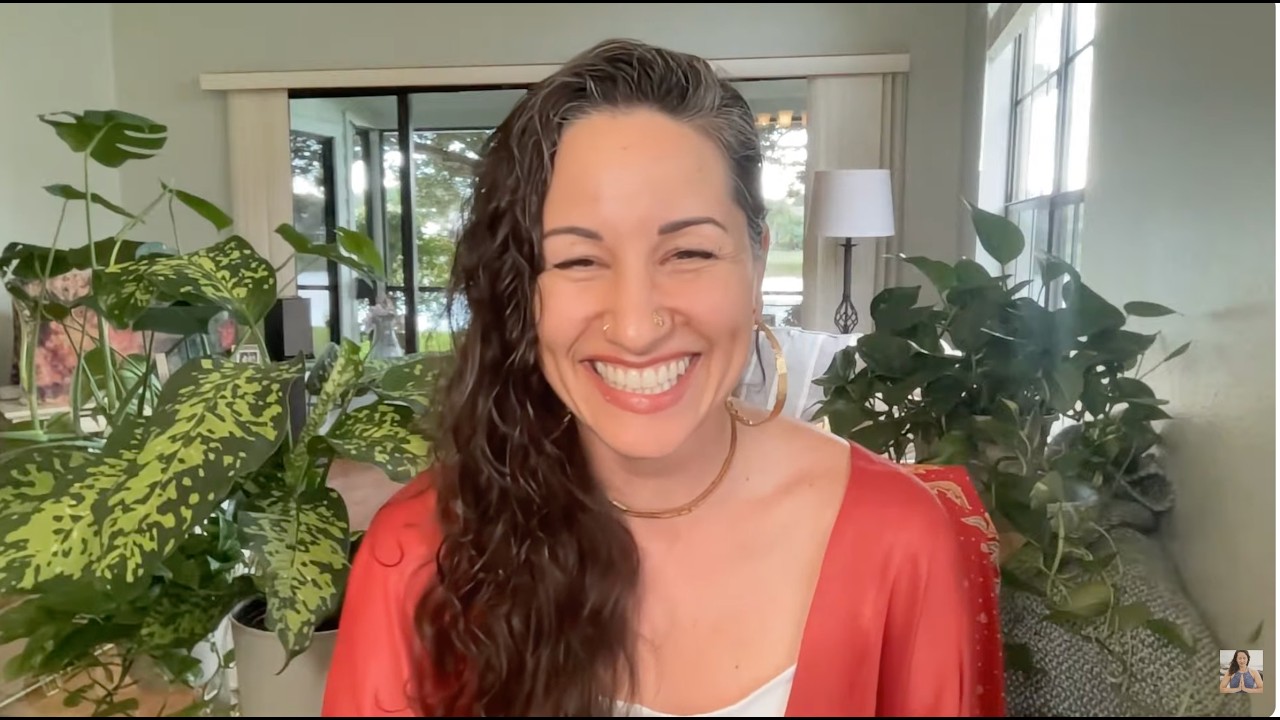
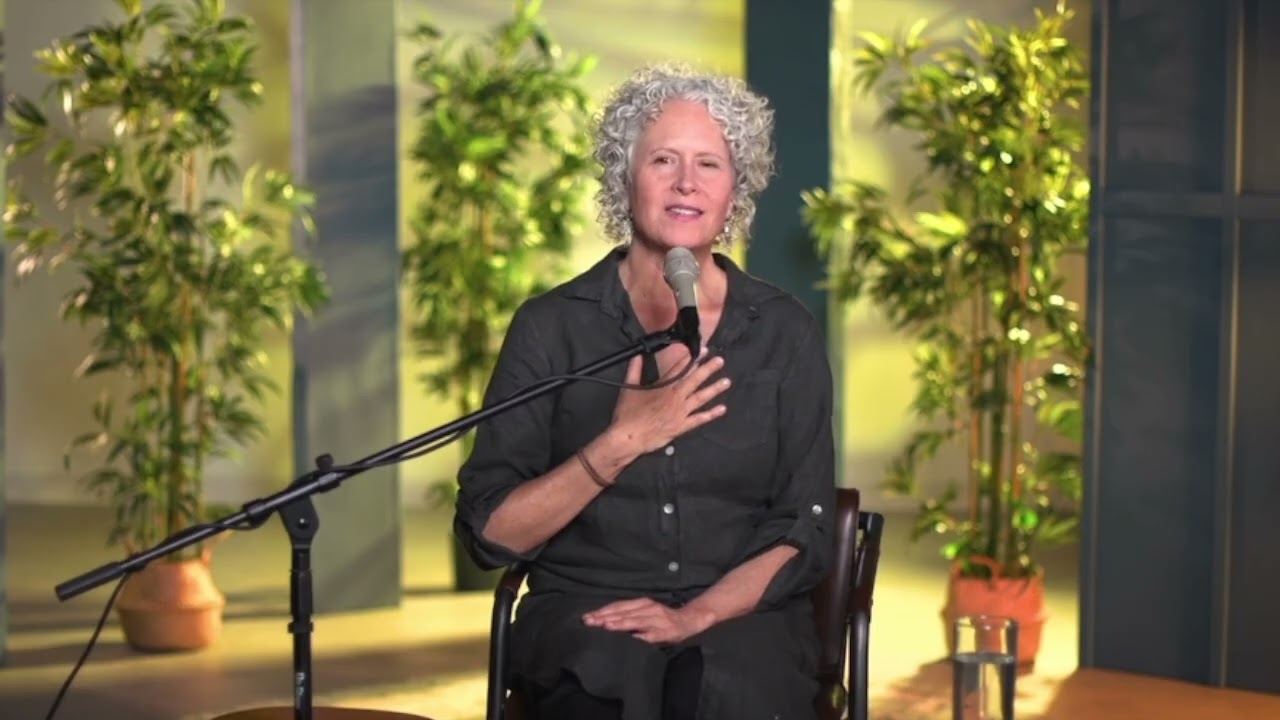
Lying on a mat with the feet relaxed wide and the palms turned up toward the ceiling, you are asked to do almost nothing. That is the premise of "Resting In Wholeness," a 35-minute Yoga Nidra practice led by Selena Lael, and it is where the craft lives. The session moves the body from settling to sinking to a feeling of floating, threads a single present-tense intention through the whole descent, and then returns the listener to waking with the same care it took to go down. Yoga Nidra is a practice of passive attention rather than effort, and this recording shows how much structure can sit inside an instruction to simply rest.
WhatdoesYogaNidraactuallyaskyoutodo?
The name is the first clue. In the opening minutes, Selena Lael explains that "Yoga Nidra translates to yogic sleep and is a powerful way to passively move into a deeper experience and state of ease and relaxation." The word passively matters. Nothing in the practice asks you to achieve a state. You are asked to position the body, follow a voice, and notice what arises.
Setup is treated seriously. Before any breathing begins, the teacher walks through props with the precision of a stage manager: a pillow or bolster behind the knees, something small under the neck or head, a blanket because "the body tends to cool down," and something to cover the eyes to "bring the awareness inward." Arms rest alongside the body with palms facing up. That posture is not decoration. A supported, open body gives the nervous system fewer reasons to stay on alert, which is the whole game in a practice like this.
Howdoesthebreathsetthepace?
Around the two-and-a-half-minute mark, the breath becomes the first object of attention. Listeners are invited to inhale and feel "the belly and the chest rising up toward the sky," then exhale and feel "the body softening down into the earth." The instruction is gentle but specific. Notice the coolness of air entering the nostrils and the warmth leaving them. Let a slight space open between the teeth so the jaw can begin to soften, and let the small muscles of the forehead, eyes, and mouth release.
This is the classic foundation of Yoga Nidra: a stable, simple anchor that gives the mind somewhere to rest while the body does its work. Notice the phrasing, too. "There is nothing else for you to do. Nothing else to fix or solve." That sentence recurs in different forms through the session, and by the time it returns it has become something close to a permission slip.
Whatisasankalpa,andwhydoesthe"Iam"matter?
The emotional center of the practice arrives at about 8:18, when the listener is asked to move the awareness into the center of the chest, "where there is this innate wisdom." From that space, the instruction is to ask the heart, "what is my deepest desire?" and to listen with an open mind.
The answer becomes a sankalpa, which Selena Lael defines as "an intention statement that is created in the present tense as if what we're desiring is already manifest, is already present in our lives." Her examples are specific: if the deepest desire is to remember the peace of one's being, the sankalpa might be "I am an embodiment of peace"; if it is to live joyfully, it might be "I am living my life joyfully in every moment."
Two craft details are worth noticing. First, the grammar. The teacher insists that the sankalpa begin with "I am," explaining that "anything we speak after I am in any language brings that into creation." Whether or not a listener reads that as metaphysics, it is a useful discipline. A goal written as a future wish ("I will someday feel calm") keeps the desire at arm's length. A statement in the present tense asks the listener to stand inside it. Second, the repetition. The sankalpa is silently repeated three times at its creation, then returns three more times later in the practice, so it functions less like a slogan and more like a melody the body learns.
Howdoesabodyscanmovethroughthewholeself?
At about 11:52, the practice shifts into rotation of awareness, the systematic sweep through body parts that gives Yoga Nidra much of its recognizable shape. The instructions are short and precise: "Sense all 10 toes. Feel the soles of the feet and heels. Sense the tops of the feet. Feel both ankles." The sequence climbs through calves, knees, hips, pelvis, belly, chest, back, shoulders, arms, wrists, hands, fingers, neck, jaw, tongue, eyes, forehead, ears, and scalp.
The sweep does two things at once. It gives the mind a sequence to follow, which is useful for a busy head that would otherwise wander into planning. And it trains a particular quality of attention: noticing without fixing. The listener is not asked to relax the foot or loosen the jaw by force. The instruction is to sense. Often that is enough, and the body softens on its own when it is simply noticed.
The scan ends with an instruction that is easy to read past: "Become aware of the whole body. The whole body. The whole body." The repetition is a deliberate pause, a moment to hold the entire physical self as one field rather than a list of parts.
Whathappensintheheavy-to-lightmovement?
This is the most distinctive stretch of the recording. Around 20:29, the instruction is to feel the body "becoming heavy. Heavy and even heavier with each breath, like the body is sinking down." Then, without a pause, the direction reverses: "The body becomes lighter. Lighter and lighter, becoming so buoyant. It's as if the body is beginning to float. Weightless like a feather in the air."
The polarity has a purpose. Heaviness invites the listener to let go of holding, to release the sense of supporting oneself. Lightness invites a different relationship with the body, one in which it becomes spacious rather than solid. Moving between the two gives the nervous system a clear contrast, and many people find that the floating image is where the practice feels most open. The speaker frames it as a turning point. "It is in this place that you remember who you are," she says, before naming that self as "a being of light. Eternal presence. Embodiment of love."
"You are worthy. You are lovable. You are cherished for who you are. Simply for being you."
(Selena Lael, guiding the practice, around 26:25 in the recording)
Those affirmations sit alongside the sankalpa and the repeated phrase "I am that I am," which closes out the deepest part of the session. The video description presents the same spirit in plainer terms: "Come exactly as you are. There is nothing to fix and nowhere to get." Whatever a listener makes of the spiritual language, the design is consistent. The practice keeps returning the listener to a state of acceptance rather than improvement.
Whydoesthereturntowakingmatterasmuchasthedescent?
Many guided rests end abruptly. This one does not. At about 28:49, the teacher acknowledges that some listeners may be using the practice to fall asleep and invites them to keep resting, ignoring the guidance to come out. For those who are ready to finish, the return is slow: fingers and toes, a deep inhale with arms reaching overhead, a long exhale, a roll onto one side, and then a seated position with eyes closed.
The closing gestures are ritual without being heavy. Hands rest over the heart in gratitude "to yourself for taking this time for nourishment, rest, and care." The sankalpa is recalled once more. Then the palms come together in anjali mudra, and the session dedicates its benefit outward with a chant. At about 32:47, the teacher explains that "Loka samasta sukhino bhavantu" means "may all beings in all of creation be happy and free," and invites listeners to join if they know it. The practice ends with Om Shanti, the word for peace repeated three times.
The sequence matters because a rest that ends abruptly can leave the body still in its softened state while the mind is jolted back. The gradual return gives the nervous system a chance to reorient, and the gratitude gesture gives the experience a shape that can be carried into the rest of the day.
Howshouldyouusethispractice?
The video's description makes certain claims about the wider benefits of Yoga Nidra: that it "has been shown to help calm the nervous system, reduce stress, improve sleep, and support emotional well-being." Those are claims made by the channel, and this article does not independently verify them. What the recording does offer is a clear, carefully paced structure that a listener can learn and return to.
A few practical notes from the practice itself. Stay still for the full duration if you can; the teacher notes the benefits are "most powerful when we remain still throughout." Choose a sankalpa that you can say in the present tense without strain. And if you tend to drift toward sleep, the instructions already make room for that.
Wheretogofromhere
Start with the structure, not the spiritual vocabulary. Lie down, set up the props Selena Lael describes, and let the breath be the anchor for the first few minutes. Once you can settle into that, bring attention to the heart, listen for one honest desire, and phrase it as "I am." Then let the body scan take you from toes to scalp, and notice the moment the body shifts from heavy to light. Practice the return as carefully as the descent.
Repeat the practice over several sessions rather than judging the first one. Yoga Nidra tends to reveal itself through familiarity: the sankalpa that felt forced on day one may sound different by week three, and the body scan may begin to feel less like a list and more like a way of listening. The practice asks for very little, and for many listeners that is exactly the difficulty.
Comments
Loading the conversation…
Transcript
[0:00] Welcome.
[0:02] My name is Selina Leayell. I am an
[0:04] international coach and teacher.
[0:08] And I'm so grateful to be together for
[0:10] this practice of Yoga Nidra.
[0:12] Yoga Nidra translates to yogic sleep and
[0:16] is a powerful way to passively move into
[0:21] a deeper experience and state of ease
[0:24] and relaxation.
[0:27] For this practice, I invite you to find
[0:30] a comfortable position, lying down if
[0:33] possible.
[0:34] If that's not possible, of course,
[0:36] you're welcome to be comfortable in a
[0:38] chair.
[0:40] If you are lying down,
[0:43] you may wish to be in bed or if you're
[0:45] on the floor, on some kind of padding
[0:47] like a yoga mat or a blanket.
[0:52] Take the feet a little wider than the
[0:55] hips.
[0:57] Allow the toes to fall out to the sides.
[1:02] Have whatever you need to feel really
[1:04] comfortable for this practice. You may
[1:07] wish to have a pillow or a bolster
[1:09] behind the knees.
[1:11] Something small for behind the neck or
[1:13] the head.
[1:16] The body tends to cool down, so you may
[1:18] wish to have a blanket.
[1:22] It's also nice to really bring the
[1:24] awareness inward, so you may wish to
[1:26] have something to cover your eyes as
[1:28] well.
[1:31] Allow the arms to be alongside the body
[1:35] with the palms facing up toward the sky.
[1:43] If the eyes are still open, I invite you
[1:45] to close them.
[1:51] Make any little adjustments you need,
[1:55] and then [music] find your way to
[1:57] stillness.
[2:00] The benefits of Yoga Nidra are most
[2:03] powerful
[2:05] when we remain still throughout the
[2:06] duration of the practice.
[2:09] Of course, if you need to move the body,
[2:11] that's perfectly okay.
[2:16] Again, find your way to stillness.
[2:22] Start to deepen the breath.
[2:29] As you inhale,
[2:32] feel the belly and the chest rising up
[2:36] toward the sky.
[2:40] And as you exhale, feel the body
[2:42] softening down into the earth.
[2:48] Inhale, there's this expansion
[2:51] with the breath through the torso.
[2:56] Exhale, feel the softening happening.
[3:03] With each breath, you may feel
[3:06] the muscles
[3:08] becoming more relaxed.
[3:13] A sense of the bones and the whole body
[3:17] becoming heavier
[3:20] as tension starts to melt.
[3:24] And the body settles into this support
[3:28] beneath you, behind you.
[3:45] Feel the coolness of the air
[3:48] as it moves in through your nostrils.
[3:53] And the warmth as it moves out.
[4:12] Sense the air moving across your skin.
[4:31] Allow a slight space between the teeth
[4:36] so the jaw can begin to soften.
[4:41] The small muscles
[4:44] in the forehead,
[4:47] around the eyes and the mouth, also
[4:50] soften.
[5:00] For these next few moments,
[5:02] allow your awareness to rest on the
[5:05] sensations of the breath.
[5:08] There is nothing else for you to do.
[5:14] Nothing else
[5:17] to fix or solve.
[5:27] Feel this flow of the breath
[5:30] moving in
[5:32] and out of the body.
[6:00] >> This is a time
[6:02] that is for you
[6:04] to rest,
[6:07] to be,
[6:11] to allow yourself
[6:15] to be here just as you are
[6:20] with whatever you're feeling or
[6:22] thinking.
[6:25] It's okay to be just as you are.
[6:40] Bring your awareness to the center of
[6:42] your chest,
[6:45] your heart center.
[6:51] Imagine or feel
[6:54] you are moving deeper
[6:56] and deeper into the space of your heart,
[7:00] where there is this innate wisdom.
[7:11] Deeper and deeper,
[7:17] touching into this peaceful
[7:20] wisdom
[7:22] of your heart.
[7:26] This space where
[7:29] you know what you need.
[7:44] And now from this space of the heart
[7:47] ask your heart
[7:50] what is my deepest desire?
[7:58] Listen for the answer with an open mind.
[8:18] And now let us create a sankalpa,
[8:22] an intention statement
[8:24] that is created in the present tense
[8:28] as if what we're desiring
[8:31] is already manifest, is already
[8:34] present in our lives.
[8:38] So, if your
[8:40] deepest desire
[8:43] is to remember the peace of your being,
[8:47] maybe your sankalpa is
[8:49] I am an embodiment of peace.
[8:55] Or if your deepest desire is
[8:58] to live in joy and enjoy your life,
[9:03] maybe your sankalpa sounds like I am
[9:07] living my life joyfully in every moment.
[9:12] As you create your sankalpa,
[9:15] I invite you to use the words I am.
[9:20] For anything we speak after I am in any
[9:23] language
[9:26] brings
[9:27] that
[9:29] into
[9:30] creation.
[9:33] So, create your sankalpa
[9:35] and then silently
[9:37] it three times.
[10:09] Take a deep, full breath in and out.
[10:16] As you feel the body becoming
[10:20] heavier,
[10:25] more relaxed
[10:27] with each breath.
[10:33] You are safe here.
[10:38] You are cared for.
[10:52] Become aware of the sounds far away.
[11:09] Become aware of the sounds in the space
[11:12] around you.
[11:30] Silently repeat
[11:33] in your mind,
[11:36] "I am awake
[11:39] and aware."
[11:52] We will now move the awareness
[11:55] to different parts of the body.
[11:59] Allow the body to remain still
[12:03] as your mind follows my voice.
[12:10] Sense all 10 toes.
[12:21] Feel the soles of the feet and heels.
[12:32] Sense the tops of the feet.
[12:44] Feel both ankles.
[12:54] Sense the lower legs, the calves and
[12:58] shins.
[13:08] Feel the knees
[13:11] and the space behind the knees.
[13:24] Sense the front and backs of the upper
[13:28] legs.
[13:42] Feel both hips.
[13:52] Sense [music] the whole pelvis.
[13:56] Heavy, relaxed.
[14:10] Sense the whole belly.
[14:22] Feel the waist
[14:24] and solar plexus.
[14:34] Become aware of the whole chest.
[14:49] Sense low back.
[14:57] Mid back.
[15:06] Feel upper back [music]
[15:08] and shoulder blades.
[15:22] Sense both shoulders.
[15:31] Feel the upper arms.
[15:42] Elbows
[15:44] and the space inside of the elbows.
[15:54] Feel the forearms.
[16:02] Both wrists.
[16:11] Feel the palms of the hands.
[16:19] Backs of the hands.
[16:29] Sense all fingers and thumbs.
[16:42] Become aware of the neck and throat.
[16:52] Sense the jaw.
[17:00] Lips.
[17:07] Teeth.
[17:14] Gums.
[17:21] >> tongue
[17:29] Feel the nose.
[17:37] Both eyes.
[17:47] forehead
[17:57] Become aware of both ears.
[18:10] Sense the whole scalp
[18:12] and face.
[18:22] Become aware of the whole body.
[18:28] The whole body.
[18:34] The whole body.
[19:11] Recall your sankalpa.
[19:15] Silently repeat it three times.
[19:39] Feel the body becoming
[19:42] heavy.
[19:48] Heavy
[19:51] and even heavier
[19:53] with each breath, like the body is
[19:55] sinking down.
[20:05] And now feel the body becoming lighter.
[20:11] Lighter and lighter,
[20:14] like the body is becoming weightless.
[20:29] Again, feel the weight of the body
[20:32] sinking down.
[20:35] The body becomes heavier and heavier
[20:40] and heavier,
[20:43] weighted down into the earth.
[20:55] And then the body
[20:57] becomes lighter.
[21:01] Lighter and lighter, becoming so
[21:04] buoyant.
[21:07] It's as if the body is beginning to
[21:10] float.
[21:13] Weightless like a feather
[21:16] in the air.
[21:18] The body is so light.
[21:23] So free.
[21:28] So at ease.
[21:42] You are held.
[21:47] You are free.
[22:10] It is in this place
[22:14] that you remember who you are.
[22:22] A being of light.
[22:31] Eternal presence.
[22:39] Embodiment
[22:41] of love.
[22:53] Your breath is life [snorts] itself.
[23:07] >> You are so precious.
[23:12] So exquisite.
[23:19] So
[23:22] so loved.
[23:35] And you are one with life.
[23:39] With all of life.
[23:50] You could never be alone.
[23:55] Never.
[24:05] It's okay
[24:07] to remember
[24:09] who you are.
[24:19] It's okay
[24:22] to be
[24:23] just [music] as you are.
[24:40] You are so loved.
[24:47] You are love itself.
[24:59] You are accepted
[25:01] just as you are.
[25:05] Just as you are.
[25:17] You are worthy.
[25:22] You are lovable.
[25:30] You are cherished
[25:35] for who you are.
[25:40] Simply for being you.
[25:56] Feel these words
[25:59] in the depth of your being.
[26:07] I am
[26:10] that I am.
[26:21] I am
[26:23] that
[26:25] I am.
[26:34] I am
[26:37] that
[26:39] I am.
[26:45] The pharmacy.
[28:49] >> Feel you are using this practice [music]
[28:52] to fall asleep,
[28:56] I invite you to
[28:59] continue to rest and ignore
[29:02] the guidance to come out of the
[29:04] experience.
[29:10] If you are ready to complete with me,
[29:16] sense the air
[29:19] flowing in
[29:21] and out of the body. [music]
[29:32] Begin to deepen the breath,
[29:35] welcoming this breath of life.
[29:54] Become aware of the space around you.
[30:01] Feel your body making contact
[30:04] with the support [music] beneath you,
[30:07] behind you.
[30:21] Inhale deeply.
[30:26] Exhale through the mouth.
[30:33] Inhale deeply.
[30:39] Exhale through the mouth.
[30:47] Very slowly begin to move
[30:51] fingers [music]
[30:52] and toes.
[31:02] Inhale, reach your arms up along the
[31:05] ears. Take a stretch.
[31:08] Exhale.
[31:16] Relax the arms
[31:18] back by your sides. If you're on your
[31:21] back,
[31:23] you can hug the knees toward the chest.
[31:28] And slowly roll over onto one side.
[31:40] When you're ready,
[31:42] use your hands to guide yourself up to a
[31:45] seat
[31:48] with the eyes closed.
[32:00] Let us place our hands over our hearts,
[32:05] gently bowing in gratitude.
[32:10] Gratitude
[32:11] to yourself for taking this time
[32:16] for nourishment,
[32:19] rest, and care.
[32:26] Recall your sankalpa,
[32:29] and again repeat it three times in your
[32:31] mind.
[32:45] >> Let us bring the palms to touch and
[32:47] Anjali mudra.
[32:49] This expression of gratitude
[32:53] will complete our practice
[32:56] offering the benefit to all beings.
[33:02] This chant [music]
[33:05] means may all beings in all of creation
[33:10] be happy and free.
[33:14] I invite you to join me if you're
[33:16] familiar with it.
[33:21] Loka
[33:24] samasta
[33:28] sukhino
[33:30] bhavantu
[33:35] Loka
[33:38] samasta
[33:41] sukhino
[33:44] bhavantu
[33:48] Loka
[33:51] samasta
[33:54] sukhino
[33:57] bhavantu
[34:01] And we'll complete with Om Shanti Shanti
[34:04] Shanti.
[34:05] Peace. Peace. Peace. Inhale.
[34:11] Om
[34:19] Shanti
[34:22] Shanti
[34:26] Shanti
[34:36] >> Thank you for sharing your practice with
Selena Lael is an international spiritual teacher and transformational guide whose work is rooted in a profound truth: each of us is already whole, worthy, and
Yoga Nidra translates to yogic sleep, and Selena Lael describes it as a way to passively move into a deeper state of ease and relaxation. Unlike seated meditation that often focuses on a single object, this practice is typically lying down and guided by a voice that moves attention through breath, body, and intention.
A sankalpa is an intention statement created in the present tense, as if the desire is already present in your life. In this practice, the listener asks the heart for a deepest desire and phrases it starting with "I am," such as "I am an embodiment of peace."
The practice alternates between sinking into heaviness and then floating into lightness, with the speaker describing the body as weightless like a feather. The contrast invites release of holding and a more spacious relationship with the body, and the speaker presents this as the place where you remember who you are.
In this practice, Selena Lael explains that the chant means "may all beings in all of creation be happy and free." It is used at the close as a dedication of the practice's benefit to all beings.
The video's description states that Yoga Nidra has been shown to help calm the nervous system, reduce stress, improve sleep, and support emotional well-being. These are claims made in the channel description rather than conclusions verified in the article, though the practice itself is designed for deep rest.
The teacher explicitly says that if you are using the practice to fall asleep, you should continue to rest and ignore the guidance to come out of the experience. The closing return is only for those who are ready to complete the practice with her.
The practice suggests lying down on a yoga mat or blanket, with a pillow or bolster behind the knees, something small for the neck or head, and a blanket since the body tends to cool down. An eye cover is recommended to help bring attention inward.