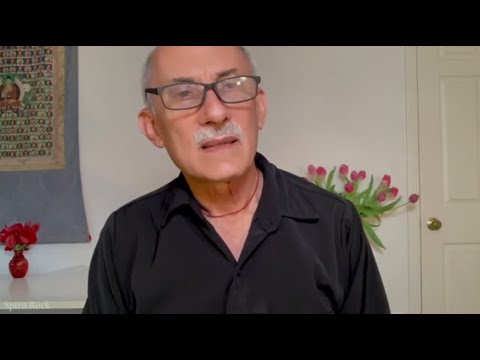
Jack Kornfield explores how intentionality transforms everyday conversation into a practice of presence and mutual understanding. The foundation is not in technique but in shifting the intention behind listening and speaking—from defending, proving, or winning to genuinely discovering what another person means. This reframes communication as a contemplative act, rooted in the Buddhist concept of Right Speech, where compassion and clarity work together to reduce suffering and deepen connection.
What Is the Role of Intention in Communication?
Kornfield emphasizes that the quality of our speech and listening depends almost entirely on intention. As he states in the talk, "The key to listening and speaking wisely is the intention—our intention to learn, to discover, to hear something that we haven't understood." This is not about perfecting technique or learning the "right words." Instead, it is about the deeper motive that drives the conversation.
Most people approach dialogue with a hidden agenda: to be heard, to be right, to convince the other person, to protect themselves, or to win the argument. These intentions, even when unconscious, fundamentally shape how we listen and speak. When the underlying intention is defensive or self-protective, the other person feels it immediately, regardless of how polite the words might be. The conversation becomes a transaction rather than a meeting.
Shifting intention means asking: What do I actually want from this exchange? Do I want to learn something true, or do I want to be confirmed? Do I want to understand this person, or do I want them to understand me? These are not easy questions, because they require honesty about our own fears and needs. Yet this shift in intention is where genuine communication begins.
How Does Wise Listening Differ from Ordinary Listening?
Kornfield draws on contemplative traditions to distinguish between listening that is reactive and listening that is open. In ordinary conversation, most people are not truly listening—they are waiting for their turn to speak. They are filtering what they hear through their own beliefs, preparing counterarguments, or already deciding whether they agree or disagree before the other person finishes.
Wise listening, by contrast, is receptive. It assumes there is something to discover in what the other person is saying, even if it challenges our views. This does not mean passive agreement; it means meeting the other person with genuine curiosity about their experience, their reasoning, their concerns. It means creating space for them to be fully heard.
This requires slowing down. In our culture of rapid response and social media, we are trained to react quickly. Wise listening asks us to pause, to notice what we are feeling as we listen, and to resist the urge to interrupt or correct. It asks us to listen not just to the words but to the emotion, the need, and the person behind them.
When someone feels truly heard—not agreed with, but genuinely understood—the entire dynamic of the conversation shifts. They become less defensive. They are more open to other perspectives. They feel seen. And paradoxically, when we listen in this way, people often become more willing to hear us as well.
What Does Right Speech Mean in Buddhist Practice?
Kornfield's teaching draws on the Buddhist principle of Right Speech, one of the eight components of the Noble Eightfold Path. Right Speech is not about being nice or polite; it is about speaking in ways that reduce suffering and support clarity. It has several dimensions.
First, Right Speech asks whether what we are about to say is true. Not whether it is the whole truth, or whether it is advantageous to us, but whether it is factually accurate. Speaking falsely, even with good intentions, creates confusion and undermines trust. This is why honesty is central to Right Speech.
Second, Right Speech considers timing and audience. The same truth spoken at the wrong moment or in the wrong tone can harm rather than help. A parent scolding a child in front of peers, for example, may be speaking truth but doing so in a way that damages the child's dignity and capacity to learn. Wise speech is spoken with sensitivity to context.
Third, Right Speech asks about intention. Are we speaking to harm, to dominate, to inflate our own status? Or are we speaking from a place of genuine care for the other person's wellbeing? This is where compassion enters. Wise speech is speech that is offered with the other person's good in mind.
The Buddhist framework recognizes that what we say matters. Our words have power. They shape how others see themselves and the world. They either build connection or erode it. By bringing attention to the intention behind our speech, we begin to use this power more responsibly.
How Can Compassion Transform Difficult Conversations?
Difficult conversations often arise because people feel threatened or misunderstood. One person raises a sensitive topic, and the other person becomes defensive. The conversation escalates. Both parties end up feeling hurt or angry.
Kornfield's approach suggests that compassion—understood not as softness but as genuine care for the other person's struggle—can interrupt this pattern. When we approach a difficult conversation with the intention to understand rather than to fix, blame, or win, we create psychological safety. The other person does not feel attacked. They can be more honest about their own fears and concerns.
This does not mean avoiding honesty or difficult truths. It means speaking difficult truths from a place of care. It means saying, "I value our relationship, and I need to talk about something that is bothering me" rather than "You always do this." It means listening for the hurt or fear beneath someone's anger rather than taking the anger personally.
Compassionate communication also includes compassion for ourselves. If we are reactive or hurt in a conversation, we are not in a place to speak or listen wisely. Taking time to acknowledge our own emotions, to ground ourselves, to remember what we actually care about—this is part of preparing to communicate with compassion.
Why Do Most People Fail at Listening Deeply?
Kornfield identifies several obstacles to deep listening. One is speed. We live in a culture that rewards quick responses and rapid decision-making. True listening cannot be rushed. It requires patience, and patience is something many of us have trained out of ourselves.
Another obstacle is our own mental activity. Our minds are constantly generating thoughts, judgments, and reactions. We are comparing what we hear to our own experiences, evaluating whether the other person is right or wrong, planning what we will say next. All of this mental activity prevents us from being fully present with what is being said.
A third obstacle is our attachment to our own view. We come into conversations with strong beliefs about how things are, what people are like, what is right and wrong. When someone says something that contradicts our view, we dismiss it or argue against it rather than genuinely considering it. We protect our worldview at the expense of understanding the other person.
Fear is also at play. Deep listening means being vulnerable. If we truly open ourselves to understand another person's reality, it might change us. It might expose us to ideas or feelings we would prefer to avoid. So we construct defenses: we interrupt, we minimize, we intellectualize, we hide behind politeness. Wise listening requires the courage to be changed by what we hear.
What Practices Support Wise Communication?
While Kornfield emphasizes that technique follows intention, there are practical supports. One is mindfulness—the basic practice of noticing what is happening without judgment. As we speak, we can notice: What is my tone? What feeling is beneath my words? Am I present, or am I lost in thought? As we listen, we can notice: Am I truly listening, or am I preparing to respond? What judgment am I making?
Another support is pause. Simply pausing before we speak gives us space to check our intention. Are we about to speak from wisdom or from reactivity? A pause also gives the other person space to fully express themselves. In group conversations, pauses are rare. Most people fear silence and rush to fill it. But silence can be generous—it says, "Take the time you need."
Reflection is also helpful. Instead of immediately responding to what someone says, we can reflect back what we have heard: "So what I hear you saying is... Is that right?" This does two things: it ensures we have actually understood what the person meant (not what we thought they meant), and it shows the other person that we are genuinely trying to understand. Often, the person will correct us or clarify, deepening the conversation.
Finally, Kornfield suggests returning to our deepest values. Why do we want to communicate with this person at all? What do we care about in this relationship? When we remember that underneath the disagreement or hurt, there is actually care, the entire conversation can shift. We are no longer adversaries; we are two people who care about each other, trying to find understanding.
Where to Go From Here
The teachings on wise speech and compassionate listening are not limited to formal meditation practice. They are applicable to every conversation: with partners, family, friends, colleagues, strangers. The invitation is to experiment. In your next conversation, notice your intention. Notice what you are listening for. Notice what you want to be heard. Then, gently shift: Can you listen to learn? Can you speak from genuine care? The results will be immediate. People respond to being truly seen. Relationships deepen when we approach them with the intention to understand. And over time, this practice transforms not just individual conversations but the entire texture of how we move through the world together.