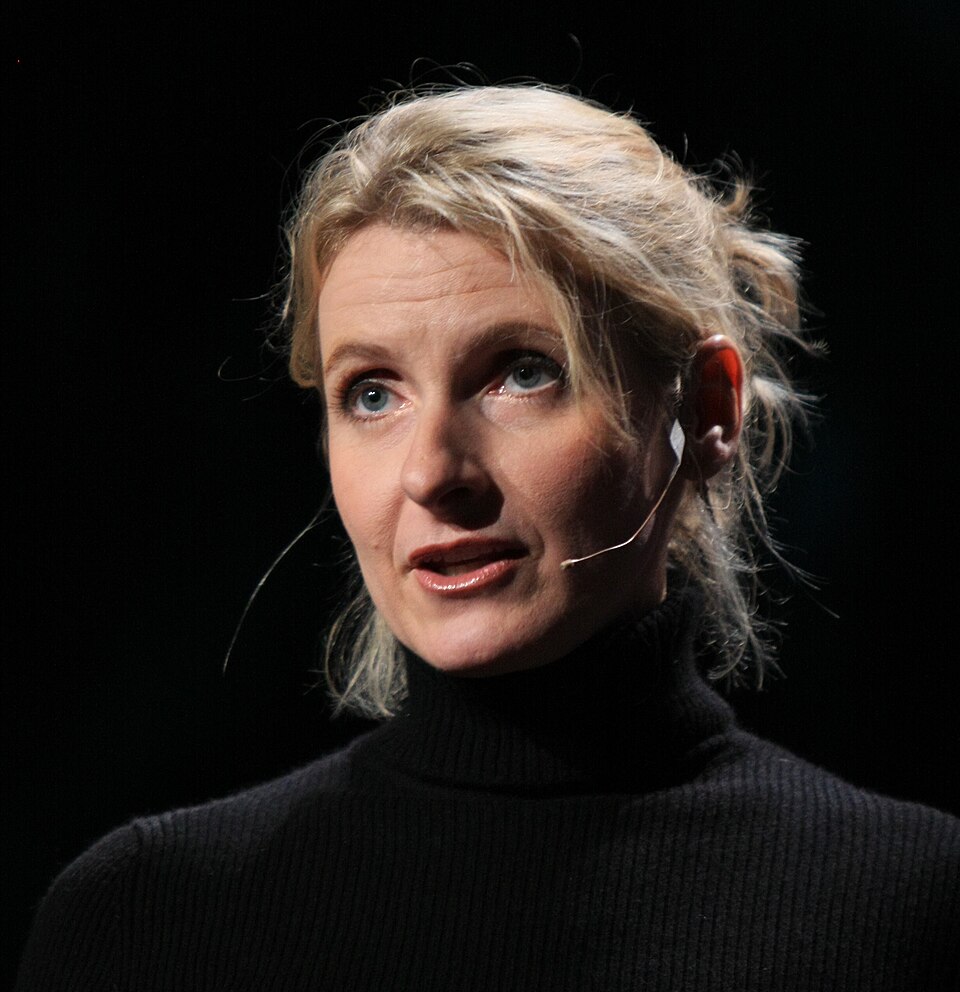
Most of us have been sold a lie about courage. The cultural narrative is relentless: true strength means becoming fearless, transcending your anxieties, conquering the beast of dread through sheer willpower and positive thinking. It's woven into every self-help book, TED talk, and Instagram affirmation—the idea that maturity, enlightenment, and authentic power all require you to move past fear, to overcome it, to achieve a state of unshakeable certainty. But what if that entire framework is not only wrong but dangerous? What if the pursuit of fearlessness isn't liberation but a kind of spiritual delusion that only the most psychologically intact—or the most unsettlingly numb—actually achieve? Elizabeth Gilbert, the bestselling author whose spiritual memoir shaped a generation's thinking about purpose and transformation, has a radical counterargument. In a recent conversation with life coach Marie Forleo, she inverts the conversation entirely: the goal isn't to overcome fear, but to befriend it. More provocatively still, she argues that fearlessness itself isn't a virtue—it's a psychological warning sign.
Gilbert opens with an observation that stops you cold. She has "no desire to become a fearless person because the only genuinely fearless human beings I've ever met were psychopaths or toddlers." It's a startling comparison, but she's serious. The comparison isn't hyperbole; it's diagnostic.
Think about what fearlessness actually looks like in its pure form. A person with no fear is someone disconnected from consequences, indifferent to the suffering of others, incapable of the mental modeling that allows us to imagine danger before it strikes. That's the clinical picture of sociopathy. Or there's the toddler—a creature so neurologically underdeveloped that it hasn't yet learned to recognize threat. Neither is a model for adult wisdom.
Gilbert notes something crucial that we sense but rarely articulate: when you encounter a truly fearless person, something essential is missing. You see it "in the kind of, like, weird eyes. You're like, 'Wow, you are a dangerous human being to yourself and others and I don't wanna be anywhere near you.'" That uncanny quality you can't quite name—that's the absence of the internal compass that fear provides. Fearlessness, in other words, isn't enlightenment. It's a deficit.
This challenges one of the deepest cultural myths about courage and transformation. We've been taught that the hero is the person unafraid—the soldier who charges into gunfire, the entrepreneur who risks everything on an untested idea, the person who stands up to injustice despite consequences. But Gilbert's argument suggests we've been conflating two very different things: the presence of fear, and the presence of wisdom about what to do when fear arises.
Then comes the moment that pivots the entire conversation. When asked to share how she conquered fear, Gilbert laughs at the premise. "I… it's adorable that you think I conquered…" The humor deflates the myth instantly. She hasn't conquered it. She isn't trying to. And here's the reveal that changes everything: "I'm afraid right this minute. I'm afraid, like, almost every minute of my life."
This admission is stunning precisely because it comes from Elizabeth Gilbert—an author who has written books about spiritual seeking and purposeful living, a teacher whose work has helped millions of people interrogate their choices and their paths. If someone with her level of achievement, self-awareness, and spiritual practice is still afraid almost constantly, then perhaps the entire goal of the spiritual and self-help enterprise has been misconceived.
She's not saying this defensively. She's not apologizing for still being afraid. She's stating it as fact: fear is part of being alive and conscious. And that's not a problem to solve—it's a condition to understand.
So if the goal isn't fearlessness, what is? Gilbert reframes fear entirely. Her relationship with it "begins with a tremendous amount of respect and appreciation because fear is the reason I am still alive today. It's the reason you're still alive today."
She invites us into a simple but profound exercise: trace back through your own life. Find the moments where your survival depended on heeding fear's quiet voice. These moments are everywhere, usually invisible to us until we look. "Get out of that ocean, the waves are too big." That inner voice that said don't enter that apartment with that person. The instinct that warned you away from walking down a particular street at night. The sense that a car ahead was moving dangerously.
These aren't dramatic moments, necessarily. They're the constant low hum of threat-detection that keeps a conscious being alive in a world full of genuine hazards. Our ancestors didn't survive to pass on their genes because they were fearless. They survived because they were afraid—afraid enough to move cautiously, to listen to subtle signals, to retreat when something felt wrong. Every person can "point to a moment in our lives that we survived because we were afraid."
Fear, in this light, is not a psychological problem. It's an evolutionary gift. It's the reason that humans have made it through predators, accidents, disease, and the stupidity of other people. Every time you woke up this morning alive, fear played a role. You just didn't notice because it was working.
But here's where the current moment throws a wrench into the machinery. Gilbert offers a vivid diagnosis: fear is "all jacked up on Red Bull and it's really trigger happy and it doesn't know the difference between a genuinely dangerous situation and just a little bit of a nervy situation."
This is the actual problem. Not that we feel fear—we should. The crisis is that our threat-detection system was calibrated for a world of genuine predators, resource scarcity, and immediate physical danger. Our nervous systems are running a program designed for survival in conditions of genuine physical threat. But we're living in a world where the greatest threats are social vulnerability, uncertainty, and the gap between who we are and who we're afraid we should be.
So the same mechanism that once warned our ancestors away from a predator now screams danger when we face a blank page, a difficult conversation, public speaking, or the vulnerability of being truly seen. The sensitivity that kept our ancestors alive is now firing at ghosts and shadows. We're experiencing a thousand false alarms for every genuine threat. The system isn't broken. It's radically miscalibrated to modern life.
Understanding this miscalibration is liberating because it means the problem isn't you—it's not that you're broken or weak or unsuitable for the challenges of your life. It's that your fear is working exactly as designed, just in the wrong environment. It's like having a smoke detector so sensitive it goes off whenever you toast bread.
From this understanding flows a fundamental shift in approach. Instead of trying to override, suppress, or conquer fear—techniques that often amplify it through sheer resistance—Gilbert is suggesting we acknowledge it, respect its evolutionary purpose, and learn to coexist with it. This isn't resignation. It's maturity.
Here's the truth Gilbert is pointing to: if you're going to do anything meaningful in your life, you're going to be afraid. The writer afraid to publish. The entrepreneur afraid to launch. The person afraid to be truly seen. That fear isn't a sign you're doing something wrong; it might be the clearest sign that you're doing something real.
The work, then, isn't to achieve fearlessness. It's to develop a more nuanced relationship with fear. It's to listen carefully: what is this fear trying to tell me? Is this a genuine warning, or is it an echo of an old threat that no longer applies? Is this nervousness protecting me from something I actually need to be protected from, or is it simply the sensation of growth and uncertainty?
Sometimes the answer will be: yes, listen to your fear and stay safe. Sometimes: no, thank your fear for trying, and move forward anyway. Either way, you're in conscious relationship with fear rather than at war with it. You're respecting its function while maintaining your own agency. This is what befriending fear looks like—not denying it, not conquering it, but making it your ally in the work of discernment.
The practical implication is this: the next time fear arises, pause before automatically trying to overcome it. Instead, ask: What is my fear protecting me from? Is that protection relevant to my actual present situation? Is this signal or noise?
This doesn't mean ignoring fear. It means developing enough discernment to know when to listen and when to move forward anyway. Befriending fear doesn't mean you become fearless. It means you become wise—wise enough to distinguish between the fear that saves your life and the fear that stops you from living it. That's the real work. That's what a meaningful life actually requires.