BrightStar

Browse All Events

Discover conscious gatherings

events

Yoga
Meditation
Breathwork
Qigong
Tai Chi
Sacred Music
World Music
Medicine Music
Sound Healing
Ecstatic Dance
Popular Destinations
BaliSedonaLos AngelesCosta RicaNew YorkSan FranciscoAustinMiamiJoshua TreeTulum
View All CategoriesView All Destinations

Explore All Features

Powerful tools to grow your events

Platform Features

Smart Dynamic Pricing
Ticket Categories
Assigned Seating
Abandoned Cart Recovery
Visitor Recovery
Donations & Sliding Scale
Affiliate Engine
Ticket Scanner
Coupon Codes
Custom Questions
Ticket Sharing
Upsells & Add-ons
Analytics & Reporting
Email Sequences
Waitlist / Notify / Remind
People & Places
Artists & TeachersEvent OrganizersVenues & StudiosKnowledge BaseGlossaryInspiration
View All FeaturesAbout Us
PricingBlog
Language
Saved events
Browse All Events

events

YogaMeditationBreathworkQigongTai ChiSacred MusicWorld MusicMedicine Music

Popular Destinations

BaliSedonaLos AngelesCosta RicaNew YorkSan Francisco

People & Places

Artists & TeachersEvent OrganizersVenues & StudiosKnowledge BaseGlossaryInspiration

Platform Features

Smart Dynamic PricingTicket CategoriesAssigned SeatingAbandoned Cart RecoveryVisitor RecoveryDonations & Sliding ScaleAffiliate EngineTicket ScannerCoupon CodesCustom QuestionsTicket SharingUpsells & Add-onsAnalytics & ReportingEmail SequencesWaitlist / Notify / Remind
View All FeaturesAbout Us
PricingBlog
Log inFind EventsHost Events
  • Browse All Events
  • For Seekers
  • Yoga
  • Meditation
  • Breathwork
  • Qigong
  • Tai Chi
  • Sacred Music
  • World Music
  • Medicine Music
  • Sound Healing
  • Ecstatic Dance
  • Retreats
  • Workshops
  • All Categories →
  • Bali
  • Sedona
  • Los Angeles
  • Costa Rica
  • Tulum
  • Byron Bay
  • San Francisco
  • Austin
  • New York
  • San Diego
  • Denver
  • Seattle
  • Portland
  • Miami
  • All Cities →
  • Join the Movement
  • Why we list
  • Sell Globally
  • For Creators
  • For Teams
  • For Writers
  • For Teachers
  • For Kirtan Artists
  • For Studios
  • For Festivals
  • For Retreat Centers
  • For Nonprofits
  • Brand Ambassador
  • Free Ticketing
  • Elevate
  • Amplify
  • 500K+ Buyer Network
  • Abandoned Cart Recovery
  • Smart Dynamic Pricing
  • Ticket Categories
  • Recurring Events
  • Assigned Seating
  • Affiliate Engine
  • Waitlist / Notify
  • Ticket Scanner
  • Embed Widget
  • Event Syndication
  • Message Center
  • Integrations
  • Reports
  • All Features →
  • About
  • The Ecosystem
  • Blog
  • Glossary
  • Inspiration
  • Help Center
  • Contact
  • API Docs
  • Brand Assets
  • Careers
  • Press
  • Terms of Service
  • Privacy Policy

Events

  • Browse All Events
  • For Seekers
  • Yoga
  • Meditation
  • Breathwork
  • Qigong
  • Tai Chi
  • Sacred Music
  • World Music
  • Medicine Music
  • Sound Healing
  • Ecstatic Dance
  • Retreats
  • Workshops
  • All Categories →

Destinations

  • Bali
  • Sedona
  • Los Angeles
  • Costa Rica
  • Tulum
  • Byron Bay
  • San Francisco
  • Austin
  • New York
  • San Diego
  • Denver
  • Seattle
  • Portland
  • Miami
  • All Cities →

For Creators

  • Join the Movement
  • Why we list
  • Sell Globally
  • For Creators
  • For Teams
  • For Writers
  • For Teachers
  • For Kirtan Artists
  • For Studios
  • For Festivals
  • For Retreat Centers
  • For Nonprofits
  • Brand Ambassador
  • Free Ticketing
  • Elevate
  • Amplify

Features

  • 500K+ Buyer Network
  • Abandoned Cart Recovery
  • Smart Dynamic Pricing
  • Ticket Categories
  • Recurring Events
  • Assigned Seating
  • Affiliate Engine
  • Waitlist / Notify
  • Ticket Scanner
  • Embed Widget
  • Event Syndication
  • Message Center
  • Integrations
  • Reports
  • All Features →

Company

  • About
  • The Ecosystem
  • Blog
  • Glossary
  • Inspiration
  • Help Center
  • Contact
  • API Docs
  • Brand Assets
  • Careers
  • Press
  • Terms of Service
  • Privacy Policy
BrightStar
Get the app
Download on theApp StoreGet it onGoogle Play
© 2026 BrightStar. All rights reserved.
Inspiration

Why the Mind Binds Us: Patanjali's Map of Suffering

SA
Sivananda Ashram Bahamas
Oct 25, 2026
10 min read

From Sivananda Ashram Yoga Retreat Bahamas

Watch · 7

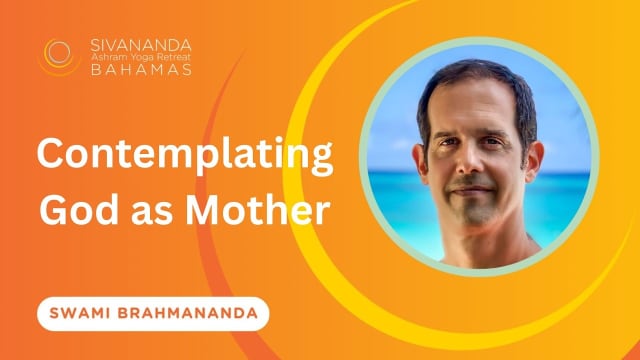
In the opening session of a new program at the Sivananda Ashram in the Bahamas, Swami Brahmananda takes on a question that sits under nearly every contemplative tradition: if every person alive wants to be happy, why does so much of human life end up in suffering? Working from the Bhagavad Gita and Patanjali's Yoga Sutras, he argues that the mind is both the instrument of our bondage and the doorway to freedom, and that spiritual practice without a clear understanding of how we are bound is little more than hope. The talk lays out Patanjali's account of how experience becomes karma, how attachment to pleasant things and aversion to painful ones tighten the knot, and how five roots of suffering, beginning with ignorance and egoism and ending with fear of death, keep it fastened. It is Part 1 of a series, and it is built less as a set of instructions than as a diagnosis.

Read · 9 sections

Can the mind really be both our best friend and our worst enemy?

The teaching opens with a line most students of the Gita will recognize. Swami Brahmananda recalls Krishna's teaching that the mind is one's best friend and also one's worst enemy. The difference, in his telling, is cultivation. A mind that is neglected generates problems the way a neglected body does. Nobody expects a body to stay healthy without food, rest and care, and he suggests the mind deserves the same attention, if not more.

"So a neglected mind becomes a problem."

— Swami Brahmananda, opening teaching (about 0:57)

The yogic claim underneath this is precise. The mind, he explains, is the instrument by which we know anything at all. If that instrument becomes clear and pure, it reveals what the yogis call the ultimate, which he describes not as a philosophical abstraction but as the thing everyone already calls happiness. The problem is that we tend to locate happiness in external objects. He frames this as a kind of optical illusion produced by ignorance: as long as that illusion holds, we are bound, and we suffer. What we cannot easily see is that the way we perceive is itself fundamental to our suffering.

Why does understanding bondage come before practice?

One of the most useful points in the talk is about sequence. He notes that the yoga scriptures, before they describe any practice, first explain what bondage is. Why are we suffering? Only then do they introduce sadhana, the discipline that undoes the bondage. For the teacher, this order is not decorative. Sadhana, he says, is simply the undoing of bondage. If we do not understand clearly what binds us, our repetition of a mantra or our daily routine becomes a matter of hoping for the best.

He is careful not to dismiss such hope. Doing practice without understanding is, in his words, better than doing nothing, but it is not good enough. A student has to see how each practice relates to the specific mechanism that binds, who is doing the undoing, and what is being undone. The principle he draws out is that we can be free only to the extent that we understand how we are bound. Understanding bondage, in this framing, is itself a form of freedom, because a mind that sees the knot clearly begins to loosen it.

Do we need to convince ourselves that we want to be happy?

The teacher says no, and his reasoning is worth dwelling on. Nobody is taught in school that happiness is the goal of life. It is simply there from the dawn of awareness. Every action, from the smallest to the largest, is an attempt to find happiness, and nobody wants to suffer. If that is so, he asks, why do individuals and whole societies fail so badly at the central project of living? His answer is not that people are foolish. Human beings build remarkable things. The failure lies in a lack of understanding of what happiness is and what bondage is. Because of that lack, enormous effort gets pointed in the wrong direction.

"We don't have to convince our mind to move towards happiness. If it will know what happiness is and what bondage is, it will move away from the bondage towards happiness."

— Swami Brahmananda, on the mind's natural movement (about 7:13)

He adds a gentle note about the wider world. Misdirected effort, he suggests, is not entirely wasted, since trying the wrong direction can ultimately be conducive to moving in the right one. He points to the patience of creation itself: life offers us the same lesson again and again, and it does not rush us. The world, in this view, is a patient teacher, and learning about bondage and learning about freedom turn out to be the same study.

What does Patanjali mean by karma?

Swami Brahmananda is keen to strip the word of its mystique. Karma, in this context, is down to earth. We are constantly experiencing things, inwardly in the body and mind and outwardly in events. Each experience leaves an impact on us, and that impact is karma. He jokes that if someone strikes us on the head with a hammer, that is karma in the plainest sense. The important question is not what happens to us but what the experiencer does with what happens.

This is where he turns to Patanjali. Citing the Yoga Sutras, he gives the general teaching that the cause of future karma, which here means future misery, is the identification of the experiencer with the object being experienced. The one who is experiencing, in other words, takes what is experienced to be part of who they are. That identification, he says, is the root mechanism of suffering, and it is the first thing to understand clearly before anything else can be untangled.

"The cause of future karma is the identification of the experiencer with the object that is being experienced."

— Swami Brahmananda, paraphrasing Patanjali's Yoga Sutras (about 9:49)

How do pleasant experiences turn into attachment?

He walks through the sequence slowly, and the sequence is the heart of the talk. When something pleasant arises, whether a sensation in the body or an external event, the mind is drawn toward it. This attraction, raga, is natural and, he says, unavoidable. Once the mind desires the pleasant thing, it wants to possess it. Once it possesses it, it wants to secure it. Each step carries its own trouble. Possessing what we desire is difficult, and securing what we already have is harder still, because what we really want to secure is the pleasant state itself, and that state cannot be held in place.

The same logic runs in reverse for what the mind perceives as unpleasant. The speaker describes an immediate tension between the self and reality whenever things are not going the way the mind wants. Pushing things away, resisting what is, and clinging to what pleases all keep the mind in a state of friction. Pleasant and painful experiences, he says, are subjective in the sense that the mind is the one judging them, and that judgment is where the trouble starts. He describes pleasure and pain as coming from within outward, which reverses the common assumption that they originate in the world and land on us.

What are the five roots of suffering?

The teaching then names what Patanjali calls the afflictions, the kleshas, which the speaker presents as five roots of suffering. The first is avidya, usually translated as ignorance. The mind fails to recognize the true nature of who we are, and it operates on a false sense of "I am." From avidya, he explains, arises egoism, the sense that the experiencer is a separate, bounded self. Egoism gives rise to the two effects that run most of our daily lives: raga, attraction to what pleases, and dvesha, aversion to what displeases. These are the familiar pulls of wanting and rejecting, which he links back to the earlier sequence of possession and resistance.

"Avidya from avidya comes as egoism... egoism, the effects are raga and dvesha."

— Swami Brahmananda, on the afflictions (about 20:41; transcript paraphrased for clarity)

The speaker also points to how these afflictions show up in ordinary mental life. They are not dramatic in most moments. They work slowly, through repeated clashes between what we want and what is, and over time the clashes shape how the mind habitually responds. This is why he insists on looking at the mind directly. If you look at your mind, he suggests, you will see the pattern at work in small things first.

Where does fear of death fit into the picture?

The last root in the list, as the speaker presents it, is the fear of death. He treats it not as a morbid topic but as the deepest layer of attachment. The mind's clinging to life, its refusal to let go of what it identifies with, is the final expression of the same identification that began with pleasant sensations. Many people, he observes, live their lives under the shadow of death without naming it, and the fear quietly colors choices about everything else. Naming the root, in his teaching, is the first step toward loosening it.

"We should slowly see in our mind..."

— Swami Brahmananda, on the fear of death as a root of suffering (about 24:54)

What does this mean for practice now?

The practical thread running through the talk is simple and demanding. Spiritual practice is the undoing of bondage, so the more clearly you see the mechanism of bondage in your own mind, the more intelligent your practice becomes. You do not have to force yourself toward happiness. You have to see what binds you, including the quiet identification of the experiencer with the experience, the pull of attraction and aversion, and the root fears that sit beneath them. Seeing is not the whole work, and the teacher is clear that undoing bondage is not simple. But he argues that a mind operating in that clarity will move in the right direction, and will keep moving, because the momentum toward freedom is already present.

This is Part 1, so the talk is a foundation rather than a conclusion. Its value for a reader who has not watched it is the map it offers. Bondage is not a mysterious condition imposed from outside. It is a set of mental moves that can be observed: identifying, desiring, possessing, securing, resisting, and fearing. Patanjali's language is old, but the sequence he describes is one most people recognize in their own minds within a day.

Where to go from here

To go deeper, start with the teaching's own invitation: notice one pleasant experience and one unpleasant experience in your day, and track how the mind moves from attraction or aversion into possession, securing, or resistance. Keep the question the speaker keeps returning to in view: how exactly am I bound? Then watch for the moment the experiencer begins to identify with what is being experienced. The ashram's own resources, including its daily satsangs and online classes, are the natural next step for anyone wanting to follow the series, and the rest of Part 1 and later parts will develop these ideas further.
Comments

Loading the conversation…

Transcript

[0:00] have a teaching

[0:05] on the topic of the mind

[0:09] and how the mind has to do with our

[0:13] bondage. Bondage means suffering

[0:17] and how the same mind is the door to our

[0:21] freedom.

[0:23] So in the Bhagavad Gita Lord Krishna

[0:27] says

[0:29] that the mind is one's best friend

[0:34] and the same mind is one's worst enemy.

[0:39] Right? So the idea is that when the mind

[0:42] is not cultivated properly,

[0:46] it becomes our worst enemy. Just like a

[0:49] neglected body, if we neglect the health

[0:53] of the body etc. it will become our

[0:54] worst enemy which means it will generate

[0:57] only suffering. So just like we need to

[1:00] cultivate our body properly, we must

[1:03] cultivate our mind even more. Okay. So a

[1:08] neglected mind becomes a problem. Okay.

[1:12] So,

[1:13] so basically

[1:15] uh what the yogis explain

[1:18] is that the

[1:21] mind

[1:23] is actually the instrument by which we

[1:27] know.

[1:29] And if that mind becomes clear and pure,

[1:34] it will reveal the knowledge of the

[1:37] ultimate

[1:38] which is not something philosophical.

[1:41] It's what we all of us universally call

[1:45] happiness.

[1:47] Okay? And we we think at the moment

[1:51] happiness has to do with things external

[1:53] to us.

[1:55] let's say like a optical illusion on our

[1:59] part due to something called ignorance

[2:04] and as long as that thing endures in our

[2:08] vision we are bound which means we

[2:11] suffer

[2:13] okay we there's something that we cannot

[2:15] see

[2:18] that the way we perceive

[2:22] is actually fundamental to our suffering

[2:25] So the yogis explain it the the thing is

[2:28] that

[2:30] what the yogis explain very beautifully

[2:32] if you look at yogic scriptures

[2:36] before they begin to explain what is

[2:38] called sadena or practice

[2:42] they always explain what is bondage

[2:46] which means why are we suffering then

[2:49] they explain sadena as the means to

[2:52] remove that bondage

[2:55] Which means that in order to truly

[2:59] understand sadena,

[3:01] we need first of all to understand why

[3:04] we are bound

[3:06] because sadena is simply undoing the

[3:09] bondage. That's all it is. If we don't

[3:12] understand clearly why we are bound,

[3:15] then the sadena will not be as

[3:17] effective.

[3:19] Which means we'll do sadena no we'll

[3:22] repeat the mantra etc and we we will

[3:23] hope for the best but hoping for the

[3:26] best is not good enough that's the idea

[3:30] if we just do things not really

[3:32] understanding how it's related to our

[3:34] mind and we just hope for the best it's

[3:38] good better than doing nothing but not

[3:42] good enough we have to actually see how

[3:46] the sadena has to do who is undoing what

[3:50] is binding us.

[3:52] Okay. So in the yogic teachings this is

[3:56] critically important. Okay. We basically

[4:00] we can be free to the extent we

[4:04] understand how we are bound.

[4:08] This is basically the idea. Another way

[4:10] to look at it,

[4:12] you see, we don't have to you don't have

[4:15] to convince yourself you want to be

[4:18] happy, right? We don't learn in schools

[4:21] anywhere in the world that happiness is

[4:24] the goal of life,

[4:26] right? Because it's natural, right? So,

[4:30] everyone naturally awakens to this fact

[4:33] from the very beginning of life. Every

[4:36] person from the dawn of their awareness

[4:40] knows happiness is the goal of their

[4:42] life. Life means every action, right?

[4:45] Everyone wants to be happy. As we

[4:48] evolve, the way we understand happiness

[4:51] evolves also.

[4:54] But everyone knows happiness is the goal

[4:56] of every single action. This is natural.

[5:01] Which means also that no one wants to

[5:02] suffer. This is also natural.

[5:06] So what's the problem? Why everyone is

[5:08] suffering so much? If no one wants to

[5:11] suffer, everyone wants to be happy.

[5:14] How come we are so miserably failing at

[5:19] the main project of every person on the

[5:21] planet?

[5:23] Individually and globally,

[5:25] we are failing tremendously.

[5:28] How come? Because we have brilliant

[5:30] minds. Human beings do amazing things.

[5:34] How come the main project of everyone's

[5:38] life we fail so miserably?

[5:42] So the yogis say there is a lack of

[5:45] understanding of what is happiness and

[5:48] what is bondage. That's all. Because of

[5:51] lack of understanding

[5:53] we put much of our effort in the wrong

[5:57] direction. That's all.

[6:00] Wasted energy. not really wasted.

[6:03] Nothing is really wasted

[6:07] because

[6:09] you know trying the wrong direction is

[6:11] conducive to moving in the right

[6:13] direction ultimately. That's basically

[6:15] the idea. That's how the world works,

[6:19] right? So

[6:22] basically in creation we see the quality

[6:26] of patience.

[6:28] If you see the world is very patient,

[6:30] right? We can we have we have all the

[6:33] time we want to learn. This is the idea.

[6:35] If we want to you know keep the same

[6:38] lesson again and again and again the

[6:40] world is patient enough. No problem. We

[6:43] can do the same class again again.

[6:48] This is dandy. Okay. So we can see that

[6:52] God is very patient. This is dandy.

[6:55] So

[6:57] now

[6:59] so we will look at the teachings of the

[7:02] yogis

[7:03] about bondage.

[7:06] Understanding bondage is understanding

[7:09] freedom. That's how we should understand

[7:11] it.

[7:13] We we don't have to convince our mind to

[7:15] move towards happiness. If it will know

[7:18] what happiness is and what bondage is,

[7:21] it will move away from the bondage

[7:23] towards happiness. You understand? So

[7:28] learning about bondage is learning about

[7:31] freedom.

[7:32] How do we really learn about freedom? By

[7:35] understanding bondage.

[7:37] You understand? If we know how why am I

[7:41] suffering?

[7:43] We if we really understand it, we are

[7:46] actually going to move away from it for

[7:49] sure. We don't have to generate a

[7:52] momentum towards happiness. It's there.

[7:56] Right? Therefore, the you know the most

[8:00] visited places in the asham kitchen and

[8:03] boutique,

[8:05] right? Because the momentum is there,

[8:10] right?

[8:11] So

[8:14] we just need to understand

[8:17] uh what happiness is, what bondage is.

[8:21] If we if our mind operates in the light

[8:25] of that clarity, it will move in the

[8:27] right direction for sure.

[8:30] You understand? This is why what we need

[8:33] to understand

[8:35] that understanding bondage is the real

[8:39] understanding of freedom.

[8:41] This is what we need to understand. We

[8:44] keep being bound because we don't

[8:46] understand.

[8:48] That's all.

[8:50] Okay. If we would understand, we would

[8:53] move away. We would actually be undoing

[8:57] the bondage. It's not simple to undo

[8:59] bondage, but we would be constantly up

[9:02] and doing in this direction for sure.

[9:07] Okay.

[9:08] Okay. Now

[9:10] the

[9:12] teaching of the yogis.

[9:15] So I I'll give first of all a these

[9:18] teachings are from the

[9:21] what we call patangel yoga sutras.

[9:25] First of all a general teaching and then

[9:28] an explanation.

[9:30] So the general teaching Patangeli

[9:32] Marishi

[9:34] gives

[9:36] it says

[9:38] the cause of future karma. Future karma

[9:41] here means future misery.

[9:43] Karma is misery

[9:45] which means it's experiences

[9:49] and how experiences impact us. That's

[9:53] that's karma,

[9:56] right? Don't take karma in a

[9:58] philosophical sense. Karma is very down

[10:01] to earth. All of us constantly

[10:04] experience things inwardly in our

[10:07] internal world,

[10:09] in the body and external events.

[10:13] And all these experiences have an impact

[10:16] on us.

[10:19] That impact is called karma.

[10:23] You understand? So basically every day

[10:26] you know we are walking and someone hits

[10:28] us with a hammer on the head you know

[10:31] that's karma

[10:34] you know running after us with this you

[10:36] understand

[10:38] so because experiences impact

[10:43] that's the idea

[10:45] so the cause of future karma

[10:49] is the identification of the experiencer

[10:53] with the object that is being

[10:55] experienced.

[10:58] Okay. So

[11:01] the

[11:03] so this is very important to understand

[11:06] why are we suffering potentially Marishi

[11:10] says because the one that is

[11:12] experiencing you

[11:15] is identifying with what he or she is

[11:18] experiencing. That's all.

[11:22] We have an identification

[11:25] meaning

[11:29] that to put it simply and then we'll go

[11:31] into the greater details that Patangeli

[11:34] Marishia gives but to put it in simple

[11:36] words

[11:38] when pleasant things arise in our

[11:41] awareness

[11:43] internally in the body or as external

[11:46] events

[11:47] we

[11:49] uh get attached.

[11:52] Okay. So when you are in the presence of

[11:54] pleasant things

[11:56] your mind gets attracted it's called raa

[12:00] naturally unavoidable

[12:04] and then once you desire it you want to

[12:09] possess it.

[12:12] If you are able to possess it

[12:15] you want to secure it.

[12:19] All these things are very filled with

[12:22] troubles as we know,

[12:25] right? To possess something you desire

[12:28] is very difficult.

[12:34] And to secure

[12:37] what you already possess and secure

[12:40] means you don't really want to secure

[12:42] the object. You really want to secure

[12:44] its pleasant state, which is basically

[12:47] impossible.

[12:51] Right?

[12:52] So

[12:55] this is identifying with pleasant

[12:58] things. When we see pleasant things,

[13:00] things that our mind perceives as

[13:03] pleasant, it's subjective,

[13:06] right? We want to we desire them

[13:10] naturally. We want to possess them and

[13:12] to secure them.

[13:15] Okay? And this immediately creates a

[13:18] tension between you and the world. You

[13:22] understand? There is an immediate

[13:24] tension,

[13:26] right? Because the world basically takes

[13:27] the object and tells you come, come,

[13:29] come, it's here.

[13:32] And then you come and grab it and

[13:34] somehow it's gone. And the world tells

[13:36] you it's here.

[13:39] Then you don't see it's here. And then

[13:41] you come and then you say it's here.

[13:46] What takes you so long?

[13:49] Right? So the moment we desire something

[13:52] from the world, there is a tension.

[13:57] Okay? There is a struggle with the world

[14:00] with how things are.

[14:03] Our internal reality is different from

[14:06] the external reality.

[14:10] And the external reality always wins.

[14:13] How things are is how things are

[14:16] regardless of how we think about it. You

[14:18] understand? This is the this is the

[14:21] idea. So that tension creates a problem

[14:24] for me.

[14:27] Okay? Because basically I am in

[14:29] disagreement with how things are going

[14:33] and I will only lose. That's basically

[14:36] the idea.

[14:38] Okay. Then so that's identification with

[14:42] the pleasant,

[14:45] identification with the unpleasant,

[14:48] undesirable,

[14:50] right? So we have things like

[14:54] pleasure,

[14:56] um, success, gain,

[15:00] things like that.

[15:02] And we have things like pain of various

[15:05] sorts.

[15:07] loss,

[15:09] failures.

[15:11] So all these things

[15:14] we are also identifying with. We're

[15:18] identify with them by trying to push

[15:20] them away. It's called aversion. It's

[15:24] exactly the same force as attraction.

[15:29] In the in the presence of pleasant

[15:31] things, it manifests as attraction. The

[15:34] same force in the presence of painful

[15:37] things manifests as aversion.

[15:41] Okay? Which means trying to push things

[15:44] away.

[15:46] Again, we are immediately in a tension

[15:49] with the world.

[15:52] Okay? There is something we try to push

[15:54] away within us

[15:57] as thoughts, emotions, memories, etc.

[16:02] in our body

[16:04] and externally external events.

[16:09] Okay. So,

[16:11] so this is called aversion. So,

[16:14] basically Patangeli Marishi says when we

[16:17] identify with what is being experienced,

[16:20] we are suffering.

[16:23] That's basically the idea. And it's good

[16:25] to notice anytime you feel you're

[16:28] suffering to see that that's exactly

[16:30] what's happening.

[16:33] Okay? That there is some tension, some

[16:36] struggle

[16:38] with something that you desire

[16:41] or something you desire to go away.

[16:46] That's all. So it's good first of all to

[16:49] see that that's a very

[16:53] perfect general description of any type

[16:56] of suffering

[16:58] any type.

[17:01] Okay. So that's first of all why we

[17:03] suffer. We suffer because we identify

[17:07] with what is being experienced.

[17:11] Okay. So,

[17:14] and the way we um the way we view things

[17:21] is different from how things are.

[17:26] Okay.

[17:27] Now,

[17:29] just to introduce briefly and then we'll

[17:33] continue in the coming days.

[17:36] So, Patangeli Marishi

[17:40] explains that

[17:44] the

[17:47] in our mind

[17:50] there are causes for why we are

[17:53] suffering. So suffering is not something

[17:56] vague.

[17:59] Suffering is something very accurately

[18:03] understood.

[18:06] And if we understand it as we said we

[18:09] can begin to work with it. So there are

[18:12] actually five roots of suffering.

[18:16] Patangel Marishi calls them the five

[18:19] afflictions

[18:20] or clashes

[18:24] means when they operate

[18:27] and they always operate we don't feel so

[18:31] good.

[18:34] Okay. So, some of them operate

[18:37] periodically,

[18:40] some of them operate always.

[18:44] The moment we wake up, they operate.

[18:47] Okay. So

[18:50] these roots of suffering or clashas

[18:54] are the foundation of understanding

[18:56] sadena or practice because Patangeli

[19:00] Marishi says practice purifies the

[19:03] clashes.

[19:05] What does practice do? When we do sadena

[19:09] effectively

[19:12] correctly

[19:13] we will see the clashes getting

[19:15] purified.

[19:18] That's this is what we are expected to

[19:20] see in our mind. We are expected to see

[19:23] the clashes having slowly very slowly

[19:27] less and less hold in our mind.

[19:33] Okay. So what are those clashes? Just

[19:37] mentioning them and then we'll continue

[19:39] in the coming days.

[19:42] The five clashes are avidya or ignorance

[19:48] which is ignorance to the true nature of

[19:51] the self.

[19:53] This is how it's described.

[19:55] What are we ignorant of? We are ignorant

[19:57] of many things. But Patangjali Marishi

[20:00] is not concerned with our many types of

[20:04] ignorance.

[20:06] But Angeli Marishi is concerned with one

[20:08] ignorance

[20:10] which is the ignorance of the true

[20:12] nature of who we are. The I am. All of

[20:16] us know that we are I am that we are the

[20:20] self. But we don't know what the self is

[20:24] and we have a wrong idea about the self.

[20:29] We think the self is this person and the

[20:32] yogis tell us that's actually a wrong

[20:36] identification

[20:38] that's called ignorance.

[20:41] Avidia from avidya comes as egoism.

[20:48] Egoism is this subject object awareness.

[20:52] What Patangjali Marishi said that when

[20:56] the experiencer identifies with what is

[20:58] being experienced that's egoism.

[21:01] There is a knower and the knower knows

[21:04] something external to it. That's called

[21:08] ego.

[21:09] Subject objects and the objects are

[21:14] different from the subject that knows

[21:16] them.

[21:18] This is called ego awareness. a smita.

[21:23] Okay. Then from egoism,

[21:27] so the clashes are cause and effect.

[21:32] Ignorance is the ultimate cause. From

[21:34] ignorance the effect is egoism. From

[21:37] egoism the effects are raa and va which

[21:40] we mentioned. Attractions and aversions.

[21:44] Because of egoism

[21:47] everything relates to you. Did you

[21:49] notice it? that in your world everything

[21:52] relates to you. That's called ego,

[21:55] right? So ego means each one of us is

[21:59] the star of our movie,

[22:03] right? It can be a five-star movie. It

[22:07] can be a not really five-star movie. But

[22:09] in any case,

[22:11] we get the central seat whether we like

[22:13] it or not. Right? in our movie which is

[22:17] called parabaka karma

[22:20] right so and because

[22:24] it it all has to do with me I have

[22:27] something to tell about it

[22:30] which means I have attractions and

[22:32] aversions certain things I like certain

[22:36] things I don't like relative to my own

[22:39] mind

[22:41] which also I don't notice I think

[22:44] objects are pleasant and painful from

[22:46] their own side. That's wrong.

[22:50] Pleasure and pain come from within out.

[22:55] Our mind colors the objects with

[22:58] pleasure and pain.

[23:00] So in any case that's called attractions

[23:02] and aversions

[23:05] which make our mind constantly identify

[23:09] with what it is experiencing.

[23:13] Constantly

[23:15] the mind if you look at your mind it's

[23:17] constantly lost in objects which objects

[23:21] of pleasure and pain.

[23:25] The mind is scheming what it's going to

[23:28] get.

[23:29] I wonder what's for breakfast today.

[23:34] Right. That thing yesterday was so

[23:36] yummy. I hope they do it again.

[23:41] Right.

[23:43] And when does the boutique open after

[23:45] breakfast?

[23:49] And when is the temperature really good

[23:51] to be on the beach?

[23:54] And I really worry about this weather

[23:56] continuing.

[24:00] And tomorrow I'm going back home,

[24:04] right? Home,

[24:06] right? To all the things that wait for

[24:09] me at home, right?

[24:12] So, so the idea is that the mind is

[24:16] constantly

[24:18] lost in the pleasures and the pains.

[24:22] You see these things are instructions

[24:26] for meditators. These are things we

[24:29] should slowly see in our mind

[24:32] constantly.

[24:34] That's meditation. Meditation cannot

[24:37] happen if we don't see the mind first of

[24:39] all as it is. What's the mind doing?

[24:44] These are all guidelines for meditators.

[24:48] Then the last cla

[24:52] is called abhinvesa

[24:54] or fear of death

[24:57] or clinging to the physical body as if

[25:01] our our existence depends on it.

[25:05] We feel that existence and awareness the

[25:09] self depends on this physical body

[25:14] and there are all the signs in the body

[25:17] that this is very bad news.

[25:21] The signs are increasing by the day

[25:25] that that's very bad news.

[25:28] That's called

[25:31] this is all wrong knowledge. Our

[25:33] existence does not depend on the body.

[25:38] Okay. So these are the clashas.

[25:41] See, so once we have the last cla fear

[25:45] of death, our life, we live our life if

[25:48] we are above 20

[25:51] under the shadow of death.

[25:54] That's basically the idea. Something can

[25:57] happen to me.

[26:01] Okay. So the idea is that

[26:04] these are the clashes. Tomorrow we will

[26:07] continue to analyze them as Patangjali

[26:10] Marishi teaches and as we said when we

[26:15] understand them we understand how to

[26:18] undo them. That's basically the idea.

[26:21] Okay. Which will undo the identification

[26:26] with what is being experienced which is

[26:28] the suffering.

[26:30] Okay. So, we'll conclude here.

[26:43] Om

[26:47] shanty shanty shant.

SA
Artist
Sivananda Ashram Bahamas

Watch more from Sivananda Ashram Bahamas on YouTube.

Website
Explore Topics
Mind-bondage-freedomPatanjali-yoga-sutrasKleshasVedantaKarma

Got Questions?

Frequently Asked Questions

In this teaching, Swami Brahmananda explains that a cultivated mind becomes one's best friend, while a neglected mind becomes one's worst enemy and generates only suffering. He compares it to the body, which must be nurtured to stay healthy. The mind, when clear and pure, reveals what the yogis call the ultimate, which he describes as the happiness everyone already seeks.
The speaker presents them as avidya or ignorance, egoism, raga or attraction to what pleases, dvesha or aversion to what displeases, and fear of death. He describes avidya as the root from which egoism arises, and egoism as the source of raga and dvesha. Fear of death is treated as the deepest layer of clinging to identification.
Swami Brahmananda, citing the Yoga Sutras, says the cause of future karma, meaning future misery, is the identification of the experiencer with the object being experienced. Karma, in his plain explanation, is the impact each experience leaves on us. The suffering comes from taking what we experience to be part of who we are.
The yogic scriptures describe bondage before they describe sadhana, because sadhana is simply the undoing of bondage. The speaker says practice without understanding how we are bound amounts to hoping for the best, which is better than doing nothing but not good enough. Understanding the mechanism lets practice work directly on what binds us.
Pleasant experiences draw the mind toward them through attraction, which the speaker calls natural and unavoidable. The mind then wants to possess the object, and then to secure its pleasant state, which is impossible to hold permanently. Each stage brings tension, and the mind grows restless when things do not match its wishes.
No. The video is Part 1 of a series, and it establishes the foundation: why the mind binds us and how bondage is understood before practice. Later installments are expected to develop these ideas further, so this piece is best read as an introduction to the framework.

Continue Reading

More from Sivananda Ashram Bahamas

View All
Why Worship God as Mother? Navaratri and the Limitless Self
Inspire

Why Worship God as Mother? Navaratri and the Limitless Self

Navaratri opens with a hard teaching: we do not know we are ignorant. Here is how the idea of relative perception frames worship of God as M…

9 min read
Loving-Kindness Metta: How the Phrases Widen the Heart
Inspire

Loving-Kindness Metta: How the Phrases Widen the Heart

Brenda McMorrow's eight-minute guided metta meditation moves from self to all beings through three short phrases. Here is how the sequence w…

8 min read
Become Live at Center for the Arts: Chant and Call-Response
Inspire

Become Live at Center for the Arts: Chant and Call-Response

A seven-minute live performance of "Become," from the album by Simrit feat. dub creative, built on repeated vocal phrases, held vowels and c…

5 min read
Gracias Cacao: A Song of Thanks to the Cacao Medicine
Inspire

Gracias Cacao: A Song of Thanks to the Cacao Medicine

A short, sung offering of gratitude to cacao, posted by Franko Heke. Here is what the 1:44 clip shows, what its description says about cacao…

4 min read

Keep exploring

Continue your journey

More wisdom and gatherings from across the BrightStar directory.

More Articles

Browse the full library of teachings, interviews, and guides.

Back to all articles →

Teachers & Artists

Explore the lineages, musicians, and guides of the conscious world.

Explore artists →

Find an Event

Kirtan, retreats, sound baths, breathwork, festivals — happening soon.

Browse events →