BrightStar

Browse All Events

Discover conscious gatherings

events

Yoga
Meditation
Breathwork
Qigong
Tai Chi
Sacred Music
World Music
Medicine Music
Sound Healing
Ecstatic Dance
Popular Destinations
BaliSedonaLos AngelesCosta RicaNew YorkSan FranciscoAustinMiamiJoshua TreeTulum
View All CategoriesView All Destinations

Explore All Features

Powerful tools to grow your events

Platform Features

Smart Dynamic Pricing
Ticket Categories
Assigned Seating
Abandoned Cart Recovery
Visitor Recovery
Donations & Sliding Scale
Affiliate Engine
Ticket Scanner
Coupon Codes
Custom Questions
Ticket Sharing
Upsells & Add-ons
Analytics & Reporting
Email Sequences
Waitlist / Notify / Remind
People & Places
Artists & TeachersEvent OrganizersVenues & StudiosKnowledge BaseGlossaryInspiration
View All FeaturesAbout Us
PricingBlog
Language
Saved events
Browse All Events

events

YogaMeditationBreathworkQigongTai ChiSacred MusicWorld MusicMedicine Music

Popular Destinations

BaliSedonaLos AngelesCosta RicaNew YorkSan Francisco

People & Places

Artists & TeachersEvent OrganizersVenues & StudiosKnowledge BaseGlossaryInspiration

Platform Features

Smart Dynamic PricingTicket CategoriesAssigned SeatingAbandoned Cart RecoveryVisitor RecoveryDonations & Sliding ScaleAffiliate EngineTicket ScannerCoupon CodesCustom QuestionsTicket SharingUpsells & Add-onsAnalytics & ReportingEmail SequencesWaitlist / Notify / Remind
View All FeaturesAbout Us
PricingBlog
Log inFind EventsHost Events
  • Browse All Events
  • For Seekers
  • Yoga
  • Meditation
  • Breathwork
  • Qigong
  • Tai Chi
  • Sacred Music
  • World Music
  • Medicine Music
  • Sound Healing
  • Ecstatic Dance
  • Retreats
  • Workshops
  • All Categories →
  • Bali
  • Sedona
  • Los Angeles
  • Costa Rica
  • Tulum
  • Byron Bay
  • San Francisco
  • Austin
  • New York
  • San Diego
  • Denver
  • Seattle
  • Portland
  • Miami
  • All Cities →
  • Join the Movement
  • Why we list
  • Sell Globally
  • For Creators
  • For Teams
  • For Writers
  • For Teachers
  • For Kirtan Artists
  • For Studios
  • For Festivals
  • For Retreat Centers
  • For Nonprofits
  • Brand Ambassador
  • Free Ticketing
  • Elevate
  • Amplify
  • 500K+ Buyer Network
  • Abandoned Cart Recovery
  • Smart Dynamic Pricing
  • Ticket Categories
  • Recurring Events
  • Assigned Seating
  • Affiliate Engine
  • Waitlist / Notify
  • Ticket Scanner
  • Embed Widget
  • Event Syndication
  • Message Center
  • Integrations
  • Reports
  • All Features →
  • About
  • The Ecosystem
  • Blog
  • Glossary
  • Inspiration
  • Help Center
  • Contact
  • API Docs
  • Brand Assets
  • Careers
  • Press
  • Terms of Service
  • Privacy Policy

Events

  • Browse All Events
  • For Seekers
  • Yoga
  • Meditation
  • Breathwork
  • Qigong
  • Tai Chi
  • Sacred Music
  • World Music
  • Medicine Music
  • Sound Healing
  • Ecstatic Dance
  • Retreats
  • Workshops
  • All Categories →

Destinations

  • Bali
  • Sedona
  • Los Angeles
  • Costa Rica
  • Tulum
  • Byron Bay
  • San Francisco
  • Austin
  • New York
  • San Diego
  • Denver
  • Seattle
  • Portland
  • Miami
  • All Cities →

For Creators

  • Join the Movement
  • Why we list
  • Sell Globally
  • For Creators
  • For Teams
  • For Writers
  • For Teachers
  • For Kirtan Artists
  • For Studios
  • For Festivals
  • For Retreat Centers
  • For Nonprofits
  • Brand Ambassador
  • Free Ticketing
  • Elevate
  • Amplify

Features

  • 500K+ Buyer Network
  • Abandoned Cart Recovery
  • Smart Dynamic Pricing
  • Ticket Categories
  • Recurring Events
  • Assigned Seating
  • Affiliate Engine
  • Waitlist / Notify
  • Ticket Scanner
  • Embed Widget
  • Event Syndication
  • Message Center
  • Integrations
  • Reports
  • All Features →

Company

  • About
  • The Ecosystem
  • Blog
  • Glossary
  • Inspiration
  • Help Center
  • Contact
  • API Docs
  • Brand Assets
  • Careers
  • Press
  • Terms of Service
  • Privacy Policy
BrightStar
Get the app
Download on theApp StoreGet it onGoogle Play
© 2026 BrightStar. All rights reserved.
Inspiration

Why Spiritual Seeking Can Keep You From Finding It

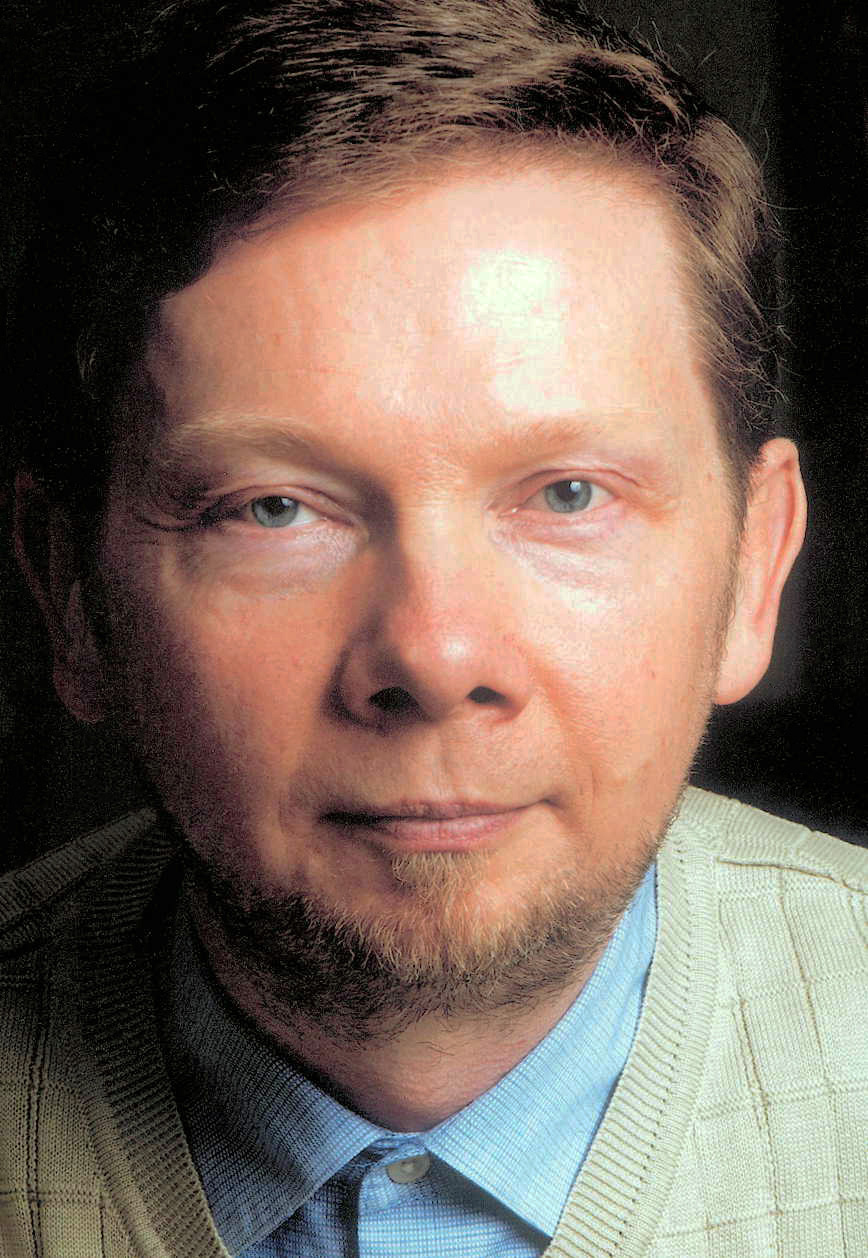
Eckhart Tolle
Eckhart Tolle
Oct 19, 2026
9 min read
Watch · 7

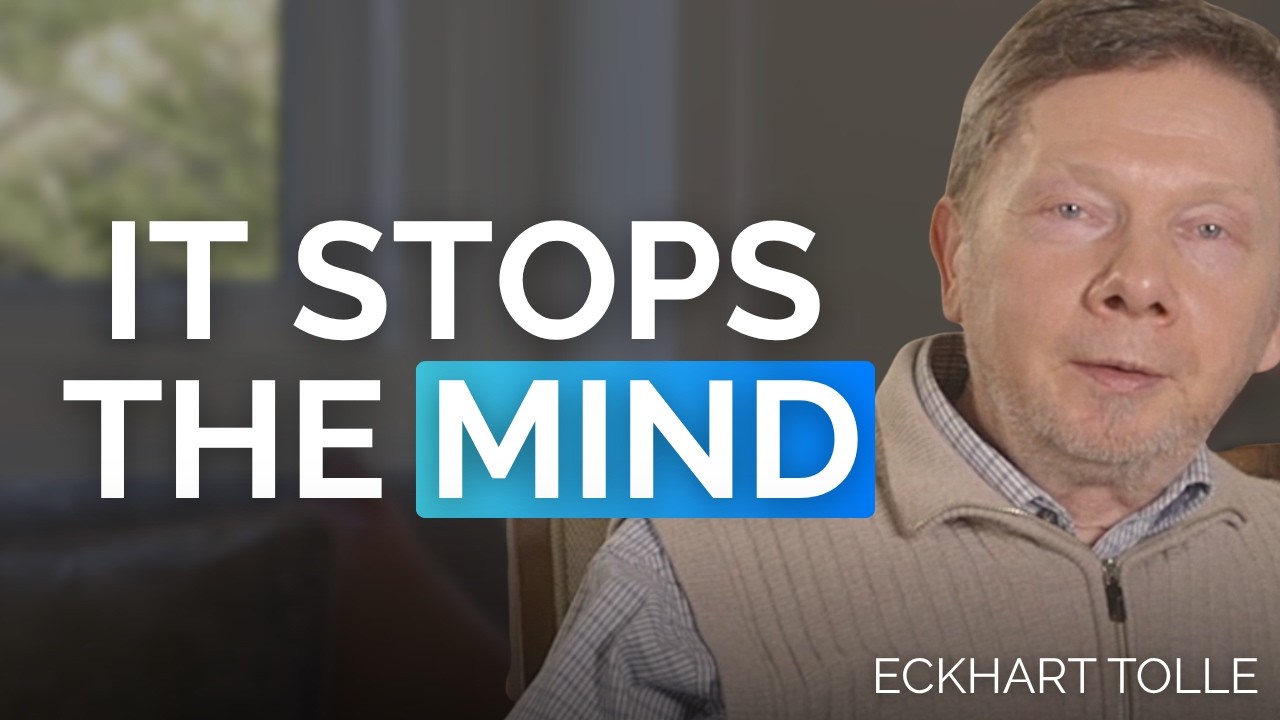
Picture a meditation cushion, a clock on the wall, and a person who has written "6:00 to 6:30" into the calendar every morning for years. When the timer goes off, they stand, stretch, and move on to the next thing on the list, feeling faithful to the practice. That picture is the starting point of a short teaching Eckhart Tolle recorded for his YouTube channel in October 2026, and his argument is that the diligence itself may be the problem. The deep I, the dimension of being he says lies beneath the voice in the head, cannot be found by a seeker who is always looking ahead. It is already here, and the one thing that obscures it is the sense of a self that has to go and get it. In the roughly ten minutes of the video, Tolle moves from the Buddha's legendary decision to stop seeking, to the question of who is doing the identifying, to a moment of stillness he says can last only twenty seconds and still change everything.

Read · 7 sections

Why does a daily spiritual habit get in the way?

Tolle is not against meditation. He calls it "a lovely thing" and says it "can be wonderfully helpful." His objection is to the way it is usually held. The trap is subtle: you sit down because the calendar says so, you feel that you are "doing" your meditation, and then at 6:30 you get up and start the next task, which is also something to be done. The practice becomes one more entry on a list of doings.

"If you approach it in a wrong way, then you believe unconsciously that you are doing your meditations."

— Eckhart Tolle, in the video (about 1:13)

He goes further: even after twenty years of practice, meditation "might have improved your life," but if it is approached as another doing, it "would just be another thing that you add to all the doings in your life." The distinction he draws is between meditation as an activity and meditation as recognition. "True meditation is the realization of being," he says. "The realization that you are now totally inseparable from present moment." Read this way, the 6:30 alarm is not a failure. It is a useful mirror. It shows how easily a spiritual practice can be absorbed into the same accumulation of effort that defines ordinary striving.

Why can't the deep I be found in the future?

The core logic of the talk rests on one word: seeking. Tolle's point is grammatical as much as spiritual. Every search has a destination, and every destination sits somewhere ahead. "As a spiritual seeker, the fact that you are a seeker already implies that you won't find it," he says. "Because seeking implies time and future." The phrase "I will get enlightened" contains a future tense, and that tense is the mind's habitual container. The deep I, he insists, "is not something that you can look to the future to find. You cannot find it in the future."

This is why he calls the present moment the only portal. He describes it as "the most obvious portal into that dimension," and then adds a sharper observation: it is the thing the human "habitually overlooks," the very thing that "keeps the human going as a human." The present moment, he says, is "the only thing there is. Present moment. There is nothing else." The seeker's restlessness is a way of constantly leaving that single fact in favour of a later one.

"Doing doesn't get you there. Because it already is."

— Eckhart Tolle, in the video (about 3:26)

That sentence is the hinge of the whole teaching. If the realization is already present, then effort cannot produce it, and the effort that makes you feel like you are approaching it is, in his terms, the very thing keeping you from arriving.

What did the Buddha discover under the tree?

To illustrate, Tolle returns to the story that most readers will know in outline. He describes the young man who lived in luxury, surrounded by every sensory satisfaction, and who realized early that human life ends in aging, illness and death. The question he asked, in Tolle's telling, was "Is this all there is to human life?" He left his palace, took up "all kinds of extreme practices, fasting," and became so accomplished that many disciples gathered around him. Then something happened. He realized he was not there yet.

Tolle is careful to frame this in his own terms, offering "my free translation of the ancient sutras." The decisive moment is that the Buddha sat under a tree and said, in effect, "That's it. I'm done. I'm done seeking. No more." The disciples, according to the teaching, thought he had lost his mind, and most of them left. "He didn't mind anymore," Tolle says. What followed was awakening, "but only because he relinquished time completely." He let go of the future, the goal, and the seeker's identity, and "went into being itself."

"That's it. I'm done. I'm done seeking. No more."

— Eckhart Tolle, retelling the Buddha's moment in the video (about 4:56)

The story raises an obvious question, which Tolle raises for himself: could the Buddha have arrived at this surrender at the start, before the years of austerity? His answer is "Apparently not." He then applies the same logic to the viewer. Practice may be necessary, not as the destination but as the path that brings you to the edge where you can finally "drop it and enter the now." The practice is a staircase you climb until you notice you no longer need it, and then, he suggests, you stop.

Why does the voice in the head feel like who you are?

Here Tolle identifies the obstacle that makes stopping so hard. Most people, he says, have a voice in the head that never stops talking, and they have identified with that voice. "They are the voice in the head. And so their whole sense of self is in it." Every thought carries a faint signature of self: "There's a self. Their thought processes are imbued with a sense of self always, me."

It follows that letting the stream of thinking stop feels like a threat. People are reluctant, he says, "because their self is in it." This is his definition of spiritual sleep. "Identified with thinking, identified with emotions. That is the state of being spiritually asleep. You're now you awaken." Awakening, in this framing, is not the acquisition of new information. It is a shift in where you locate your identity. Tolle is describing a condition in which the mind is treated as the self, so any silence in the mind registers as a small death.

This is a point worth sitting with, because many readers will recognise the feeling. The next thought seems to be the thing holding you together. Stopping it sounds like losing yourself. Tolle's teaching is that the fear is itself produced by the identification.

Who is the one doing the identifying?

The question that the rest of the talk turns on is this: "If you are not your thoughts and emotions and even sense perceptions, who is the one that does the identifying?" The logic is almost a koan. Something is aware of the thoughts. Something notices the emotion, and then takes it personally. That something, Tolle says, is "the true being of you." It is what has been mistaking itself for the thinking all along.

He admits that this is where "concepts become difficult." You cannot think your way to the answer, because the thinking is the thing being observed. The only route he offers is experiential: "in order to even have a glimpse of you as the one that has been doing the identifying," the stream of thought must come to a stop, at least briefly.

"If you are not your thoughts and emotions and even sense perceptions who is the one that does the identifying?"

— Eckhart Tolle, in the video (about 8:15)

What is left when the thinking stops?

This is the most precise instruction in the video, and it is worth reading slowly. The stopping he describes is "a moment of cessation of thinking without loss of consciousness." That qualifier matters. He is not describing sleep, dullness, or a drift into vagueness. "You're not falling below thinking, you're not becoming unconscious at all. You're highly conscious. But no thought activity." He adds the striking detail that the moment might last only "20 seconds," and that you will not be counting it, "since that would be a thought."

The question he leaves hanging is simple and disorienting: "What is left of you if you're not thinking, telling yourself who or what you are, remembering anything?" It is not an invitation to answer intellectually. It is a prompt to notice, in a moment of quiet alertness, what remains when the narrating voice goes silent. Tolle's claim is that you are already, totally, inseparable from this moment. The seeking is what keeps you from seeing it.

There is an honesty in the way he frames it. He does not promise that the moment will come on schedule, or that every reader will reach it in one sitting. He acknowledges that practice "may be needed," and that years of meditation may have improved a life. But the realization itself, he says, "is not a doing." The paradox he keeps returning to is that the thing you are looking for is the very presence doing the looking.

Where to go from here

If this talk leaves you restless, that may be a sign that it has touched something real. A few practical starting points follow directly from Tolle's words. First, notice the verbs in your spiritual life. Count how often you say "I will" or "I need to get to" and ask whether those phrases carry an implied future. Second, when you sit, try attending to the present moment rather than measuring the session by its length. Third, watch for the moment when a thought arrives with the word "me" attached, and ask who is noticing it. You do not need to force silence. Tolle's point is that the question itself can loosen the identification.

Tolle says he goes much further into all of this in the full session, which is available to viewers through the Eckhart Tolle Now membership advertised in the video's description. The short talk is best understood as a doorway rather than a complete map. It offers a single, sharp invitation: stop seeking for a moment, and see what is already here.

Comments

Loading the conversation…

Transcript

[0:00] The famous moment, Buddha sat under a

[0:02] tree

[0:03] said, "That's it. I'm done." That's my

[0:07] free translation of the ancient sutras.

[0:12] >> [bell]

[0:17] >> The important thing to realize,

[0:18] especially for spiritual seekers,

[0:22] is that the

[0:24] the spiritual dimension or the deep I

[0:28] is not something that you can

[0:33] look to the future to find. You cannot

[0:36] find it in the future.

[0:41] So, as a spiritual seeker,

[0:44] the fact that you are a seeker

[0:47] already implies

[0:50] that you won't find it.

[0:53] Because seeking implies time and future.

[0:58] If you meditate, which is a lovely

[1:00] thing, meditation can be wonderfully

[1:02] helpful,

[1:03] but if you approach it

[1:06] in a wrong way,

[1:08] then you believe unconsciously that you

[1:12] are

[1:13] doing your meditations. Every day,

[1:16] you do your meditations between 6:00 and

[1:20] 6:30.

[1:22] I'm doing my meditation.

[1:24] Okay?

[1:26] There.

[1:27] After at 6:30, I have to do something

[1:29] else.

[1:31] To do my meditation.

[1:33] Okay?

[1:38] To

[1:40] No.

[1:42] Even after 20 years of doing a

[1:45] meditation,

[1:46] it might might have improved your life

[1:49] if you But if you're not doing it

[1:51] rightly,

[1:53] then it would just be another thing that

[1:55] you add to all the doings in your life.

[1:58] Because true meditation

[2:01] is the realization of being.

[2:04] The realization that you are

[2:08] now totally inseparable from present

[2:11] moment.

[2:13] Any kind of seeking implies future

[2:16] and becomes a hindrance.

[2:19] So,

[2:22] to go deeper,

[2:25] you need to

[2:27] use my would say

[2:30] the most obvious

[2:32] portal

[2:34] into that dimension, which is

[2:38] the present moment.

[2:40] The present moment that

[2:43] the human habitually overlooks.

[2:48] That keeps the human going as a human.

[2:52] To continuously overlooks

[2:54] the most vital thing there is.

[2:58] The present moment. The only thing there

[2:59] is. Present moment. There is nothing

[3:02] else.

[3:03] So, and it's the

[3:06] opening into

[3:08] the deep eye.

[3:10] That the present moment is a portal

[3:13] into that dimension.

[3:15] And so,

[3:17] it

[3:19] Doing doesn't get you there.

[3:22] Because it already is.

[3:26] Doesn't it mean

[3:28] that all spiritual practice is

[3:31] pointless?

[3:32] Not necessarily.

[3:35] You may need

[3:38] spiritual practice to take you that

[3:41] point at to that point

[3:44] where you can

[3:46] drop it

[3:48] and

[3:49] enter the now.

[3:51] This is exactly the story of the Buddha.

[3:54] He was a young man

[3:56] and although he lived in

[3:58] very luxury surroundings with all

[4:02] sensory satisfactions.

[4:04] He realized at an early age

[4:07] that the ultimate destiny of humans is

[4:10] to grow old and become ill and die. He

[4:13] saw that and said, "Is this all there is

[4:16] to human life?" Then he left his

[4:19] sumptuous surroundings

[4:21] and became a

[4:22] spiritual seeker.

[4:24] And he practiced all kinds of

[4:27] uh

[4:27] extreme practices, fasting, those

[4:31] charities.

[4:32] For several years, he became so good at

[4:34] every spiritual practice that many

[4:36] disciples came there came to him that

[4:39] he's so good at this.

[4:41] And after a few years, something

[4:43] happened to him. He realized

[4:46] he's not there yet. But despite all that

[4:48] his practices,

[4:50] uh

[4:51] he still hadn't realized the deep eye,

[4:54] as I call it.

[4:56] And that was the moment when he just sat

[4:58] under a tree, the famous moment. Buddha

[5:01] sat under a tree,

[5:02] said, "That's it.

[5:04] I'm done." That's my free translation of

[5:07] the ancient sutras.

[5:11] He said, "That's it.

[5:14] I'm done.

[5:15] I'm done seeking.

[5:17] No more."

[5:19] And there he sat.

[5:22] And the disciples said, "He lost it."

[5:26] And most disciples left him.

[5:29] He didn't mind anymore.

[5:32] And that was

[5:34] Then came the awakening.

[5:37] But only because he relinquished

[5:40] time completely. He relinquished

[5:42] everything.

[5:44] He went

[5:46] into being itself.

[5:49] And so

[5:51] the question may arise,

[5:54] couldn't he have done this

[5:56] at the very beginning before he

[6:00] tried all these

[6:02] extreme spiritual practices? Couldn't he

[6:04] have realized the being before or that

[6:08] it saved himself all that trouble?

[6:12] Apparently not.

[6:14] And that may be the case with you also.

[6:18] You may need it may take take you to

[6:21] that point where you are now ready to

[6:23] surrender

[6:25] to the now, one could say.

[6:29] Now,

[6:31] the most important aspect of

[6:36] realizing the being, the deep I,

[6:40] the I,

[6:43] is

[6:45] there needs to be a moment of

[6:48] cessation of thinking

[6:53] without loss of consciousness.

[6:58] Cessation, ending,

[7:00] of

[7:01] thought activity.

[7:03] Which most people have the voice in the

[7:05] head, never talk stops talking.

[7:09] And they identified with it. They are

[7:12] the voice in the head.

[7:16] And so,

[7:17] their their whole sense of self is in

[7:19] it. So, people are very reluctant in

[7:21] many cases to let go of this stream of

[7:24] thinking because

[7:26] their

[7:29] their self is in it.

[7:33] The self is in every thought that

[7:36] that arises in the head, there's a self.

[7:40] Their thought processes are imbued with

[7:42] a sense of self always, me. Identified

[7:46] with thinking, identified with emotions.

[7:51] That is the state of being spiritually

[7:53] asleep.

[7:54] You're now you awaken.

[7:57] When I say identify with thought,

[7:59] identify with emotion, the important

[8:01] question that arises is

[8:04] if you are not your thoughts and

[8:07] emotions and even sense perceptions

[8:10] who is the one that does the

[8:13] identifying?

[8:15] So I should say humans identify with

[8:17] thinking, they identify with emotions.

[8:20] They derive the meaning, they derive

[8:22] their sense of self from that, but who

[8:25] is the one that is doing the identifying

[8:28] and that would be these are two

[8:30] being of you.

[8:34] Ah.

[8:35] Okay.

[8:37] Now this is now we reach point where

[8:40] concepts become difficult because

[8:44] in order to even have a glimpse

[8:47] of you

[8:50] as the one

[8:52] that has been doing the identifying

[8:56] perhaps up to this point

[8:59] you as the one that's doing the

[9:02] identifying

[9:05] in order to realize that the

[9:07] stream of thinking

[9:10] must come to even to if for short moment

[9:14] come to a stop.

[9:17] But you're not

[9:19] falling below thinking, you're not

[9:21] becoming unconscious at all.

[9:25] You're highly conscious.

[9:28] But no thought activity even if it's

[9:31] just

[9:32] 20 seconds you don't count it as

[9:34] thought.

[9:36] So

[9:38] just

[9:39] thinking subsides

[9:43] and

[9:46] what is left

[9:47] of you if you're not

[9:50] thinking telling yourself

[9:54] who or what you are

[9:57] remembering anything.

Eckhart Tolle
ArtistEckhart Tolle

German-born spiritual teacher whose 1997 book The Power of Now became one of the most widely read spiritual works of the 21st century. After a profound transformation at 29 — movin…

View profileWebsite
Explore Topics
Spiritual-seekingPresent-momentDeep-iIdentification-with-thoughtBuddha-under-the-tree

Got Questions?

Frequently Asked Questions

In this video Tolle uses the deep I to describe the true being beneath the thinking and emotional self. He says it is what has been mistakenly identifying with thoughts, emotions and sense perceptions, and that it can only be glimpsed when thinking stops without any loss of consciousness.
Tolle argues that seeking itself implies time and future, so a seeker is always looking ahead for something that is already present. He calls the present moment the only portal into the deep I and says doing does not get you there because it already is.
Tolle tells how the Buddha, after years of extreme practices and many disciples, realized he had not yet found the deep I. He sat under a tree and said, in Tolle's free translation, 'That's it. I'm done,' relinquished seeking, and awakened only once he let go of time.
No. Tolle says meditation can be wonderfully helpful and may have improved a person's life over many years. His warning is about approaching it as one more thing to do, when true meditation is the realization of being.
Tolle says even twenty seconds of thinking stopping, while remaining highly conscious, can reveal the deep I. He notes you would not be counting the seconds, since counting would itself be a thought.
In his words, being spiritually asleep means identifying with thinking and emotions so that your whole sense of self lives in the voice in your head. Awakening means recognizing that you are not those thoughts and emotions.

Continue Reading

More from Eckhart

View All
Why Does God Allow Suffering? A Reframing of the Argument
Inspire

Why Does God Allow Suffering? A Reframing of the Argument

A therapist's question about suffering becomes a lesson on why the classic argument against God rests on a flawed picture. Here is Tolle's r…

1 min read
What You Know for Sure: Consciousness Aware of Itself
Inspire

What You Know for Sure: Consciousness Aware of Itself

Tolle answers Oprah's closing question with one certainty: you are conscious. Here is why noticing that awareness halts thought, and the sma…

1 min read
Mantra Medicine for Letting Go: Listening to "I Release"
Inspire

Mantra Medicine for Letting Go: Listening to "I Release"

A close listen to Beautiful Chorus's "Mantra Medicine: Release," a seven-minute sung affirmation built on "I release" and what repeating a s…

1 min read
Loving-Kindness Metta: How the Phrases Widen the Heart
Inspire

Loving-Kindness Metta: How the Phrases Widen the Heart

Brenda McMorrow's eight-minute guided metta meditation moves from self to all beings through three short phrases. Here is how the sequence w…

1 min read

Keep exploring

Continue your journey

More wisdom and gatherings from across the BrightStar directory.

More Articles

Browse the full library of teachings, interviews, and guides.

Back to all articles →

Teachers & Artists

Explore the lineages, musicians, and guides of the conscious world.

Explore artists →

Find an Event

Kirtan, retreats, sound baths, breathwork, festivals — happening soon.

Browse events →