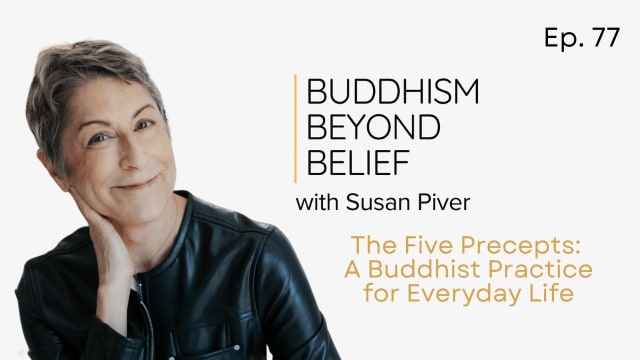
In a 44-second clip drawn from her Buddhism Beyond Belief podcast, teacher Susan Piver makes a claim that cuts against much of modern wellness culture: an insistence on always thinking positively can work as an intoxicant, a way of getting high on optimism so we don't have to feel what hurts. She isn't telling anyone to abandon hope. She is asking people to notice what they reach for when pain arrives, and to leave room for dark thoughts, sadness, grief, and anger rather than routing around them.
Piver frames the question as one of attention: "Pay attention to what are you doing to try to get high." The phrase "get high" is deliberate. In her framing, intoxicants aren't limited to alcohol or drugs. They include any strategy that lifts us out of direct contact with discomfort. Her video description lists doom scrolling alongside the insistence on positivity, placing both in the same family of compulsive escape.
The "positivity police" line is the sharpest moment in the clip. Piver is naming a social pressure: the sense that feeling low is a failure to be corrected rather than a human state to be met. Against that pressure she says, plainly, that there is "room for thinking dark thoughts," "room for feeling sad," and "room for grief and certainly anger." Making space for those feelings is not a rejection of a spiritual path. It is closer to the ground the path stands on.
She also acknowledges why the habit takes hold. "Sometimes it can feel that the only way around these very painful feelings is through intoxicants of material or abstract forms," she says. That honesty matters. The clip doesn't scold anyone for reaching for a crutch. It asks that we first see the crutch clearly.
Read as a practice, the implication is small and concrete. When you feel the pull to brighten a painful moment, pause and ask what you are avoiding. Sometimes the answer is grief, sometimes anger, sometimes just sadness that nobody around you seems to have time for. In each case the feeling is often more bearable when it is allowed to be present than when it is quietly covered over.
This clip is a fragment. The full Buddhism Beyond Belief episode it comes from, according to the video description, takes up the Five Precepts and their importance on the spiritual path. For context beyond the clip: the traditional Five Precepts include a precept against intoxicants that cloud the mind, which helps explain why Piver extends that idea to habits that look like virtue, such as relentless positivity. Watch the full episode on Susan Piver's channel to hear how she develops that thread.
If you want to test the idea in your own life this week, try one exercise: the next time you catch yourself reframing a hard feeling into something upbeat, name the feeling first, without fixing it, and see what changes.