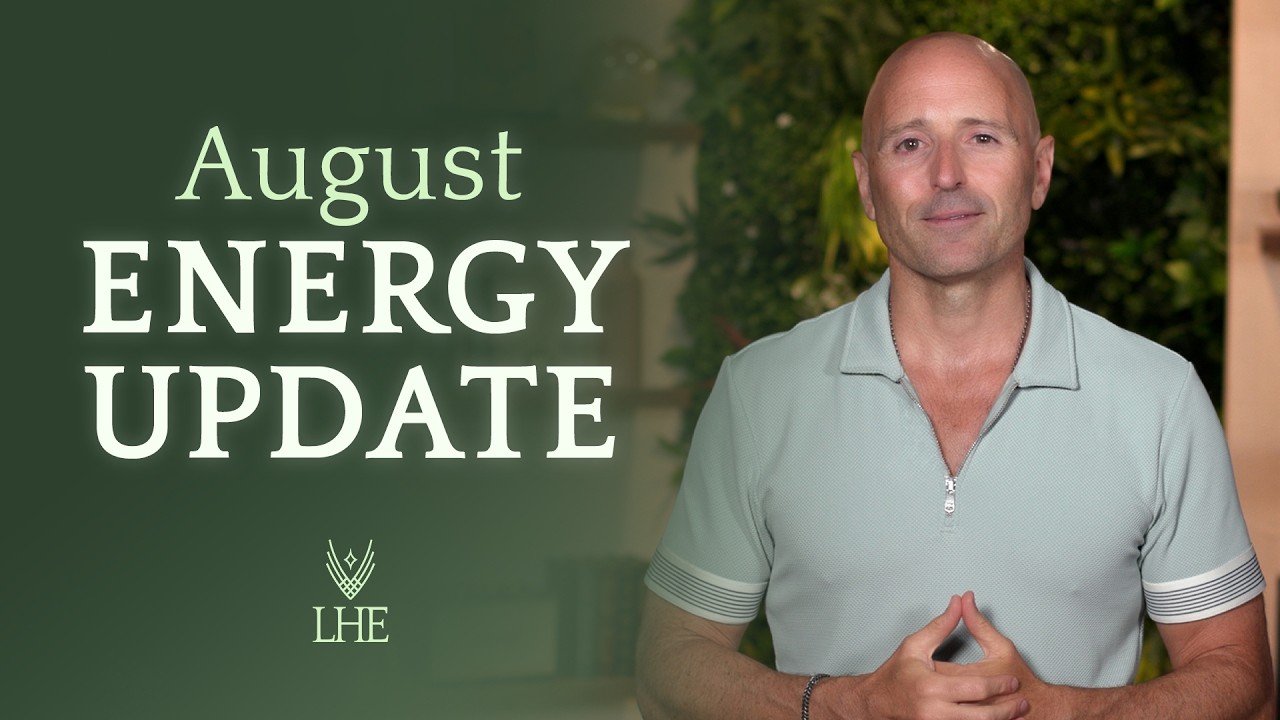
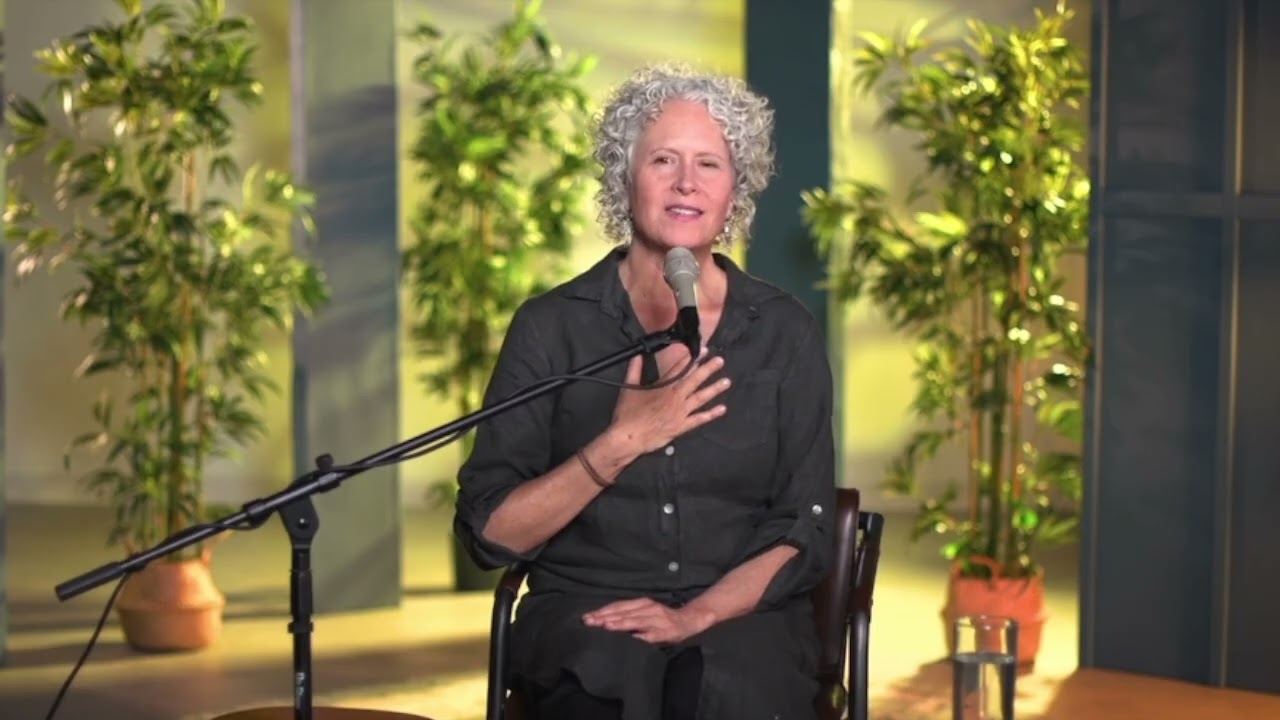
Picture a familiar Tuesday. You make the same coffee, sit in the same chair, and reach for the same routine, and something has shifted. The drink that once felt like comfort now tastes like noise. A friend's easy complaining sits badly in your chest. A habit you have carried for years no longer feels like a choice you can make. Nothing dramatic has happened, and yet the ground feels different. That quiet unease is the territory a five-minute clip from the October 2026 Energy Update by the teacher Lee Harris sets out to map. Harris argues that messages from the other side, meaning psychic, angelic and afterlife experiences, are becoming more common and more openly discussed, and that this shift does not leave everyday life untouched. Certain foods, drinks, relationships and ways of being start to feel like things you can no longer do. He frames that discomfort not as a malfunction but as part of a larger reorientation, and he uses the clip to invite viewers to a free live broadcast called The Power of Channeling. What follows explains the ideas he raises, what they ask of a listener, and where a careful reader should slow down.
The core claim is simple and sweeping. In his words, "More people are receiving messages from the other side. Psychic, angelic, and afterlife experiences and messages are permeating." He describes these experiences as lifting people "into their crown chakra energies and into higher realm communication," and he says the trend is becoming normal. The key link he draws is between normalization and disruption: "This is becoming more normal, which in tandem makes the old way of seeing, living, perceiving, and feeling the world feel less normal."
It helps to notice what Harris is not saying. He does not claim that the phenomena are new. He describes the trend as one that "comes up in different forms" over the years, and he is careful to say that "we're definitely seeing it more and more now." The change he points to is social as much as spiritual. More people are speaking about these experiences and feel "less afraid of their other dimensional experiences than we were all taught to be some decades ago." The claim, in other words, is about permission. Experiences that were once private or stigmatized are being shared openly, and that openness is what he believes is changing the culture around them.
He also acknowledges that the picture is not uniform. The forms these experiences take "look different for different cultures, ... different religions and different spiritual groups, but the essence is the same." The essence, as he frames it, is "this connection to something bigger than what our human life and our human story, as we have been told to believe it so far holds true."
One of the more striking lines in the clip is a developmental claim: "Children are wired to remain connected to the other side until it gets knocked out of us as we grow up." Harris goes on to say that "many of us have to come back to remembering our connection to what is beyond the human as adults." This is the framework that gives the talk its emotional logic. If connection is the default, then the adult who feels a sudden pull toward intuition, guidance or inner knowing is not inventing something new. They are, in his telling, remembering.
The language of remembrance recurs throughout. "There is a remembrance in these messages and connections with the other side," he says near the start. Later he adds that "many of us have been rememberers of it for a long time," and that even those who have lived with this awareness for years are now moving "into new levels of height and dimension because we're all moving along together." The image is of a collective awakening rather than a private one, with older practitioners and newcomers climbing together.
For a listener, this framing does two things. It removes the sense that spiritual experience is an exotic add-on for a few special people, and it recasts the process of growing up as a kind of forgetting. Whether one accepts the developmental claim or not, it gives the teaching a clear narrative arc: origin, loss, return.
Here Harris makes a point that deserves more attention than its brevity suggests. The world, he says, "does not necessarily have unified beliefs around it, and holding onto past human stories about the other side, how it's organized, can be seductive." The word he chooses is seductive, and it is an honest one. Inherited stories about heaven, the afterlife and the structure of the unseen are comforting. They give shape to what is otherwise unknowable. His warning is that they can also become a ceiling, keeping a person loyal to a map that no longer matches what they are experiencing.
This is the hinge of the whole talk. If the other side is real and vast, then any single description of it, whether inherited or newly invented, is partial. Harris does not offer a replacement map. Instead he asks the listener to hold the older stories more loosely and to trust direct experience, while acknowledging that "it doesn't mean everyone's going to agree, and it doesn't mean everyone's going to see it the same way." That willingness to leave disagreement standing is worth noting. It distinguishes his framing from a program that demands conversion.
This is the part of the clip most people will recognize from their own lives, and it is where Harris is most concrete. He says that "the certain things you used to do won't feel like things you can do anymore. Certain foods, certain drinks, certain experiences, certain people, certain relationships." Notice the list. He is not issuing a rulebook. He is describing a felt sense: things that once fit stop fitting. You may notice you no longer want the drink, or that a conversation leaves you drained rather than entertained.
He pairs that loss with a gain. "You will feel different, and there will be a part of you that will feel more at home in yourself than you ever have because you will have reconnected to this wider home that we all have access to." The disorientation and the sense of homecoming are presented as two sides of the same movement. The old habits fall away because the self has begun to locate itself somewhere larger.
A practical reading, consistent with what he says, is that discernment is the skill here. The clip does not tell viewers which foods to avoid or which people to leave. It suggests that the body and the attention will begin to register mismatch, and that the listener's job is to notice rather than to force. Those who want to act on these shifts will need to make their own judgments, and Harris does not claim to make them for them.
Harris is clear that it is not. "It can make you question a lot of what you used to see as true, and this is okay. This is part of the process." He adds that the experience is not permanent in its rawest form: "Eventually, it settles down, and you find a new way to be human and be in the world with your higher-dimensional access being part of your story, part of your journey."
He also says the connection persists even when it is intermittent. Once you have had the experience, "it will remain in your energy field," and this holds "even if you're only connecting to it in moments or in minutes or in hours." For readers who have had a single striking experience and then felt its fading, this is a meaningful reassurance, though it is one a skeptical reader can test only through their own life.
The most useful thing in this part of the talk may be its tone. Harris does not dramatize the disruption. He frames it as a stage, which is a familiar shape in contemplative traditions generally: a period of loosening that precedes integration. The honest caveat is that a stage framing can also make hard feelings easy to explain away. Anyone experiencing real distress, confusion or isolation should treat that as worth discussing with people they trust and with qualified professionals, not only as a phase to ride out.
The clip ends as an invitation. Harris announces "a completely free live premiere broadcast called The Power of Channeling," scheduled for October 14. He describes it as roughly an hour in which he will discuss "what the power of channeling is, how it affects our lives, how it can enhance our lives, and how to use it," and in which he will also let "my guides, the Z's, talk about who we are as humans, how we create change and transformation." He ties the broadcast to his "upcoming annual initiation workshop," presenting it as a free entry point. He also notes that viewers may have encountered him through an energy update, through his channeling sessions, an interview, or one of his online or in-person workshops.
Because the broadcast was announced as taking place on October 14, readers arriving now should check the teacher's own channels for any replay or archived version rather than assuming a live option remains open. The clip itself is a promotional teaser for that event, and it is useful to read it as such. It gives framing and a set of claims, not a body of evidence.
The strongest case for this talk is its candor about disagreement and its insistence that disruption is normal. Its weakest point is that many of its central claims, from the developmental idea that children are wired to remain connected to the claim that the trend is rising, rest on the teacher's own experience and perception rather than on data presented in the clip. Those claims may matter deeply to some listeners. They are still claims, and a reader who wants to engage seriously should weigh them against their own judgment and the perspectives of people who hold different views.
What the clip does offer is a useful vocabulary for a common experience. Many people do notice that their tastes, relationships and routines shift after a period of spiritual openness, grief, illness or change. Harris gives that shift a name, a shape and a purpose. Whether one reads it as remembrance, as personal growth or as something to examine critically, the observation that the familiar can start to feel wrong is worth taking seriously on its own terms.
If this clip resonated, the most useful next step is to pay attention to your own pattern rather than to adopt anyone's conclusions wholesale. Notice which foods, drinks, people and routines begin to feel off, and ask whether the feeling is clarifying or simply uncomfortable. Read Harris's own words in context, preferably by watching the full broadcast if it is archived, and compare his framing with other contemplative and religious teachers who address the same questions. Hold the afterlife and channeling claims as open questions, and give extra care to any disorientation that becomes hard to live with. The experience he describes may be a stage, but the person living through it deserves steady support as well as an interesting explanation.