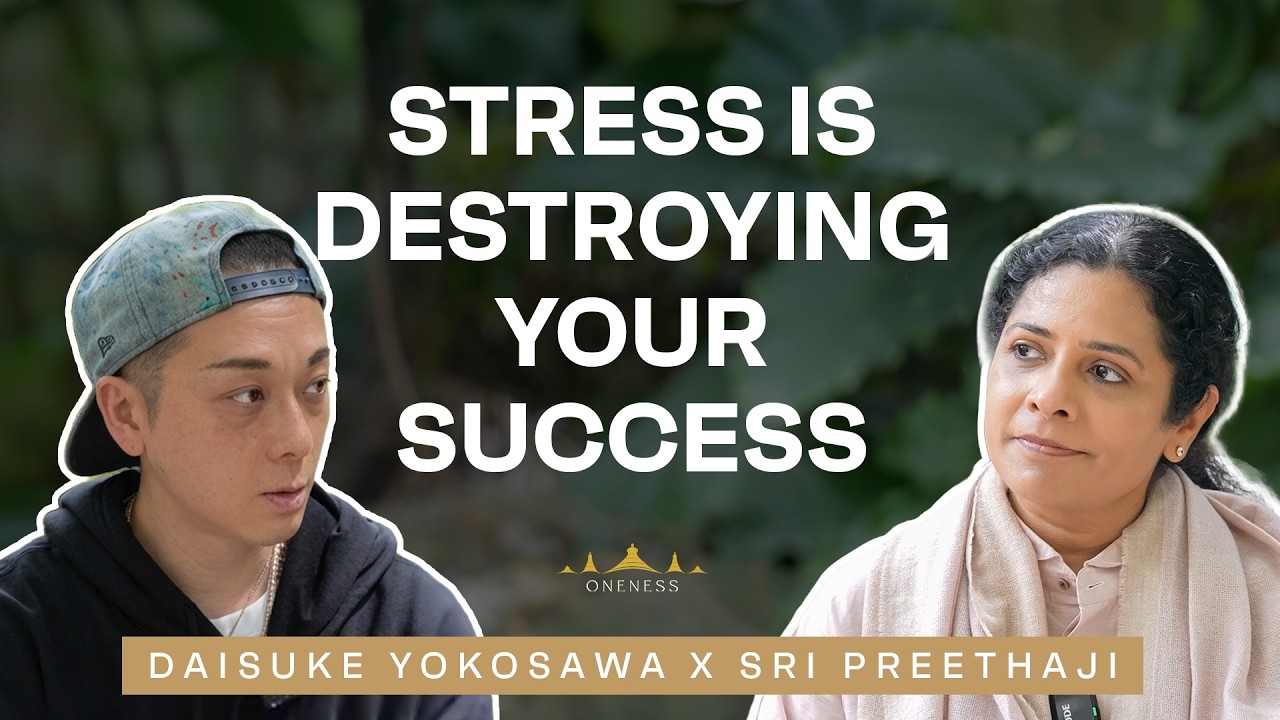
Brilliance and intellectual capability are not sufficient shields against failure. The Oneness Movement teaching examines why outer-world competence breaks down under stress without corresponding inner strength. When the external environment changes rapidly—as it does today—psychological resilience and inner clarity become the foundation that holds intelligence in place. Stress directly collapses cognitive function and erodes self-worth, even in capable people. Building inner strength through calm and clarity allows brilliant minds to sustain their capacity and navigate change without fragmenting.
Why Does Intelligence Alone Not Protect Us From Failure?
The premise of this teaching is counterintuitive: brilliant people fail. Not because they lack ability, but because ability divorced from inner strength cannot withstand pressure. The Oneness Movement distinguishes between two systems operating in a human being—the outer capacities (skills, knowledge, intelligence, credentials) and the inner foundation (psychological resilience, emotional stability, clarity of mind). In a stable environment, the outer system can function adequately on its own. But modern conditions are anything but stable.
The world changes at accelerating speed. Market conditions shift, organizational structures reorganize, technologies obsolete expertise within years. In this flux, brilliant people—those trained to rely on their intellectual prowess—discover that intelligence alone becomes a liability when the ground beneath it destabilizes. A surgeon with decades of expertise, a strategist with proven success, a technologist at the forefront of their field—each can experience the collapse of their effectiveness the moment psychological pressure peaks.
Stress is the mechanism of this collapse. When external demands overwhelm inner resources, the nervous system shifts into survival mode. In this state, the prefrontal cortex—the seat of complex reasoning, creative problem-solving, and strategic thinking—loses access to its full potential. The brilliant mind becomes constrained, reactive, and fragmented. Self-doubt floods in. Past certainties feel hollow. The person who was previously capable finds themselves paralyzed by indecision or locked into rigid, repetitive thinking.
How Does Stress Directly Undermine Cognitive Function?
The physiology is well-established: chronic stress impairs executive function, working memory, and adaptive reasoning. But the Oneness teaching goes deeper, pointing to the subjective experience: when you lack inner strength—a stable, grounded center—external pressure doesn't just reduce your performance; it erodes your sense of self-worth. You begin to internalize the struggle as a personal failure rather than a systems problem.
A brilliant person accustomed to success interprets stress-induced underperformance as proof of inadequacy. This creates a second loop of damage. The original stressor (market collapse, criticism, organizational change) triggers the stress response. The stress response diminishes cognitive capacity. Reduced capacity produces worse outcomes. Worse outcomes confirm the fear that "I'm not actually capable." This feedback loop spirals, and what began as an external challenge becomes an internal identity crisis.
Without inner strength—without a psychological foundation that remains stable across changing outer conditions—even talented people get caught in this trap. They attribute their struggle to lack of intelligence or effort, when the actual cause is absence of inner resilience.
What Is Inner Strength in Practical Terms?
The Oneness Movement frames inner strength as a combination of calm and clarity. Calm is not passivity or lack of concern; it is the nervous system's capacity to remain regulated even amid challenge. Clarity is the ability to perceive situations without the distortion of fear, reactivity, or ego-defense.
When you have inner strength, external pressure does not collapse your thinking. You can still access creativity, pattern recognition, and sound judgment. You remain grounded in your own knowledge and capability. Criticism doesn't demolish your self-worth because your worth isn't contingent on external validation. Change doesn't paralyze you because you have an internal reference point that doesn't depend on circumstances remaining stable.
This is not about positive thinking or self-esteem affirmations. It's about the actual neurological and psychological capacity to function well under pressure. Some people have built this capacity through years of contemplative practice, trauma processing, or life experience. Many have not, and their intelligence becomes a liability—a high-powered system operating without a stable foundation.
Why Does the Fast-Changing World Demand Inner Development?
In slower eras, stability could substitute for inner strength. If your environment changed slowly and predictably, you could rely on expertise, credentials, and established methods. Today, that's impossible. Technology, markets, social structures, and knowledge frameworks shift at rates that make any fixed expertise obsolete within a decade or less. The brilliant strategist trained in one paradigm must now constantly adapt to new realities.
This adaptive demand requires precisely what many high-achievers have neglected: inner stability. You cannot navigate continuous change from a fragmented, stressed, defensive state. You need calm—the capacity to face unknowns without panic. You need clarity—the ability to perceive accurately what is actually happening, separate from what you fear or wish were true.
The Oneness Movement teaching suggests that the modern world is not demanding more intelligence; it's demanding more inner strength. The people who will thrive are not necessarily the smartest, but those who can remain clear-minded and psychologically resilient under continuous pressure.
How Can Brilliant People Begin to Build Inner Strength?
The teaching offers a practical direction: intentional development of calm and clarity. This is not a luxury add-on to success; it is foundational infrastructure. For brilliant people, this often means letting go of the assumption that thinking harder, working longer, or accumulating more expertise will solve the underlying problem. The problem is the absence of an inner foundation, not insufficient capability.
Practices that build this foundation include contemplative meditation (which trains the nervous system to remain regulated), honest self-inquiry (which clarifies what you actually believe versus what you've been told to believe), and exposure to teaching that names this gap directly. Many brilliant people have never heard a framework that validates both their intelligence and their need for inner development. They've internalized the narrative that capability should be enough.
The Oneness Global Summit referenced in the description offers a specific entry point: three days focused on calm and clarity. The structure is deliberately short (three days) and accessible (online, free to reserve). This suggests the teaching recognizes that brilliant people are often time-poor and credential-skeptical. A short, direct immersion into practices and teachings that address the actual gap—not more information, but more inner development—can shift someone's trajectory.
Where to Go From Here
If you are a brilliant person experiencing the gap between your capability and your resilience under pressure, this teaching names something real. The solution is not to question your intelligence or to work harder. It is to begin deliberately building the inner foundation that allows your intelligence to function in the world as it actually is—which is unstable, fast-moving, and demanding of psychological maturity alongside intellectual skill.
Start with honest assessment: Where do you notice that stress collapses your thinking? In which areas of life does pressure transform you from capable to reactive? These are the edges where inner strength is being asked to develop. The practices and teaching frameworks that build calm and clarity are available, but they require the same intentionality and commitment that you've applied to building outer expertise. The difference is that this development happens from within.