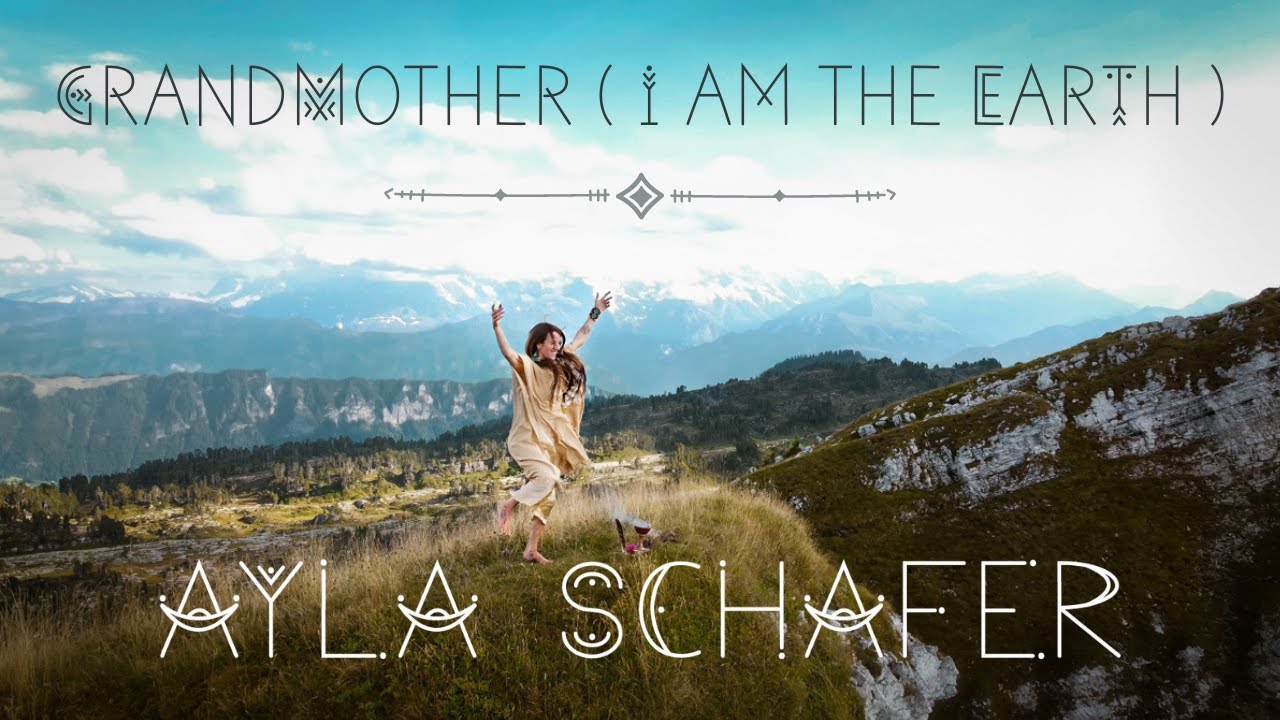
"Vuela con el Viento," Spanish for "fly with the wind," is an official music video by Ayla Schafer, published on January 21, 2019, and by now it has passed 28 million views. The film runs a little over eight minutes and sets a song she wrote and performed against a pair of dancers who divide the four classical elements between them. A shakuhachi, the Japanese end-blown bamboo flute, is credited as a featured voice on the track. The source material for this piece is thin: the video's description and credits are detailed, but the transcript is almost entirely musical markers with no recoverable lyrics. So what follows stays close to what the video and its credits actually establish, and marks where interpretation begins.
Read literally, the title is an invitation: fly with the wind. It is a phrase of movement before it is a phrase of meaning, and that suits a video built on bodies in motion rather than a static performance. The Spanish title also tells you something about how the piece is presented. Schafer's name and the song's title sit side by side in the credits as the core of the work, and the choice of language carries the track beyond its English-speaking audience without needing a translation to be felt.
The description is specific on this point. Water and Air are danced by Adelina Vaughn. Earth and Fire are danced by Denise Rowe. That division is the spine of the film. It gives the video two performers, two pairs of elements, and a built-in contrast: one pairing sits in the fluid and the weightless, the other in the grounded and the burning. The arrangement is a formal choice that a viewer can see without any explanation. Whether the video intends a larger reading of these pairings is not stated in the material, so it is best to take the division at face value: two bodies, four elements, one song holding them together.
The song is credited as "written and performed by Ayla Schafer," and the description adds that it features shakuhachi played by Adrian Freedman. The shakuhachi is a bamboo flute with a long history in Japanese music, and its breathy, unfretted tone is distinctive for the way it sits under a voice rather than competing with it. In a track built around a vocal and a dance, that choice of instrument puts the breath and the air front and center, which resonates with the film's use of the Air element. That connection is the editor's reading, not a claim made in the credits.
The description credits Kai Ohio as director, cinematographer, editor and producer, working with The Samsara Collective. The clothing is listed as sponsored and designed by Kai Clothing, and the description includes a discount code for a boutique, which is worth noting as a disclosed commercial element of the production. The credits are a useful reminder that a video like this is a collaborative object: a song, two dancers, a flutist, a director-producer, and a costume partner each shape what reaches the screen.
Very little, in words. The timestamped transcript is almost entirely musical markers, with scattered single syllables and a few non-verbal sounds. What it does show is the shape of the track. It opens with music at the six-second mark and carries on instrumentally for long stretches. A burst of laughter comes at 1:25 and applause at 2:22, which suggests a moment where the recording or the performance opened up to a live response. Near the end, at 8:21, a vocal fragment closes the piece. There are no lyrics in the material, so any claim about what Schafer sings would be invention. Viewers who want the words should check the official video page itself.
- 0:06: Opening music, no spoken or sung words in the transcript.
- 1:25: Laughter breaks into the track.
- 2:22: Applause, the clearest audience response in the transcript.
- 8:21: A closing vocal fragment ends the film.
To go further than this piece can, start with the sources the description points to. Schafer's linked page, listed as linktr.ee/Aylaschafer, collects her wider work. Dancer Adelina Vaughn's site, adelinavaughn.com, covers the Water and Air work, and Denise Rowe's Earth and Fire work is listed at earthdances.co.uk. Adrian Freedman's shakuhachi work is at adrianfreedman.com, and The Samsara Collective's site, TheSamsaraCollective.co.uk, is the production home for the film. Watching the video twice, once for the music and once for the division of the elements, is also worth the eight minutes it takes.