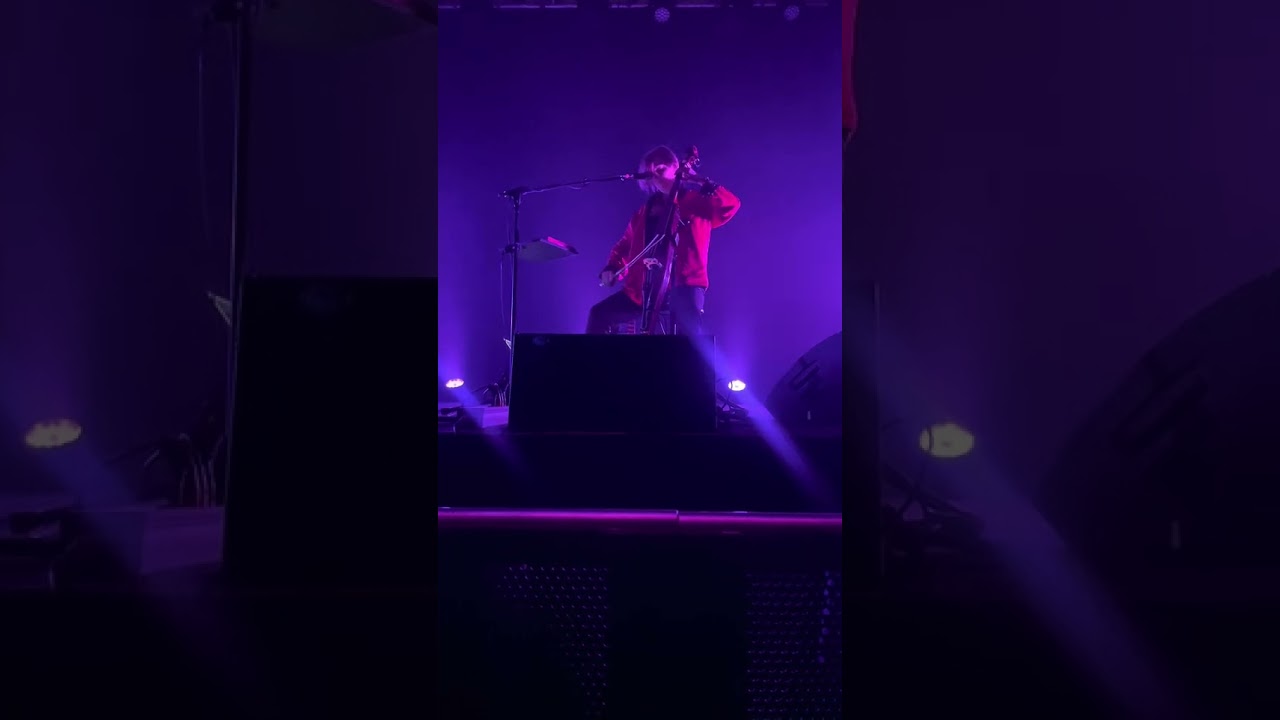
Shannon Hayden's song "Vanished" investigates the paradox of ego dissolution in spiritual experience—the moment when individual identity appears to disappear and what remains is pure presence, aware but without the constructed self. The piece contemplates whether vanishing is loss or liberation, and what it means to dissolve into something greater than the separate "I."
What Does It Mean to Vanish Spiritually?
The title "Vanished" points to a core spiritual inquiry: the experience of the self disappearing. This is not literal death or dissociation, but rather a fundamental shift in the sense of identity. In many contemplative traditions, this dissolution is understood as the ego—the constructed sense of a separate, defended self—losing its solidity and gravitational pull. What vanishes is not consciousness itself, but the illusion that consciousness belongs to "me" as a discrete entity.
This experience appears across traditions with different language: Advaita calls it the dissolution of the individual self into Brahman; Buddhism describes it as the emptiness of a permanent, unchanging "I"; Christianity speaks of dying to self; Sufism describes fana, the annihilation of the ego in union with the Divine. Hayden's song explores this universal threshold where the personal self seems to evaporate.
The Paradox of Presence Without Identity
A central mystery in spiritual practice is that when the sense of "I" dissolves, something doesn't vanish—it clarifies. Presence remains. Awareness remains. But it no longer feels like "my" presence or "my" awareness; it feels impersonal, universal, prior to the sense of ownership. This is the paradox: by vanishing, the self encounters what is more fundamental than itself.
In this state, there is functioning—the body moves, words arise, perception happens—but without the usual narrator claiming credit or demanding to know "what's in it for me?" The dissolution of the ego does not paralyze; often it liberates action from the friction of self-protection and self-promotion. The separate self vanishes, but the universe continues to move through what remains.
Why Does the Ego Feel Like Something to Lose?
The fear of vanishing is entirely real. The ego experiences its own dissolution as annihilation, because from the ego's perspective, that is exactly what it is. The constructed self is invested in continuity, control, and distinction. The prospect of losing the boundary that defines "me" versus "not-me" triggers the deepest resistance.
This is why spiritual teachers often note that the ego will do almost anything to avoid dissolution—including spiritual practices themselves, turned into projects of ego-enhancement. The ego can appropriate meditation, devotion, and even non-dual teaching in service of becoming a "more enlightened me." True dissolution requires a surrender that the ego, by definition, cannot engineer. It can only discover what remains when it finally stops.
The Process of Vanishing: Gradual and Sudden
Spiritual traditions speak of vanishing as both a process and an event. The gradual dissolution occurs through sustained practice: meditation reveals the gaps between thoughts; contemplation loosens the ego's grip on identity; devotion melts the hardness of the separate self. Each moment of genuine presence—of simply being aware without defending—erodes the solidity of the "I."
Yet there are also sudden experiences of dissolution, often unprovoked, where the usual sense of self simply ceases for a moment, an hour, or longer. These glimpses are not earned through effort; they arrive as grace, as the sudden removal of a veil. Whether gradual or sudden, the vanishing is not annihilation but clarification—like a cloudless sky revealing itself to be what was always here.
What Remains When the Self Vanishes?
The deepest question posed by "Vanished" is not what is lost but what persists. When the separate "I" dissolves, what is the ground of experience? Different traditions answer with different language: pure consciousness, Buddha-nature, the Witness, God, emptiness, the Absolute. But the direct experience is usually simpler and more alive than any theology.
What remains is ordinary yet extraordinary: the here-and-now, unfiltered by memory or anticipation. The world as it is, without the overlay of personal significance. A sense of deep okayness, or love, or simply "being," not as an achievement but as the baseline from which everything emerges. The separate self vanishes, but presence—which is not "mine" or "yours"—is fully alive.
Integration: How to Live After Vanishing?
One practical challenge: experiences of ego dissolution do not instantly restructure daily life. A person can have a profound insight into the illusory nature of the separate self and still return to petty reactions, defensive patterns, and the sense of being a limited individual. The dissolution must deepen from glimpse to stability, from experience to embodiment.
This is where contemplative discipline continues post-awakening. Not to "attain" something more, but to allow the implications of vanishing to reorganize the entire system—thoughts, emotions, behavior, relationships. As presence becomes more primary and the ego less compulsive, living becomes naturally more aligned with reality as it actually is, rather than as the ego defends and interprets it.
Why This Song, Now?
Hayden released "Vanished" in 2016, from the album "You See The World." The pairing of these titles suggests a vision: when the separate "I" vanishes, the world appears as it actually is, not filtered through the agenda and fear of a defended self. The video, directed by Ron Hayden, accompanies this inquiry into dissolution and clarity.
In an era of relentless self-branding, endless documentation of the personal narrative, and the illusion that identity can be engineered and marketed, a song titled "Vanished" offers a radical counter-question: What if the entire project of defending and promoting the self is the problem? What if liberation is the ego disappearing?
Where to go from here
If the inquiry into vanishing resonates, direct attention to moments in daily life where the sense of "I" loosens: in deep conversation, in nature, in music, in grief or awe. Notice how presence can be alive without the ego narrating the experience. Explore contemplative practices—meditation, prayer, silence—not as projects to improve yourself but as doorways to discovering what is more fundamental than yourself. Read non-dual teachers like Ramaji, Nisargadatta, or contemporary teachers exploring the dissolution of the separate self. And listen again to "Vanished," allowing the music to point toward the silence from which all sound arises.