BrightStar

Browse All Events

Discover conscious gatherings

events

Yoga
Meditation
Breathwork
Qigong
Tai Chi
Sacred Music
World Music
Medicine Music
Sound Healing
Ecstatic Dance
Popular Destinations
BaliSedonaLos AngelesCosta RicaNew YorkSan FranciscoAustinMiamiJoshua TreeTulum
View All CategoriesView All Destinations

Explore All Features

Powerful tools to grow your events

Platform Features

Smart Dynamic Pricing
Ticket Categories
Assigned Seating
Abandoned Cart Recovery
Visitor Recovery
Donations & Sliding Scale
Affiliate Engine
Ticket Scanner
Coupon Codes
Custom Questions
Ticket Sharing
Upsells & Add-ons
Analytics & Reporting
Email Sequences
Waitlist / Notify / Remind
People & Places
Artists & TeachersEvent OrganizersVenues & StudiosKnowledge BaseGlossaryInspiration
View All FeaturesAbout Us
PricingBlog
Language
Saved events
Browse All Events

events

YogaMeditationBreathworkQigongTai ChiSacred MusicWorld MusicMedicine Music

Popular Destinations

BaliSedonaLos AngelesCosta RicaNew YorkSan Francisco

People & Places

Artists & TeachersEvent OrganizersVenues & StudiosKnowledge BaseGlossaryInspiration

Platform Features

Smart Dynamic PricingTicket CategoriesAssigned SeatingAbandoned Cart RecoveryVisitor RecoveryDonations & Sliding ScaleAffiliate EngineTicket ScannerCoupon CodesCustom QuestionsTicket SharingUpsells & Add-onsAnalytics & ReportingEmail SequencesWaitlist / Notify / Remind
View All FeaturesAbout Us
PricingBlog
Log inFind EventsHost Events
  • Browse All Events
  • For Seekers
  • Yoga
  • Meditation
  • Breathwork
  • Qigong
  • Tai Chi
  • Sacred Music
  • World Music
  • Medicine Music
  • Sound Healing
  • Ecstatic Dance
  • Retreats
  • Workshops
  • All Categories →
  • Bali
  • Sedona
  • Los Angeles
  • Costa Rica
  • Tulum
  • Byron Bay
  • San Francisco
  • Austin
  • New York
  • San Diego
  • Denver
  • Seattle
  • Portland
  • Miami
  • All Cities →
  • Join the Movement
  • Why we list
  • Sell Globally
  • For Creators
  • For Teams
  • For Writers
  • For Teachers
  • For Kirtan Artists
  • For Studios
  • For Festivals
  • For Retreat Centers
  • For Nonprofits
  • Brand Ambassador
  • Case Studies
  • Free Ticketing
  • Elevate
  • Amplify
  • 500K+ Buyer Network
  • Abandoned Cart Recovery
  • Smart Dynamic Pricing
  • Ticket Categories
  • Recurring Events
  • Assigned Seating
  • Affiliate Engine
  • Waitlist / Notify
  • Ticket Scanner
  • Embed Widget
  • Event Syndication
  • Message Center
  • Integrations
  • Reports
  • All Features →
  • About
  • The Ecosystem
  • Blog
  • Glossary
  • Inspiration
  • Help Center
  • Contact
  • API Docs
  • Brand Assets
  • Careers
  • Press
  • Terms of Service
  • Privacy Policy

Events

  • Browse All Events
  • For Seekers
  • Yoga
  • Meditation
  • Breathwork
  • Qigong
  • Tai Chi
  • Sacred Music
  • World Music
  • Medicine Music
  • Sound Healing
  • Ecstatic Dance
  • Retreats
  • Workshops
  • All Categories →

Destinations

  • Bali
  • Sedona
  • Los Angeles
  • Costa Rica
  • Tulum
  • Byron Bay
  • San Francisco
  • Austin
  • New York
  • San Diego
  • Denver
  • Seattle
  • Portland
  • Miami
  • All Cities →

For Creators

  • Join the Movement
  • Why we list
  • Sell Globally
  • For Creators
  • For Teams
  • For Writers
  • For Teachers
  • For Kirtan Artists
  • For Studios
  • For Festivals
  • For Retreat Centers
  • For Nonprofits
  • Brand Ambassador
  • Case Studies
  • Free Ticketing
  • Elevate
  • Amplify

Features

  • 500K+ Buyer Network
  • Abandoned Cart Recovery
  • Smart Dynamic Pricing
  • Ticket Categories
  • Recurring Events
  • Assigned Seating
  • Affiliate Engine
  • Waitlist / Notify
  • Ticket Scanner
  • Embed Widget
  • Event Syndication
  • Message Center
  • Integrations
  • Reports
  • All Features →

Company

  • About
  • The Ecosystem
  • Blog
  • Glossary
  • Inspiration
  • Help Center
  • Contact
  • API Docs
  • Brand Assets
  • Careers
  • Press
  • Terms of Service
  • Privacy Policy
BrightStar
© 2026 BrightStar. All rights reserved.
Inspiration

Unblock Your Nose by Holding Your Breath: The Buteyko Drill

Patrick McKeown
Patrick McKeown
Apr 17, 2011
8 min read
Watch · 10

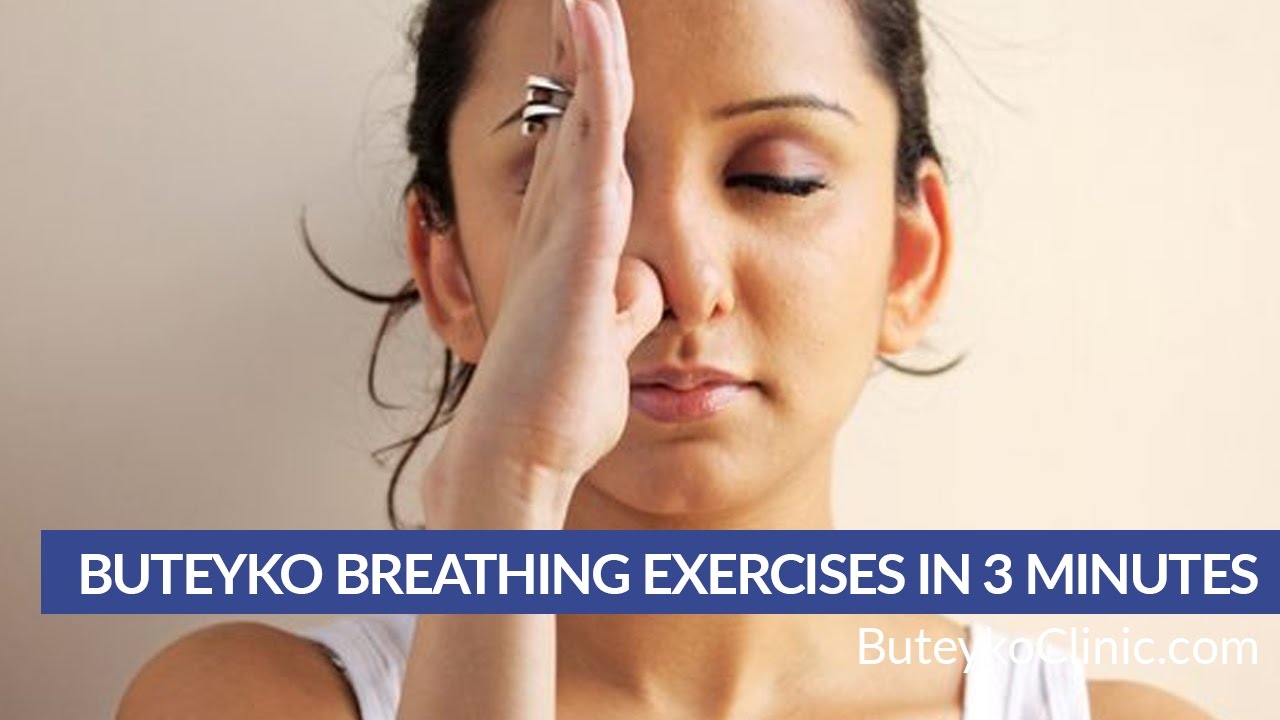
A man sits up straight, asks you to straighten your back, and tells you the nose is the one organ asthmatics cannot afford to bypass. Then he gives you a drill that sounds like a dare: take a small breath in through the nose, a small breath out, pinch the nostrils shut, and nod your head up and down for as long as you can hold it. That is the core of a short Buteyko clip by practitioner Patrick McKeown, uploaded in 2011 and still circulating widely, in which the breath-hold is presented as a way to clear a congested nose in about three minutes. Behind the quick instruction sits a larger argument about why the mouth should stay shut, why over-breathing feeds symptoms, and why a temporary fix is not the same as retraining the breath.

Read · 8 sections

What is the nose-unblocking exercise, step by step?

McKeown's instructions are unusually concrete. Sit reasonably upright. Take a small breath into the nose, then a small breath out. Hold the nose closed and nod your head up and down for as long as you can, without letting air sneak in or out of the mouth. When you can no longer hold, stop and wait about 30 seconds to recover your breathing. He says to repeat it roughly five or six times, and to avoid blowing your nose between rounds, so the drill itself does the work. Keep going, he says, "until your noses are free."

The nodding matters. McKeown frames it as physical movement combined with breath-holding, a pairing he compares to swimming, which many people with asthma have found beneficial. (That comparison comes at about 3:04 in the clip.) The head movement keeps the body active while the breath is restricted, so the drill is not simply sitting still and suppressing air. It is a controlled, deliberately uncomfortable exercise, and he is candid that it should feel that way: he tells viewers to push, to hold "as long as you can," and to keep going rather than quitting at the first urge to breathe.

Why does the nose matter so much in this method?

Before he gives the drill, McKeown spends time on what the nose is for. In the clip, he lists its functions: it filters incoming air, removing what he calls "three cases of germs and bacteria" (the auto-generated transcript garbles the phrase, so treat the exact wording with care), it moistens air, it warms air, and it regulates volume. Those are the reasons he says all asthmatics need to breathe through the nose. (He makes this point at about 0:13 and again at 0:18.)

The argument is simple. When the mouth is open, air bypasses that filtering system entirely. For McKeown, this is the root of the problem he is trying to fix, not just a cosmetic issue. He also says, with some asperity, that an open-mouth posture "looks Dreadful," which is the only point in the clip where the aesthetics surface. The clinical concern dominates the rest of the lesson.

Why does holding your breath clear a stuffy nose?

The mechanism McKeown gives is chemical. During a breath-hold, carbon dioxide builds up in the lungs and bloodstream. He describes CO2 as acting "as a natural relaxant of your blood vessels," which is why, he says, people often feel warmer during the exercise (around 1:23). He also says the drill is effective for shifting mucus, and that viewers may notice some mucus moving afterward (around 1:35).

It is worth being precise about what he claims and what he does not. In the clip he links the breath-hold to a sensation of warmth, to relaxed blood vessels, and to mucus movement. He is describing what people feel and what he has observed in practice. He is not making promises about long-term outcomes from a single session, and the video itself is short enough that it cannot evaluate them. Readers who want to know how the CO2 mechanism is understood in medicine should look beyond a seven-minute demonstration.

Does the drill work for everyone with a blocked nose?

McKeown is clear that it does not. He says the exercise "will work for the vast majority of asthmatics," and that the main exception is a structural problem such as a deviated septum or nasal polyps, which he says make the nose "quite difficult to shift" (around 2:07). If the blockage comes from inflammation, he says it will usually clear quickly. He puts the timeline at roughly five minutes for asthmatics generally.

He is equally clear about what the drill is not. At about 2:24 he calls the effect temporary: "this is about correcting your breathing volume." The lasting change, he says, comes from other exercises that build what he calls control pause, so that the nose stays clear on an ongoing basis. In other words, the nose-clearing drill is a tool for the moment, while the broader method is about retraining the breath over time. That distinction is the spine of the whole clip, and it is easy to miss if you watch only the drill.

Why does Buteyko insist the mouth stays closed?

The clip returns repeatedly to mouth closure, and it is the most striking instruction in the video. McKeown tells viewers to keep their mouths closed even when it feels suffocating. He acknowledges that people who have breathed through the mouth for ten, fifteen, or twenty years may feel they cannot get enough air the moment they close it (around 3:20). He calls that feeling temporary.

His explanation is an analogy about habit. He compares a person who eats ten meals a day, then is told to cut to three, and who feels hungry for days because the body has learned the old pattern. The body is "telling you you're not getting enough food," he says, "even though you're getting more than what you require." Applied to breathing, the open-mouth, large-volume pattern becomes the baseline the body expects, and the sensation of not getting enough air is a sign of the habit rather than a sign of genuine need. (The analogy runs from about 3:41.)

He follows it with a case study he calls Brian, a person he describes as having kept his mouth open for around eleven years, "not quite sure" of the exact figure, and who had become used to large-volume breathing. The lesson is the same: keep the mouth closed, let the feeling pass, and the nose becomes the primary route again. By the end of the drill, McKeown is pointed about it. Asthmatic breathing, he says, should be "quiet, calm, still, regular, easy and relaxed." Heavy, noisy breathing with upper-chest movement and an open mouth, he argues, feeds symptoms and contributes to airway constriction. (The closing argument arrives around 5:55.)

Who should not push this exercise?

This is the part of the clip that deserves the most attention from viewers. McKeown is not casual about contraindications. He tells severe asthmatics not to push the exercise too hard (around 1:05). Later, he says that anyone with contraindications, "as mentioned in the manual," should go gently and is "better off using exercise number six." He specifically names blood pressure and diabetes as conditions that change the calculus, noting that the people in his demonstration are healthy and have only asthma (around 6:50). Breath-holding is not a neutral act, and his own caveats say so.

If you have asthma, heart or blood pressure problems, diabetes, or any condition that affects your breathing, speak with a qualified clinician before adopting a breath-hold routine. The video is a demonstration by one practitioner, not a substitute for individual assessment, and its author builds his own warnings into the lesson.

What does this clip still teach, more than fifteen years on?

The video was uploaded in April 2011 and has since drawn a very large audience, with a view count above 765,000 at the time of this writing. Its appeal is clear: it is short, direct, and physically active, and it asks viewers to do something rather than only learn about it. What it teaches best is the framing. Breathing through the nose matters for filtering, warming, moistening, and regulating volume. Habitual mouth-breathing can become the body's expectation. A breath-hold can clear a stuffy nose for a while, but the durable change comes from retraining the breath over time. Those ideas are more useful than any single drill, and they are the reason a three-minute clip can carry a seven-minute argument.

Where to go from here

If the drill caught your interest, watch the clip with the caveats in mind, and start slowly. Keep the mouth closed during the rest of the day as well as during the exercise, because McKeown treats the habit as the real subject. Notice how your breathing feels when you are calm, and whether the warmth and mucus movement he describes show up for you. Then look for McKeown's other material, which he lists in the video's description, including longer instructional clips and the manual he references for exercise six. Read those before making any change that involves breath-holding, and talk to a clinician if you have a condition that might be affected.

Comments

Loading the conversation…

Transcript

[0:04] um what I want you to do is to sit up

[0:06] reasonably straight if we can straighten

[0:08] you up bar the functions of the nose for

[0:11] an asmatic all asmatics need to nasal

[0:13] breed if we have our mouth open um we're

[0:16] bypassing the filtering mechanism of the

[0:18] nose our nose is very very effective at

[0:21] filtering incoming air it removes three

[0:23] caes of germs and bacteria it moistens

[0:25] incoming air it warms incoming air it

[0:28] regulates volume and furthermore if you

[0:30] have mouth open it looks

[0:32] Dreadful what I want you to do is to

[0:34] make the switch if you've got a

[0:36] congested nose and how do we decongest

[0:38] it and we'll use this exercise here now

[0:42] basically what I want you to do is to

[0:43] take a small breath into your nose a

[0:46] small breath out hold your nose and Nod

[0:49] your head up and down for as long as you

[0:52] can so that's a small in small out hold

[0:56] your nose and Nod your head up and down

[0:58] for as long as you can now this exercise

[1:00] is very suitable for people who don't

[1:02] have

[1:03] contraindications if you're a very

[1:05] severe asmatic I don't want you to push

[1:06] it too much okay when we've done it I

[1:10] want you to wait then about 30 seconds

[1:12] to recover your breathing and we'll

[1:14] start again so we'll do it about five or

[1:16] six times try not to blow your nose at

[1:19] this point as well now you might also

[1:22] start to feel warm and the reason that

[1:23] you're feeling warmer is because you're

[1:25] when you hold your breath you're

[1:26] building up CO2 in the lungs it's

[1:28] building up in the blood and it works to

[1:30] act as a natural relaxant of your blood

[1:32] vessels this exercise is also quite

[1:35] effective for shifting mucus you might

[1:37] find that you're shifting some mucus

[1:39] afterwards if we can try it again take a

[1:41] small breath into your nose small breath

[1:44] out hold your nose and Nodge your head

[1:46] up and down for as long as you can up

[1:47] and down up and

[1:51] down and don't let any air sneak in and

[1:53] out of your mouth so you're pushing it

[1:56] you're holding it for as long as you

[1:58] can and we keep doing it until your

[2:01] noses are

[2:03] free this will work for the vast

[2:05] majority of asmatics it's only in the

[2:07] event that you may have a pup or a

[2:08] deviated septum that you'll find it

[2:10] quite difficult to shift but if there's

[2:12] inflammation or ritis it will work

[2:14] pretty quickly any asmatic you can

[2:17] unblock your noses in 5 minutes now this

[2:20] will work temporarily it's this is about

[2:22] correcting your breathing volume other

[2:24] exercises what we'll do is by building

[2:26] up your control paw your nose will

[2:29] remain free and a continue

[2:32] basis if we can wait just for one moment

[2:35] you might start to feel some Freedom

[2:36] coming in there now you might start to

[2:39] feel warmer if we can try it again take

[2:42] a small breath in small breath out hold

[2:45] your nose and Nod your head up and down

[2:47] for as long as you

[2:48] can and I need you to push hold your

[2:51] breath for as long as you can up and

[2:52] down up and down

[3:01] that's it so the aim is to hold your

[3:04] bread for as long as you can as if

[3:05] you're underwater we all know that

[3:07] swimming has been quite beneficial for

[3:09] people with asthma when we're swimming

[3:11] our face is submerged this is the pretty

[3:14] much in the same guidelines we're doing

[3:15] some physical movement and at the same

[3:17] time we're holding our breaths now what

[3:20] I want you to do is is to keep your

[3:22] mouths closed if you've had your mouth

[3:23] open for the last 10 15 20 plus years

[3:26] you might feel that as long as soon as

[3:28] you close your mouth you might feel that

[3:30] suffocated that you're not able to get

[3:32] enough air in this is only a temporary

[3:34] measurement for instance you feel

[3:36] suffocated now I want you to continue to

[3:38] keep your mouths closed if you were

[3:41] weighing 25 30 stone and you were eating

[3:44] 10 meals per day and you suddenly go

[3:46] from 10 meals per day somebody says to

[3:48] you you're eating far too much I need

[3:50] you to bring your food amounts the

[3:53] amount of food that you eat down to

[3:55] three meals per day how will you feel

[3:56] for a few days you will feel a hunger

[3:58] for food and the reason you feel a

[4:01] hunger for food is because you've

[4:02] developed a habit of eating 10 meals per

[4:05] day and this may have happened over many

[4:07] years now all of a sudden if you go from

[4:10] 10 meals per day down to three meals per

[4:12] day your body has become used to eating

[4:15] 10 meals per day you're all of a sudden

[4:17] eating three meals per day but your body

[4:18] is telling you you're not getting enough

[4:20] food even though you're getting more

[4:21] than what you require our asmatic having

[4:24] the mouth open Brian with his mouth open

[4:26] for we'll say eight years I'm not quite

[4:28] sure um 11 years so he hasn't had his

[4:32] mouth open for quite a while he's become

[4:33] used to large volume breathing now with

[4:36] his mouth closed just as for many of you

[4:38] in the past you feel you're not getting

[4:39] enough air but we keep our mouth closed

[4:41] and that feeling goes can we practice

[4:44] that exercise again want to keep doing

[4:46] it until our nose gets free if we take a

[4:50] small breath in take a small breath out

[4:52] hold your nose and Nod your head up and

[4:54] down for as long as you can up and down

[4:56] up and down

[5:05] again the similarities here of swimming

[5:07] would be physical Movement by moving

[5:10] your head up and down accompanied by

[5:12] breath holding or restricted breathing

[5:15] during the breath hold you're building

[5:16] up CO2 and this is acting as a natural

[5:20] decongestant does your nose feel any

[5:22] Freer is your nose Freer is your nose

[5:25] Freer is your nose Freer is your nose

[5:27] Freer is your nose Freer okay wait 30

[5:30] seconds and we'll do it again now if I

[5:32] see you with the mouth open I'm going to

[5:34] gently remind

[5:35] you so mouth's closed everybody when

[5:39] should we have our mouths closed for the

[5:41] rest of our lives if we've got asthma we

[5:43] cannot have our mouths open our mouths

[5:46] should be closed all the time every

[5:48] minute every hour every day as opposed

[5:51] to the noisy breathing with the mouth

[5:52] open and the size lots of movement

[5:55] asthmatic breathing should be quiet calm

[5:58] still regular easy and and relaxed when

[6:01] it's quiet and still and relaxed we're

[6:03] not feeding our symptom when it's heavy

[6:06] and there's upper chest movement and

[6:08] there's the mouth open you're feeding

[6:10] your symptoms you're contributing to

[6:12] your Airway constriction all the time

[6:15] can we try that exercise once more this

[6:18] again is the exercise to unblock the

[6:20] nose and you keep doing it until your

[6:22] nose is free take a small breath in

[6:25] small breath out hold your nose and Nod

[6:27] your head up and down for as long as you

[6:29] can

[6:34] so the aim here is to push now if you do

[6:36] have contraindications as in as

[6:38] mentioned in the manual go gently with

[6:41] this exercise you're better off using

[6:43] exercise number six but the aim here is

[6:46] everybody here is healthy there's no

[6:48] blood pressure no diabetes no other

[6:50] conditions just asthma so we can

[6:53] push okay so you're holding your breath

[6:55] for as long as you

[6:56] can okay

Patrick McKeown
ArtistPatrick McKeown

Founder of Buteyko Clinic International, teaching the Buteyko breathing method that grew out of his own struggles with asthma and disrupted sleep.

View profileWebsite
Explore Topics
Buteyko-breathingNasal-breathingBreath-holdAsthma-breathingPatrick-mckeown

Got Questions?

Frequently Asked Questions

In the Buteyko clip, Patrick McKeown says to take a small breath in through the nose and a small breath out, then hold the nose closed and nod the head up and down for as long as you can without letting air escape through the mouth. Wait about 30 seconds to recover, then repeat roughly five or six times, avoiding blowing your nose in between. He says to keep going until the nose is free.
McKeown explains that during a breath-hold carbon dioxide builds up in the lungs and blood, and he describes CO2 as acting as a natural relaxant of the blood vessels. He says this is why people often feel warmer during the exercise. He presents this as an observed effect in the clip rather than a long-term medical claim.
No. McKeown tells severe asthmatics not to push it too hard and says that anyone with contraindications, such as blood pressure or diabetes, should go gently or use exercise number six from the manual. Anyone with a breathing or heart condition should consult a clinician before trying breath-holding.
McKeown argues that the nose filters, warms, moistens, and regulates incoming air, and an open mouth bypasses that system. He says asthmatic breathing should be quiet, calm, and relaxed, and that open-mouth, heavy breathing feeds symptoms and contributes to airway constriction.
According to McKeown, the drill works for the vast majority of asthmatics, but a deviated septum or polyps can make the nose quite difficult to clear. He says inflammation tends to respond quickly, while structural blockages are harder to shift.
McKeown says the effect is temporary and is about correcting breathing volume in the moment. He says lasting control comes from other Buteyko exercises that build control pause so the nose stays clear over time.
McKeown uses an analogy: someone who ate ten meals a day and cut to three feels hungry for days because the body has learned the old pattern. He says habitual large-volume mouth-breathing can similarly make the body feel short of air even when it is getting more than it needs, and that the feeling passes as the habit changes.

Continue Reading

More from Patrick

View All
Unblocking a Stuffy Nose: The Breath-Hold Method Explained
Inspire

Unblocking a Stuffy Nose: The Breath-Hold Method Explained

A child pinches her nose, nods gently, and pretends to dive for a stick at the bottom of a pool. Patrick McKeown's nose-unblocking exercise …

1 min read
Buteyko Breathing: Why Breathing Less Calms the Body
Inspire

Buteyko Breathing: Why Breathing Less Calms the Body

Patrick McKeown's short Buteyko demonstration argues that the deep breath we're told to take under stress works backward. Here is the reason…

1 min read
Afepakian Remix: Ocarina, Field Recordings and Maleku Voice
Inspire

Afepakian Remix: Ocarina, Field Recordings and Maleku Voice

A mantra-based song becomes an organic electronic piece in the Liquid Bloom Mix of "Afepakian." Here is how ocarina, field sound and an indi…

1 min read
Ik Onkar Beyond “One God”: Who Gets to Define the Words?
Inspire

Ik Onkar Beyond “One God”: Who Gets to Define the Words?

A two-minute Nanak Naam clip argues that Ik Onkar has been stuck with a "one god" gloss for 250 years. The speaker says the opening phrase d…

1 min read

Keep exploring

Continue your journey

More wisdom and gatherings from across the BrightStar directory.

More Articles

Browse the full library of teachings, interviews, and guides.

Back to all articles →

Teachers & Artists

Explore the lineages, musicians, and guides of the conscious world.

Explore artists →

Find an Event

Kirtan, retreats, sound baths, breathwork, festivals — happening soon.

Browse events →