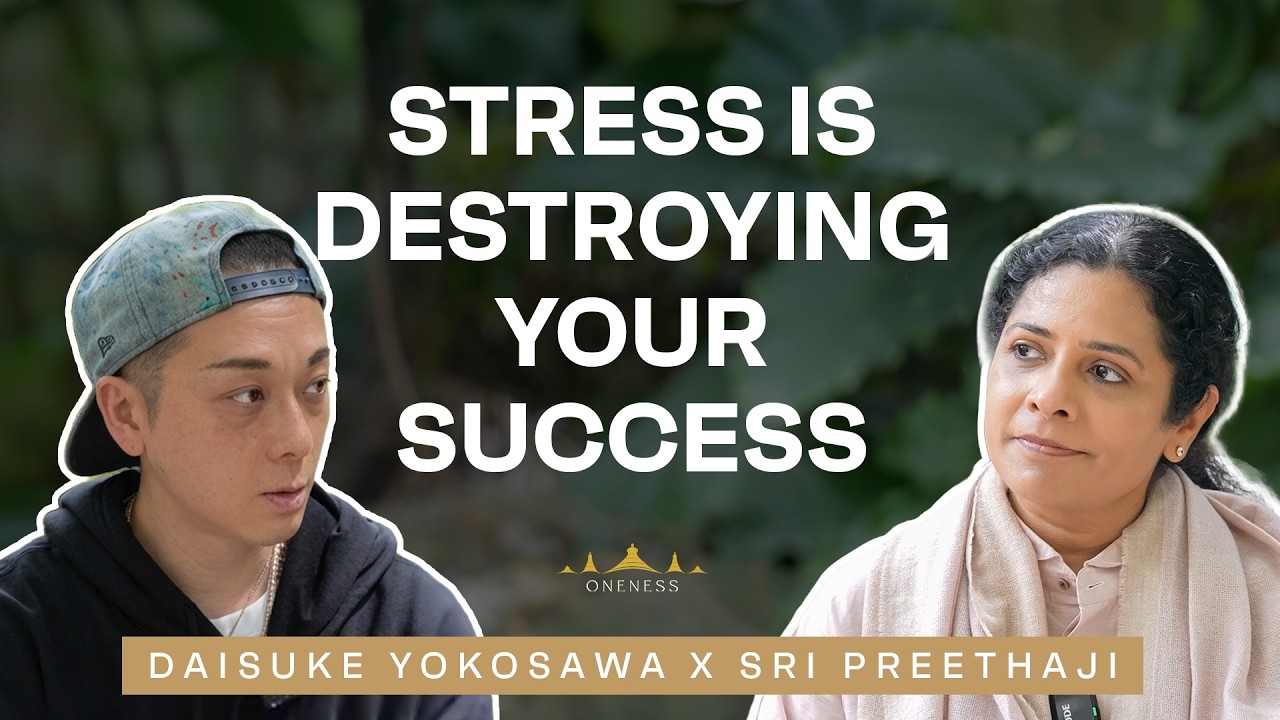
True success isn't measured by external achievements alone—it's defined by your ability to walk out of suffering as it emerges, bring your attention inward, and discover peace within yourself. This approach transforms problems from sources of distress into opportunities for deeper self-understanding and lasting well-being.
What Does Real Success Actually Mean?
The Oneness Movement, through Sri Preethaji and Sri Krishnaji, challenges the conventional definition of success that focuses exclusively on external accomplishments—career advancement, financial gain, social status, or material possessions. While these external markers have their place, they represent only a shallow understanding of what it means to truly succeed in life.
Real success, according to this teaching, centers on an entirely different metric: your capacity to maintain inner peace and freedom from suffering regardless of external circumstances. This doesn't mean ignoring practical responsibilities or abandoning goals. Rather, it means that your primary measure of accomplishment is how effectively you navigate inner states and psychological patterns that typically derail well-being.
A person might achieve every external goal yet remain trapped in cycles of anxiety, frustration, regret, or dissatisfaction. Conversely, someone facing significant external challenges can possess remarkable inner stability and freedom. The latter represents the kind of success that actually transforms your quality of life from the inside out.
How Do You Walk Out of Suffering as It Arises?
The core teaching centers on a practical skill: recognizing suffering when it appears and consciously stepping out of it rather than becoming fused with it. Suffering doesn't arise once and then disappear; it emerges continuously as part of human experience. The question isn't whether you'll encounter difficulties, challenges, or painful emotions—the question is whether you'll know how to exit the suffering itself.
"Walking out of suffering" means developing the capacity to observe your distress without being completely absorbed by it. When a problem surfaces—whether it's a conflict with another person, a setback at work, a health concern, or an emotional wound—your habitual response is often to remain stuck in the mental and emotional patterns that the problem generates. You replay the situation, imagine negative outcomes, blame yourself or others, or attempt to escape through distraction.
The alternative is to notice that you are caught in suffering and to consciously disengage from it. This isn't denial or suppression; it's a shift in awareness where you recognize "I am experiencing this pain, but I am not limited to this pain." This subtle but profound distinction creates space for choice. Instead of automatically spiraling deeper into the pattern, you gain the freedom to respond differently.
Why Is Bringing Attention Inward the Key?
When facing a problem, the natural instinct is to direct all attention outward—to the circumstances, the other people involved, the external obstacles, or the specific situation demanding resolution. While external assessment has practical value, it often traps you in a reactive loop where your peace depends entirely on changing external conditions.
Bringing attention inward shifts this equation. Instead of asking "How do I control external circumstances to feel better?" you begin to ask "What is happening within me right now? Where am I experiencing tension, reactivity, or contraction?" This inward turn is not escapism—it's the most pragmatic approach because it addresses the root of your suffering rather than merely trying to rearrange external problems.
When you turn your attention inward during a problem, several things become possible:
- You observe your patterns: You notice how you habitually react to obstacles. Perhaps you become defensive, aggressive, withdrawn, or self-critical. Seeing these patterns is the first step toward changing them.
- You access clarity: Internal attention creates mental and emotional space where genuine insight can emerge. Solutions that seemed impossible become visible when you're not entirely consumed by reaction.
- You find your center: Beneath the agitation of problems lies a deeper dimension of consciousness that remains untouched by external circumstances. Turning inward is how you reconnect with that stabilizing ground.
- You become less reactive: The more you access your inner world, the less you're controlled by automatic responses. You can choose your response rather than being driven by habit.
How Does a Problem Become an Opportunity?
The transformation of a problem into an opportunity happens through this shift in perspective and practice. A problem, from this view, isn't simply an obstacle in your external life—it's an invitation to develop greater inner capacity.
Consider a specific situation: a colleague takes credit for your work. The external problem is real. But the actual opportunity lies in what this situation reveals about you. Do you become angry and vengeful? Do you collapse into self-doubt? Do you try to manipulate the situation? Your reaction to the problem teaches you about where you still have unconscious patterns, where you lack resilience, and where you need to grow.
By turning inward when the problem arises, you're essentially saying: "Instead of being limited by this external difficulty, I'm going to use it as material for my own development." The problem becomes a teacher. It shows you exactly where your psychological freedom ends and where you're still contracted by fear, pride, insecurity, or judgment.
This reframe doesn't mean becoming passive or accepting injustice. It means that even as you take appropriate external action—addressing the situation, setting boundaries, solving the practical problem—you're simultaneously using the experience to deepen your own inner capacity. Your real victory isn't winning the external battle; it's gaining freedom within yourself.
What Is the Connection Between Inner Peace and External Solutions?
A common misconception is that developing inner peace means becoming indifferent to external problems or abandoning effective action. This teaching suggests the opposite: the more genuinely peaceful you are internally, the more effective your external responses become.
When you're caught in reactivity—anger, fear, desperation—your actions tend to be shortsighted and often create new problems. When you're internally centered, even amid difficulty, your responses come from clarity and wisdom rather than panic or ego-protection. You naturally make better decisions, handle conflicts more skillfully, and find creative solutions that reactive thinking would never generate.
Inner peace and external effectiveness aren't opposed; they're intimately connected. The inward journey isn't an escape from life's practical demands—it's the foundation that makes you more capable of handling them.
Where to Go From Here
The practical application of this teaching begins with deliberate practice. The next time you encounter a problem—whether major or minor—pause and consciously bring your attention inward. Notice what you're feeling, where you're experiencing tension in your body, what thoughts are cycling through your mind. Don't try to fix anything; just observe. This simple act of turning inward, practiced consistently, gradually rewires your habitual reactivity into conscious response.
Over time, you'll develop the capacity to walk out of suffering as it arises. You'll notice that problems don't diminish in frequency, but your relationship to them fundamentally changes. External achievements will still matter, but your deepest measure of success becomes your own inner freedom—the peace you carry regardless of what's happening around you.