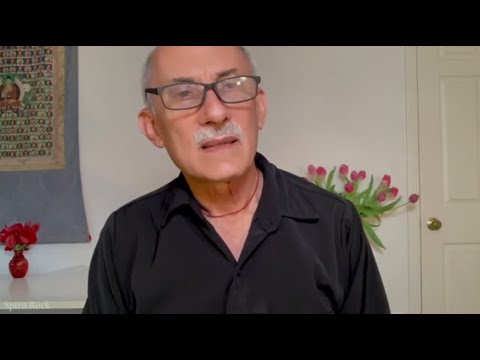
Jack Kornfield argues that the blueprint for a more beautiful world already exists within each person—accessible through cultivating trust, joy, imagination, and mindful presence. Drawing on Buddhist teachings, metaphors from natural transformation, and reflections on community and social engagement, Kornfield frames personal awakening not as escape from the world but as the foundation for meaningful change. He explores how to hold suffering without despair, embrace our role as agents of transformation, and contribute our unique voice and presence to collective awakening.
What Brings Us Joy in This Life?
Kornfield begins by returning to a fundamental question: what brings us authentic joy? This is not a question about pleasure or distraction, but about the deep satisfaction that arises when we align with our nature and contribute meaningfully. Joy, in Kornfield's framework, is not frivolous—it is a vital resource and indicator of alignment with what matters. In a world facing real suffering, despair, and injustice, the capacity to access and share joy becomes a form of resistance and sanity. Kornfield suggests that recovering joy is one of the most radical and necessary practices available to us.
How Does Trust Form the Foundation of Transformation?
Central to Kornfield's teaching is the cultivation of trust—not naïve trust in outcomes, but a deep trust in the possibility of transformation itself. This trust is grounded in understanding how change actually occurs. Kornfield draws on the metaphor of the butterfly and the chrysalis: inside the chrysalis, the caterpillar's body dissolves into what he calls "imaginal cells"—cells that imagine and reorganize the caterpillar's structure into something entirely new. This is not a metaphorical process; it is biological transformation that requires the caterpillar to surrender its old form completely.
The teaching here is radical: transformation requires trust that dissolution is not death, but metamorphosis. We must trust that when old structures fall away—old patterns, identities, certainties—something genuinely new can emerge. Kornfield emphasizes that this trust is not blind; it is informed by the reality that transformation happens at every level of nature and consciousness. When we cultivate trust in our own capacity to change, we also trust in the possibility of collective transformation. This trust, Kornfield suggests, is the antidote to despair and cynicism.
What Does It Mean to Cultivate an Enlightened or Awakened Heart?
Kornfield frames enlightenment not as a distant, otherworldly state but as the awakening of the heart to its fullest capacity—to love, to see clearly, to respond wisely. An awakened heart is one that has learned to hold paradox: it grieves what is lost and suffering while simultaneously trusting in beauty and possibility. It can face injustice without hardening, and face despair without collapsing into hopelessness.
Kornfield teaches that mindful presence is the practice that cultivates this awakened heart. By bringing steady, compassionate attention to our experience—to breath, sensation, emotion, thought—we begin to see through the small, defended self that believes it must protect itself through control, judgment, or domination. In place of that contracted self, we discover a heart that is naturally wise, naturally compassionate, and naturally connected to all beings.
How Can Imagination Shape Our Future?
Imagination is not escape or fantasy in Kornfield's teaching; it is the capacity to envision possibilities beyond what currently exists. Drawing on the imaginal cell metaphor, Kornfield points out that before the butterfly exists, it must be imagined—not consciously by the caterpillar, but at a cellular level. The imaginal cells are cells that "remember" what the butterfly will be and work together to reshape the entire organism.
For human transformation and collective awakening, imagination serves a similar function: it holds the vision of what is possible. When we imagine a more beautiful world—not as escapism, but as a spiritual and creative practice—we align our energy, intention, and action toward that vision. Kornfield emphasizes that this is not New Age magical thinking; it is the recognition that consciousness and intention shape action, and action shapes reality. To imagine a beautiful world together is to begin the work of creating it.
What Is the Role of Community and Sangha in Awakening?
Kornfield places significant emphasis on sangha—spiritual community—as essential to both personal awakening and collective transformation. We do not awaken in isolation; we awaken in relationship. Sangha provides witness, support, accountability, and shared commitment. It also reminds us that awakening is not individual achievement but collective unfolding.
In sangha, we learn to help each other. We see our struggles reflected in others and discover that we are not alone. We also discover that our joy, presence, and clarity directly affect those around us. Kornfield teaches that each person who awakens—who becomes more present, more loving, more wise—has a ripple effect. The energy of one awakened heart affects the whole field. This is why the cultivation of personal awakening is simultaneously the most radical and most practical contribution to creating a better world.
How Do We Hold Suffering Without Despair?
Kornfield directly addresses one of the deepest challenges of our time: how to be aware of real suffering, injustice, and ecological devastation without falling into despair or becoming cynical. He teaches that this is a matter of balance and perspective. We do not deny suffering; we see it clearly. But we also see beyond the current moment. We take the long view.
Taking the long view means understanding that transformation, while slow, is real. It means recognizing that justice movements have succeeded in the past and can succeed in the future. It means knowing that individuals and communities have transformed seemingly impossible situations. This is not optimism as denial; it is realism grounded in actual history and actual possibility.
Kornfield also teaches that our moral response to suffering is not to collapse under its weight, but to let it clarify our values and direct our action. Morality, justice, and love are not separate from spiritual practice—they are expressions of it. When the heart is awake, it naturally moves toward justice, toward caring for the vulnerable, toward standing against harm.
What Is the Power of Protest, Resistance, and Joyful Strength?
Kornfield explores the question of how we engage in protest and resistance skillfully. He teaches that there is power in protest grounded in love and truth rather than hatred and fear. When we stand up against injustice from a place of clarity and compassion—when we are not motivated by fear of those causing harm, but by love for those being harmed—our action is more effective and more transformative.
This requires letting go of fear, which Kornfield names as one of the essential inner practices. Fear contracts us; it narrows our vision and our heart. When we let go of fear—not recklessly, but through cultivating trust and understanding—we discover the strength of joy. Strength rooted in joy is different from strength rooted in anger or aggression. It is resilient, creative, and generative. It sustains us over the long haul and does not require the enemy to exist in order to feel powerful.
How Do We Imagine a Beautiful World Together?
Kornfield calls us to a specific spiritual practice: imagining a more beautiful world together. This is not vague or sentimental. It involves using our faculty of imagination intentionally, collectively, to envision what justice, beauty, care, and awakening might look like. When we do this together, in community, we create a shared vision that can guide action and sustain hope.
Kornfield references the poet Allen Ginsberg's poem "Howl," which names despair, injustice, and the destruction of beautiful souls by an insane civilization—but does so in a way that honors what is sacred and alive even in the wreckage. This is the kind of imagination Kornfield calls for: not denial of what is broken, but a fierce commitment to beauty, sacredness, and possibility even in the midst of struggle.
What Is Our Role as Playful Children of the Spirit?
Kornfield invites us to feel ourselves as playful children of the spirit—to recover a sense of wonder, curiosity, and even humor about existence. This is not childishness, but a return to the openness and joy that children naturally embody before they are contracted by fear and conditioning. A playful spirit is free to explore, to make mistakes, to discover, to delight.
This playfulness is an antidote to the grim, driven quality that often accompanies activism and spiritual seeking. Kornfield teaches that the more we can bring joy, tenderness, and even playfulness to our engagement with life—to our practice, our relationships, our work for justice—the more sustainable and effective it becomes. We are not meant to burn ourselves out in joyless struggle. We are meant to bring our full aliveness to the world.
How Do We Navigate Modern Times With Balance and Equanimity?
Kornfield addresses the modern dilemma: how do we stay informed, engaged, and responsive to real problems while also maintaining balance, peace, and equanimity? His teaching is not to withdraw or to become indifferent. Rather, it is to develop the capacity to be present with whatever arises—joy and sorrow, beauty and injustice—without being overwhelmed or losing our center.
This requires practices that strengthen our nervous system and our heart: meditation, movement, time in nature, connection with loved ones, and engagement with community. It requires discernment about what to take in (the news, social media, information) and what to consciously set aside. It requires alternating between action and rest, between engagement and retreat, between serious work and play.
Kornfield teaches that equanimity is not indifference; it is the steady heart that can remain present, clear, and loving regardless of circumstances. When we cultivate equanimity, we become more capable of wise action, because we are not reactive or driven by fear and adrenaline. We can see situations more clearly and respond with creativity and compassion.
What Is Our Individual "Make-Weight of Hope"?
Kornfield uses a beautiful phrase: adding your "make-weight of hope" to the world. A make-weight is a small weight added to a scale to balance it. He teaches that each of us, by virtue of our presence, our awakening, our joy, our love, and our commitment, is adding weight to the side of hope, beauty, and transformation. We are not separate from the whole; our individual actions and consciousness affect the whole.
This is both humbling and empowering. Humbling because we cannot control outcomes; empowering because our presence matters. When you bring your awakened heart, your joy, your voice, and your imagination to the world, you are making a real difference. You are strengthening the field of consciousness. You are helping others to awaken. You are contributing to the transformation toward a more beautiful world.
Where to Go From Here
Kornfield invites us into ongoing practice: meditation and mindfulness to cultivate an awake, trusting heart; engagement with sangha and community for witness and support; imagination practices that envision beauty and justice; and wise action grounded in love rather than fear. He encourages us to recover joy as a spiritual practice, to let go of despair through understanding the long view and the reality of transformation, and to trust in our own capacity to help shape a more beautiful world. Finally, he reminds us that this is not a solitary journey—we are imagining and creating together, with all beings, each adding our unique voice and presence to the great unfolding of consciousness.