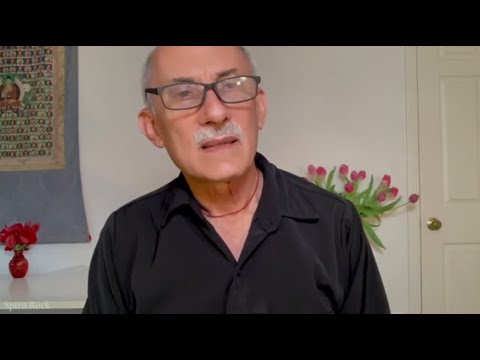
In this conversation, meditation teacher Jack Kornfield and systems healer Thomas Hübl, PhD explore how spiritual practice and trauma healing are inseparable from social change. They discuss practical skills for digesting personal and collective trauma, expanding emotional tolerance, the role of activism in spiritual awakening, and how consciousness itself—not trauma—is the deepest truth of who we are. The discussion bridges individual healing, intergenerational wounds, and the interconnection between inner work and outer world responsibility.
What Is Trauma's Role in Disconnecting Us from Our True Nature?
According to Kornfield, a foundational misunderstanding in spiritual work is the belief that "who you are is so much more than your trauma, you are consciousness itself." Trauma—whether personal, intergenerational, or collective—creates patterns of fear, contraction, and survival responses that overlay our fundamental nature. These patterns don't define us; they obscure our capacity for loving awareness. Hübl's work on collective trauma explores how these wounds live not just in individual psychology but in cultural memory and systems, passed down through families and societies. When we ignore this reality, we remain on autopilot, reactive rather than responsive, unable to access the wisdom and compassion that characterize our deeper consciousness.
How Does Mindfulness Help Digest Trauma at the Body Level?
The conversation emphasizes that trauma healing requires developing specific skills—it is not automatic. Mindfulness, in this context, means bringing steady, non-judgmental awareness to the sensations, emotions, and patterns held in the body. Trauma lives in the nervous system as dysregulation: a narrowed "window of tolerance," in which the nervous system oscillates between hyperarousal (fight-or-flight) and hypoarousal (freeze or shutdown). Conscious healing involves gently expanding this window through practice. When we sit in meditation or engage in somatic awareness, we learn to stay present with discomfort without being consumed by it. This is not suppression or spiritual bypassing; it is the slow, patient work of metabolizing stored experience. The nervous system learns, through repeated safe experiences of presence, that it is possible to feel without being overwhelmed.
What Is the Connection Between Spiritual Practice and Activism?
Kornfield states directly: "The whole notion that spiritual practice doesn't have anything to do with activism is a fiction." This challenges a common retreat into purely interior spirituality. The recognition of interdependence—expressed in his poetic observation that "every breath you take is the breath of the starlings and the earthworms and the soil. We're all inter-breathing it together"—naturally generates responsibility. When we awaken to our interconnection with all beings, racism, war, economic disparity, and environmental destruction become not abstract political issues but direct expressions of collective suffering. Activism rooted in loving awareness differs fundamentally from burnout-inducing righteousness; it emerges from compassion rather than rage, from clarity rather than ideology. The practice of mindfulness and meditation becomes the fuel that allows activists to remain grounded, present, and sustainable in their work.
How Can Spiritual Practitioners Avoid Burnout While Engaging in Social Change?
Both teachers stress the importance of balance and self-care in activist work. Without a grounded meditation practice and clear spiritual understanding, activists often operate from a wounded place, driven by unhealed trauma or righteous anger—patterns that inevitably lead to burnout. Hübl's work on collective healing includes the recognition that we inherit the traumas of our cultures, including the traumas of injustice and oppression. To work effectively for change, practitioners must first digest these inherited patterns in themselves, so they act from wholeness rather than reactivity. Kornfield's long practice with meditation master Maha Ghosananda demonstrates this integration: spiritual deepening and engagement with suffering are not opposed but mutually supportive. The sustained presence developed through meditation allows activists to remain compassionate, creative, and resilient over time.
What Does It Mean to Expand Your Window of Tolerance?
The "window of tolerance" is a key concept in trauma-informed healing. It refers to the zone of arousal in which a person can process experience, learn, and respond flexibly. Trauma narrows this window: the nervous system becomes hypersensitive, jumping quickly into fight-flight (reactivity) or freeze (shutdown) in response to minor triggers. Expanding this window is both the goal and the practice of conscious healing. Through mindfulness, somatic therapy, breathing practices, and sustained meditation, the nervous system gradually learns to stay regulated across a wider range of stimulation. This means you can be present with difficult emotions—grief, rage, fear—without dissociating or exploding. You can engage with the world's pain without being consumed by it. This expanded capacity is essential both for personal healing and for the sustained, grounded activism that creates real change.
How Do We Work with Racism, War, and Systemic Injustice Spiritually?
The conversation addresses how spiritual practitioners can work with structural violence without bypassing the reality of suffering or falling into despair. First, they emphasize honest acknowledgment: racism, war, and economic disparity are real, rooted in specific systems and histories, and require practical engagement. Second, they situate this work within a framework of interdependence and collective healing. Hübl's research on collective trauma includes work on the wounds carried by cultures affected by war, displacement, and systemic oppression. Healing these wounds happens not through denial or individual transcendence but through conscious witnessing, shared accountability, and structural change. Spiritual practice—particularly the development of loving awareness—is the ground from which such work emerges. It clarifies our values, sustains our energy, and helps us distinguish between genuine compassionate action and reactive righteousness.
What Is the Relationship Between Skepticism and Mystical Understanding?
The episode includes a discussion of shifting from skeptical to mystical perspectives. This is not a move away from critical thinking but an expansion that includes direct experience of interconnection, consciousness, and the transcendent dimensions of existence. The scientific worldview can be reductionist, treating consciousness as an epiphenomenon of the brain, cutting us off from the lived reality of our interdependence and the depths of what we are. Kornfield and Hübl suggest that as practitioners deepen in meditation and contemplative practice, they naturally begin to experience directly—not just intellectually—the way consciousness and interconnection operate. This is not anti-science; rather, it integrates the findings of systems theory, neuroscience, and ecology with the direct knowing available through disciplined practice.
How Do We Engage with Middle East Trauma and Collective Wounds?
The conversation touches on specific regional traumas, including the Middle East, where cycles of violence, displacement, and loss span generations. Hübl's work on collective trauma healing has included facilitating groups across conflict lines. The key insight is that healing these intergenerational wounds requires not only political solutions but also conscious witnessing and processing. People carry the trauma of their ancestors and communities; this is held in the nervous system, in cultural narratives, and in relational patterns. Spiritual communities and practitioners can serve as containers for this healing work—spaces where people from different sides can witness each other's suffering, recognize their shared humanity, and begin to digest the inherited trauma that perpetuates cycles of violence. This is slow work, and it operates alongside—not instead of—political action and justice work.
What Is Waking Up from Autopilot?
A core theme in both teachers' work is the recognition that most people live on autopilot, driven by conditioned patterns and survival responses developed in response to early wounds. Trauma keeps us frozen in the past, reacting to current situations as if they are old threats. Waking up means developing the capacity to observe these patterns, to distinguish between a genuine present-moment threat and a conditioned trigger. This is the work of mindfulness: noticing when the mind is in the past (rumination, regret) or future (anxiety, planning), and gently anchoring awareness in the body and the present moment. From this grounded presence, choice becomes possible. We can respond rather than react, act from values rather than fear, and engage with the world from our fullest humanity rather than our wounds.
Where to Go From Here
The integration of personal trauma healing, spiritual practice, and engaged activism is not a linear path but a recursive deepening. Begin with a consistent mindfulness or meditation practice; this is the foundation that develops the stability and clarity needed for all other work. Simultaneously, notice the inherited traumas—personal, familial, and cultural—that live in your body and psyche. Work with a trauma-informed therapist or healer if needed; healing is not a purely individual achievement but often requires skilled support. As your window of tolerance expands and your awareness deepens, notice the natural emergence of compassion and responsibility. Engage with the world's suffering from this grounded place, not from guilt or rage. Study the work of teachers like Kornfield and Hübl who integrate wisdom traditions with contemporary understanding of trauma and systems. Find or build communities of practice that support both inner work and outer action. Remember Kornfield's fundamental reassurance: your true nature is consciousness itself, vast and loving. Your trauma is real and requires skillful attention, but it does not define you. This recognition, held with compassionate action in the world, is the path to both personal freedom and meaningful contribution to collective healing.