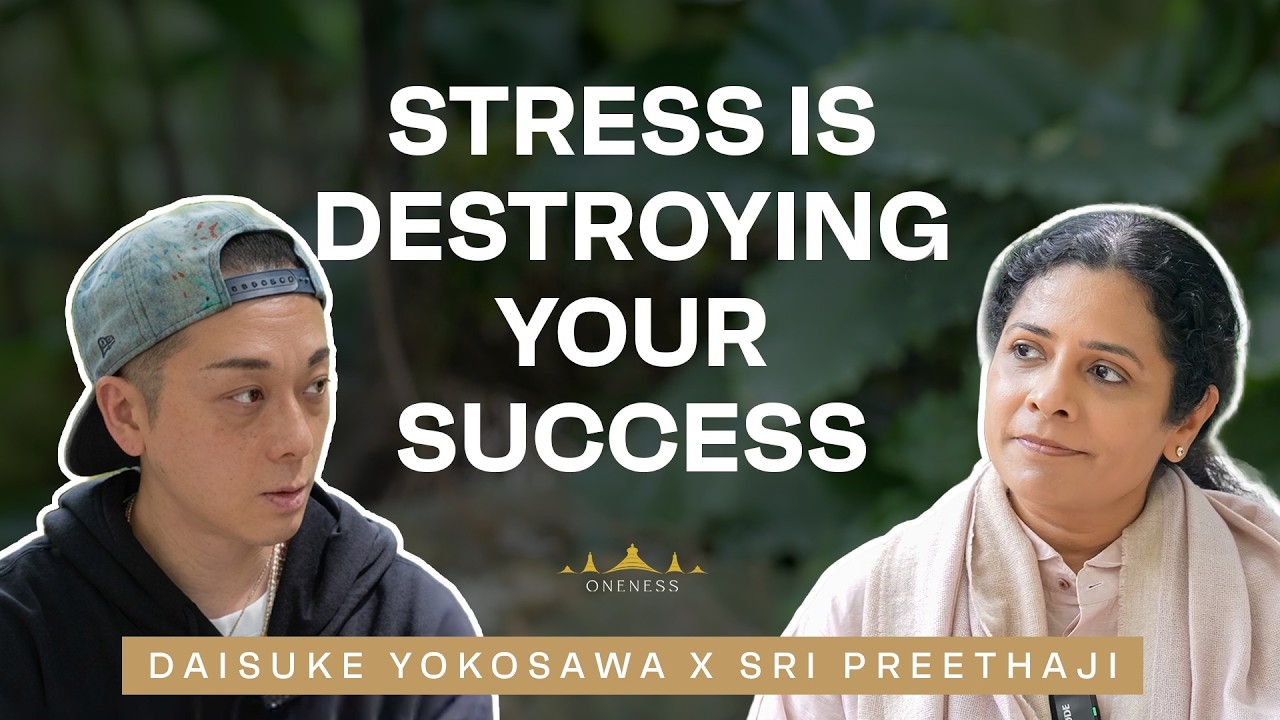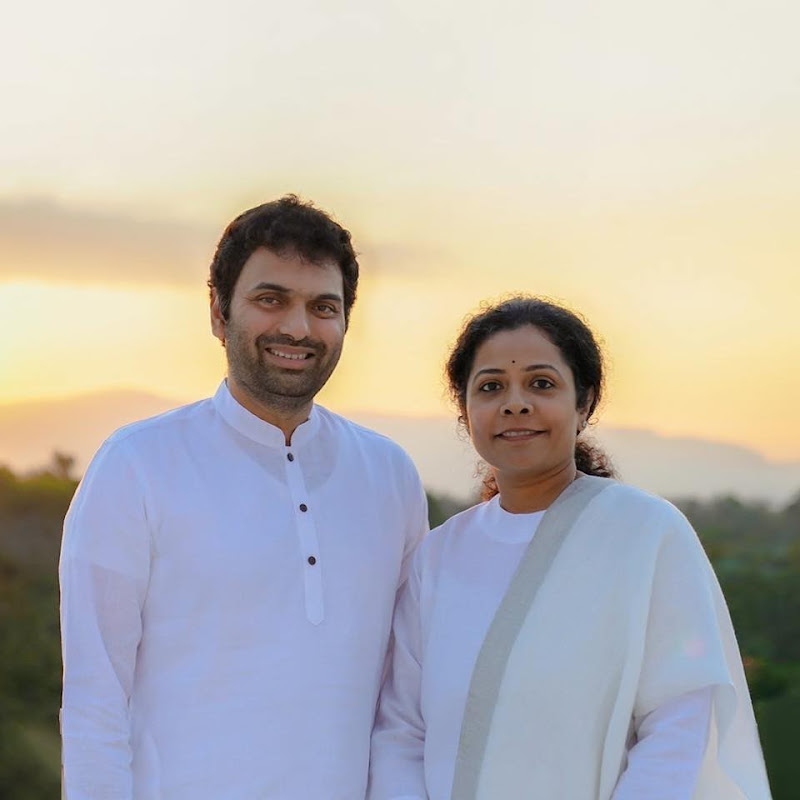
In a mass gathering in Rajahmundry, thousands of participants received direct transmission of unperturbed peace—a state of inner stability and equanimity—from Mukti Gurus through the Oneness Movement's E2 Live platform. This event demonstrates how the Oneness lineage works with energetic transmission rather than intellectual teaching alone, allowing large numbers of people to access a coherent state of consciousness simultaneously.
The Oneness Movement, founded by Sri Preethaji and Sri Krishnaji, operates on the principle that consciousness itself can be transmitted from one being to another. In the Rajahmundry event, the stated mechanism was transmission of "unperturbed peace"—not a relaxed numbness or escapism, but a dynamic inner stability that remains unaffected by external circumstances.
This transmission model differs fundamentally from teaching-based spiritual paths. Rather than learning techniques or philosophy to construct peace through effort, participants are said to receive a coherent state directly. The Mukti Gurus—enlightened facilitators within the Oneness lineage—act as conductors or stabilizers of this state, allowing it to flow to thousands simultaneously. The use of E2 Live, a platform for remote participation, extends this transmission beyond physical proximity, suggesting that in this model, energetic states operate independent of distance.
Most contemplative traditions emphasize individual practice—meditation, self-inquiry, ritual—as the primary path to peace. The Oneness Movement's approach prioritizes the field effect: when consciousness shifts in one person, it creates conditions for shift in others nearby or connected through intention and attention.
In the Rajahmundry gathering, thousands participated together, meaning the coherence was collective rather than isolated. This mirrors concepts in physics and neuroscience where synchronized systems amplify effects. The Mukti Gurus likely served as the stable reference point—individuals who have already integrated this state of unperturbed peace deeply enough that they can hold it steady while others tune in. Participants would receive not through their own effort but through resonance with that established state.
The phrase "unperturbed peace" itself is specific. It is not about feeling good or becoming passive. Rather, it describes equanimity—a mind that meets changing circumstances without reactivity, judgment, or fear, yet remains fully awake and responsive. This is distinct from escapism or suppression.
E2 Live is the Oneness Movement's platform for distributing these transmissions globally. The "E2" likely refers to a specific energetic technology or protocol developed within the lineage. By hosting the Rajahmundry event through this platform, Sri Preethaji and Sri Krishnaji made the transmission available not only to those physically present but to those joining remotely.
This raises a practical question about how transmission works across digital connection. If the mechanism is energetic or consciousness-based rather than physical, the logic would be that attention and intention create a link, and the digital platform simply facilitates that link by gathering attention in one place, at one time, toward one coherent state. Thousands could join with focused attention on receiving the transmission, regardless of location.
The high attendance (thousands) suggests that in the Rajahmundry region and the broader Oneness Movement community, transmission events are recognized as significant. Several factors likely drive participation:
- Direct experience over theory: If previous participants have felt genuine shifts in their inner state through transmission, word spreads organically. They seek repeated access to that experience.
- Mukti Guru reputation: The term "Mukti Guru" refers to a liberated teacher—someone who has themselves realized the ultimate freedom (mukti) that the movement points toward. People gather around such individuals hoping that proximity to their state will catalyze their own shift.
- Collective consciousness effects: Meditating or receiving transmission in a group of thousands creates a powerful field. The coherence is stronger than individual practice because intention and attention are unified.
- Accessibility of awakening: Unlike paths requiring years of solitary practice, the transmission model suggests enlightenment or deep peace is available now, directly, without prerequisites. This appeals to seekers who may feel frustrated with traditional slow paths.
The movement's name points to a core realization: that all boundaries between self and other, observer and observed, are ultimately illusory. At the deepest level, consciousness is unified; the sense of separation is a construct of mind.
When the Rajahmundry event transmits "unperturbed peace," it is likely also facilitating a glimpse or experience of this underlying oneness. Peace flows naturally when the individual ego's sense of threat dissolves—when you realize there is nothing ultimately separate to protect. The thousands receiving transmission may have had moments where the boundary between "me" and "the teacher," "me" and "the others in the room," or "me" and "the universe" thinned or vanished briefly.
This is not a belief to be adopted, but a state to be experienced. Transmission is the mechanism by which that experience becomes accessible without lengthy practices.
Rajahmundry is a historic city in Andhra Pradesh, India, located on the banks of the Godavari River. The choice to host a major transmission event there suggests either an existing community of practitioners in that region or an intention to establish one. India has long been the center of the Oneness Movement's physical presence and cultural roots, and such large gatherings in Indian cities keep the work rooted in its source context while also making it accessible to hundreds of thousands in the subcontinent.
The 5,483 recorded views of the short video clip suggest that while the live event reached thousands, the recorded transmission also circulates afterward. People who could not attend in real-time—whether due to logistics or learning about the event afterward—can still access the recorded transmission, continuing the ripple effect.
In traditional Hindu and yogic frameworks, a Guru is far more than a teacher. The Guru is a bridge between the absolute and the relative, between enlightenment and the ego-bound person. A Mukti Guru specifically is one who has realized complete liberation (mukti) and can therefore stabilize others in that realization.
The Mukti Gurus in the Rajahmundry event functioned as anchors. They held the state of unperturbed peace steady—through their own consciousness, their presence, their attention—while thousands tuned in to receive it. This is not a performance or demonstration; it is an actual energetic function. The stability of the Guru's inner state creates conditions where others' minds can settle into coherence.
This model assumes that consciousness is contagious, that inner states can be transmitted across the boundary between beings. Modern neuroscience on mirror neurons and emotional contagion provides some empirical support for this principle, though it does not fully explain the more subtle claim of "state transmission."
The description states that peace "floods" the participants, using an image of sudden arrival or saturation. However, whether the resulting state is permanent depends on several factors. In most transmission traditions, a single exposure creates an opening—a taste of a deeper state—rather than irreversible change. Participants may feel deeply peaceful for hours or days after the event, but unless they continue to practice, align their life, or receive repeated transmissions, the mind typically drifts back toward habitual patterns.
However, even a temporary experience of unperturbed peace is significant. It proves to the receiver that such a state is real and possible. This has the power to shift their orientation toward life and practice going forward. The Oneness Movement likely combines transmission events with ongoing practices, meditations, and community to deepen and stabilize the initial shift.
If you are drawn to this approach, several paths are available:
- Explore the Oneness Movement's online platforms and E2 Live schedule to learn about upcoming transmission events in your region or to join remotely.
- Research the Oneness Movement's foundational teachings to understand the philosophy behind transmission work. Books and videos by Sri Preethaji and Sri Krishnaji outline both the theoretical and experiential dimensions.
- Consider how this transmission model compares to other lineages you may have encountered. Some teachers work with energetic transmission; others with meditation technique, devotion, or direct inquiry. Your own nature will resonate with different approaches.
- If you attend a transmission event or join one remotely, notice your own experience carefully. What shifts in your inner state? Does peace genuinely arise, or is it suggestion? Your direct experience is the only reliable teacher.
- Investigate the relationship between momentary transmission experiences and lasting transformation. How do these glimpses integrate into daily life? What practices or conditions support deepening the initial shift?