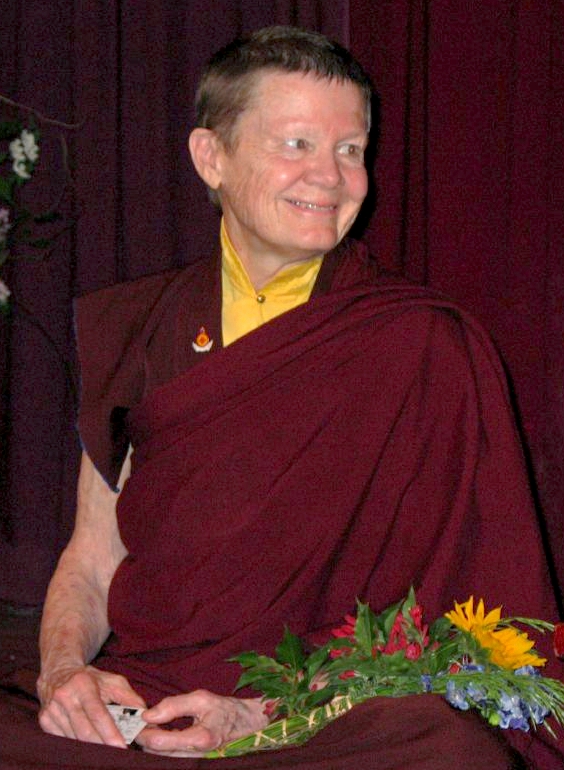
Tonglen is a Tibetan Buddhist practice in which you breathe in the suffering of others and your own difficult emotions—fear, despair, anger—with the intention of relieving their pain, and breathe out relief, healing, and openness. Rather than avoiding what we resent and push away, tonglen deliberately takes it as the seed of compassion. By doing this practice, you move out of self-absorption, realize the universality of suffering, and use your own experience of pain as a bridge to understanding all beings. The practice is not about forced positivity or spiritual bypass; it honors the depth and vulnerability of real suffering and redirects it toward opening the heart.
What Stops Us From Practicing Compassion in the Moment?
When we sit down to practice meditation or contemplation and are invited to generate compassion—especially for our own stress or difficulty—the mind often goes blank. Chodron describes a common experience: you've rushed through your day, arrived at a retreat or practice session stressed about something, and then you're asked to work with that very stress as your object. Total numbness arrives. The invitation to feel compassion for yourself and all others experiencing the same stress meets a wall. This is not failure; it's the ordinary human condition. The difficulty itself is the starting point.
Other scenarios emerge as people begin to practice. Some people connect for only "two and a half seconds" before distraction takes over—thoughts pull attention away, and then a bell or gong rings to bring them back. Yet in those brief moments, something may have registered. Others touch something so deep, vulnerable, and tender that it feels intensely painful. There is a fear of overwhelm: if I open to this, will I be flooded? Will it become too much? These are not obstacles to dismiss but honest signals that the practice is meeting real emotional material.
When the subject is very close to home—something filled with personal fear, insecurity, or sadness—the blocks can shift. Sometimes you find no trouble generating the wish to help. Yet alongside that impulse is a protective fear: the fear that opening fully will break you. Other times, a single practice begins with one person or group you care about, and then the practice keeps "morphing into other subjects." The mind and heart refuse to stay contained. Many many subjects arise—prisoners, the ill, the bereaved, all beings caught in patterns you recognize in yourself.
How Did Tibetan Practitioners Use Tonglen at the End of Life?
Sogyal Rinpoche, in his popular book The Tibetan Book of Living and Dying, describes a traditional Tibetan approach that Chodron explores throughout the weekend teaching. In Tibet, and among Tibetan refugees in exile, it was and remains common for someone who is dying of an illness—someone who knows death is near—to begin the practice of tonglen. The dying person breathes in all the illnesses of all other people who are dying. They wish to take on not only the physical pain but also the mental and emotional reactions: the fear, anger, despair, and other emotions that accompany terminal illness.
The intention is deliberate: Since I am feeling this anyway, let it have meaning. Let it be the seed of compassion and empathy for all these other people. I know exactly how they feel because I am very ill and I am dying. Let me stand in the shoes of millions.
Behind this practice is a belief about karma. The Tibetan view holds that by doing tonglen with this intention, the dying person purifies their negative karma. They can die free of that heavy burden precisely by using their illness and dying process as a vehicle for compassion. The suffering is not wasted. It becomes the means to liberation. The very thing that would seem most natural to resent, fear, and push away—your own fatal illness—becomes instead a stepping stone. It transforms into the means by which your heart and mind become open and free.
How Does Suffering Transform Into Connection?
This is the hidden mechanism of tonglen: what we usually resent and push away, we deliberately take in. The illness, the stress, the fear—these are not problems to overcome in order to practice compassion. They are the practice. By doing this, you escape what Chodron calls "the prison of self-absorption." You are no longer caught up only in yourself, your small world, your private pain. Instead, the practice becomes the means by which you realize something vast: your interconnectedness with all beings.
This realization has two layers. First, you discover that your suffering is not uniquely yours. You realize that "it isn't just my suffering—it's universal suffering." Whatever you are experiencing right now, millions of others are experiencing too. Second, and more radically, you discover that you can know something true about everyone on the planet by knowing your own inner life.
Chodron states this directly: "To the degree that I've felt fear, I know the fear of all human beings and animals. To the degree that I've been in the clutches of despair or depression, I know the taste and smell of everyone's depression. To the degree that I've grieved or felt hopeless, I know the hopelessness and grief of all people. To the degree that I've been caught up and carried away by anger, revenge, bitterness, hard-heartedness of all kinds, I know the anger and bitterness and revenge—the taste of it in my mouth—I know what it tastes like in everyone else's mouth too."
This is not metaphor or sentiment. By feeling your own pain deeply and honestly, you develop direct knowledge of what others suffer. You become fluent in the language of human vulnerability. Your particular suffering becomes your credentials for compassion on a universal scale.
What Does Tonglen Practice Actually Do to the Mind?
Tonglen "takes you out of yourself," but it does so by using yourself as the basis. Your own experience—your fear, your despair, your anger—is not bypassed or transcended. It is used. It becomes the ground on which you open your heart as wide as the universe itself. You use the particular to reach the infinite.
The practice also shifts something about identification. When you breathe in suffering and breathe out relief, you are not identifying with the small self that owns the suffering. You are identifying instead with the capacity to transform and to connect. You begin to know something of "the vastness of your being, the vastness of your mind." The mind is not the cramped, defended place it usually seems. It is vast enough to hold the suffering of all beings. It is vast enough to wish relief for all.
This is what makes tonglen, as Chodron says, "an amazing practice." It is amazing not because it is pleasant or makes you feel good. It is amazing because it reorganizes your entire sense of who and what you are.
Where to Go From Here
If you are interested in learning tonglen, recognize that the initial difficulty—the numbness, the distraction, the fear of overwhelm—is normal and expected. The practice is not about achieving perfect focus or dissolving into bliss. It is about showing up with your honest experience and using it as the door to compassion. Start with what is real for you right now. If you are stressed, use that stress. If you are grieving, use that grief. If you are angry, use that anger. Breathe it in with the wish that all beings caught in that same emotion be freed from it. Breathe out relief, healing, and peace. Do this for a few minutes, or even a few breaths. Notice what happens in your sense of boundaries between self and other. Notice whether the practice shifts anything about your relationship to your own difficulty. Over time, and with repetition, the mind and heart may begin to reorganize around something wider and more interconnected. The practice is not about achieving a spiritual state; it is about aligning your intention and attention with what is most true: that all beings wish to be free from suffering, and that your suffering can become the bridge between you and them.


