BrightStar

Browse All Events

Discover conscious gatherings

events

Yoga
Meditation
Breathwork
Qigong
Tai Chi
Sacred Music
World Music
Medicine Music
Sound Healing
Ecstatic Dance
Popular Destinations
BaliSedonaLos AngelesCosta RicaNew YorkSan FranciscoAustinMiamiJoshua TreeTulum
View All CategoriesView All Destinations

Explore All Features

Powerful tools to grow your events

Platform Features

Smart Dynamic Pricing
Ticket Categories
Assigned Seating
Abandoned Cart Recovery
Visitor Recovery
Donations & Sliding Scale
Affiliate Engine
Ticket Scanner
Coupon Codes
Custom Questions
Ticket Sharing
Upsells & Add-ons
Analytics & Reporting
Email Sequences
Waitlist / Notify / Remind
People & Places
Artists & TeachersEvent OrganizersVenues & StudiosKnowledge BaseGlossaryInspiration
View All FeaturesAbout Us
PricingBlog
Language
Saved events
Browse All Events

events

YogaMeditationBreathworkQigongTai ChiSacred MusicWorld MusicMedicine Music

Popular Destinations

BaliSedonaLos AngelesCosta RicaNew YorkSan Francisco

People & Places

Artists & TeachersEvent OrganizersVenues & StudiosKnowledge BaseGlossaryInspiration

Platform Features

Smart Dynamic PricingTicket CategoriesAssigned SeatingAbandoned Cart RecoveryVisitor RecoveryDonations & Sliding ScaleAffiliate EngineTicket ScannerCoupon CodesCustom QuestionsTicket SharingUpsells & Add-onsAnalytics & ReportingEmail SequencesWaitlist / Notify / Remind
View All FeaturesAbout Us
PricingBlog
Log inFind EventsHost Events
  • Browse All Events
  • For Seekers
  • Yoga
  • Meditation
  • Breathwork
  • Qigong
  • Tai Chi
  • Sacred Music
  • World Music
  • Medicine Music
  • Sound Healing
  • Ecstatic Dance
  • Retreats
  • Workshops
  • All Categories →
  • Bali
  • Sedona
  • Los Angeles
  • Costa Rica
  • Tulum
  • Byron Bay
  • San Francisco
  • Austin
  • New York
  • San Diego
  • Denver
  • Seattle
  • Portland
  • Miami
  • All Cities →
  • Join the Movement
  • Why we list
  • Sell Globally
  • For Creators
  • For Teams
  • For Writers
  • For Teachers
  • For Kirtan Artists
  • For Studios
  • For Festivals
  • For Retreat Centers
  • For Nonprofits
  • Brand Ambassador
  • Free Ticketing
  • Elevate
  • Amplify
  • 500K+ Buyer Network
  • Abandoned Cart Recovery
  • Smart Dynamic Pricing
  • Ticket Categories
  • Recurring Events
  • Assigned Seating
  • Affiliate Engine
  • Waitlist / Notify
  • Ticket Scanner
  • Embed Widget
  • Event Syndication
  • Message Center
  • Integrations
  • Reports
  • All Features →
  • About
  • The Ecosystem
  • Blog
  • Glossary
  • Inspiration
  • Help Center
  • Contact
  • API Docs
  • Brand Assets
  • Careers
  • Press
  • Terms of Service
  • Privacy Policy

Events

  • Browse All Events
  • For Seekers
  • Yoga
  • Meditation
  • Breathwork
  • Qigong
  • Tai Chi
  • Sacred Music
  • World Music
  • Medicine Music
  • Sound Healing
  • Ecstatic Dance
  • Retreats
  • Workshops
  • All Categories →

Destinations

  • Bali
  • Sedona
  • Los Angeles
  • Costa Rica
  • Tulum
  • Byron Bay
  • San Francisco
  • Austin
  • New York
  • San Diego
  • Denver
  • Seattle
  • Portland
  • Miami
  • All Cities →

For Creators

  • Join the Movement
  • Why we list
  • Sell Globally
  • For Creators
  • For Teams
  • For Writers
  • For Teachers
  • For Kirtan Artists
  • For Studios
  • For Festivals
  • For Retreat Centers
  • For Nonprofits
  • Brand Ambassador
  • Free Ticketing
  • Elevate
  • Amplify

Features

  • 500K+ Buyer Network
  • Abandoned Cart Recovery
  • Smart Dynamic Pricing
  • Ticket Categories
  • Recurring Events
  • Assigned Seating
  • Affiliate Engine
  • Waitlist / Notify
  • Ticket Scanner
  • Embed Widget
  • Event Syndication
  • Message Center
  • Integrations
  • Reports
  • All Features →

Company

  • About
  • The Ecosystem
  • Blog
  • Glossary
  • Inspiration
  • Help Center
  • Contact
  • API Docs
  • Brand Assets
  • Careers
  • Press
  • Terms of Service
  • Privacy Policy
BrightStar
Get the app
Download on theApp StoreGet it onGoogle Play
© 2026 BrightStar. All rights reserved.
Inspiration

The Shock of Doing Nothing: What Darkness Reveals About Self

Big Think
Big Think
Oct 15, 2026
9 min read
Watch · 7

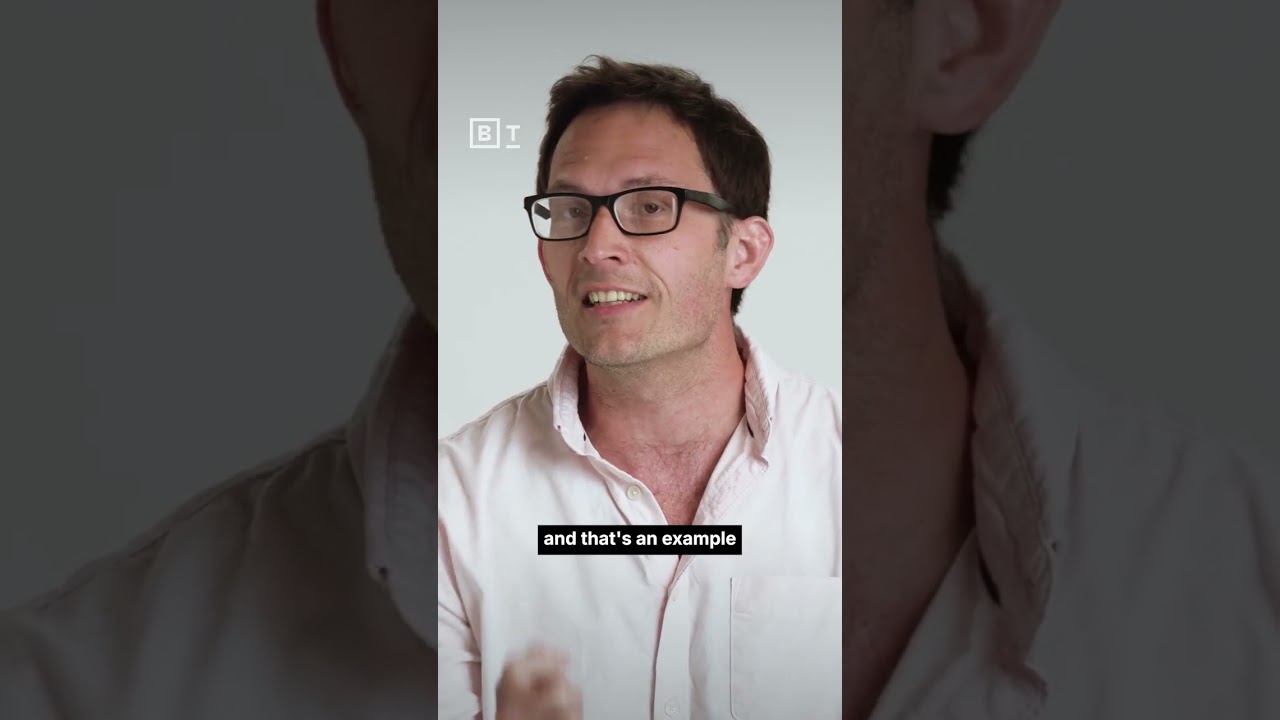
Picture a room where the light is switched off and stays off. No screen to glance at, no voice in the next room, no notification buzzing against a table. Nothing to reach for. Andrew Holecek, who has spent years studying what happens when sensory input stops entirely, says the first thing most people meet in that room is not peace. It is restlessness, and underneath the restlessness, a grip. In a short Big Think interview, he lays out a sequence that runs from the shock of doing nothing, through the unprocessed material of the unconscious, down to what he calls the "primordial contraction," the sense of self most of us never think to question. On the far side of that descent, he argues, the walls we build around our experience open wide, and the real work begins: learning to carry that openness back into an ordinary day.

Read · 7 sections

Why do we reach for something in the first place?

Holecek does not start in the dark. He starts with the phone in your hand. "We're addicted to distraction," he says. "We're light junkies." He asks viewers to count how many times a day they reach for the phone, the tablet, the inbox, and then to look underneath the reach itself.

"Look underneath it. What are you feeling? You're going to find a contraction. We feel this deficient sense of emptiness. We feel that something's missing." (Andrew Holecek, Big Think interview, 0:19)

That framing is the spine of the whole clip. The impulse to grab is not treated as a bad habit to be managed with willpower. It is read as a symptom of a deeper feeling that something is lacking. Holecek ties this to consumerism directly, calling it a product of the same restlessness: "I want this, I want that, I want, I want, I want." His diagnosis is that we have "lost touch" with who we are, and that our identity has been outsourced to activity. "Who you think you are is defined by what you do," he says. "Who you really are is revealed when you finally stop doing." (Holecek, Big Think interview, 0:40)

The darkness, in other words, is an experiment in removing the thing we keep reaching for, so the reaching itself becomes visible.

What happens in the first stretch of total darkness?

Holecek describes a dark retreat as "like a cold plunge," and he is careful to say that you are "entering as close as one can get to a complete sensory deprivation chamber." The cold-plunge comparison is useful because it captures the body's first response. It is a shock before it is anything else, and Holecek locates the shock precisely: "The amazing thing about darkness is the shock comes from the shock of doing nothing."

The first stretch, he says, is often boring, and boredom is where the pain lives. The internal monologue he describes is almost comic in its frustration: "I can't do this. I can't distract. I can't move in the normal ways." (Holecek, Big Think interview, 1:32) He offers a rough estimate of what follows. "About 90% of people, when they hit the dark, they contract." He names the familiar survival responses, "fight, flight, freeze, or fawn," and it is worth noting that this is his observation from his own work, not a figure from a controlled study cited in the clip.

Then the arc turns. Holecek says that with more time in the dark, "what a surprise, the more you become familiar with the darkness." The body begins to trust that nothing is going to happen. "You relax, you slow down, you surrender." (Holecek, Big Think interview, 1:56) What begins as an assault on the nervous system becomes, for those who stay, a kind of settling.

Why does the mind start to fall into itself?

This is the most unusual claim in the clip. In ordinary life, the mind has an object: a task, a feed, a conversation. Remove the object and the mind does not go blank. It turns inward. "In the dark, mind becomes reality because there's nothing else," Holecek says. "You first fall in."

What it falls into, in his account, is the unconscious. He is blunt about its texture. "This is the dimension of the unconscious mind, where I like to say all the spiders and snakes hang out." What surfaces is "undigested, unprocessed, unmetabolized psychic material," including "reflections from childhood experiences." (Holecek, Big Think interview, 2:19)

The key word here is digestion. Holecek does not treat this material as something to fight or escape. He says it "is going to come up to be, in fact, digested," and that the dark is where that metabolizing happens. The result is painful, and he says so. "You start to see in the most exquisite and actually painful ways." The sentence that follows is almost a koan of self-inquiry: "I am not this. I'm not that." Each recognition, in his telling, widens the space around the self rather than confirming it.

He has a name for the enclosure these recognitions dissolve: the perception box. "You're basically opening the walls, expanding the walls of your perception box." These walls are not a metaphor for personality traits alone. Holecek describes them as defense mechanisms, built "against the sensory assault of our conventional world." Darkness removes the assault, and the walls, no longer needed in the same way, begin to give.

What is the primordial contraction?

The descent does not stop at the walls. "Eventually, you're going to drop even below that," Holecek says, "All the way down to the primordial contraction." He describes it as the place where the self feels most solid: "It feels like the very sense of self, the very thing that I take as a given."

"The primordial contraction feels like me. It feels like the very sense of self, the very thing that I take as a given. That's the primordial contraction." (Andrew Holecek, Big Think interview, 3:12)

The phrase is worth sitting with. A contraction is not a belief about yourself; it is the felt tightening that precedes any belief. Holecek's point is that most of us treat this sense of "me" as a fact rather than a movement, and the dark is one of the few settings where it can be seen as a movement. Once you reach it, he says, "you have disappeared to become nothing," and you are "below the surface structures of your storyline."

He frames the moment of release with an image of open sky: "We look up and we see nothing but blue sky." Then comes the revelation he returns to most often, the sudden presence of "literally millions of stars, points of light, that represent the unconscious mind." It is a striking move. The same darkness that felt like emptiness becomes, from the inside, crowded with light.

Does nothing really mean everything?

Holecek's final turn in this clip is the most lyrical. "Really good news here is nothing really means everything. Empty of self means full of others." He describes a general opening in the body and mind: "Everything dilates. It's not just your eyes that dilate. Your mind dilates. Your heart dilates. Your body dilates. Everything opens." (Holecek, Big Think interview, 4:17)

He calls this "the ultimate expansion of all your perception boxes." For a viewer who has never sat in darkness, the language can sound abstract, but the logic is consistent. If the contraction is the root of the reaching, then loosening the contraction changes what the reaching feels like. The grip is no longer necessary. "You realize, 'oh my gosh, I don't need a grasp. I don't need a contract.' I could stay open."

Can the openness survive coming back into the light?

This is where Holecek's account becomes a practical question rather than a story about a unique experience. He notes that "as you come back up, you'll start to notice the walls of your perception box contract." The walls return because the world still demands defense. The light is back, the phone is back, the inbox is back.

So the invitation he leaves the viewer with is not to stay in the dark. It is to ask whether the openness can be held in ordinary conditions. "Can I hold this level of openness? My sense faculties are open. My mind is open. My heart's open. How do I digest, metabolize, incorporate, make it stable?" The final line is the one that matters most for anyone who has ever had a profound moment in a retreat and then lost it on the commute home: "How do I transform this state into a trait? That's the journey."

It is worth being honest about what the clip does not cover. At five minutes, it does not explain how dark retreats are structured, supervised, or prepared for, and it does not offer a method for turning openness into a trait. Those are open questions Holecek points toward rather than answers he delivers here. What the clip does offer is a clear map of the terrain: the reach, the shock, the contraction, the descent, the opening, and the long return.

Where to go from here

If this clip made you curious about the rest of Holecek's thinking, the full Big Think interview, "What total darkness reveals about who you really are," goes further into the material. Big Think's Perception Box series hub gathers related pieces on the same theme. Both are available at bigthink.com.

For readers who want to test the idea without a dark retreat, the question Holecek poses is a usable starting point. Next time you reach for a screen, pause and ask what you are feeling underneath the reach. His claim is that you will often find a contraction there, and that noticing it is where the work begins.
Comments

Loading the conversation…

Transcript

[0:05] - We're addicted to distraction.

[0:07] We're light junkies.

[0:08] Just look at your life experience.

[0:10] Look at the impulsivity.

[0:13] Every time you reach for your phone, like how many times a day does that happen?

[0:17] Your tablet, your email.

[0:19] Look underneath it. What are you feeling?

[0:20] You're going to find a contraction.

[0:24] We feel this deficient sense of emptiness.

[0:26] We feel that something's missing.

[0:28] Consumerism was born of this, right?

[0:30] I want this, I want that, I want, I want, I want.

[0:34] We're so pulled apart from who we are.

[0:37] We've lost touch.

[0:40] Who you think you are is defined by what you do.

[0:45] Who you really are is revealed when you finally stop doing.

[0:50] The very structure of the self is radically threatened when it's sent into

[0:53] the dark.

[1:03] Dark retreat, it's like a cold plunge.

[1:09] You're entering as close as one can get to a complete sensory deprivation chamber.

[1:16] The amazing thing about darkness is the shock comes from the shock of doing nothing.

[1:25] At first, it can be intensely boring.

[1:31] And that's the painful part.

[1:32] “I can't do this.

[1:33] I can't distract.

[1:33] I can't move in the normal ways.”

[1:37] About 90% of people, when they hit the dark, they contract.

[1:42] Fight, flight, freeze, or fawn response.

[1:49] But the more time you spend in there, what a surprise, the more you become familiar

[1:53] with the darkness.

[1:56] You relax, you slow down, you surrender.

[2:03] And then the mind starts to fall into itself.

[2:11] In the dark, mind becomes reality because there's nothing else.

[2:17] You first fall in.

[2:19] This is the dimension of the unconscious mind, where I like to say all the spiders

[2:22] and snakes hang out.

[2:26] You receive all this undigested, unprocessed, unmetabolized psychic material.

[2:35] Reflections from childhood experiences.

[2:39] It's going to come up to be, in fact, digested to metabolize it in the dark.

[2:45] You start to see in the most exquisite and actually painful ways.

[2:50] I am not this. I'm not that.

[2:53] You're basically opening the walls, expanding the walls of your perception box.

[3:00] But eventually, you're going to drop even below that.

[3:06] All the way down to the primordial contraction.

[3:12] The primordial contraction feels like me.

[3:14] It feels like the very sense of self, the very thing that I take as a given.

[3:19] That's the primordial contraction.

[3:22] And then what?

[3:23] They're going to open it.

[3:25] And that's where the gold takes place.

[3:29] You're forced to make this radical introduction to who you really are.

[3:35] So you enter this environment that brings about this kind of dissolution of

[3:39] self-structured identity.

[3:42] You have disappeared to become nothing.

[3:47] You drop even below that.

[3:48] Now you're below the surface structures of your storyline.

[3:55] We look up and we see nothing but blue sky.

[3:59] So you go into the dark, and that allows the revelation of literally millions of

[4:03] stars, points of light, that represent the unconscious mind.

[4:10] Really good news here is nothing really means everything.

[4:14] Empty of self means full of others.

[4:17] Everything dilates.

[4:18] It's not just your eyes that dilate.

[4:19] Your mind dilates.

[4:20] Your heart dilates.

[4:21] Your body dilates.

[4:22] Everything opens.

[4:25] This is what darkness brings about.

[4:28] This is the ultimate expansion of all your perception boxes.

[4:35] And as you come back up, you'll start to notice the walls of your perception box contract.

[4:41] They serve as defense mechanisms against the sensory assault of our conventional world.

[4:47] It's the most beautiful and revelatory thing.

[4:50] You realize, “oh my gosh, I don't need a grasp.

[4:51] I don't need a contract.”

[4:53] I could stay open.

[4:55] And so therefore, the invitation and revelation is, can I hold this level of openness?

[5:01] my sense faculties are open.

[5:02] My mind is open.

[5:03] My heart's open.

[5:05] How do I digest, metabolize, incorporate, make it stable?

[5:08] How do I transform this state into a trait?

[5:12] That’s the journey.

Big Think
ArtistBig Think

Big Think is a digital media platform and educational content studio that produces expert-led video essays and interviews exploring science, philosophy, psychology, and culture. Fo…

View profileWebsite
Explore Topics
Perception-boxPrimordial-contractionDark-retreatSensory-deprivationUnconscious-mind

Got Questions?

Frequently Asked Questions

Holecek describes the primordial contraction as the felt sense of self, the thing we normally take as a given and never question. He says that in total darkness, a person can drop below the surface storyline down to this contraction, which is where dissolution of self-structured identity begins.
Holecek says the first stretch is often intensely boring and can trigger a fight, flight, freeze, or fawn response, which he estimates happens in about 90% of people. With more time, people relax and the mind turns inward, bringing up unprocessed material from the unconscious, including childhood reflections.
In this clip, the perception box refers to the walls around our experience, which Holecek describes as defense mechanisms against the sensory assault of the conventional world. Darkness expands these walls, and they tend to contract again when a person returns to ordinary light and noise.
Holecek argues that who we think we are is defined by what we do, so stopping removes the activity that holds up our sense of self. He says the shock comes specifically from the shock of doing nothing, which exposes the restless feeling of emptiness that we usually cover with distraction.
Holecek poses this as the central question: how to digest, metabolize, and stabilize the openness so it becomes a trait rather than a temporary state. He calls this the journey, but the clip does not lay out a specific method for doing it.
Holecek describes a dark retreat as entering as close as one can get to a complete sensory deprivation chamber, comparing it to a cold plunge. The clip does not go into how such retreats are structured or supervised.

Continue Reading

More from Big

View All
Why Bonhoeffer's Three Elements of Stupidity Matter
Inspire

Why Bonhoeffer's Three Elements of Stupidity Matter

Dietrich Bonhoeffer called stupidity a bigger threat to civilization than evil. Its three elements: outsourced thinking, willful ignorance, …

1 min read
Tiny Habits That Change Your Life, One Minute at a Time
Inspire

Tiny Habits That Change Your Life, One Minute at a Time

The knowing-doing gap keeps us stuck between understanding what's good for us and actually doing it. Small, consistent practices close that …

1 min read
Mantra Medicine for Letting Go: Listening to "I Release"
Inspire

Mantra Medicine for Letting Go: Listening to "I Release"

A close listen to Beautiful Chorus's "Mantra Medicine: Release," a seven-minute sung affirmation built on "I release" and what repeating a s…

1 min read
Why Spiritual Seeking Can Keep You From Finding It
Inspire

Why Spiritual Seeking Can Keep You From Finding It

Eckhart Tolle argues that the spiritual search can hide the deep I, which is already present in the now. He reads the Buddha's tree, the 6:3…

1 min read

Keep exploring

Continue your journey

More wisdom and gatherings from across the BrightStar directory.

More Articles

Browse the full library of teachings, interviews, and guides.

Back to all articles →

Teachers & Artists

Explore the lineages, musicians, and guides of the conscious world.

Explore artists →

Find an Event

Kirtan, retreats, sound baths, breathwork, festivals — happening soon.

Browse events →