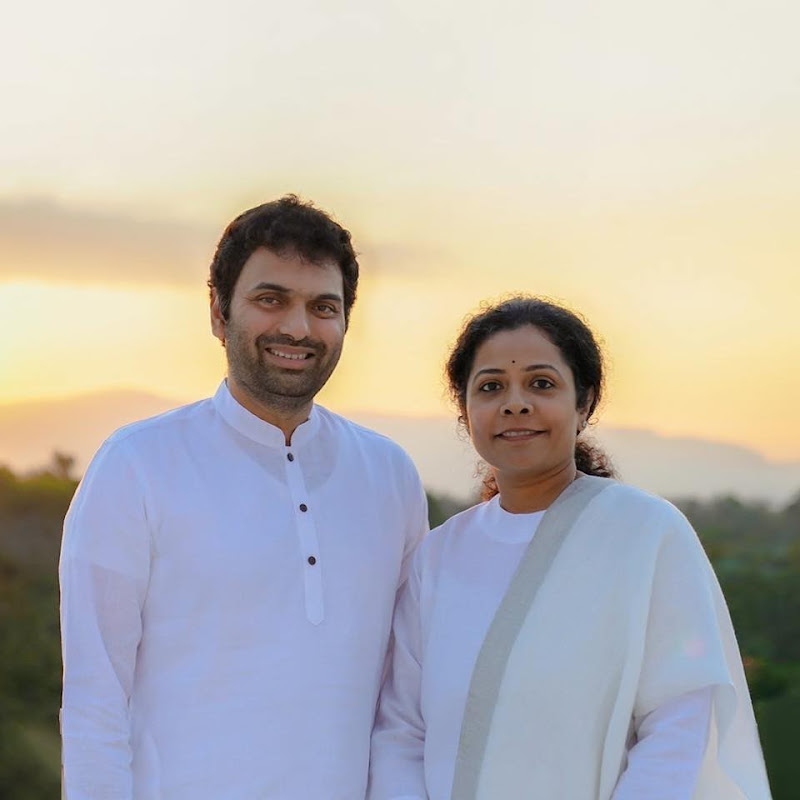
Sri Krishnaji appeared at Vadtal to mark the 200th anniversary of Bhagavan Swami Narayan's spiritual legacy, joining other spiritual leaders in honoring the founder of one of India's most significant dharmic traditions. The gathering celebrated both the historical impact of Swami Narayan's teachings and the ongoing relevance of his vision for modern spiritual practitioners. As a representative of the Oneness Movement, Krishnaji's presence underscored the living continuity of these teachings and their universal resonance across different spiritual lineages.
Bhagavan Swami Narayan (1781–1830) founded one of the most influential Hindu devotional movements in modern history. His teachings synthesized rigorous philosophical inquiry with devotional practice, creating a tradition that emphasized both intellectual understanding of the divine and the heart-centered experience of God's presence. Swami Narayan established monasteries, organized his followers into a structured spiritual community, and articulated a clear path of dharma (righteous living) accessible to householders and renunciates alike.
The Vadtal gathering, held at one of the two primary seats of the Swami Narayan tradition, marks two centuries since Swami Narayan's mahasamadhi—the conscious departure of a realized master from physical form. This threshold carries weight in Hindu tradition: it is a moment to assess the teachings' living relevance, to honor those who preserved them, and to recommit to their core principles. The 200th anniversary is not merely historical commemoration but an active reaffirmation of spiritual transmission.
The presence of multiple spiritual leaders at a single celebration signals a significant shift in how contemporary spirituality honors its roots. Rather than isolated sectarian practice, modern spiritual movements increasingly recognize shared principles across different lineages. When leaders like Sri Krishnaji attend such gatherings, they implicitly acknowledge that the truths Swami Narayan articulated two centuries ago remain vital and universally applicable.
These gatherings serve several functions: they preserve historical memory, validate the relevance of classical teachings to contemporary practitioners, demonstrate the transmission of genuine spiritual authority through lineage, and create a space where the living community of practitioners can collectively renew their commitment. The attendance of diverse spiritual voices also suggests that the principles at work—devotion, righteous living, the recognition of the divine in all beings—transcend any single sectarian identity.
Sri Krishnaji, as part of the Oneness Movement alongside Sri Preethaji, represents a contemporary expression of non-dual spiritual teaching. While the Oneness Movement emerged in modern times, its core insight—that all consciousness is ultimately unified, and that human beings can awaken to this unity directly—aligns with the advaitic (non-dual) philosophy that also runs through Swami Narayan's teachings. Both traditions point toward the direct experiential realization of the divine nature of existence.
By participating in Vadtal's celebration, Krishnaji acknowledges that contemporary spiritual movements are not departures from classical tradition but continuations of its deepest insights expressed in forms suited to modern practitioners. This cross-pollination suggests that the work of spiritual transmission is not locked in the past but alive in each generation.
For contemporary practitioners, honoring a lineage's 200-year legacy is an act of both humility and responsibility. It acknowledges that one's own spiritual practice rests upon centuries of accumulated wisdom, preserved through the dedication of countless yogis, monks, and devotees. This recognition can deepen one's own practice by connecting it to a larger story—one that extends backward through time and forward into the future.
The Vadtal celebration invites practitioners to ask: What was Swami Narayan pointing toward with his teachings? How do those principles manifest in my own life? What does it mean to live according to dharma in the 21st century? By gathering collectively around these questions, practitioners renew not just memory but the actual force of the teachings themselves.
In classical Hindu spiritual traditions, authority does not reside in institutions alone but in the direct realization of spiritual masters and the formal transmission of their teachings through recognized lineages. Swami Narayan established this transmission through his appointed successors and the monastic order he founded. Two hundred years later, that lineage continues through its institutional centers and the realized teachers who uphold its principles.
When contemporary masters like Sri Krishnaji honor such celebrations, they participate in a larger ecology of spiritual transmission. Each generation receives what was given to it, authenticates it through direct experience, and passes it forward with appropriate adaptation to new contexts. The gathering at Vadtal represents this living chain of transmission—not a museum exhibition of the past, but the present-moment enactment of spiritual continuity.
For those drawn to explore this lineage directly, the Swami Narayan tradition maintains temples and centers throughout India and the diaspora, offering both philosophical study and devotional practice. Sri Krishnaji's own teachings through the Oneness Movement provide another contemporary entry point into the non-dual philosophy that underlies many of these classical traditions. Consider investigating how the principles of dharma, devotion, and direct realization manifest in your own spiritual practice, regardless of your chosen lineage. The principle honored at Vadtal—that spiritual truth is timeless and universally available—remains the most important inheritance any tradition can offer.