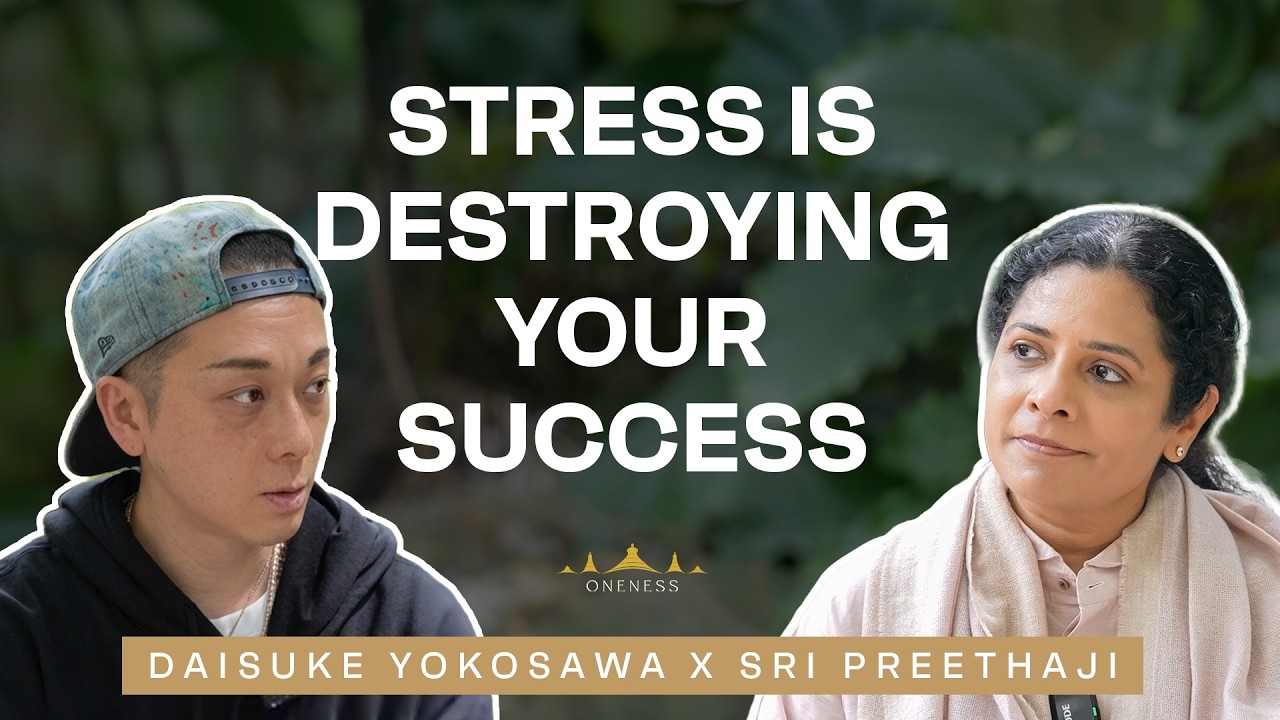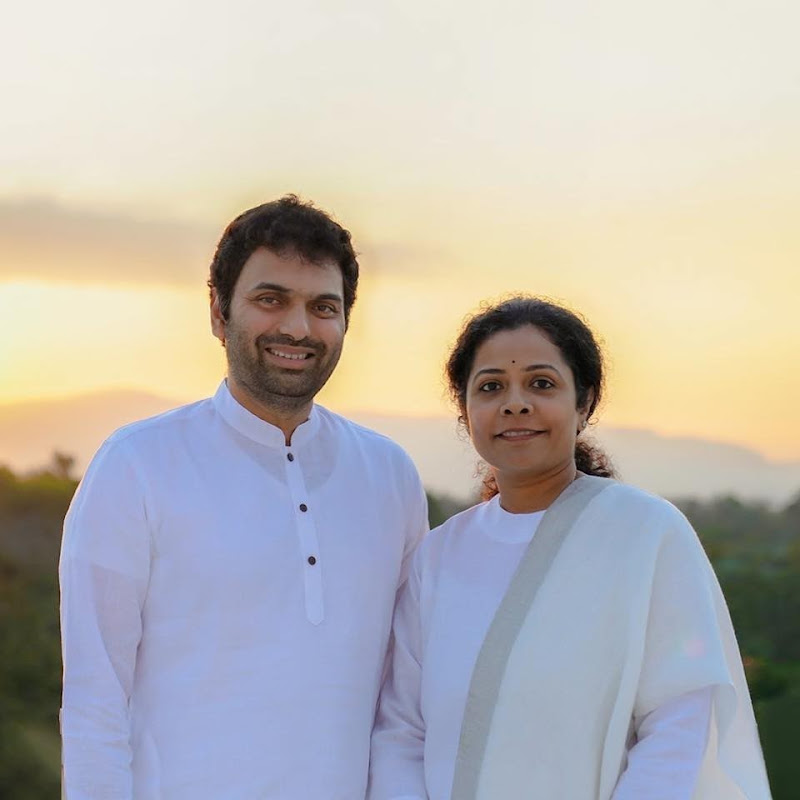
Sri Preethaji and Sri Krishnaji present a framework for spiritual evolution that operates independently of religious affiliation. Rather than requiring conversion or doctrinal shifts, their approach emphasizes that genuine inner transformation—the dissolution of stress, awakening of abundance, and cultivation of peace—can happen within any faith tradition. This perspective bridges ancient mystical wisdom with contemporary understanding, suggesting that the mechanisms of consciousness development transcend specific religious boundaries.
Why Religious Identity Doesn't Determine Spiritual Maturity
The Oneness Movement, as taught by Sri Preethaji and Sri Krishnaji, operates from a foundational principle: spiritual development is not synonymous with religious conversion or doctrinal allegiance. A person can remain deeply committed to their native faith—whether Christianity, Islam, Judaism, Hinduism, Buddhism, or any other tradition—while simultaneously engaging in practices and insights that accelerate consciousness evolution.
This distinction matters because it addresses a common barrier to inner work. Many individuals avoid meditation, contemplative practice, or spiritual inquiry because they fear it threatens their inherited religious identity. They may believe that exploring mystical dimensions of consciousness requires abandoning their community, their prayer tradition, or their theological understanding. Sri Preethaji and Sri Krishnaji's teaching dissolves this false dichotomy.
The reason religious affiliation doesn't determine spiritual capacity is simple: stress, attachment, reactivity, and the absence of inner peace are not religious problems—they are human problems. A Christian experiences ego-driven suffering the same way a Muslim, Hindu, or atheist does. The mechanisms of the mind that create contraction, fear, and separation operate identically across all belief systems. Therefore, the practices and insights that dissolve these mechanisms are equally applicable across all traditions.
How Ancient Wisdom and Modern Science Align on Consciousness
The Oneness Global Summit, as described, explicitly bridges "ancient mysticism and modern science." This fusion is critical because it legitimizes inner work for those whose trust centers on empirical evidence rather than faith alone. Modern neuroscience confirms what contemplative traditions have documented for millennia: meditation rewires the brain, reduces markers of stress, increases coherence in the nervous system, and generates measurable changes in emotional regulation and sense of well-being.
When science validates what mystical traditions have always taught—that the quality of your inner state determines the quality of your outer experience—it becomes possible for someone to engage these practices without any theological commitment. A person can explore how consciousness works, how perception shapes reality, and how inner coherence produces outer abundance without needing to adopt any new religious framework.
Sri Preethaji and Sri Krishnaji's approach leverages this convergence. By teaching that the awakening of abundance (in wealth, joy, love, and peace) is a natural consequence of aligning the head (intellect, rational understanding) and heart (feeling, intuition, direct knowing), they bypass religious debate entirely. They're speaking to the structure of human consciousness itself.
The Three Pathways of the Oneness Framework
The teaching encompasses three dimensions that operate independently of religious doctrine:
- Stress dissolution: The recognition and release of accumulated tension held in the body and mind. This is not a religious practice—it's a physiological one. Anyone, regardless of faith, benefits from the nervous system settling into parasympathetic dominance.
- Abundance awakening: The understanding that inner states of peace, clarity, and coherence generate outer experiences of prosperity, meaningful relationships, and joy. This operates as a natural law of consciousness, not a theological doctrine.
- Union of head and heart: The integration of rational intelligence with intuitive wisdom. Most spiritual traditions teach this—the Sufis speak of it, Christian mystics embody it, Advaita Vedanta systematizes it. The Oneness Movement presents it as a universal capacity that anyone can cultivate.
Why Switching Religions Is Not the Path
There's an implicit critique in the title "No Need to Change Your Religion." It acknowledges a real phenomenon: people sometimes feel compelled to convert to a new faith tradition in pursuit of spiritual awakening. They may believe that "real" spiritual practice happens only within a specific lineage, teacher, or doctrinal framework. This belief creates unnecessary friction and often leads to fragmentation—abandoning community, family, and cultural roots for the promise of enlightenment.
Sri Preethaji and Sri Krishnaji's message directly counters this. The mechanisms that generate inner freedom, emotional intelligence, and spiritual maturity don't require a change of address, a new set of rituals, or a different prayer language. What they require is a commitment to inner investigation and a willingness to let consciousness reorganize itself around truth rather than conditioning.
Someone deeply rooted in their Christian faith can explore the mystical dimensions of Jesus's teaching—the emphasis on inner peace, forgiveness, and non-judgment—without becoming "un-Christian." A Muslim can deepen their understanding of the heart's direct relationship to the Divine through practices that align with Sufi teaching, all while maintaining their commitment to the Quran and the Five Pillars. This is not syncretism or spiritual shopping. It's the recognition that the deepest teachings of all traditions point toward the same interior transformation.
The Global Summit as a Living Demonstration
The Oneness Global Summit, as an online event drawing "tens of thousands worldwide," functions as a practical application of this principle. People from every faith tradition, every culture, and every educational background gather in a shared container to explore consciousness. There is no requirement to adopt a new belief system, leave your community, or transform your external life. The focus is entirely on what happens when you sit in silence, when you learn to observe your own mind, when you align your actions with your deepest values, and when you allow stress to dissolve.
This accessibility is deliberate. If the teaching required conversion, it would exclude billions of people who are spiritually sincere but culturally and theologically rooted in their own traditions. By anchoring the work in mechanisms of consciousness rather than in doctrine, Sri Preethaji and Sri Krishnaji create an opening for genuine spiritual development that doesn't demand the cost of cultural displacement.
What "Abundance" Actually Means in This Context
The promise of "abundance in wealth, joy, love, and peace" might sound materialistic to some ears, but within the Oneness framework, abundance is understood as a natural consequence of inner alignment. When someone's nervous system is coherent, their mind is clear, and their heart is open, they naturally generate better decisions, more meaningful relationships, and a greater capacity to receive and create resources. This isn't magical thinking—it's the straightforward recognition that consciousness shapes perception, and perception shapes behavior, and behavior shapes outcomes.
Wealth, in this sense, doesn't necessarily mean acquiring more money (though clarity and peace often do improve financial decision-making). It means the richness of experience, the capacity to enjoy what you have, the ability to give generously, and the freedom from the anxiety that poverty of consciousness creates. Similarly, joy, love, and peace are not imported from outside—they're understood as the natural state when the layers of stress, resistance, and false identity are dissolved.
Where to Go From Here
If you're interested in spiritual development but concerned about maintaining your religious identity, the central insight is this: your faith tradition is not the obstacle to your awakening—your unexamined conditioning is. The practices that develop consciousness operate at a level deeper than doctrine. Learning to meditate, to observe your mind without judgment, to dissolve accumulated stress, and to align your actions with your highest values—these are universal human capacities, not religious ones.
The Oneness Movement offers specific resources through their website and the Global Summit for anyone ready to explore. The fact that this work happens in a multi-faith, global context is not incidental—it's the whole point. Your religion, your culture, your language, and your community are part of who you are. The work of consciousness is about becoming more fully, more authentically yourself within that context, not in spite of it or in rejection of it.