BrightStar

Browse All Events

Discover conscious gatherings

events

Yoga
Meditation
Breathwork
Qigong
Tai Chi
Sacred Music
World Music
Medicine Music
Sound Healing
Ecstatic Dance
Popular Destinations
BaliSedonaLos AngelesCosta RicaNew YorkSan FranciscoAustinMiamiJoshua TreeTulum
View All CategoriesView All Destinations

Explore All Features

Powerful tools to grow your events

Platform Features

Smart Dynamic Pricing
Ticket Categories
Assigned Seating
Abandoned Cart Recovery
Visitor Recovery
Donations & Sliding Scale
Affiliate Engine
Ticket Scanner
Coupon Codes
Custom Questions
Ticket Sharing
Upsells & Add-ons
Analytics & Reporting
Email Sequences
Waitlist / Notify / Remind
People & Places
Artists & TeachersEvent OrganizersVenues & StudiosKnowledge BaseGlossaryInspiration
View All FeaturesAbout Us
PricingBlog
Language
Saved events
Browse All Events

events

YogaMeditationBreathworkQigongTai ChiSacred MusicWorld MusicMedicine Music

Popular Destinations

BaliSedonaLos AngelesCosta RicaNew YorkSan Francisco

People & Places

Artists & TeachersEvent OrganizersVenues & StudiosKnowledge BaseGlossaryInspiration

Platform Features

Smart Dynamic PricingTicket CategoriesAssigned SeatingAbandoned Cart RecoveryVisitor RecoveryDonations & Sliding ScaleAffiliate EngineTicket ScannerCoupon CodesCustom QuestionsTicket SharingUpsells & Add-onsAnalytics & ReportingEmail SequencesWaitlist / Notify / Remind
View All FeaturesAbout Us
PricingBlog
Log inFind EventsHost Events
  • Browse All Events
  • For Seekers
  • Yoga
  • Meditation
  • Breathwork
  • Qigong
  • Tai Chi
  • Sacred Music
  • World Music
  • Medicine Music
  • Sound Healing
  • Ecstatic Dance
  • Retreats
  • Workshops
  • All Categories →
  • Bali
  • Sedona
  • Los Angeles
  • Costa Rica
  • Tulum
  • Byron Bay
  • San Francisco
  • Austin
  • New York
  • San Diego
  • Denver
  • Seattle
  • Portland
  • Miami
  • All Cities →
  • Join the Movement
  • Why we list
  • Sell Globally
  • For Creators
  • For Teams
  • For Writers
  • For Teachers
  • For Kirtan Artists
  • For Studios
  • For Festivals
  • For Retreat Centers
  • For Nonprofits
  • Brand Ambassador
  • Free Ticketing
  • Elevate
  • Amplify
  • 500K+ Buyer Network
  • Abandoned Cart Recovery
  • Smart Dynamic Pricing
  • Ticket Categories
  • Recurring Events
  • Assigned Seating
  • Affiliate Engine
  • Waitlist / Notify
  • Ticket Scanner
  • Embed Widget
  • Event Syndication
  • Message Center
  • Integrations
  • Reports
  • All Features →
  • About
  • The Ecosystem
  • Blog
  • Glossary
  • Inspiration
  • Help Center
  • Contact
  • API Docs
  • Brand Assets
  • Careers
  • Press
  • Terms of Service
  • Privacy Policy

Events

  • Browse All Events
  • For Seekers
  • Yoga
  • Meditation
  • Breathwork
  • Qigong
  • Tai Chi
  • Sacred Music
  • World Music
  • Medicine Music
  • Sound Healing
  • Ecstatic Dance
  • Retreats
  • Workshops
  • All Categories →

Destinations

  • Bali
  • Sedona
  • Los Angeles
  • Costa Rica
  • Tulum
  • Byron Bay
  • San Francisco
  • Austin
  • New York
  • San Diego
  • Denver
  • Seattle
  • Portland
  • Miami
  • All Cities →

For Creators

  • Join the Movement
  • Why we list
  • Sell Globally
  • For Creators
  • For Teams
  • For Writers
  • For Teachers
  • For Kirtan Artists
  • For Studios
  • For Festivals
  • For Retreat Centers
  • For Nonprofits
  • Brand Ambassador
  • Free Ticketing
  • Elevate
  • Amplify

Features

  • 500K+ Buyer Network
  • Abandoned Cart Recovery
  • Smart Dynamic Pricing
  • Ticket Categories
  • Recurring Events
  • Assigned Seating
  • Affiliate Engine
  • Waitlist / Notify
  • Ticket Scanner
  • Embed Widget
  • Event Syndication
  • Message Center
  • Integrations
  • Reports
  • All Features →

Company

  • About
  • The Ecosystem
  • Blog
  • Glossary
  • Inspiration
  • Help Center
  • Contact
  • API Docs
  • Brand Assets
  • Careers
  • Press
  • Terms of Service
  • Privacy Policy
BrightStar
Get the app
Download on theApp StoreGet it onGoogle Play
© 2026 BrightStar. All rights reserved.
Inspiration

Six Spiritual Traps: How Good Places Keep You From Awakening

Shinzen Young
Shinzen Young
May 21, 2009
9 min read
Watch · 7

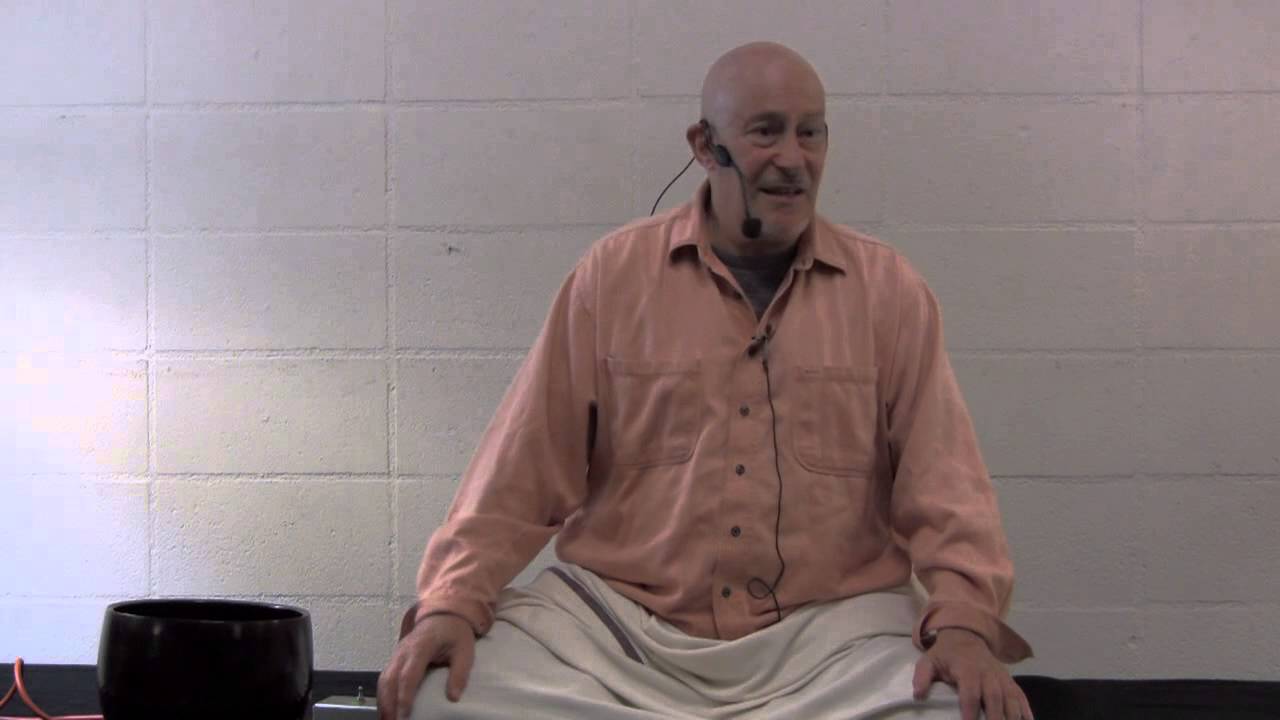
Shinzen Young's talk, filmed at Mt. Carmel Retreat Centre in Niagara Falls in April 2009, makes an argument that sounds backward at first: on the spiritual path, the danger is often not failure but a success that quietly becomes a ceiling. He names six traps, the map trap, the fundamentalism or mythological trap, the tranquility trap, the realm of powers trap, the enlightenment trap and the observer trap, and in each one the practitioner is caught up in a place that is genuinely good. Each trap also carries an antidote, a way to move from the good place toward a better one. What follows works through the six, why each one is so hard to see from the inside, and what Young recommends in its place.

The talk is short, under ten minutes, and it is delivered in the plain, conversational register of a teacher speaking to people who already sit regularly. That plainness is part of the point. Nothing here is exotic. The traps are the ordinary hazards of committed practice, and Young's contribution is to name them precisely enough that a practitioner can recognize them while still inside them.

Read · 7 sections

Why Is the Map the First Trap?

Young begins with the trap he thinks most people will actually fall into. "Most people, if they're going to get caught someplace that's going to prevent them from becoming enlightened," he says, "it's going to be in allocating so much time and energy to finding the right map, the right model, the right teacher, the right situation, that there's little time and energy left to actually do the practice." He calls it the map trap (video, 0:11).

The insight is easy to underestimate because searching feels like progress. Reading another book, comparing traditions, auditioning one more teacher, each of these looks like diligence. Young's point is that the search can absorb the very energy that practice needs. The transcript of this talk does not spell out a separate antidote for the map trap, so the clearest reading is the simplest one: notice when orientation has replaced sitting, and return to the cushion.

When Does a Mythology Stop Helping?

The second trap is the one Young calls fundamentalism, or the mythological trap. The setup is generous. "You buy into a mythological system that allows you to make dramatic and significant improvements in both your happiness subjectively and your behavior objectively," he explains (video, 0:48). He is clear that this is a real achievement. Small positive change is hard to come by, he says, and he adds a line that carries weight: "Ask any psychotherapist" (video, 1:18).

The problem, in Young's account, is what happens next. "Something really good happens," he says. "The problem is, your intellectual horizons have now become closed. The very mythological structure that allowed for these positive changes prevents the next stage in positive change" (video, 1:48). A framework that once worked as a ladder becomes a wall. The practitioner has no reason to question it, because it has delivered.

His antidote is compact and a little demanding. The fundamentalist, he says, should "realize what I just said, if they can" (video, 2:13). In other words, the way out is to see the structure as a structure, a useful instrument rather than the whole of reality.

Can Calm Become a Ceiling?

The third trap is subtler because it looks so much like success. Young describes a practitioner who gets real results: "you can achieve states of common concentration, and that's certainly a good thing." But then comes the pattern: "year after year after year, that's sort of where you're at. You sit down, everything is sort of tranquil, time passes quickly, you get up, you're refreshed, but that's about it" (video, 2:25 to 2:43). He calls this the tranquility trap.

Young does not dismiss the tranquility. He calls it "a good place," and then adds, "but you can go beyond that to a better place" (video, 2:53). The antidote is to take those blissful, tranquil states and clarify them. "You clarify them by distinguishing different flavors of restfulness," he says. "That brings a clarification component into the tranquility piece" (video, 3:08). Calm stops being a single pleasant fog and becomes something you can investigate, with finer and finer discrimination of what restfulness actually feels like.

What Happens When Powers Pull You Outward?

The fourth trap, the realm of powers, is the one Young describes with the most vivid sense of direction. The practitioner explores archetypes, special powers, out-of-body experiences, former lives, "you name it." The sense of progress is strong. "You think that you're going closer and closer to the Source," Young says. "It can be a good place, but it can also limit you" (video, 3:28).

His image is geometric. "You think you're making spiritual progress, going deeper and deeper and deeper towards the formless Source, but actually you've turned ninety degrees. You're now on a trajectory that's at right angles to going down to the Source of consciousness, but you don't know it. You're going out, out, out, exploring the power realms" (video, 3:50). The feeling of depth is real, but the vector is wrong. You are travelling sideways while believing you are descending.

The antidote is a change in how the experience is held. "You interpret the experience of the power realms as a sensory event just like any other sensory event. However bizarre, you treat it as though it were banal." Then you "apply concentration, clarity, and equanimity to it," the same way you would to a sound or an itch, and "allows you to go deeper and deeper and deeper towards, not the realm of spirits, but the realm of the Great Spirit" (video, 4:08 onward). He puts it in one line: "If you deconstruct the realm of spirits mindfully it will take you to Spirit" (video, 4:09). The remedy is not to reject the vivid visions but to stop treating them as special.

What Is the Enlightenment Trap?

The fifth trap is the strangest, because it can happen to someone who has done everything right. "It can happen that you get classical enlightenment," Young says. "It's the real thing, it's permanent, you've seen the no self, but you think you know more than you do, and you might even start teaching from that place" (video, 4:53). He is not calling the experience fake. He is describing what can follow it.

His model is a jewel: "Enlightenment is a many-faceted jewel. You can see it from many, many sides. In my experience, it's a continuum. A vast continuum, with many facets. A person could easily miss some of those facets. Just because you've seen the no self doesn't mean you don't have a long, long way to go to become truly liberated from your old habits" (video, 5:15). Seeing one facet clearly can make the rest look like detail. The result is the enlightenment trap.

The antidote is "the courage to take feedback from other teachers and to find teachers vastly senior to yourself," and, more broadly, to "constantly take feedback from your environment" (video, 5:38). Young then offers a saying from one of his own teachers, given in Japanese: "Kyō no satori wa ashita no machigai." He glosses it for the audience. "You may know satori. It's the Japanese for 'awakening.' 'Today's enlightenment is tomorrow's mistake.' Meaning you have to be constantly willing to move forward" (video, 6:09). The line is a discipline against complacency about one's own realization.

Why Can Mindfulness Trap the Observer?

The sixth trap is the one Young says is "the characteristic weakness in the mindfulness way of working." He is careful to add that it is "not a show stopper." It is simply something to be aware of. "When you work within that way, you have to be aware that this could be a problem, and you have to be aware of what the antidote is, what the fix is" (video, 6:30).

The fix has two parts. The first is to keep the danger in mind, because an unrecognized trap is the one you are most likely to fall into. The second is more interesting, and Young illustrates it with a memory of learning to drive a stick shift. "It took so much effort and I had to think about everything," he recalls, and he doubted he would ever manage "to operate this car and do anything else." Six months later, "I'm just bopping along on the freeways in L.A., listening to the radio, munching on a burrito, talking to somebody, and it's rush hour traffic." His reading: "The fact of having driven so much was driving the car. In other words, the driving became second nature" (video, 7:13 onward).

Applied to meditation, the analogy shows how the observer trap works and how it dissolves. Early on, concentration, clarity and equanimity take conscious effort. Later they run on autopilot. The subtle mental images, inner commentary and bodily sensations that create "the sense that there is someone meditating" begin to be absorbed into that momentum, "without the need for more of them to be directing the process." Young's summary is precise: "The habit of mindfulness eventually meditates you and seeps around and dissolves the sense of a meditator. That's how it works" (video, 8:20 onward).

There is a quiet reversal in this. The observer trap is the sense of a self standing apart and watching, and the cure is not a stronger observer but a practice that becomes so familiar it no longer needs one.

Where to go from here

Read as a set, the six traps trace a single pattern. Each one is a success that can become a boundary: a map that absorbs the time for practice, a framework that closes inquiry, a calm that stops deepening, a vision that pulls you outward, a realization that tempts you to stop learning, and a method whose own self-consciousness can harden into a self. Young's antidotes share a direction too: stay curious, take feedback, clarify what you have, and let the practice mature until the sense of a separate practitioner fades.

If you want to test the ideas, start with the question Young implies in each section. Where in your own practice are you pleased with a good place? What would a clarifying look, a feedback conversation, or a more careful interpretation of a vivid experience actually involve? The talk is short enough to rewatch, and the distinctions it draws are easier to recognize on a second pass. For further reading on Young's teaching, look to his other talks on concentration, clarity and equanimity, which deepen the framework these six traps rest on.
Comments

Loading the conversation…

Transcript

[0:11] Most people, if they're going to get caught someplace  

[0:18] that's going to prevent them from becoming enlightened,  it's going to be in allocating  

[0:24] so much time and energy to finding the right map,  the right model, the right teacher, the right situation,  

[0:34] that there's little time and energy left  to actually do the practice.  

[0:40] We might call that the map trap.

[0:48] The second trap on this, speaking broadly about  the spiritual path, is what we might call  

[0:57] the fundamentalism trap. You buy into a mythological  system that allows you to make dramatic and  

[1:09] significant improvements in both your happiness  subjectively and your behavior objectively.  

[1:18] Even small positive changes in a person's  life, in terms of being happier subjectively  

[1:25] and behaving better objectively — that's what I mean   by positive changes — even small positive changes 

[1:31] in a person's life are very, very difficult to come by.  Ask any psychotherapist.  

[1:39] To have huge positive changes in a person's life,  quickly, dramatically, that's not a small thing.  

[1:48] Something really good happens. The problem is,  your intellectual horizons have now become closed.  

[1:59] The very mythological structure that allowed for these positive changes  

[2:07] prevents the next stage in positive change.  The antidote for not getting caught in a  

[2:13] good place, for the fundamentalist,   is to realize what I just said, if they can.

[2:25] Let's say that you do a meditation practice,  

[2:28] you can achieve states of common concentration,  and that's certainly a good thing.  

[2:39] But, year after year after year, that's sort of where you're at.  

[2:43] You sit down, everything is sort of tranquil, time passes quickly,  you get up, you're refreshed, but that's about it.  

[2:53] That's a good place, but  you can go beyond that to a better place.  

[3:00] We might call that the tranquility trap. The antidote for that particular  getting caught in a good place is  

[3:08] you take these blissful tranquil states and then you  clarify them by distinguishing different flavors of restfulness.  

[3:18] That brings a clarification component into the tranquility piece.

[3:28] You think that you're going closer and closer  to the Source by exploring the world of archetypes,  

[3:35] special powers, leave your — you know  — body experiences, former lives, you name it.  

[3:43] It can be a good place, but it can also limit you.  You think you're making spiritual progress,  

[3:50] going deeper and deeper and deeper towards the formless Source,  but actually you've turned ninety degrees.  

[3:56] You're now on a trajectory that's at right angles to  going down to the Source of consciousness,  

[4:02] but you don't know it.  You're going out, out, out, exploring the power realms.  

[4:09] If you deconstruct the realm of spirits mindfully  it will take you to Spirit, and that's the antidote  

[4:17] to the realms of power trap. You interpret the  experience of the power realms as a sensory event  

[4:22] just like any other sensory event. However bizarre,  you treat it as though it were banal. You apply  

[4:29] concentration, clarity, and equanimity to it, as you  would with any other sensory event, and that then  

[4:36] allows you to go deeper and deeper and  deeper towards, not the realm of spirits,  

[4:43] but the realm of the Great Spirit, shall we  say, that formless doing, the dharmakāya.

[4:53] It can happen that you get classical enlightenment.  It's the real thing, it's permanent, you've seen the no self,  

[5:00] but you think you know more than you do,  and you might even start teaching from that place.  

[5:07] That's another good place you can get caught in.  Enlightenment is a many-faceted jewel.  

[5:15] You can see it from many, many sides.  In my experience, it's a continuum.  

[5:22] A vast continuum, with many facets.  A person could easily miss some of those facets.  

[5:30] Just because you've seen the no self doesn't mean  you don't have a long, long way to go   

[5:38] to become truly liberated from your old habits.  What shall we call it? The enlightenment trap.  

[5:49] The antidote to that is the courage  to take feedback from other teachers  

[5:58] and to find teachers vastly senior to yourself.  Take feedback from them.  

[6:05] Constantly take feedback from your environment.  

[6:08] One of my teachers used to say  

[6:09] "Kyō no satori wa ashita no machigai"  

[6:13] You may know satori.  It's the Japanese for "awakening".  

[6:16] "Today's enlightenment is tomorrow's mistake"  

[6:22] Meaning you have to be constantly willing to move forward.

[6:30] The observer trap is the characteristic weakness  in the mindfulness way of working. That doesn't  

[6:37] mean that it's a show stopper. It just means when  you work within that way, you have to be aware that  

[6:45] this could be a problem, and you have to be aware  of what the antidote is, what the fix is.  

[6:52] Two parts to the fix: The first is to bear in  mind what I just said, that there is this possible danger.  

[7:00] If you're not aware of this possible danger,  then you might fall into that trap.  

[7:07] You know that this could be a possible danger.  Well, then how do we not have that happen?

[7:13] Think about when you learned to drive a car,  assuming you have learned to drive a car.  

[7:22] When you first attempt to do it — I remember when I  first learned to drive a car was on a stick shift  

[7:30] and it took so much effort and  I had to think about everything  

[7:37] and I could just barely do it and I thought  to myself, I'll never be able to operate this  

[7:44] car and do anything else. I'll just have to  be constantly thinking about the two dozen  

[7:51] things I have to be constantly thinking about.  But you know what? After six months, I'm just  

[7:59] bopping along on the freeways in L.A., listening  to the radio, munching on a burrito, talking  

[8:06] to somebody, and it's rush hour traffic. It's  smog, it's chaos, and no problem. What happened?  

[8:18] The fact of having driven so much was driving  the car. In other words, the driving became second nature.  

[8:28] Mindfulness practice develops  concentration, sensory clarity, and equanimity.  

[8:36] At first, you have to think about it and  it takes a lot of effort. At some point, the  

[8:42] concentration, clarity, and equanimity start to  go on autopilot. Then the subtle mental images,  

[8:53] subtle internal conversations, and subtle emotional  sensations in the body that create the sense that  

[9:05] there is someone meditating, that there is a self  directing this process, those sensory arisings   

[9:15] start to get enfolded within the momentum of  the concentration, clarity, and equanimity,   

[9:21] without the need for more of them to be  directing the process. In other words,  

[9:28] just as with the driving metaphor, the  habit of driving eventually can drive the car.  

[9:35] In the mindfulness metaphor, the habit  of mindfulness eventually meditates you  

[9:43] and seeps around and dissolves the sense  of a meditator. That's how it works.

Shinzen Young
ArtistShinzen Young

Shinzen Young is an American mindfulness teacher and neuroscience research consultant who developed Unified Mindfulness, a systematic approach to teaching meditation that draws on…

View profileWebsite
Explore Topics
Spiritual-trapsShinzen-youngEnlightenment-trapObserver-trapMindfulness

Got Questions?

Frequently Asked Questions

In this talk Shinzen Young names the map trap, the fundamentalism or mythological trap, the tranquility trap, the realm of powers trap, the enlightenment trap and the observer trap. In each, the practitioner is caught in a place that is good but not the best available. Each trap comes with an antidote for moving on.
Shinzen Young describes the tranquility trap as years of sitting that feel calm and refreshing but never deepen. His antidote is to take those blissful tranquil states and clarify them by distinguishing different flavors of restfulness. That adds a clarification component to the calm.
He means the pull of archetypes, special powers, body experiences and former lives, which can feel like spiritual progress while actually moving you sideways from the formless Source. His antidote is to treat these experiences as sensory events, applying concentration, clarity and equanimity to them as you would to any other sensation.
He quotes a saying from one of his teachers, 'Kyō no satori wa ashita no machigai,' which he translates as 'today's enlightenment is tomorrow's mistake.' He uses it to argue that a practitioner, even one who has seen no-self, must remain willing to keep moving forward and to take feedback.
Shinzen Young calls it the characteristic weakness of the mindfulness way of working. The sense of someone meditating can persist as subtle mental images, inner talk and bodily sensations, and the fix is to be aware of the danger and let the practice become second nature, as driving does after enough practice.
No. Shinzen Young says classical enlightenment can be the real thing and permanent, with no-self seen directly. The trap is thinking you know more than you do, since enlightenment is a many-faceted continuum and a person can miss many of its facets.
The talk identifies the map trap as spending so much time and energy finding the right map, model, teacher or situation that little is left for practice. It does not spell out a separate antidote, so the practical reading is to notice when searching has replaced sitting and return to practice.

Continue Reading

More from Shinzen

View All
Strong Determination Sitting: The Meditation Shortcut Explained
Inspire

Strong Determination Sitting: The Meditation Shortcut Explained

Shinzen Young explains strong determination sitting, a committed, unmoving practice he calls one of the quickest routes to deep transformati…

1 min read
Yaza: Why the All-Night Sit Turns Sleepiness Into Meditation
Inspire

Yaza: Why the All-Night Sit Turns Sleepiness Into Meditation

A dharma talk on the Yaza, the all-night sit, explains how waves of sleepiness can become a doorway into meditative absorption. Here is what…

1 min read
Yoga Nidra for Wholeness: Sankalpa and Body Scan Guide
Inspire

Yoga Nidra for Wholeness: Sankalpa and Body Scan Guide

A 35-minute guided Yoga Nidra rest that moves from breath to sankalpa to a full body scan and back to waking. Here is how its structure work…

1 min read
This Belongs: The Ocean Meditation for Meeting Every Wave
Inspire

This Belongs: The Ocean Meditation for Meeting Every Wave

Tara Brach's guided meditation "Everything Belongs" turns a body scan into an ocean metaphor and a two-word practice. Here is how "This belo…

1 min read

Keep exploring

Continue your journey

More wisdom and gatherings from across the BrightStar directory.

More Articles

Browse the full library of teachings, interviews, and guides.

Back to all articles →

Teachers & Artists

Explore the lineages, musicians, and guides of the conscious world.

Explore artists →

Find an Event

Kirtan, retreats, sound baths, breathwork, festivals — happening soon.

Browse events →