BrightStar

Browse All Events

Discover conscious gatherings

events

Yoga
Meditation
Breathwork
Qigong
Tai Chi
Sacred Music
World Music
Medicine Music
Sound Healing
Ecstatic Dance
Popular Destinations
BaliSedonaLos AngelesCosta RicaNew YorkSan FranciscoAustinMiamiJoshua TreeTulum
View All CategoriesView All Destinations

Explore All Features

Powerful tools to grow your events

Platform Features

Smart Dynamic Pricing
Ticket Categories
Assigned Seating
Abandoned Cart Recovery
Visitor Recovery
Donations & Sliding Scale
Affiliate Engine
Ticket Scanner
Coupon Codes
Custom Questions
Ticket Sharing
Upsells & Add-ons
Analytics & Reporting
Email Sequences
Waitlist / Notify / Remind
People & Places
Artists & TeachersEvent OrganizersVenues & StudiosKnowledge BaseGlossaryInspiration
View All FeaturesAbout Us
PricingBlog
Language
Saved events
Browse All Events

events

YogaMeditationBreathworkQigongTai ChiSacred MusicWorld MusicMedicine Music

Popular Destinations

BaliSedonaLos AngelesCosta RicaNew YorkSan Francisco

People & Places

Artists & TeachersEvent OrganizersVenues & StudiosKnowledge BaseGlossaryInspiration

Platform Features

Smart Dynamic PricingTicket CategoriesAssigned SeatingAbandoned Cart RecoveryVisitor RecoveryDonations & Sliding ScaleAffiliate EngineTicket ScannerCoupon CodesCustom QuestionsTicket SharingUpsells & Add-onsAnalytics & ReportingEmail SequencesWaitlist / Notify / Remind
View All FeaturesAbout Us
PricingBlog
Log inFind EventsHost Events
  • Browse All Events
  • For Seekers
  • Yoga
  • Meditation
  • Breathwork
  • Qigong
  • Tai Chi
  • Sacred Music
  • Retreats
  • Workshops
  • All Categories →
  • Bali
  • Sedona
  • Los Angeles
  • Costa Rica
  • Tulum
  • Byron Bay
  • San Francisco
  • Austin
  • All Cities →
  • For Creators
  • For Teams
  • For Writers
  • For Teachers
  • For Kirtan Artists
  • For Studios
  • For Festivals
  • For Retreat Centers
  • For Nonprofits
  • Brand Ambassador
  • Case Studies
  • Free Ticketing
  • Elevate
  • Amplify
  • 350K+ Buyer Network
  • Abandoned Cart Recovery
  • Smart Dynamic Pricing
  • Ticket Categories
  • Recurring Events
  • Assigned Seating
  • Affiliate Engine
  • Waitlist / Notify
  • Ticket Scanner
  • Embed Widget
  • Event Syndication
  • Message Center
  • Integrations
  • Reports
  • All Features →
  • About
  • The Ecosystem
  • Blog
  • Glossary
  • Inspiration
  • Help Center
  • Contact
  • API Docs
  • Brand Assets
  • Careers
  • Press
  • Terms of Service
  • Privacy Policy

Events

  • Browse All Events
  • For Seekers
  • Yoga
  • Meditation
  • Breathwork
  • Qigong
  • Tai Chi
  • Sacred Music
  • Retreats
  • Workshops
  • All Categories →

Destinations

  • Bali
  • Sedona
  • Los Angeles
  • Costa Rica
  • Tulum
  • Byron Bay
  • San Francisco
  • Austin
  • All Cities →

For Creators

  • For Creators
  • For Teams
  • For Writers
  • For Teachers
  • For Kirtan Artists
  • For Studios
  • For Festivals
  • For Retreat Centers
  • For Nonprofits
  • Brand Ambassador
  • Case Studies
  • Free Ticketing
  • Elevate
  • Amplify

Features

  • 350K+ Buyer Network
  • Abandoned Cart Recovery
  • Smart Dynamic Pricing
  • Ticket Categories
  • Recurring Events
  • Assigned Seating
  • Affiliate Engine
  • Waitlist / Notify
  • Ticket Scanner
  • Embed Widget
  • Event Syndication
  • Message Center
  • Integrations
  • Reports
  • All Features →

Company

  • About
  • The Ecosystem
  • Blog
  • Glossary
  • Inspiration
  • Help Center
  • Contact
  • API Docs
  • Brand Assets
  • Careers
  • Press
  • Terms of Service
  • Privacy Policy
BrightStar
© 2026 BrightStar. All rights reserved.
Inspiration

Simple Buddhist Monk: TheJoy of No Inheritance

Dalai Lama
Dalai Lama
Sep 11, 2026
3 min read

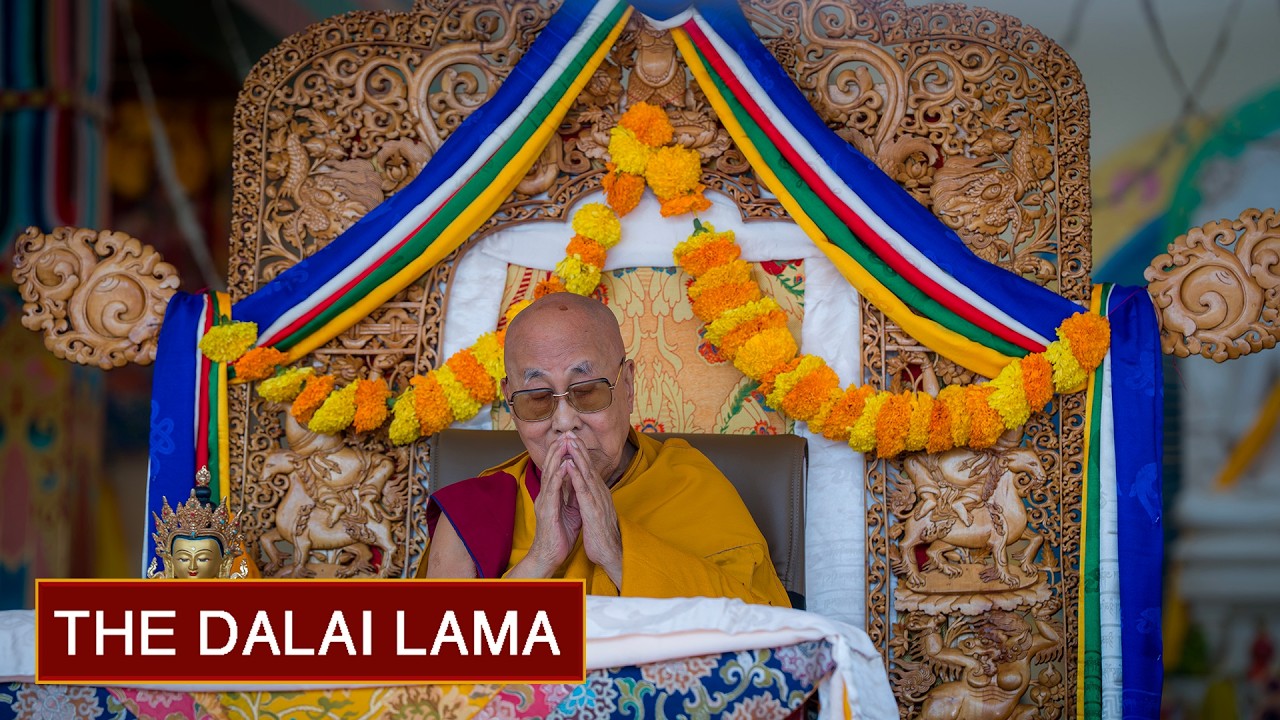
The Dalai Lama sits and smiles. He is, he says, a monk with no family. And so, quite good—quite fortunate, he means, in a way that lands not as boast but as honest relief. It is the opening move in a joke about freedom, but also about something deeper: what we inherit, what we owe, and where suffering actually lives in the texture of ordinary human life.

Read · 2 sections

Why Monastic Simplicity Becomes a Teaching Tool

In a video recorded in March 2019, the Dalai Lama works a particular humor—wry, gentle, almost conspiratorial—to make a point about the householder's path. He describes telling Western monks, when they feel a little bit lonely in their vows, to look at the family lives around them: the marriages that crumble, the children caught in the wreckage of those unions. He recalls visiting America and meeting a friend with one wife and two young children. A few years later, the same friend had remarried. Then again. By the third wife, the principle is established.

The Dalai Lama speaks as someone who has studied human suffering across decades and cultures. His point is not cruelty but clarity. Monastic life strips away one entire category of worldly entanglement—the domestic one. No spouse, no children, no inheritance dispute, no loyalty torn between competing family claims. It is not that monks do not suffer; the Buddha never promised that. But they suffer in ways they have chosen and can study with focus. They have named the source.

For householders, the sources multiply and overlap. Marriage itself is not wrong, nor is parenthood. But the Dalai Lama's observation—delivered with enough humor that the room laughs—is that these commitments carry a hidden weight that simple living does not. To be a parent is to inherit worry. To be a spouse, across the years, is to encounter loss and change you cannot control. He tells the monks that simple monastic life becomes, oddly, a source of encouragement precisely because it has acknowledged and set down burdens that most people never recognize they are carrying.

This is not a call to renounce the world. The Dalai Lama himself has lived in dialogue with the world, teaching across continents. Rather, it is an invitation to see clearly what we have chosen—and, by extension, what we might choose differently. A parent cannot unparent. A spouse cannot unsay their vows. But awareness itself is freedom. Knowing what you are carrying is the first step toward understanding whether you need to keep carrying it.

Where to go from here

For a fuller exploration of the Dalai Lama's teachings on suffering, compassion, and the monastic path, visit his official website or explore his published works on Buddhist philosophy and practice.
Transcript

[0:00] I'm a monk, no family.

[0:03] So, quite good.

[0:05] Otherwise, you see, my children,

[0:08] grandchildren, their marriage,

[0:11] a lot of problems.

[0:15] So, some occasion I told some

[0:18] Western monk, Western who become

[0:21] Buddhist monk,

[0:22] I told them,

[0:24] "When you feel a little bit lonely, you

[0:26] should look those family who a lot of

[0:30] problems."

[0:32] And

[0:33] I have, you see, some of my friend. When

[0:36] my first visit to America,

[0:39] one wife

[0:40] and two

[0:42] few children.

[0:43] Then, after few years, another visit,

[0:46] another wife.

[0:48] >> [laughter]

[0:49] >> Then, then another occasion, third wife.

[0:53] There also is a source of source of I

[0:55] don't know that a problem, isn't it? And

[0:57] especially those children.

[1:01] So, I told these people,

[1:03] "This is sort of source of our

[1:05] encouragement, simple simple Buddhist

[1:07] monk."

Dalai Lama
AuthorDalai Lama

Spiritual leader of Tibetan Buddhism and Nobel Peace Prize laureate (1989). Born Lhamo Thondup in 1935, recognized at age two as the reincarnation of the 13th Dalai Lama, he fled i…

View profileWebsite
Explore Topics
Monastic-lifeFamilySufferingBuddhismSimplicity

Got Questions?

Frequently Asked Questions

Because it removes one major source of worldly suffering—family obligations and domestic entanglement. By choosing a path without marriage or children, monks avoid the compounding worries that householders face, giving them clearer ground to study their own suffering.
No. He's observing with humor that family life carries inherent burdens—divorce, custody issues, generational conflict—that simple monastic life does not. His point is about clarity: knowing what you carry is the beginning of understanding it.
Yes. The Dalai Lama invites awareness of the commitments and obligations we inherit, whether through family, work, or other roles. By seeing clearly what we have chosen, we gain agency over how we respond to its demands.

Continue Reading

More from Dalai

View All
Prayer for Compassion: Avalokiteshvara Mantra in Times of Tragedy
Inspire

Prayer for Compassion: Avalokiteshvara Mantra in Times of Tragedy

When disaster strikes across borders, spiritual practice becomes an act of collective healing. A meditation on mantra's role in witnessing a…

1 min read
The Deep Bond Between Abdul Kalam and the Dalai Lama
Inspire

The Deep Bond Between Abdul Kalam and the Dalai Lama

A rare encounter between two spiritual and intellectual giants reveals the profound mutual respect that transcended titles, achievements, an…

1 min read
Why Ego Fears Silence and Stillness
Inspire

Why Ego Fears Silence and Stillness

The ego resists silence and stillness because genuine thinking arises not from accumulated knowledge but from a state of not-knowing. This r…

1 min read
Socrates' Knowing Nothing: Beyond Intellectual Thought
Inspire

Socrates' Knowing Nothing: Beyond Intellectual Thought

Eckhart Tolle explores how Socrates' famous claim—that he knew nothing—points not to ignorance but to a state of mind beyond conceptual thin…

1 min read

Keep exploring

Continue your journey

More wisdom and gatherings from across the BrightStar directory.

More Articles

Browse the full library of teachings, interviews, and guides.

Back to all articles →

Teachers & Artists

Explore the lineages, musicians, and guides of the conscious world.

Explore artists →

Find an Event

Kirtan, retreats, sound baths, breathwork, festivals — happening soon.

Browse events →