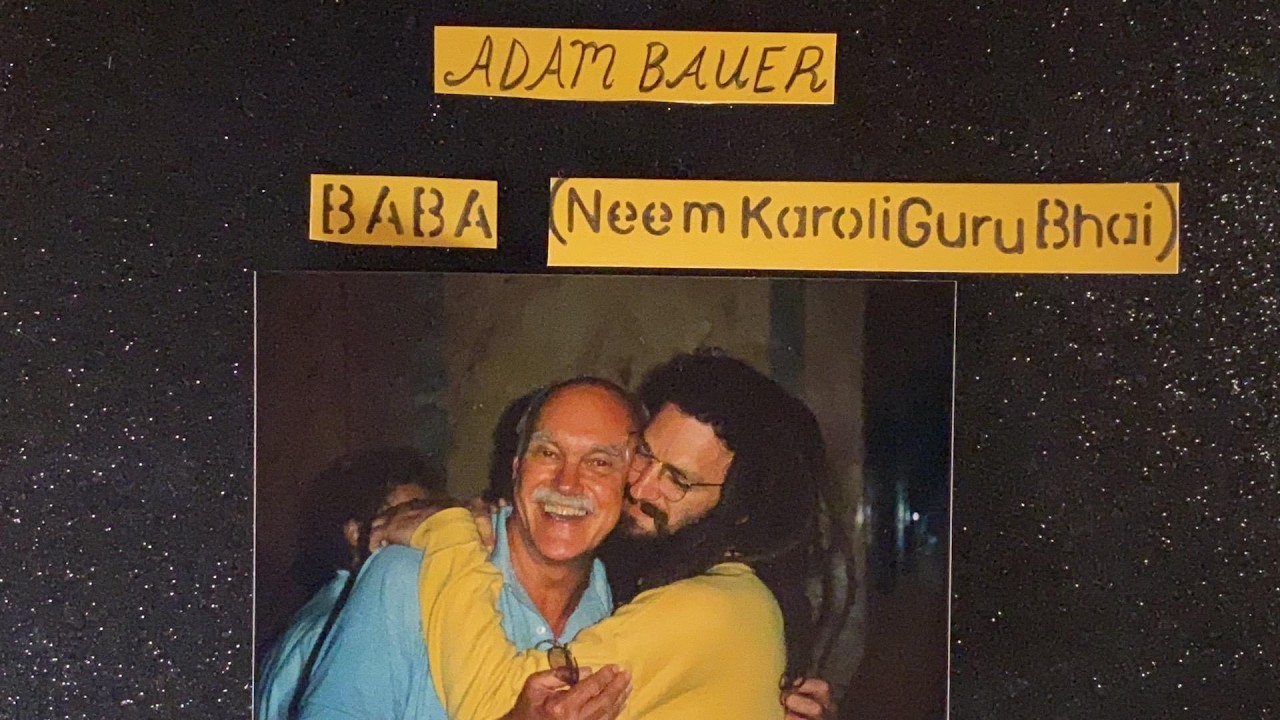
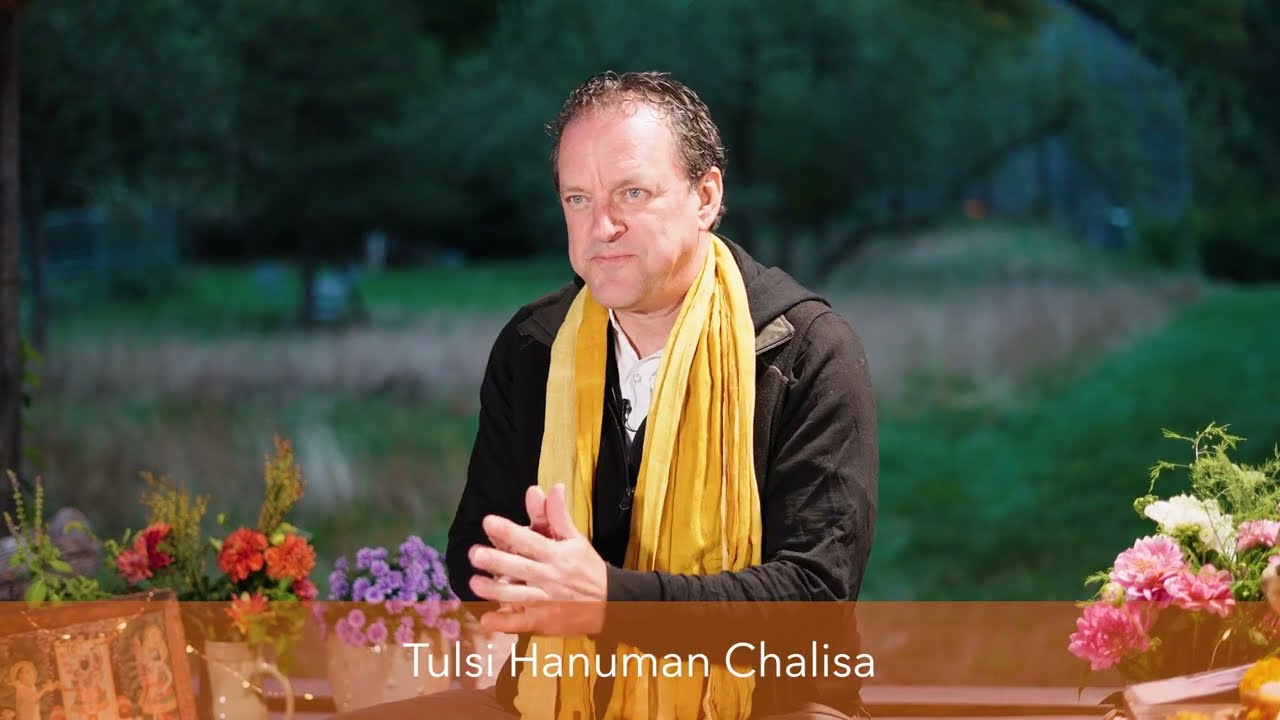
When a chant accumulates half a million views in the space of a few years, something deeper than algorithm is at work. Adam Bauer's recording of "Shri Ram Jai Hanuman," released in October 2020 as part of his album Return to the Sacred, has become a portal—one of millions of listeners finding their way back to an invocation that has moved devotional practitioners for centuries. The piece is deceptively simple: a Sanskrit phrase repeated with mounting intensity, voices layered beneath it like prayer itself gaining density and power. Yet its resonance speaks to something the modern spiritual marketplace often misses: the irreducible potency of tradition.
"Shri Ram Jai Hanuman"—the phrase translates to a hailing of Ram, the divine incarnation, and Hanuman, the monkey deity whose devotion to Ram serves as Hinduism's archetypal image of surrender and strength. In the Ramayana, Hanuman represents the principle of absolute faith married to absolute capacity: he is both the weakest and the mightiest, depending on whether he recalls his true nature. The chant is not petition but acknowledgment—an invocation that restores the singer and listener to that memory.
The chant appears throughout classical Indian music, in countless versions by saints, yogis, and contemporary practitioners. It carries the weight of oral tradition—generations of voices passing it forward, each adding texture without fundamentally altering its skeleton. When sung in kirtan, a form of congregational chanting rooted in bhakti (devotional) Hinduism and later adopted into various yoga and meditation communities, the chant becomes a shared experience. The melody typically begins low and patient, then accelerates, moving participants from intellectual understanding into embodied, felt knowledge.
The term "kirtan" literally means "narration" or "praise"—the act of singing the names and stories of the divine. Unlike some meditative practices that prize silence, kirtan is participatory, democratic, often joyful. A kirtan artist leads the melody and lyrics; the audience—or sangha (spiritual community)—joins the refrain. The repetition is not rote; it is alchemical. Practitioners report that the rhythm and Sanskrit phonetics work on the nervous system directly, moving consciousness from the discursive mind into states of absorption and ease.
In contemporary Western yoga and wellness spaces, kirtan has found a new audience. Bauer's version, recorded for what appears to be a primarily digital/streaming era, makes the tradition accessible beyond ashrams and kirtan circles. The production allows the chant to breathe; the arrangement respects both the simplicity of the form and the emotional texture that draws people to devotional practice.
Understanding why this particular chant endures requires understanding Hanuman himself. In Hindu mythology, Hanuman is the devoted follower par excellence—the servant-hero who needs nothing from the divine but the privilege of service. Yet paradoxically, Hanuman is also depicted as immensely powerful: he leaps oceans, moves mountains, and defeats demons. The tradition teaches that his strength flows directly from his devotion; they are inseparable.
For modern practitioners, Hanuman represents something radical: the marriage of receptivity and agency, of surrender and power. He does not diminish himself through devotion; he realizes himself through it. This teaching, embedded in the chant itself, offers a counternarrative to contemporary ideologies that pit personal empowerment against spiritual humility. The chant silently suggests that these are not opposites.
The album title Return to the Sacred frames Bauer's project explicitly. The word "return" carries intention: not discovery of something new, but remembrance of something already known, temporarily forgotten. This aligns with the advaita vedanta teaching that realization is not acquisition but recognition—a clearing away of ignorance to reveal what has always been present. In this framework, the chant functions as a remover of obstacles, a return route.
The piece has clearly connected across contexts: yoga studios, meditation groups, personal practice spaces, and the informal spirituality that flourishes on streaming platforms where millions of seekers navigate their own traditions and questions. The view count—439,766 as of this writing—represents not a viral phenomenon but a genuine convergence: people looking for this, finding it, and being moved by it.
A successful kirtan recording requires a particular restraint. The artist must honor the chant's antiquity without drowning it in production; must make it accessible without flattening it into background music. Bauer's approach, evident in the album structure and the clarity of the recording, respects this balance. The voice remains central; arrangements support without overwhelming. This allows each listener to meet the chant at their own depth—as a pleasant melody, as a meditation tool, as a direct spiritual practice, or as something that moves them in ways they cannot quite name.
This accessibility is crucial. Devotional practice has never required belief in a particular theology or membership in a formal institution. The chant works through sound, vibration, rhythm, and the simple human capacity to be moved by the sacred when it is offered sincerely. Bauer's recording offers it sincerely.
Listeners drawn to "Shri Ram Jai Hanuman" might explore the broader kirtan tradition—recordings by artists working in both classical and contemporary modes, as well as live kirtan events in yoga studios and spiritual communities. Understanding the figures invoked (Ram, Hanuman, and the broader pantheon of Hindu devotion) enriches the practice, though engagement need not wait for knowledge. The chant itself is the doorway. Additionally, exploring the philosophy of bhakti yoga—devotion as a direct path to liberation—provides context for why this practice has endured and why, in an age of increasing abstraction and mediation, people still hunger for the direct, embodied experience of singing together toward something sacred.