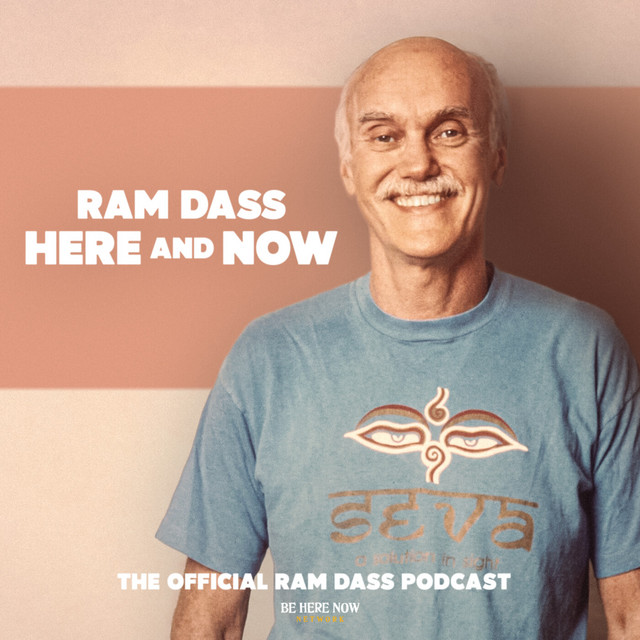
In this brief but potent reflection, Ram Dass addresses the fundamental dignity of human beings and the spiritual principle that every person has an inherent right to be fed and cared for. Rather than treating compassion as an optional aspiration, he anchors this idea in the recognition of our shared humanity—the understanding that the suffering of others is not separate from our own. This teaching reframes spiritual practice as inseparable from concrete action in the world, challenging us to see feeding the hungry not as charity but as a recognition of basic human equality.
Shared humanity is not an abstract concept in Ram Dass's teaching. It refers to the recognition that beneath all surface differences—nationality, wealth, education, status—every human being shares the same fundamental capacity for suffering and joy. This recognition forms the foundation of what Ram Dass calls being "here now": fully present to the reality of the person in front of you, seeing their needs not as separate from your own spiritual practice but as central to it.
When Ram Dass speaks of shared humanity, he draws on both Hindu and Buddhist philosophical traditions that understand all beings as fundamentally interconnected. In the Hindu tradition, this principle is captured in the Sanskrit term Tat Tvam Asi—"Thou Art That"—which suggests that the divine spark present in one being is present in all. This is not mere sentiment; it is a direct spiritual insight that should inform how we relate to others, especially those in need.
The statement that every human being has a right to be fed may seem obvious, yet it challenges the conditional thinking that pervades modern society. Ram Dass is not making an economic or political argument alone, though those dimensions matter. He is making a spiritual argument: if we truly recognize our shared humanity, then allowing another person to go hungry is equivalent to allowing ourselves to suffer.
This shifts the frame from charity—the idea that feeding the hungry is an act of generosity by those with surplus—to justice, or more precisely, to dharma. In the Sanskrit tradition, dharma refers to righteousness, duty, and the natural order. From this perspective, ensuring that everyone is fed is not a favor but a fundamental responsibility that arises from seeing clearly. It is dharma.
Ram Dass lived this principle throughout his life. His organization, the Love Serve Remember Foundation, has focused on meeting basic human needs—food, shelter, healthcare—while simultaneously supporting spiritual practice. For Ram Dass, these are not separate tracks; they are expressions of the same awakening to interdependence.
One of Ram Dass's most distinctive contributions to Western spirituality is his insistence that inner work and outer work are inseparable. Many spiritual practitioners in the 1960s, when Ram Dass was first teaching, believed that meditation and contemplation were sufficient—that changing consciousness would eventually change conditions in the world. Ram Dass challenged this view.
His teaching suggests that true spiritual practice must include what he calls "karma yoga"—the yoga of action. Feeding someone who is hungry is not a distraction from meditation; it is meditation in action. It is the direct, embodied expression of having recognized the divine in all beings. In this sense, serving others is not something that happens after you become enlightened; it is part of what enlightenment means.
This teaching draws on the Bhagavad Gita, where Krishna instructs Arjuna that action performed without attachment to results, rooted in dharma and compassion, is a valid spiritual path. You don't have to renounce the world to be spiritual; you can engage with it from a place of love and insight.
In a world with vast inequality—where some have access to abundance while others lack basic necessities—Ram Dass's teaching becomes urgent. Shared humanity is not merely a philosophical position; it calls for concrete changes in how we allocate resources, structure our economies, and relate to those who are marginalized or in poverty.
This doesn't necessarily require adopting a particular political ideology. Rather, it requires honest reflection: if you recognize the person experiencing homelessness or hunger as equally human, equally deserving of dignity, then what are the implications for how you live? How do your choices either perpetuate or interrupt systems that allow some people to flourish while others struggle for basic survival?
For Ram Dass, this reflection was never guilt-inducing. Instead, he framed it as liberation. When you stop seeing others as fundamentally separate from yourself, the act of helping becomes an act of self-interest rightly understood. You are no longer doing good deeds out of obligation; you are recognizing and acting on an insight about reality itself.
Ram Dass's teaching on shared humanity invites several directions for deepening your practice:
- Examine your own assumptions about deservingness: Notice when you make judgments about who "deserves" food, shelter, or care. What beliefs underlie these judgments? Are they aligned with a genuine recognition of shared humanity?
- Explore karma yoga in your own life: Consider how your work, whether paid or volunteer, can become an expression of service. What would change if you performed your actions without attachment to outcomes, grounded in recognition of your interdependence with others?
- Engage with systems, not just individuals: While direct service is valuable, Ram Dass also encouraged people to think structurally. What systems perpetuate hunger and poverty? How might you contribute to changing them, whether through voting, advocacy, or community organizing?
- Practice seeing deeply: In meditation and in daily life, practice the discipline of really seeing the person in front of you—not your assumptions about them, but the reality of their humanity. This is the foundation on which compassionate action rests.
Ram Dass spent his life embodying this teaching, moving fluidly between ashrams and cities, between meditation and service. His message remains clear: spiritual awakening that doesn't manifest as love for all beings is incomplete. To truly be here now is to be present to the hunger—literal and spiritual—of all those around us, and to respond with the fullness of our hearts and our hands.