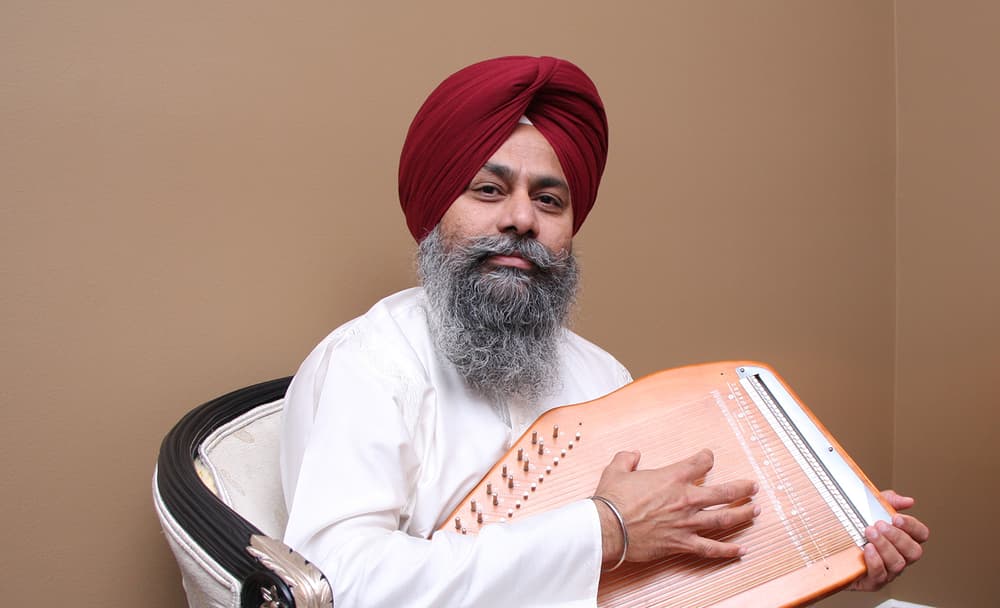
"Shaam Ke Baad" (After Evening) represents a significant moment in Hindustani classical music performance tradition, where ragas are specifically composed and performed to capture the emotional and temporal qualities of dusk. This live performance by Professor Paramjeet Singh at Jashn-e-Mousiqi in Toronto demonstrates how classical Indian music practitioners maintain and evolve ancient modal frameworks within contemporary concert settings, bridging geographical and cultural contexts while preserving the philosophical foundations of raga aesthetics.
What Is the Evening Raga Tradition in Hindustani Classical Music?
The raga system in Hindustani classical music is fundamentally tied to time and season. Each raga carries specific performance windows—morning ragas, afternoon ragas, evening ragas, and night ragas—reflecting a deep philosophical integration between musical sound, natural cycles, and human consciousness. The title "Shaam Ke Baad" literally translates to "After Evening," indicating a raga designated for performance during the twilight hours or early night.
This temporal organization is not merely a scheduling convenience but represents centuries of accumulated observation about how different raga structures and melodic characteristics resonate with particular moments in the day. Evening ragas typically employ specific note sequences that evoke the sensory and emotional qualities of dusk—the gradual transition from day to night, the cooling air, the shift in light, and the corresponding psychological states that musicians and listeners experience during this liminal time.
The tradition reflects what ethnomusicologist and raga theorists describe as the correspondence between raag and rasa (mood or emotional flavor). Rather than a raga having one fixed emotional meaning across all contexts, the time of performance, the season, and the listener's state of mind all inform how the raga is experienced and expressed by the musician.
How Do Musicians Structure an Evening Raga Performance?
A classical evening raga performance typically unfolds through several distinct sections, each serving a specific function in presenting the raga's character. The performance may begin with an alap—an unmetered, exploratory section where the musician gradually introduces the raga's ascending and descending note patterns, establishing its mood without rhythmic accompaniment. This section is especially valuable in evening ragas, where the slow unfolding of melodic material mirrors the gradual dimming of light.
Following the alap, the performance typically moves into jor, a rhythmically free but metrically organized section where the pace of melodic movement increases. The musician develops the raga's characteristic phrases, establishes its tonal center, and begins to explore the raga's internal logic—which notes work well together, which phrases are typical of the tradition, and which ornamentations best express the raga's character.
The main body of the performance enters the bandish or composition—a set melody composed within the raga framework, typically performed with a drummer and often organized in cycles that repeat at fixed intervals. The bandish serves as an anchor point, allowing the musician to demonstrate their skill in elaborating on the composition while maintaining its essential structure. Improvisations build outward from this anchor, exploring variations in rhythm, phrasing, and melodic development.
Evening ragas in particular often emphasize slower tempos and introspective phrasing, allowing the listener to settle into a contemplative state rather than being propelled forward by rapid-fire virtuosity. This reflects the evening raga tradition's alignment with the body's natural circadian rhythms and the mind's inclination toward quietude as darkness approaches.
What Role Does Geographical and Cultural Context Play in Contemporary Raga Performance?
The performance of "Shaam Ke Baad" at Jashn-e-Mousiqi in Toronto represents a significant contemporary evolution in raga tradition. Jashn-e-Mousiqi (Festival of Music) is a prominent venue for Hindustani classical and related musical traditions in Canada, serving diaspora communities and introducing non-traditional audiences to Indian classical forms.
When a raga performance occurs outside India—in Toronto, North America, or other global contexts—the performance necessarily exists within a different cultural ecosystem. The audience may include traditional listeners raised within Indian classical music contexts, as well as newcomers encountering the tradition for the first time. The physical venue, the ambient sound environment, the local climate, and the cultural expectations all differ from performance spaces in India.
Yet the raga structure itself remains consistent. A raag performed in Toronto still maintains the same note sequences, characteristic phrases, and internal logic as one performed in Delhi or Mumbai. This consistency reflects the raga system's strength as a formalized musical language—it can be transported across geography and still retain its essential character and aesthetic function.
However, the experience of an evening raga in Toronto during, say, May (when this performance was recorded) exists in a different temporal and seasonal context than the same raga performed in northern India during the same month. In Toronto, "after evening" in May means prolonged twilight extending well into the night, whereas in India, the evening transition happens more rapidly. These subtle environmental differences create new contexts for understanding how the raga's evocation of dusk resonates with listeners in different places.
How Does Raga Performance Preserve and Evolve Indian Classical Music Traditions?
Performances like "Shaam Ke Baad" at international venues serve multiple functions in the preservation and evolution of Hindustani classical music. First, they represent direct lineage transmission—a trained musician performing the tradition as they learned it, maintaining melodic structures, compositional forms, and performance practices that may stretch back generations.
Second, such performances create opportunities for cross-cultural exposure and dialogue. When non-traditional audiences encounter raga performance, they often develop deeper interest in understanding Indian classical music's philosophical foundations, theoretical structures, and historical development. This exposure can lead to formal study and participation in the tradition by people from outside Indian communities.
Third, the fact that raga performance thrives in diaspora contexts suggests the tradition's resilience and adaptability. Rather than being fixed in geographical and cultural stasis, the tradition demonstrates capacity to function meaningfully across different contexts while maintaining its essential character. This is not dilution but rather what scholars of cultural transmission describe as "dynamic preservation"—maintaining core structures while allowing contextual expression to shift with new environments.
Fourth, performances in venues like Jashn-e-Mousiqi signal to diaspora communities that their cultural traditions remain valued, accessible, and actively practiced. For musicians like Professor Paramjeet Singh and audience members who may be separated from India by geography or generation, these performances function as cultural anchoring points—opportunities to connect with traditions that may represent family heritage, spiritual practice, or aesthetic commitment.
What Philosophical Principles Underlie the Raga System?
The raga system is built on several foundational philosophical principles that distinguish it from Western classical music's approach to melody and composition. Unlike the Western tradition's emphasis on harmonic progression and the twelve-tone equal-temperament scale, ragas operate within frameworks of specific note selections (often seven out of twenty-two microtonal divisions of the octave), specific ascending and descending patterns, and specific characteristic phrases that define the raga's identity.
A raga is not simply a scale—it is a complete musical personality with rules, tendencies, preferred phrases, and an overall aesthetic character. Learning a raga means internalizing not just which notes are available but how those notes should be used to express the raga's specific emotional and temporal essence.
The correspondence between ragas and time-of-day is one expression of a broader principle: that different musical organizations correspond to different states of consciousness, different seasons, different times of life. An evening raga is not arbitrarily assigned to evening—it is understood that the specific melodic and rhythmic characteristics of that raga naturally resonate with the mental and emotional states that typically emerge as darkness approaches.
This principle reflects a non-dualistic understanding of the relationship between music, mind, and cosmos. Rather than music existing as an art form separate from natural processes and human consciousness, the raga system integrates musical structure with temporal cycles, emotional states, and spiritual practice. Some of the oldest texts describing ragas explicitly connect them to chakras (energy centers), seasons, times of day, and stages of spiritual development.
How Can Listeners Approach Evening Raga Performance Without Prior Training?
For listeners new to Hindustani classical music, approaching an evening raga performance requires releasing some expectations formed by exposure to Western concert music. There are no quick melodic hooks to latch onto, no climactic dramatic moments following conventional narrative arcs. Instead, evening ragas ask for patient, contemplative listening—allowing the gradual unfolding of melodic material to settle into your consciousness rather than demanding your immediate emotional engagement.
Listening to an evening raga can involve focusing on how the musician repeats and varies a single phrase, watching for the subtle ornamentations and inflections that distinguish one performance from another. It can involve noticing how the musician's improvisations respond to the drummer, creating complex rhythmic relationships within a steady pulse. It can involve simply allowing the emotional quality of the raga—its evening-ness, its introspective character—to wash over you without analyzing or categorizing the experience.
The advantage of encountering raga performance in a live venue like Jashn-e-Mousiqi is that the musician's presence and the collective attention of the audience create a shared field of focus. The experience of sitting in a concert hall with others listening to "Shaam Ke Baad" is qualitatively different from hearing the same raga on a recording—the live transmission of the musician's intention and the collective resonance of the listeners all contribute to how the raga is received and experienced.
Where to Go From Here
Deeper engagement with evening raga traditions can take several paths. For those interested in the historical development of ragas and their philosophical foundations, studying classical texts like the Sangita Ratnakara or more contemporary ethnomusicological analyses can provide theoretical context. For those drawn to direct practice, learning Hindustani classical music through formal training with a guru (teacher) remains the traditional pathway, though some musical concepts can be explored through listening and study without instrumental training.
Venues like Jashn-e-Mousiqi and similar cultural organizations in diaspora communities offer both performances and educational programming that can deepen exposure to Indian classical music. Engagement with living practitioners—not just as audiences but as curious students—keeps the tradition vital and allows for the kind of direct transmission that oral traditions depend on for their continuation.
The evening raga tradition ultimately invites a different way of understanding the relationship between time, music, consciousness, and the natural world—a perspective that remains particularly relevant in contemporary contexts where artificial lighting and digital technology have somewhat divorced us from direct responsiveness to circadian rhythms and natural cycles. Returning to these traditions offers both musical sophistication and a reattunement to the body's and mind's natural alignment with the passage of time.


