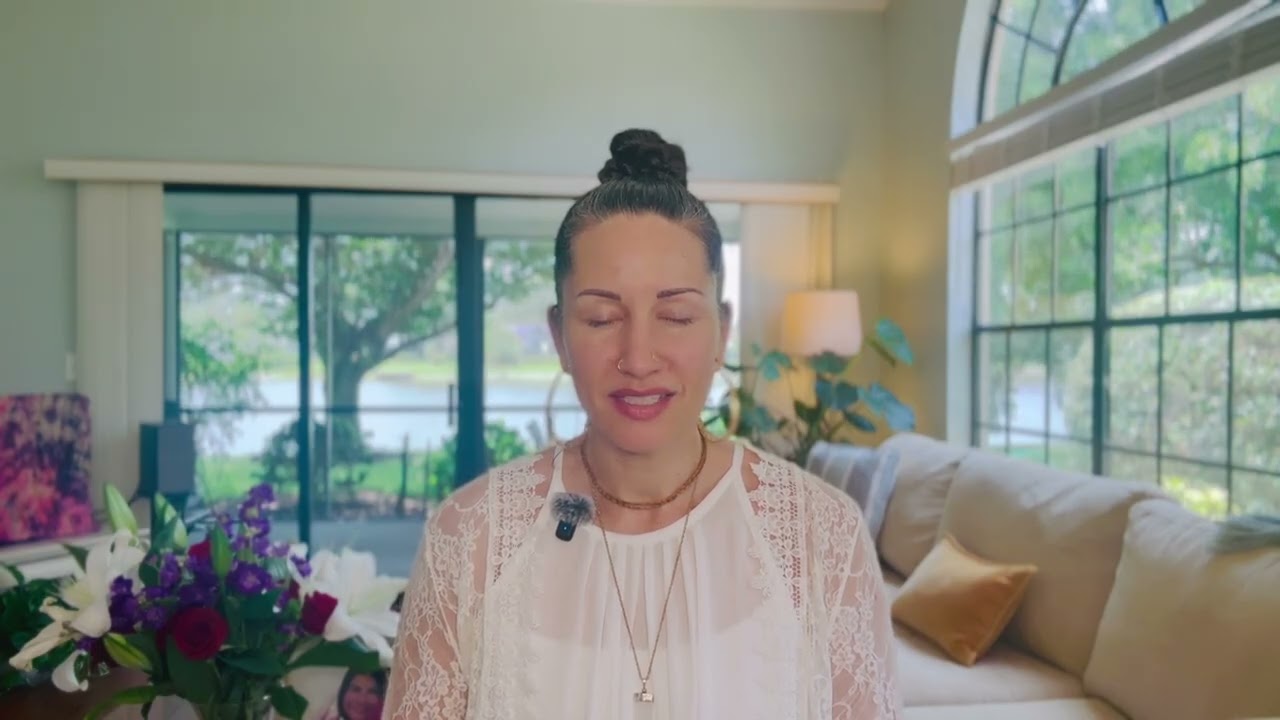
Tonight, something else gets to hold you. That is the first line of a roughly hour-long sleep hypnosis from The Mindful Movement, written and read by Sara Raymond, and it sets the terms for everything that follows. The recording asks a listener to lie down, breathe out the day, and move slowly from the soles of the feet to the crown of the head, releasing what has been braced there. Then it leads into a visualization that gives the whole practice its spine: a walk along a beach at night, a bundle held tight against the chest, and a tide that rises and falls without anyone managing it. What makes the talk worth a close reading is not any single claim. It is the craft of the sequencing, the way the voice slows, pauses, and hands the listener from one image to the next until sleep becomes the most natural next step.
Very little, and that is deliberate. The opening is not an instruction to relax. It is a breath, offered once and then repeated. "Breathe in through your nose and at the top take one more small sip of air. And then let it all go long and slow through your mouth" (1:02). The double inhale, the small top-up, and the long exhale like a sigh you have been saving all day are the same gesture the practice will return to again and again. A breathing pattern is a small piece of technique, and the script treats it with care: the listener is told the breath "doesn't need managing," that it has been working all day and "knows how to carry you through the night."
The script also makes an explicit allowance for distraction. "Some words will register clearly while others drift past half heard. Both are exactly right." That permission is structural. A sleep hypnosis that demanded full attention would defeat its own purpose, and Raymond builds the whole recording on the idea that comprehension can be partial. She goes further, telling the listener to "let go of trying to do this well," and describing the situation as one of the few places in a life "where nothing depends on you."
The framing rests on a claim that deserves to be named as the speaker's framing rather than settled fact: "your subconscious mind is receptive and present. It's always listening even through sleep." Whether or not one accepts that model, it shapes the practice. The listener is not asked to memorize anything. Whatever lands, the script says, can be "woven in during the hours that follow in its own time."
Raymond's release moves in a deliberate order: feet, ankles, calves, knees, thighs, hips, belly, lower back, shoulders, arms, hands, neck, jaw, eyes, forehead, crown. The sequence is downward and then upward, and its logic is practical. Starting at the feet gives the listener something concrete to notice first. "Your feet have carried you through so much today," she says at about 4:22, "and now they get to be still." The language is physical and specific. Feet are asked to "grow heavy, settling into the support of the bed as if the bed has been waiting for them." Calves "let go of the day's standing." Each region gets one or two images rather than a long explanation, which keeps the attention moving.
Some passages go beyond the mechanics of muscle release into something closer to observation. On the belly: "So many of us hold our belly firm all day without ever deciding to let it soften." On the shoulders: "They have been carrying more than their share for a long time." These lines do not ask the listener to change anything yet. They ask the listener to notice a habit most people never see, which is the quiet, continuous gripping that accompanies a full day of responsibility.
The hands get the longest pause. At about 8:12 the script says:
"These are the hands that hold it all. They've held it all so steadily that most people never saw how tightly they were gripping. Let your fingers uncurl now. Let your palms open."
Sara Raymond, The Mindful Movement sleep hypnosis (timestamp 8:12)
That passage is the emotional hinge of the first half. It turns a body scan into a recognition. The open palm becomes the physical sign of the theme that runs through the whole recording, and the listener is invited to feel "the air on the open skin of your hands" as a kind of evidence.
At about 11:29 the voice announces a countdown from ten to one, and the structure of the script changes. The numbers are short, each followed by a single phrase: "Everything is softening." "The bed is holding all of your weight." "Halfway down and still drifting." The shortness is the point. Long sentences demand tracking, and by this stage the listener is being asked to stop tracking. "There's no need to count along. Let the numbers carry you."
The countdown is also a threshold. Raymond names the place the listener has arrived at: "the soft space, between waking and sleeping, where effort dissolves and something in you can finally listen." That phrase is an accurate description of the hypnagogic state that many guided sleep recordings aim for, and the script's job here is to hold the listener in it without pushing. The imagery shifts, and the practice becomes less about the body and more about inner scenery.
This is where the talk becomes distinctive. The beach visualization begins with a walk on warm sand under a low moon, with "a long path of silver light across the waves." Then the listener notices something in the arms: "You are carrying a bundle of sorts." It is wrapped in cloth, held against the chest, and it has been there so long "that you stopped noticing it." The script tells the listener they do not need to unwrap it to know what is inside. "It's everything you've been holding."
The bundle is the metaphor, but the more interesting move is the part of the self that carries it. At about 17:36 the script introduces it:
"There is a part of you that carries this bundle. It's a very loyal part. This part carries the bundle because somewhere a long time ago, it recognized that holding everything together was the smartest, most loving thing you could do. It kept you safe and it kept things from falling apart."
Sara Raymond, The Mindful Movement sleep hypnosis (timestamp 17:36)
This is a gentle and unusually humane way to talk about overfunctioning. The holding is not framed as a flaw. It is framed as a protective strategy that once made sense, and that has kept running past its usefulness. The script's argument is that this part "didn't know yet that it's allowed to rest." Rest is offered not as a reward for finishing but as permission the loyal part has not yet been given.
The arc of the visualization is then concrete. The listener walks to "a place to rest, soft and dry and sheltered," kneels or sits, and lowers the bundle into the sand "as slowly as you need." The script insists on the outcome: "Nothing spills or breaks. You are okay and everything you love is still here." The loyal part sits beside the listener and, in the script's words, "can see for itself that nothing falls apart when you stop holding so tightly." The practice does not argue the listener out of responsibility. It lets the protective part witness the release directly.
The tide is the final image, and it does the most work. The water comes up the beach "in a long slow curve," stops "right before it meets you," and flows back out. "The water knows exactly how far to come. The waves move back and forth through the night without anyone managing it." That is the central idea the description names too: the tide "does its work all night without anyone holding it, and you get to rest inside that."
The image answers the problem the bundle poses. The listener has been holding everything, and the tide is an example of something that holds everything and never has to grip. Raymond ties the rhythm of the water directly to the rhythm of breath: the breath begins "to follow it slowly in and slowly out." By the end of the visualization, the external image and the internal rhythm are the same motion, which is the state the recording is trying to produce.
Later in the full recording, which runs past the excerpt available here, the script returns to the same themes at its close. Among the lines at roughly 24:13 and 25:53 are "Everything I love will be here in the morning" and "I can rest and the world keeps turning." Near the end, at about 32:36, the voice says "Allow yourself to drift fully." Those closing passages are the practice's way of confirming what the beach already showed.
The description carries two cautions that matter in practice. The first is basic: do not listen while driving. The recording is built to move the listener toward sleep, and it should be played only when lying down and able to rest. The second is that meditation and mindful movement are described as "powerful tools," and the recording states plainly that it "is not a substitute for medical care." If sleep is persistently difficult, a doctor or other trusted health professional is the right next call.
For a listener who wants to get the most from the script, the useful instruction is the one Raymond gives herself: stop trying. Let the breath do its work, let the words arrive partially, and let the numbers carry you. The practice is short on demands and long on permission, which is the point. A reader who has never tried a sleep hypnosis will find that the structure is simple, repetitive, and slow by design, and that the repetition is what allows the body to stop bracing.
If the bundle image lands, the most direct next step is the recording itself. Play it at bedtime, lie down, and let the opening breath set the pace. Notice, as the script suggests, which parts register and which drift past, and treat both as correct. If you want more support, the video description links to the creator's Members' Oasis, which the description presents as a place for further material, and to Raymond's one-to-one hypnotherapy and coaching sessions. Those are the creator's own offerings, described in the description, and they are the place to look for anything beyond this single practice.
For now, the practice leaves one clear instruction, and it is the same one the tide follows all night. Set the bundle down in the sand, let the water come up to the edge without you, and breathe out slowly.