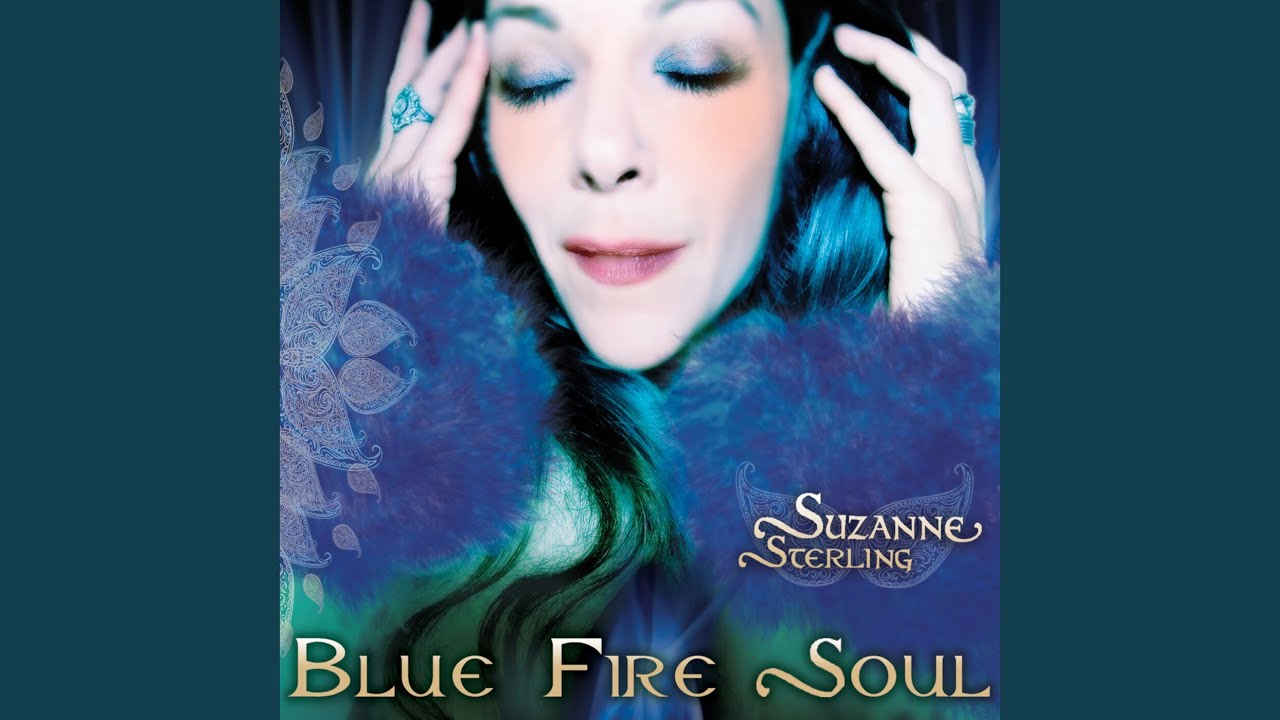
Saraswati (Slow River Deep) is a five-minute yoga chant credited to singer and composer Suzanne Sterling, with Christopher K listed alongside her as a writer and composer, released in March 2013 by White Swan Records and later posted to YouTube under the channel The Yoga Mantra and Chant Music Project. The track carries an "(Edit)" tag, which means it is a reworked, shortened version of a recording, and its title pairs a Sanskrit name with a poetic parenthetical that invites the listener to picture a river moving slowly and deeply. What follows is a close reading of what the record itself tells us, where the public information runs out, and how a listener can get the most out of a chant of this kind.
Picture the simplest way this music arrives: a browser tab, a pair of headphones, a room that has gone quiet at the end of a day. The YouTube listing gives the running time as five minutes and six seconds. That is a deliberately modest span. Chant recordings in the yoga world often run much longer, built for group practice, where the length is set by breath and by how many repetitions a room can hold. A five-minute edit is a different proposition. It asks for a single sitting, a single attention, and it leaves little room for the mind to wander before the piece resolves.
That brevity is worth taking seriously. A chant is not a song in the usual sense. Its power usually lives in repetition and in the slow accumulation of a phrase, so the first minute is mostly about settling into the pulse, and the last minute is about noticing what has changed in you during the rest. An edit that compresses the form keeps the shape but asks the listener to arrive faster. If you want to hear the piece as its makers intended, press play, close your eyes, and resist the urge to skip ahead.
The credits are the most solid ground we have. YouTube's auto-generated listing names Suzanne Sterling as a writer and composer, and it names Christopher K as a second writer and composer. The recording's copyright line reads "℗ 2013 White Swan Records," and the release date is listed as March 12, 2013. The upload is marked as provided to YouTube by Virgin Music Group, which is the distributor's standard attribution for a licensed catalog track. The channel itself, The Yoga Mantra and Chant Music Project, is an automatically generated topic channel, the sort YouTube creates to gather a label or artist's audio in one place.
Those facts matter because they tell you how a track like this travels. It is a commercial recording with a label behind it, made to be found by people searching for yoga music and mantra chants. It was not produced as a live ceremony or a teaching talk. The listing does not offer a biography, a liner note, or a statement from the artists about their intention, so anything we might say about their motives would be speculation. What the credits do establish is authorship: Sterling is the name at the front, and her work as composer and writer is the reason the piece exists in this form.
Saraswati is one of the most venerated names in Hindu tradition. She is commonly associated with learning, speech, music, and the arts, and in many tellings she is linked with a river. That combination is the reason a chant about her so often sounds like flowing water, and it is the reason a title that places her name next to a river image works so well. Whatever the specific composition contains, the name tells the listener where to point their attention: toward learning, toward sound as a vehicle for insight, and toward a sense of movement that is patient rather than urgent.
Mantra traditions have long treated a deity's name as more than a label. Calling on a name, repeating it, letting it fill the breath, is a way of tuning the mind toward the qualities that name represents. A chant titled for Saraswati is therefore often heard as an invitation to study and to clarity, not only as beautiful sound. You do not need to know the full theology to respond to that. You only need to notice that the title is asking you to listen for something beyond melody.
The parenthetical is the most evocative part of the title, and it is also the most interpretive. "Slow River Deep" reads like a description of how the music should move: unhurried, with depth under the surface rather than flash on top. It is a reasonable reading that a river image pairs naturally with a goddess associated with a river, and it is also a useful instruction for the listener. A river that is slow and deep does not hurry to arrive anywhere. It carries a great deal without drawing attention to itself.
We should be clear about the boundary here. The listing does not say that the parenthetical was written by Sterling or by Christopher K, and it does not explain the phrase. What we can say is that the title, as published, offers a metaphor, and that the metaphor fits the general character of a long, slow-breathing chant. Treat it as an open door rather than a key.
The "(Edit)" marker signals that this version is not the full-length form. Edits are common across recorded music. A label or distributor may trim a piece for a digital service, for a playlist, or for a time slot in a larger project, and a chant is no exception. The listing does not say what was removed, how much, or why. We do not know whether an original longer version exists in the same catalog, and it would be a mistake to guess.
For a listener, the practical point is simple. The five-minute version is what is on the page, and it is complete enough to stand on its own as a practice. If you come to chant recordings wanting more, you may find that the same artists or the same catalog hold other versions. Look at the label's release information and the channel's other uploads rather than assuming a longer cut exists.
At the time of the captured listing, the video had 13,175 views. That number is modest by the standards of mainstream music, and it is a useful reminder of how chant recordings usually find their audience: slowly, through search and through quiet recommendation, among people who already know they want this sound. The upload is from April 2015, two years after the original release, which suggests the track was added to the channel as part of a catalog rather than launched with a campaign. Those are observations about the video's life, not claims about the recording's reception.
Start with a fixed time and place. Five minutes is short enough to fit into a morning or an evening without negotiation, which is part of why short chant recordings work well as a daily anchor. Sit upright, let your breath find its own pace, and listen first without trying to join in. The early minute is about tuning your ear to the pulse. In the middle, notice when your attention drifts, and return to the sound without judgment. At the end, pause before you move on, and notice whether the quality of your attention has changed.
If you chant along, do it quietly and let the voice follow the recording rather than pushing ahead of it. A recorded chant is a steady reference, and the practice is less about performing it well than about letting the repeated phrase do its slow work. Many people find that a short, familiar recording becomes easier to return to than a long one, precisely because they come to know its shape and can settle into it quickly.
Saraswati (Slow River Deep) is a compact, carefully credited yoga chant with a title that does real interpretive work. The record gives us a writer and composer, a 2013 release, a label, a five-minute length, and an edit whose details we cannot verify. Beyond that, the most reliable way to know this music is to listen to it closely, more than once, at a time of day when you are not in a hurry. Check the release credits on the label's material, explore the channel's other uploads for related chants, and if you are drawn to the Saraswati tradition more broadly, read widely about her role in learning and the arts before you return to the track. The river in the title will keep its own pace. Your part is to match it.